
Handout
Why Adolescence is Developmentally Wired for Disorganization
Therapy Insights
Member Exclusive

Print Resource
— US Letter — 1 page
Population:
PediatricDiscipline:
OTSLPDiagnosis:
Executive FunctionReferences:
- Casey, B. J., Tottenham, N., Liston, C., & Durston, S. (2005). Imaging the developing brain: What have we learned about cognitive development? Trends in Cognitive Sciences, 9(3), 104–110.
- Giedd, J. N. (2004). Structural magnetic resonance imaging of the adolescent brain. Annals of the New York Academy of Sciences, 1021, 77–85.
- Steinberg, L. (2008). A social neuroscience perspective on adolescent risk-taking. Developmental Review, 28(1), 78–106.
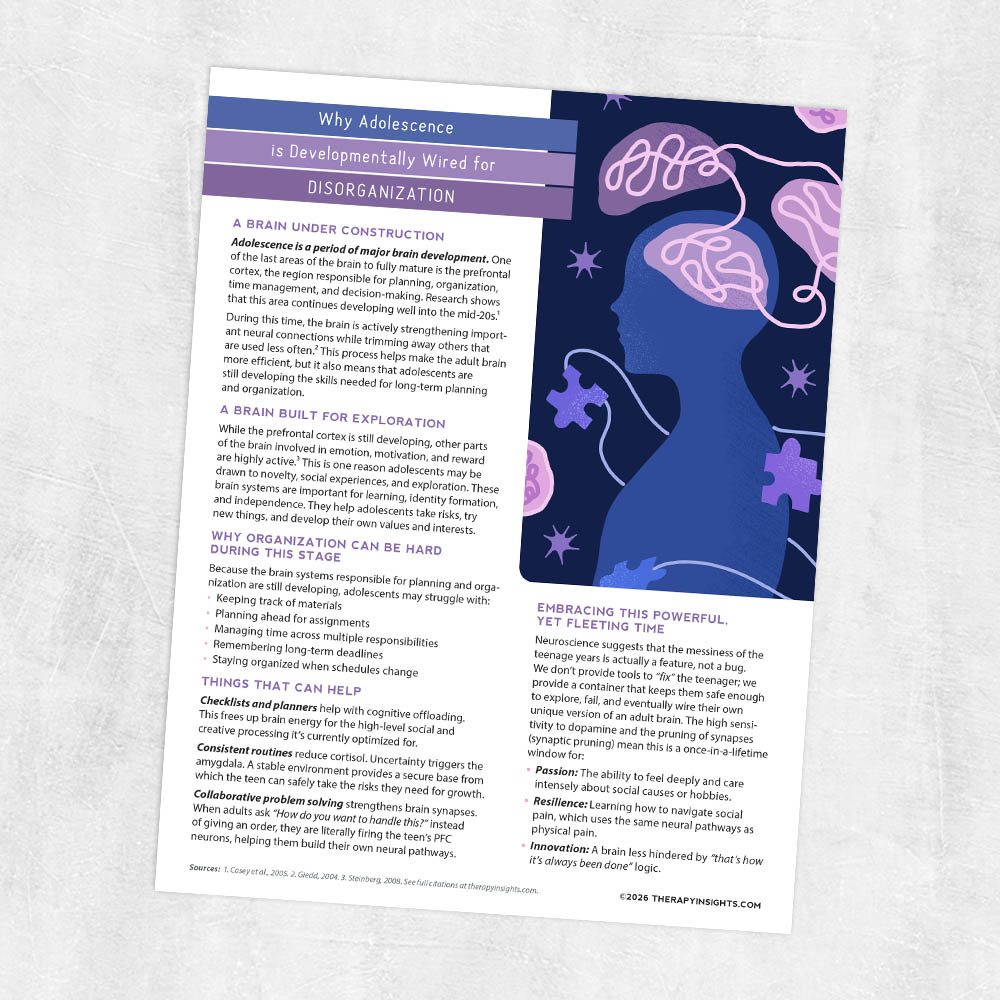
This resource reframes adolescent disorganization from a behavioral deficit to a natural byproduct of a brain optimized for exploration and identity formation. It provides therapists with a neuro-informed framework to help parents shift from frustrating power struggles toward a stance of developmental mentorship and supportive scaffolding.
Want access to this printable resource and hundreds more? Subscribe to Therapy Insights.
Subscribe to get instant and easy access to handouts, therapy materials, and clinical tools so that you can spend your valuable time doing what you do best: Connecting with your patients and changing lives for the better.
Subscribe now
Already subscribed to Therapy Insights? Log in to access this member exclusive.
Related resources
Eval Tool
Pediatric Feeding Evaluation Questionnaire
Clinical Reference
22q11.2 Deletion Syndrome: Considerations for Speech, Feeding, and Participation
Handout
The Power of Waiting: A Simple Way to Support Communication
Therapy Activity
Friendship Skills: Everyday Social Situations
Therapy Activity
I Have Something to Say: Helping Kids Repair Communication Breakdowns
Handout
Preparing for Difficult Conversations
Daily Resource Limit
There was an issue loading this asset. Please try again or contact customer support.