
SLP’s Role with Disorders of Consciousness and Functional Locked-In Syndrome
Population:
AdultDiscipline:
SLPDiagnosis:
Brain InjuryStrokeReferences:
- Bruno, M. A., Vanhaudenhuyse, A., Thibaut, A., Moonen, G., & Laureys, S. (2011). From unresponsive wakefulness to minimally conscious PLUS and functional locked-in syndromes: recent advances in our understanding of disorders of consciousness. Journal of neurology, 258, 1373-1384.
- Wannez, S., Heine, L., Thonnard, M., Gosseries, O., Laureys, S., & Coma Science Group collaborators (2017). The repetition of behavioral assessments in diagnosis of disorders of consciousness. Annals of neurology, 81(6), 883–889.
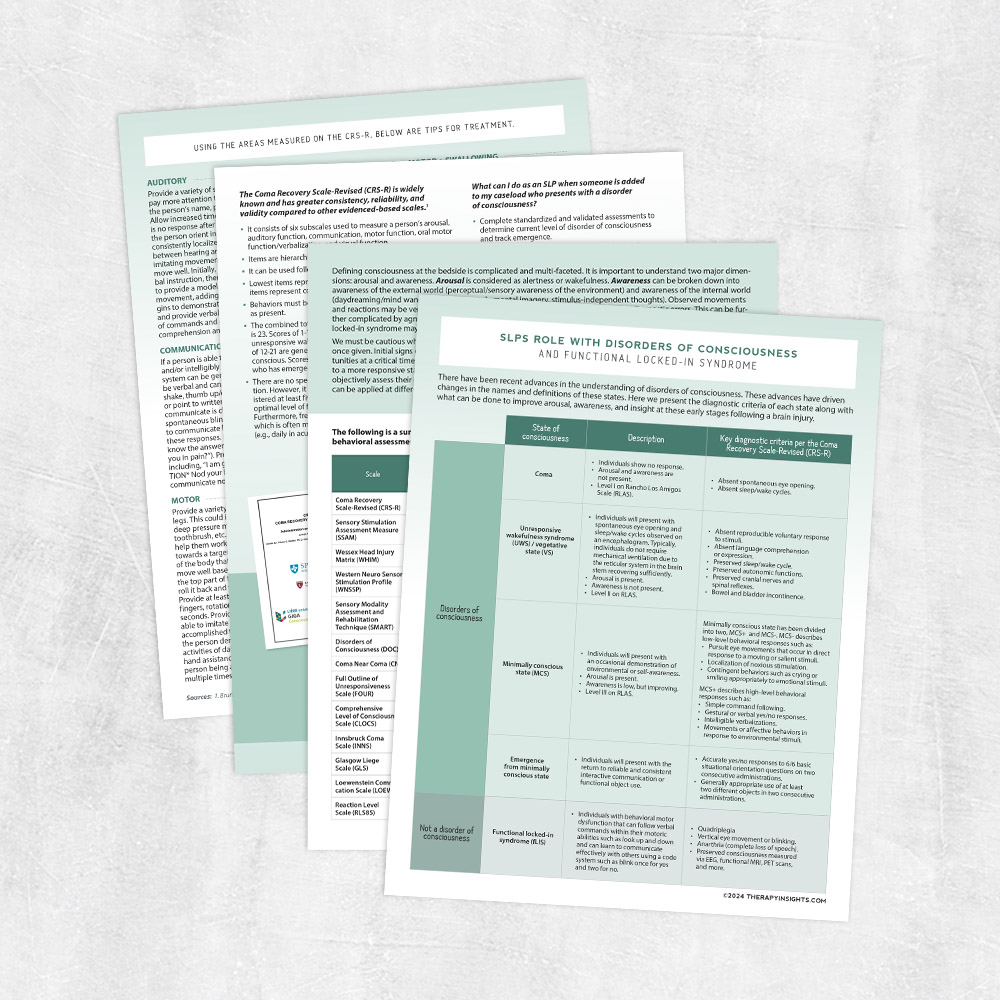
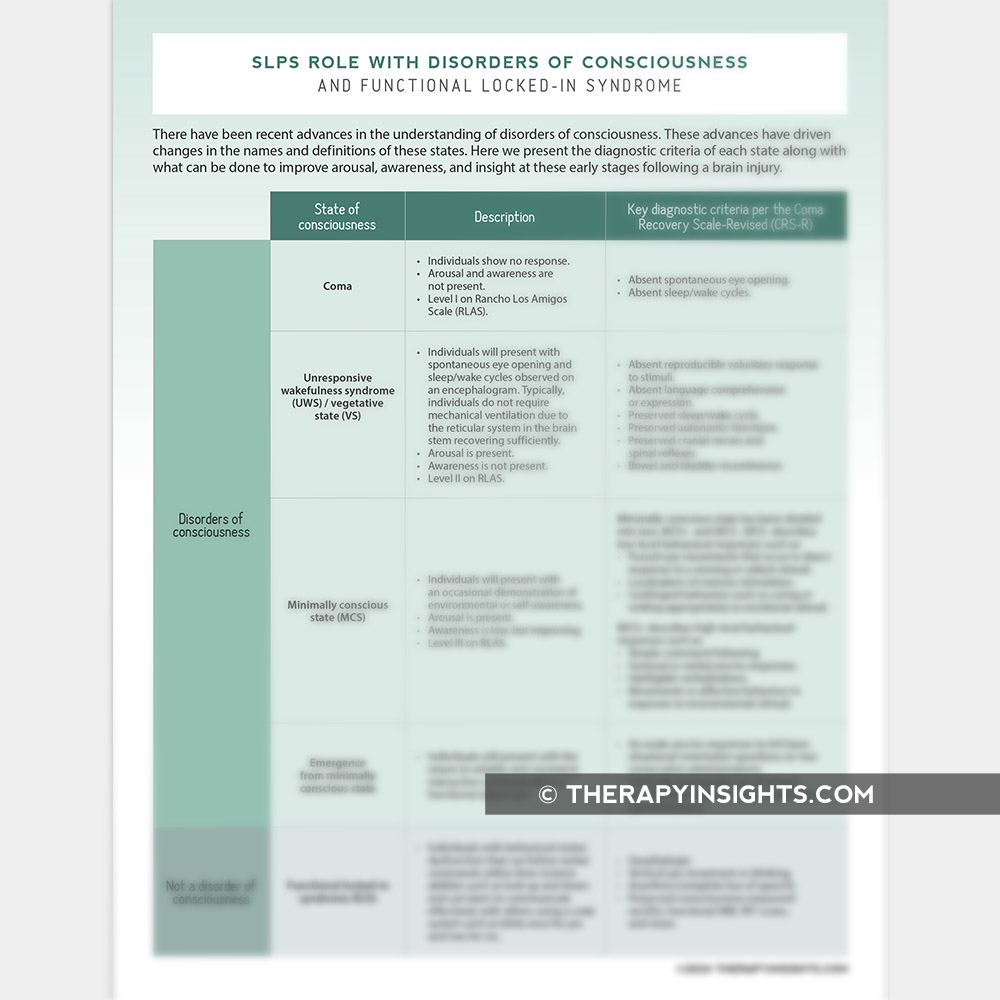
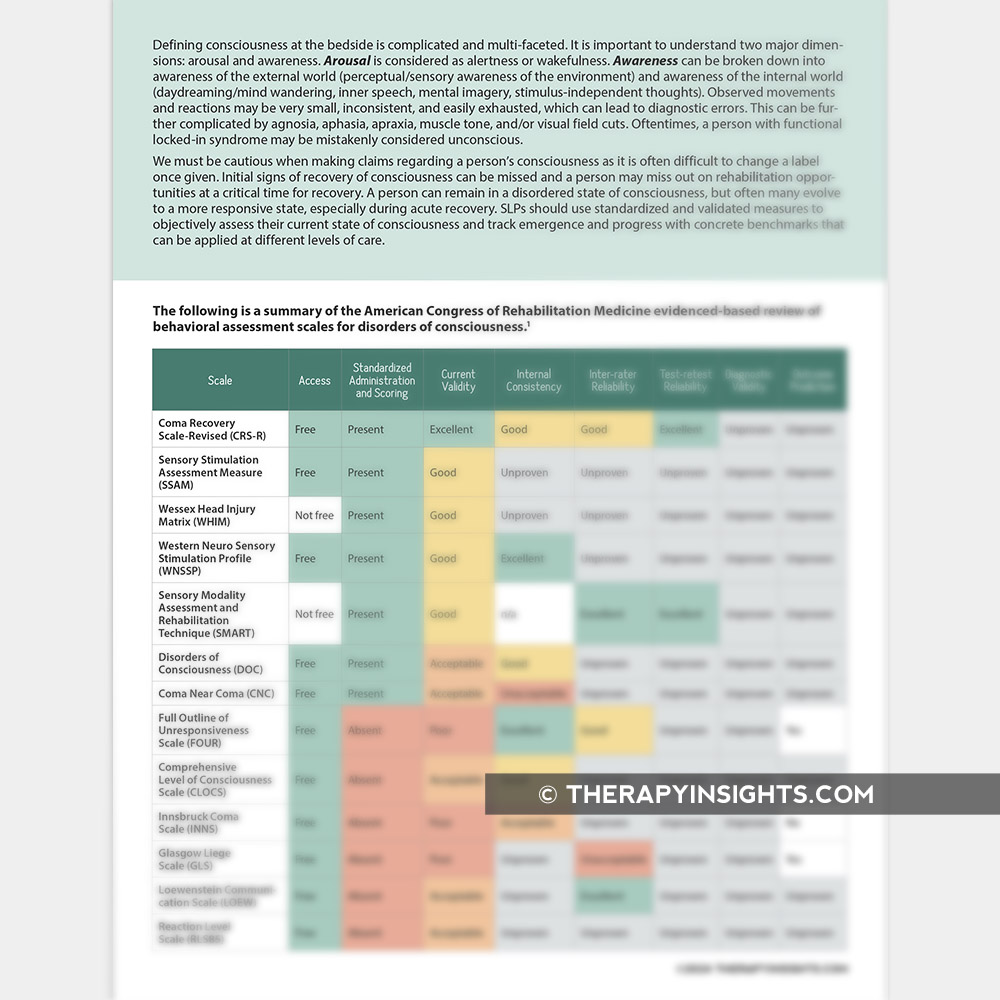
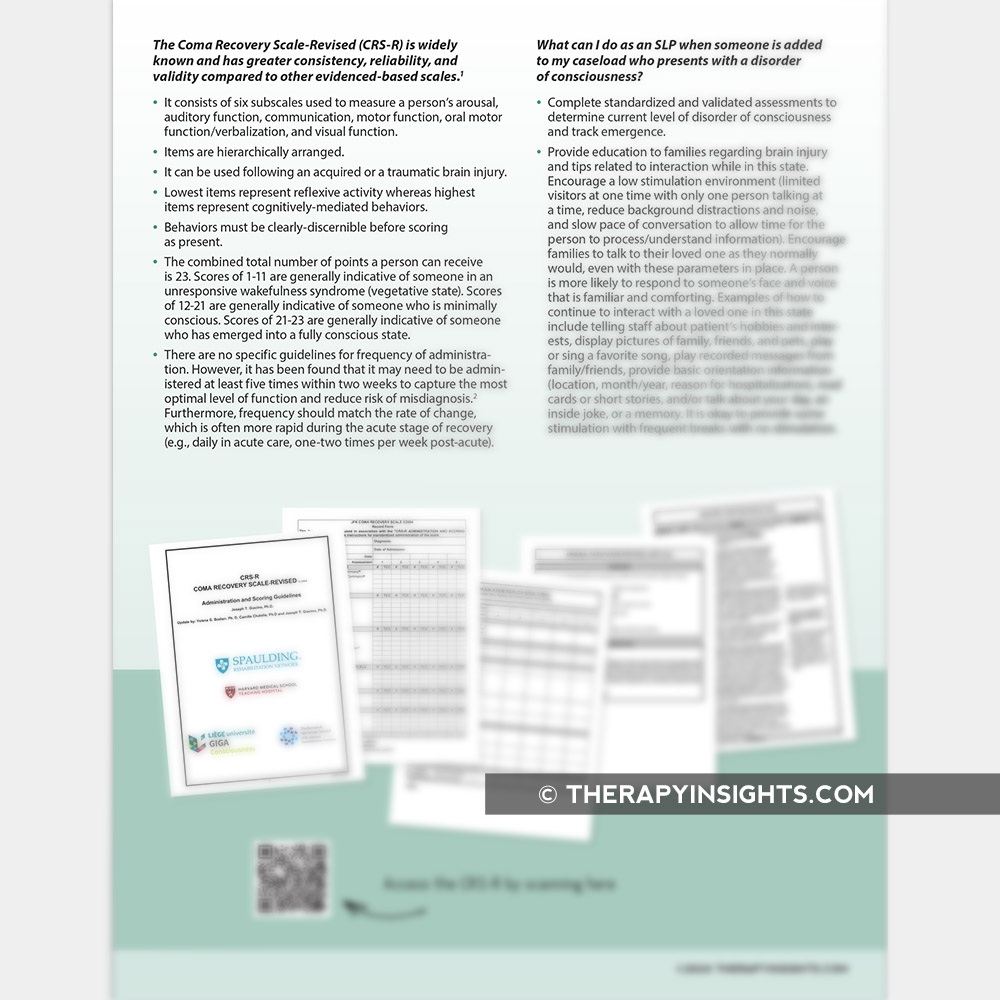
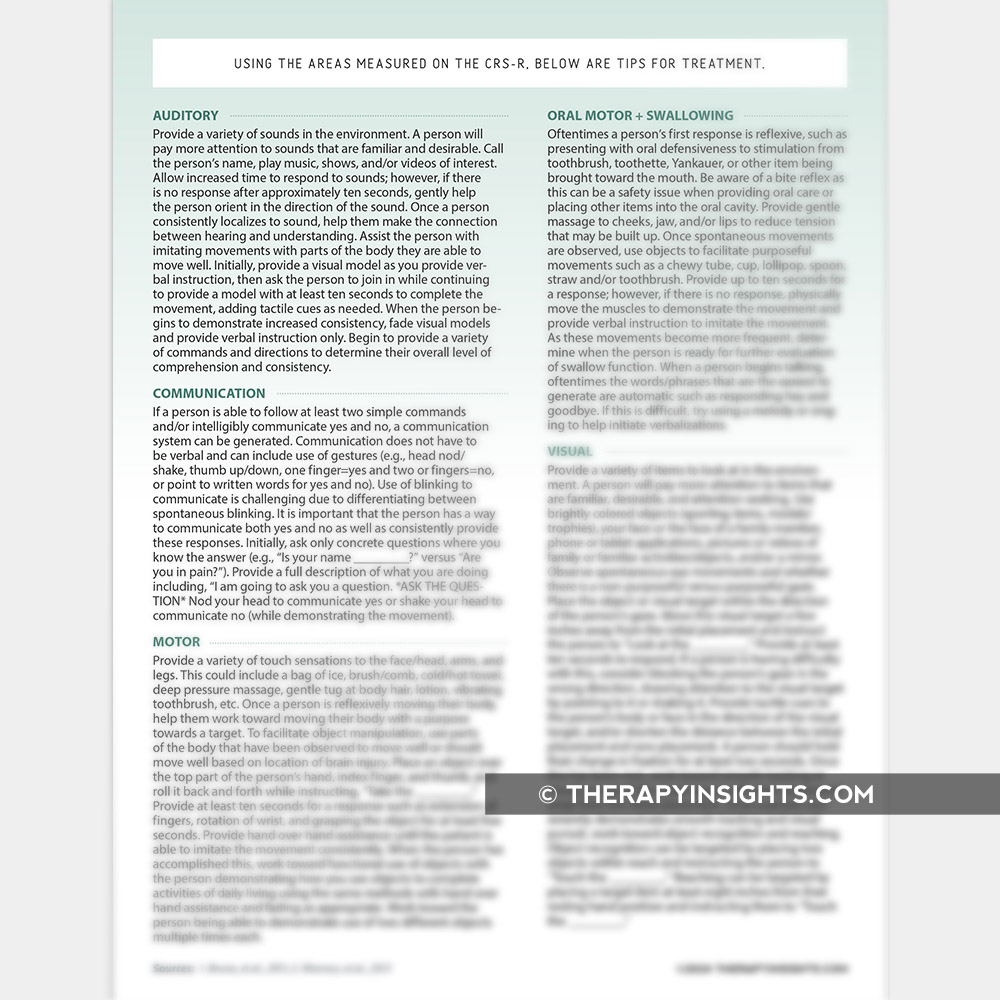
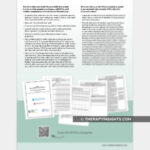
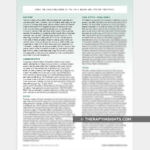
Review the evidenced-based scales for disorders of consciousness and the criteria for disorders of consciousness and functional locked-in syndrome per the Coma Recovery Scale-Revised. Explore suggestions for treatment at these low levels following brain injury. This printable clinical reference is for speech-language pathologists working with adult patients, covering Brain Injury and Stroke. Print Resource, US Letter, 4 pages. Members can view and print it.
Use this resource when a patient, family, or colleague asks:
- How can I identify functional locked in syndrome versus true unconsciousness?
- What should an SLP do when evaluating a patient with disorder of consciousness after brain injury?
- How do I differentiate minimally conscious state from unresponsive wakefulness syndrome at bedside?
Want access to this printable resource and hundreds more? Subscribe to Therapy Insights.
Subscribe to get instant and easy access to handouts, therapy materials, and clinical tools so that you can spend your valuable time doing what you do best: Connecting with your patients and changing lives for the better.
Already subscribed to Therapy Insights? Log in to access this member exclusive.
Related resources
Daily Resource Limit
There was an issue loading this asset. Please try again or contact customer support.