
Clinical Reference
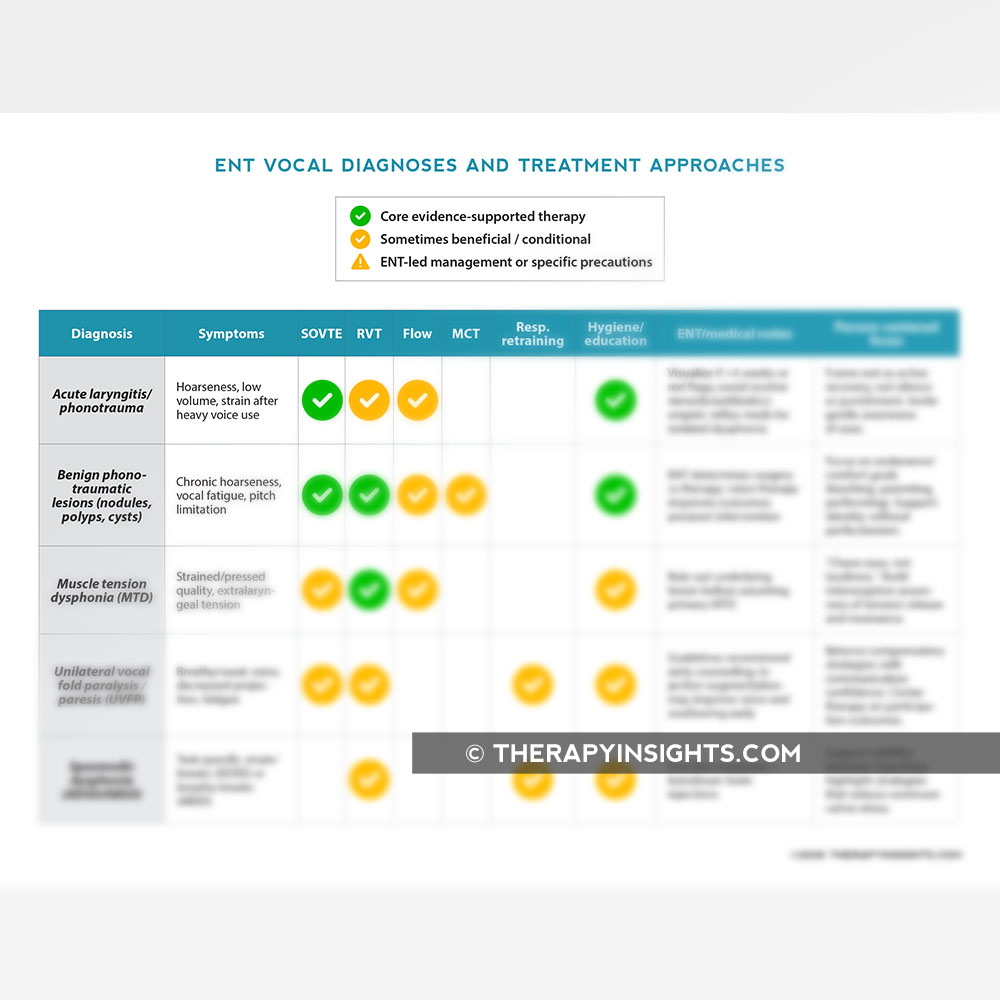
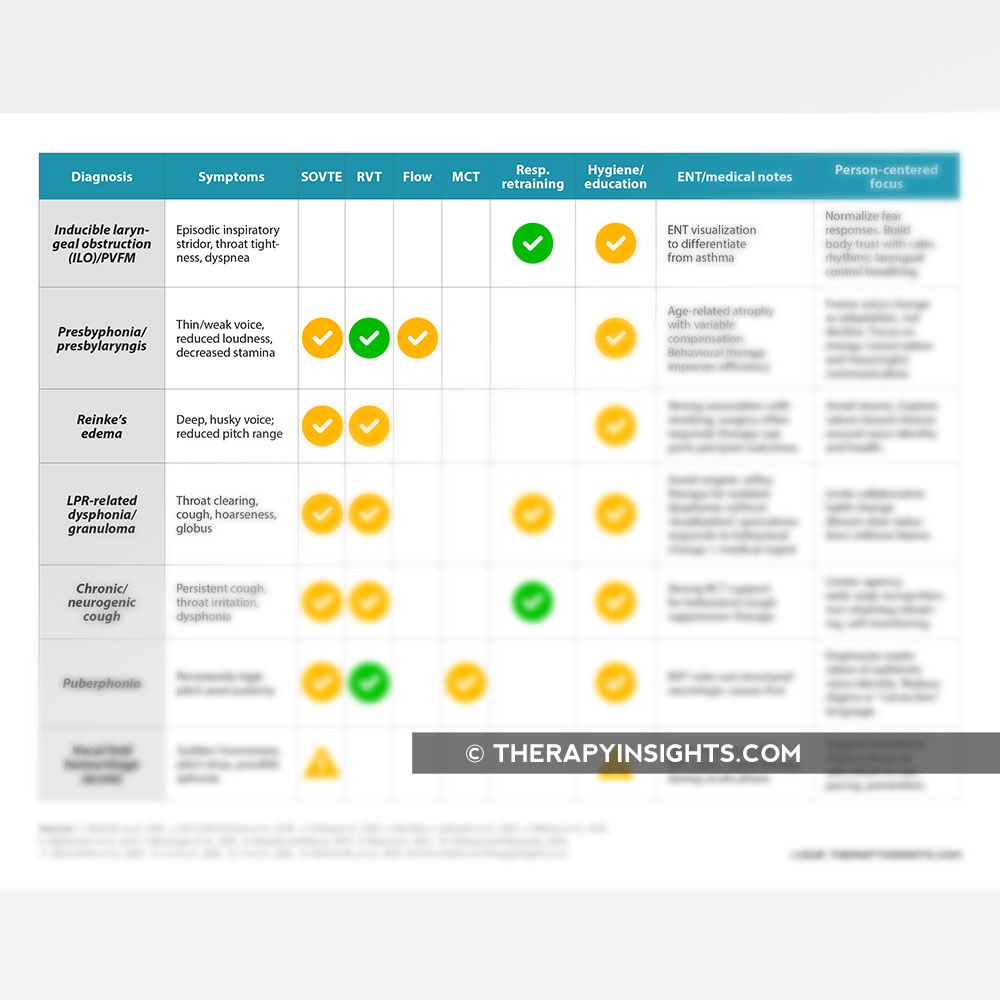
ENT Vocal Diagnoses and Therapy Approaches: A Clinical Reference
Therapy Insights
Member Exclusive








Print Resource
— US Letter — 9 pages
Population:
AdultDiscipline:
SLPDiagnosis:
VoiceReferences:
- Stachler, R. J., Francis, D. O., Schwartz, S. R., Damask, C. C., Digoy, G. P., Krouse, H. J., ... & Nnacheta, L. C. (2018). Clinical practice guideline: hoarseness (dysphonia)(update). Otolaryngology–Head and Neck Surgery, 158(1_suppl), S1-S42.
- da Cunha Pereira, G., de Oliveira Lemos, I., Gadenz, C. D., & Cassol, M. (2018). Effects of voice therapy on muscle tension dysphonia: a systematic literature review. Journal of Voice, 32(5), 546-552.
- Cheng, T. W., Chu, E. H. L., Lin, C. H., Tseng, S. H., Hou, W. H., & Lai, C. H. (2024). Effectiveness of Voice Therapy on Voice Quality and Function in Individuals with Unilateral Vocal Fold Paralysis: Systematic Review and Meta-Analysis. Journal of Voice.
- Barsties v. Latoszek, B., Watts, C. R., & Hetjens, S. (2024). The Efficacy of the Manual Circumlaryngeal Therapy for Muscle Tension Dysphonia: A Systematic Review and Meta‐Analysis. The Laryngoscope, 134(1), 18-26.
- Ribeiro, V. V., Pedrosa, V., Silverio, K. C. A., & Behlau, M. (2018). Laryngeal manual therapies for behavioral dysphonia: a systematic review and meta-analysis. Journal of Voice, 32(5), 553-563.
- Alghonaim, Y., Roskies, M., Kost, K., & Young, J. (2013). Evaluating the timing of injection laryngoplasty for vocal fold paralysis in an attempt to avoid future type 1 thyroplasty. Journal of otolaryngology-head & neck surgery, 42(1), 24.
- Benninger, M. S., Gardner, G., & Grywalski, C. (2001). Outcomes of botulinum toxin treatment for patients with spasmodic dysphonia. Archives of Otolaryngology–Head & Neck Surgery, 127(9), 1083-1085.
- Hatzelis, V., & Murry, T. (2012). Paradoxical vocal fold motion: respiratory retraining to manage long-term symptoms. Jornal da Sociedade Brasileira de Fonoaudiologia, 24, 80-85.
- Patel, R. R., Venediktov, R., Schooling, T., & Wang, B. (2015). Evidence-based systematic review: effects of speech-language pathology treatment for individuals with paradoxical vocal fold motion. American Journal of Speech-Language Pathology, 24(3), 566-584.
- Galluzzi, F., & Garavello, W. (2018). The aging voice: a systematic review of presbyphonia. European Geriatric Medicine, 9(5), 559-570.
- Marcotullio, D., Magliulo, G., & Pezone, T. (2002). Reinke's edema and risk factors: clinical and histopathologic aspects. American journal of otolaryngology, 23(2), 81-84.
- Cui, N., Dai, T., Liu, Y., Wang, Y. Y., Lin, J. Y., Zheng, Q. F., ... & Zhu, X. W. (2024). Laryngopharyngeal reflux disease: Updated examination of mechanisms, pathophysiology, treatment, and association with gastroesophageal reflux disease. World journal of gastroenterology, 30(16), 2209.
- Yi, B., Wang, S., Xu, X., & Yu, L. (2024). Efficacy of behavioral cough suppression therapy for refractory chronic cough or unexplained chronic cough: a meta-analysis of randomized controlled trials. Therapeutic advances in respiratory disease, 18, 17534666241305952.
- Nawrocka, L., Garstecka, A., & Sinkiewicz, A. (2025). The effect of phoniatric and logopedic rehabilitation on the voice of patients with puberphonia. Journal of Clinical Medicine, 14(15), 5350.
- Titze, I. R. (2006). Voice training and therapy with a semi-occluded vocal tract: rationale and scientific underpinnings.
- Yiu, E. M. L., Lo, M. C., & Barrett, E. A. (2017). A systematic review of resonant voice therapy. International journal of speech-language pathology, 19(1), 17-29.
- Rangarathnam, B., Paramby, T., McCullough, G. H., Pickett, H., Tulunay-Ugur, Ö. E., & Zraick, R. I. (2023). A randomized controlled trial of the effects of flow phonation voice treatment for primary muscle tension dysphonia. Journal of communication disorders, 101, 106290.
This reference provides a clear, person-centered overview of common ENT vocal diagnoses and the evidence-informed therapy approaches that support them. Confidently navigate complex, nuanced voice presentations while honoring each patient’s unique goals and embodied experience.
Want access to this printable resource and hundreds more? Subscribe to Therapy Insights.
Subscribe to get instant and easy access to handouts, therapy materials, and clinical tools so that you can spend your valuable time doing what you do best: Connecting with your patients and changing lives for the better.
Subscribe now
Already subscribed to Therapy Insights? Log in to access this member exclusive.
Related resources
Handout
Avoiding Red Lights: Pacing for Progress
Clinical Reference
Talking About Money After Illness or Injury: A Clinical Guide
Therapy Activity
Hockey Play-by-Play: Tracking Changing Information
Handout
Beyond Exercise: Fun Ways to Stay Active
Handout
Your Concussion Recovery Roadmap
Handout
Changes in Speech Fluency After a Neurologic Injury
Daily Resource Limit
There was an issue loading this asset. Please try again or contact customer support.