
Real Life, Real Support: May’s New Therapy Resources

Adult Neuro: New Therapy Tools for May
Sometimes the work of therapy is helping people reconnect with everyday life, like reading a manual, managing a schedule, making a decision, or returning to work in a way that actually fits who they are now. This month’s resources focus on real-world problem-solving, cognitive offloading, and adapting systems to support the person, not the other way around.
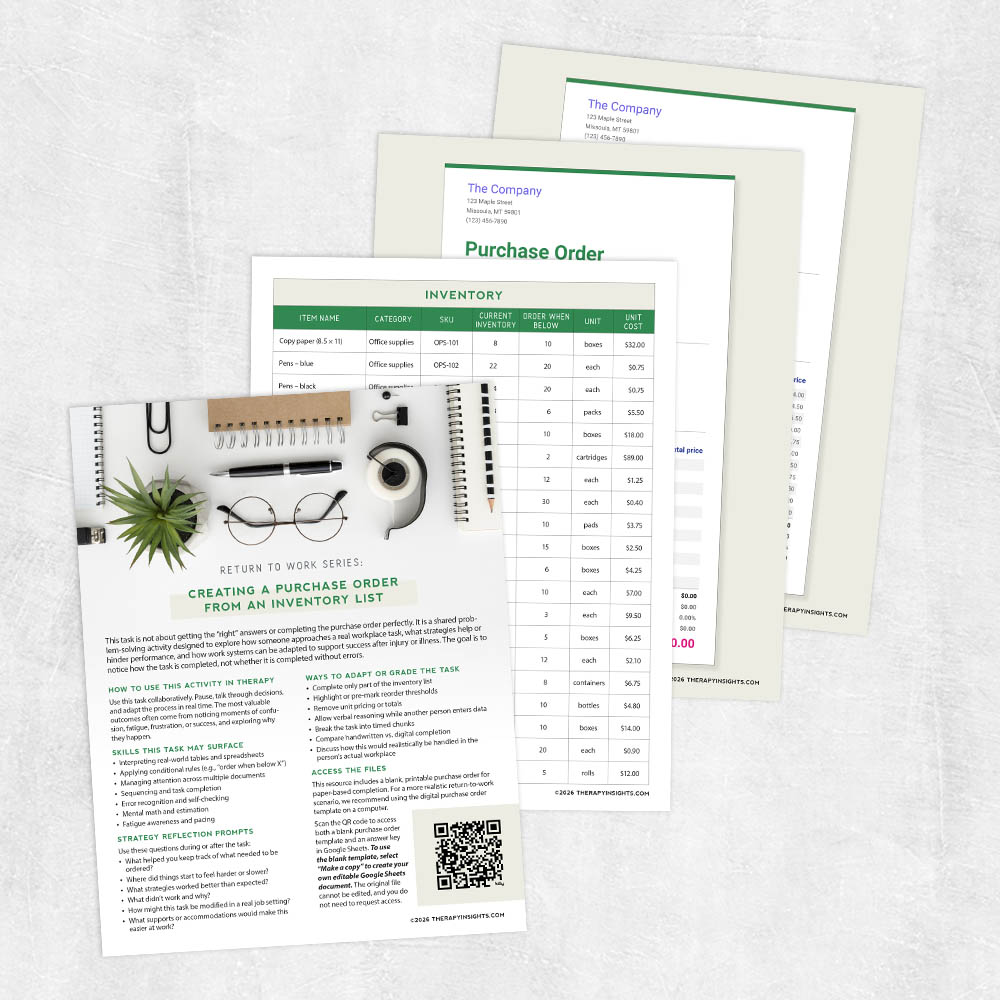
Return to Work Series: Creating a Purchase Order from an Inventory List
A functional return-to-work activity that focuses on strategy use, problem-solving, and workplace adaptation rather than correctness. Use it to explore what supports, accommodations, or workflow changes make job tasks more manageable after injury or illness.
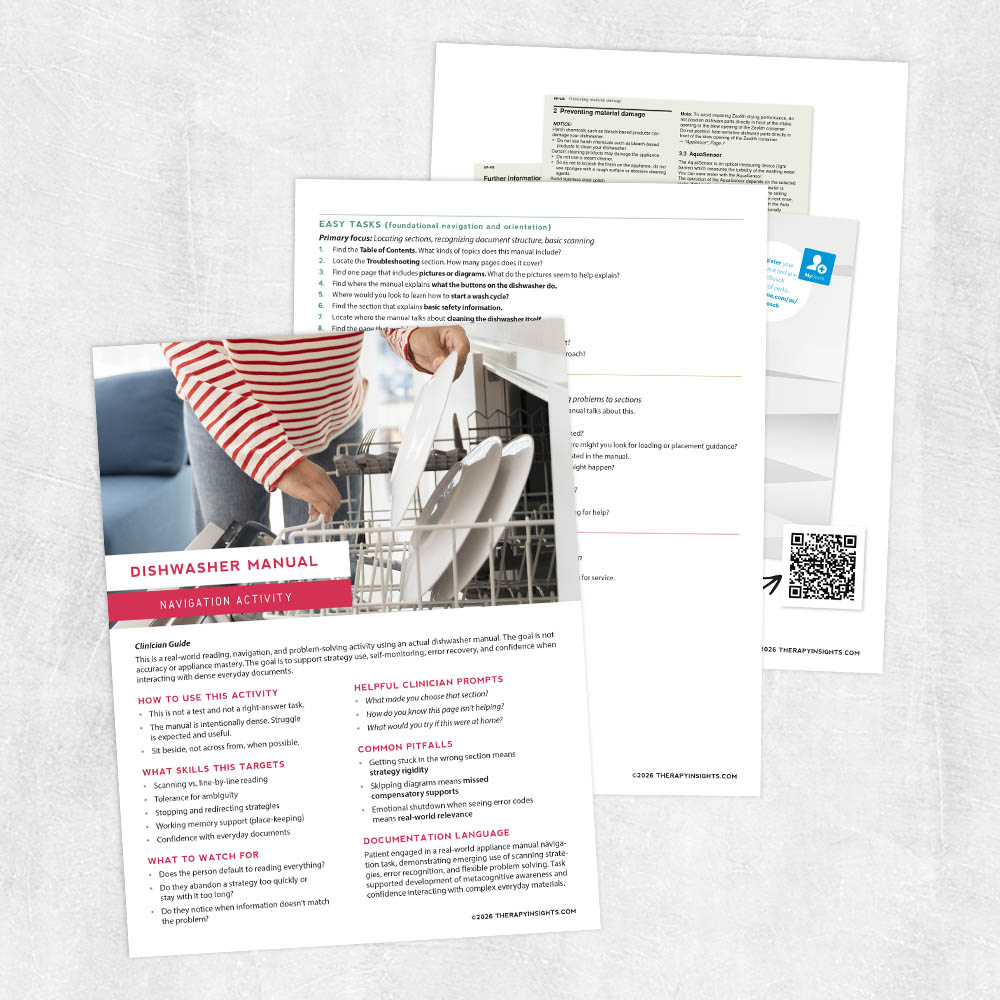
Dishwasher Manual Navigation Activity
This activity uses a real appliance manual to practice finding information when something isn’t working as expected. It supports flexible problem-solving, reading endurance, and confidence with everyday written materials without turning the task into a test.
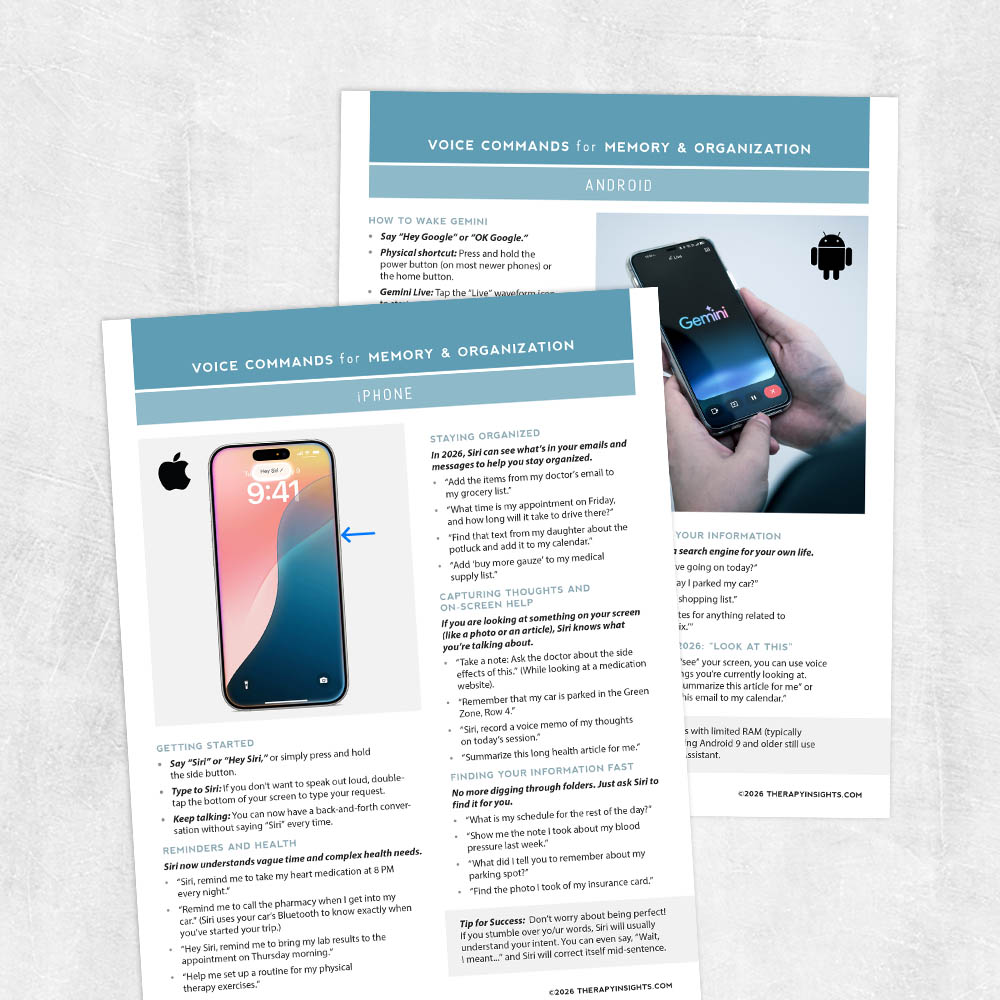
Voice Commands for Memory and Organization (iPhone and Android)
This resource helps people offload cognitive tasks using voice assistants like Siri and Gemini. Use it to build independence, reduce executive function fatigue, and support follow-through between sessions.
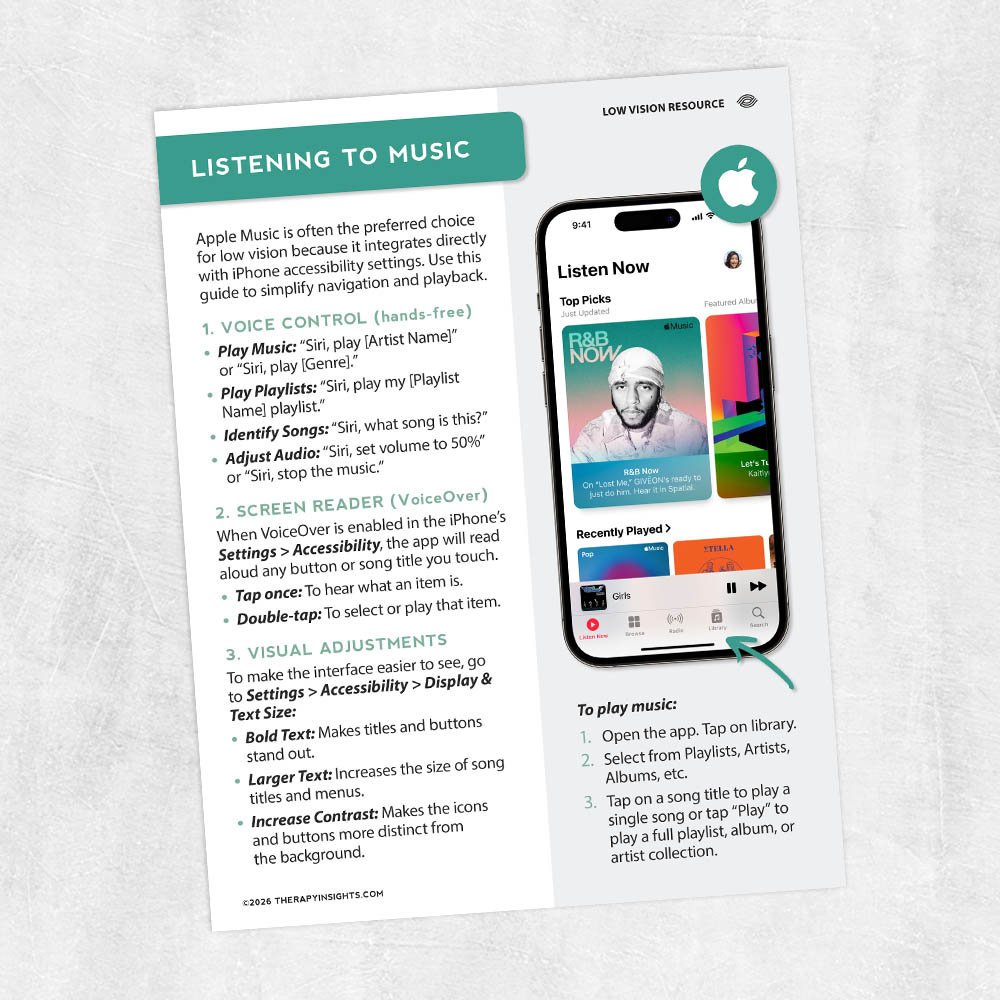
Low Vision Guide: Listening to Music
A streamlined, high-contrast guide that supports independence with accessible music technology. It focuses on reducing both visual and cognitive load through voice commands and simplified navigation.
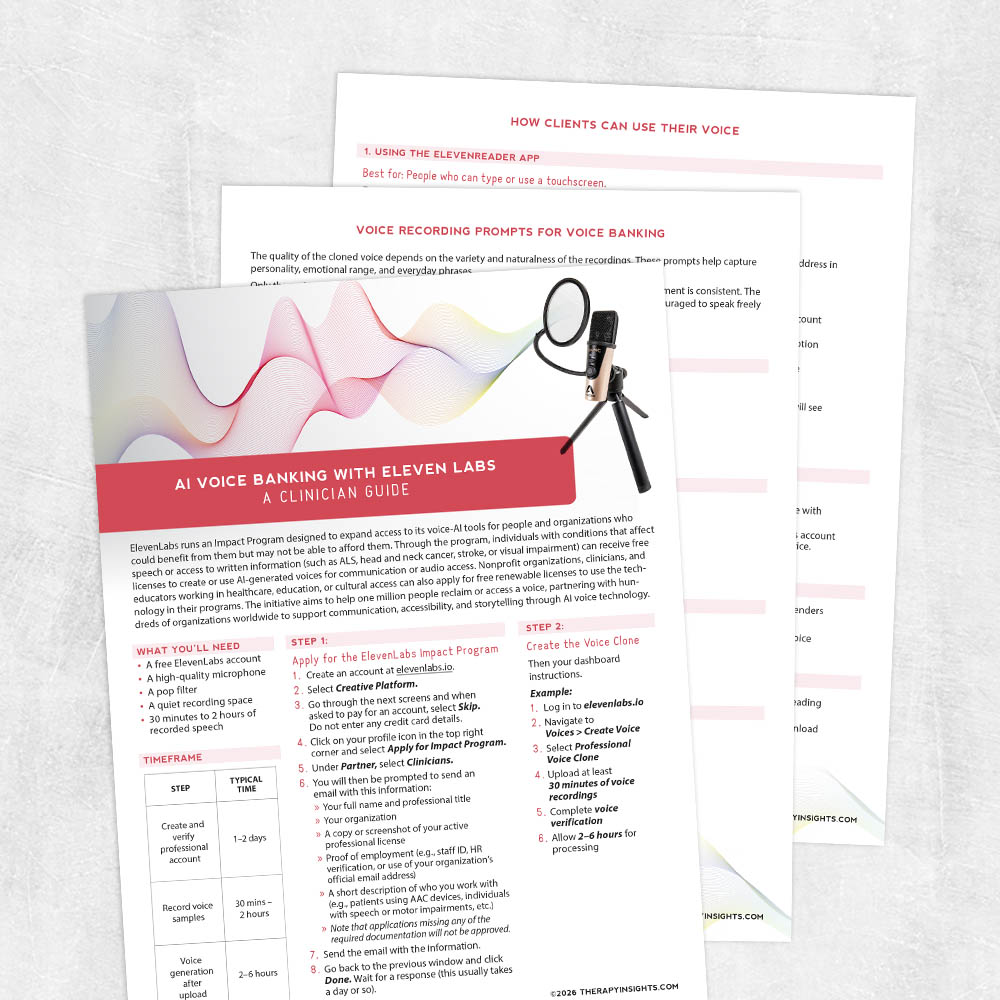
AI Voice Banking with Eleven Labs: A Clinician Guide
This guide supports therapists in helping people preserve or recreate their voice using AI technology. It includes setup steps, recording prompts, and real-world options for using a personalized voice in communication and AAC.
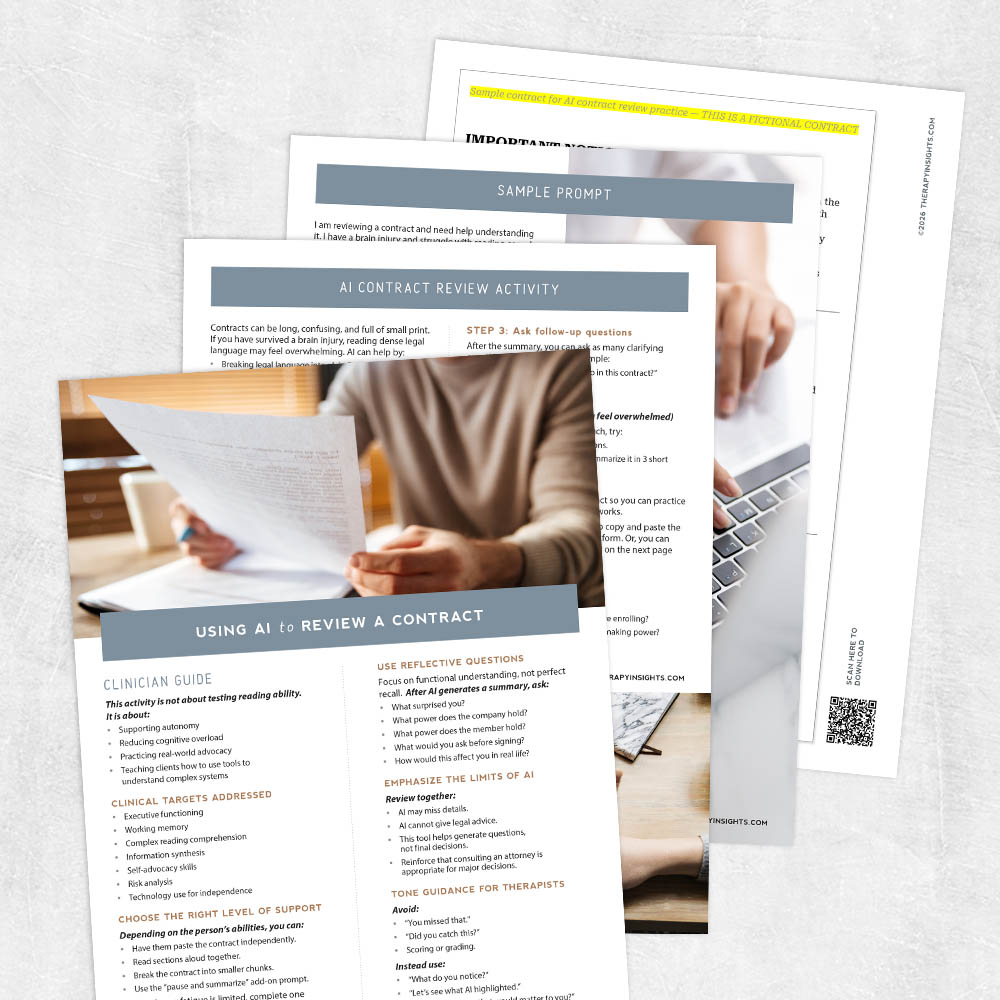
Using AI to Review a Contract
A practical activity that teaches people how to use AI to make complex documents more understandable. It builds executive functioning, self-advocacy, and confidence when navigating high-stakes decisions like healthcare or financial agreements.
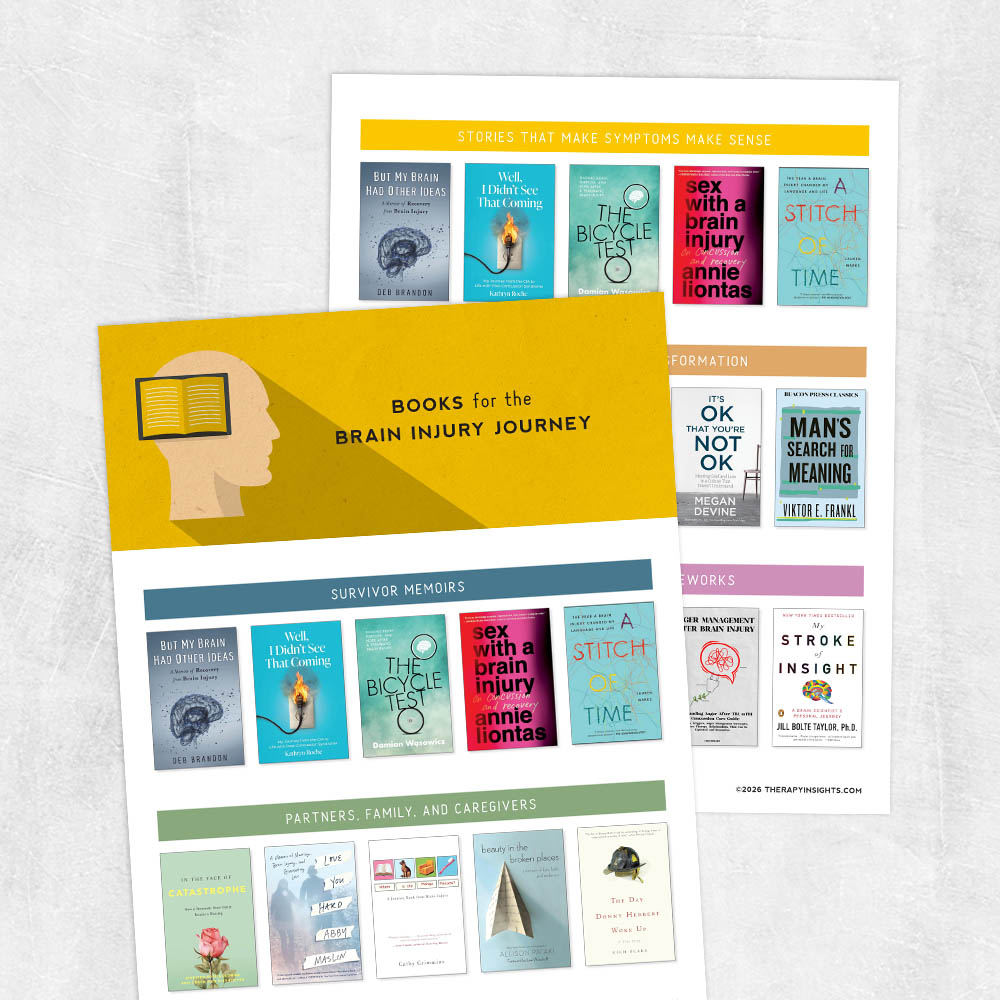
Books for the Brain Injury Journey
A curated list of reading and listening resources that explore identity, grief, resilience, and meaning after brain injury. Use it to support reflection, connection, and ongoing adjustment beyond structured therapy tasks.
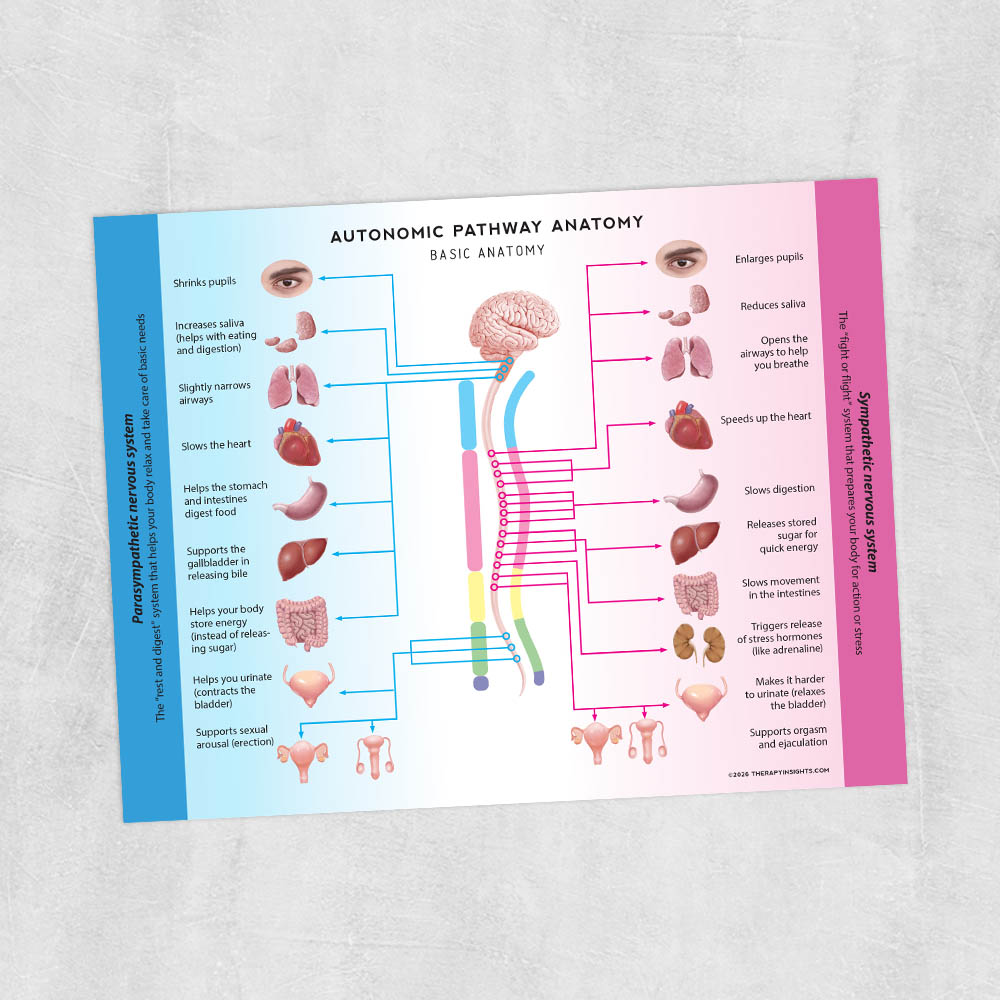
Basic Anatomy: Autonomic Pathway Anatomy
A clear visual guide to the autonomic nervous system, helping people understand how the brain and body regulate essential functions like heart rate, digestion, and breathing.
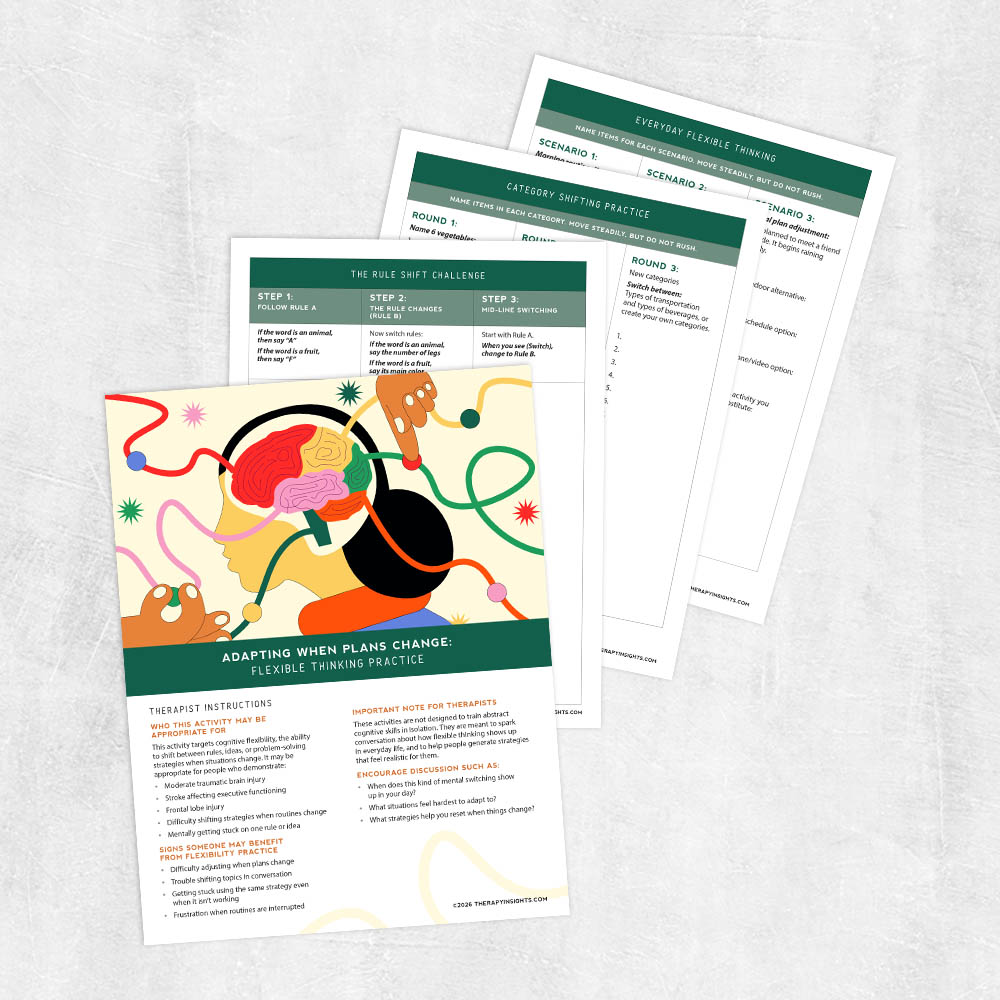
Adapting When Plans Change: Flexible Thinking Practice
An activity that supports flexible thinking through real-life scenarios, rule-switching, and alternative planning. Use it to help people build strategies for navigating change in everyday routines.
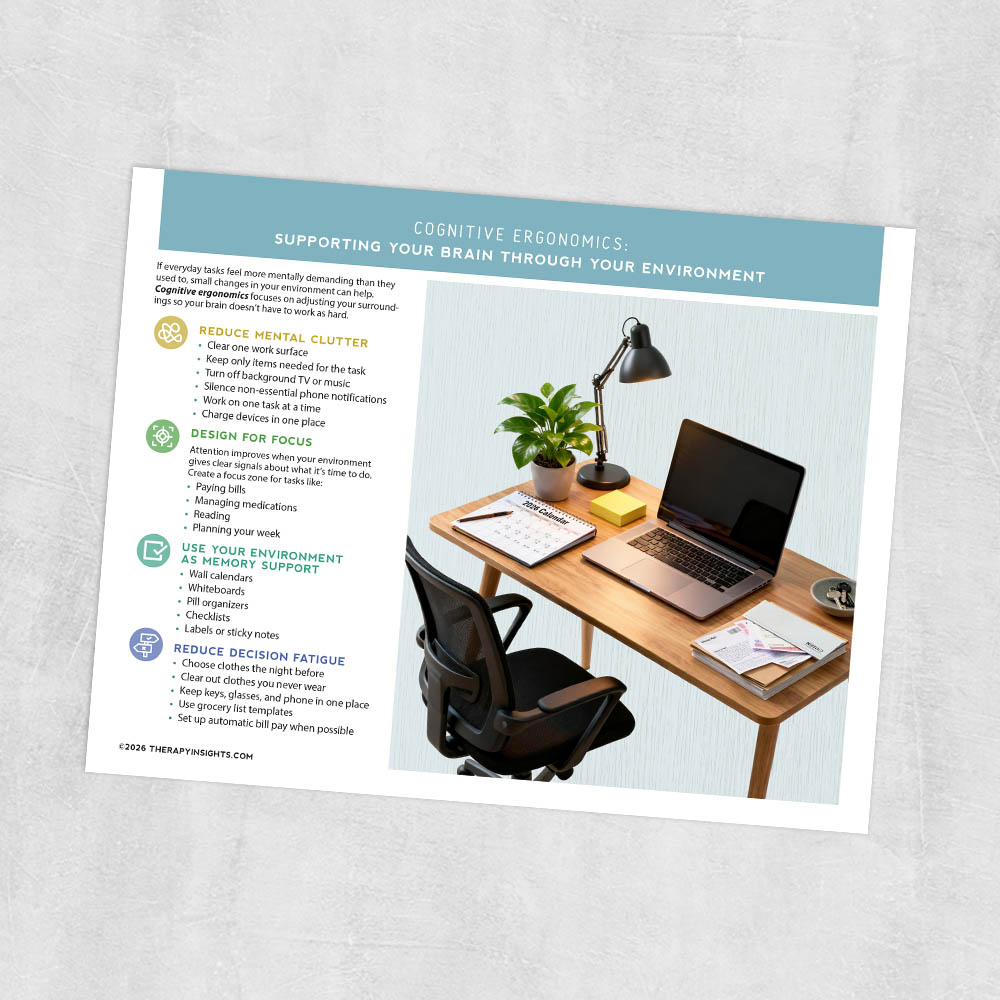
Cognitive Ergonomics: Supporting Your Brain Through Your Environment
This handout introduces how environmental changes can reduce cognitive load. Use it to help people create spaces and routines that support clearer thinking, memory, and decision-making.
What’s Coming in June…
- Real-world cognitive tasks like navigating phone menus and comparing insurance plans
- Low vision supports for medication management and accessibility
- Practical guides for neurogenic bladder and bowel changes
- Creative recovery tools like music-based rehabilitation
- Everyday participation resources for essential tremors and voting access
- Reflection tools for returning to work
Clinical Pediatrics: New Therapy Tools for May
This month’s pediatric resources focus on helping families and therapists shift how they interpret behavior, development, and progress. The emphasis is on reducing pressure, building understanding, and supporting kids in ways that feel sustainable and respectful of how their brains work.
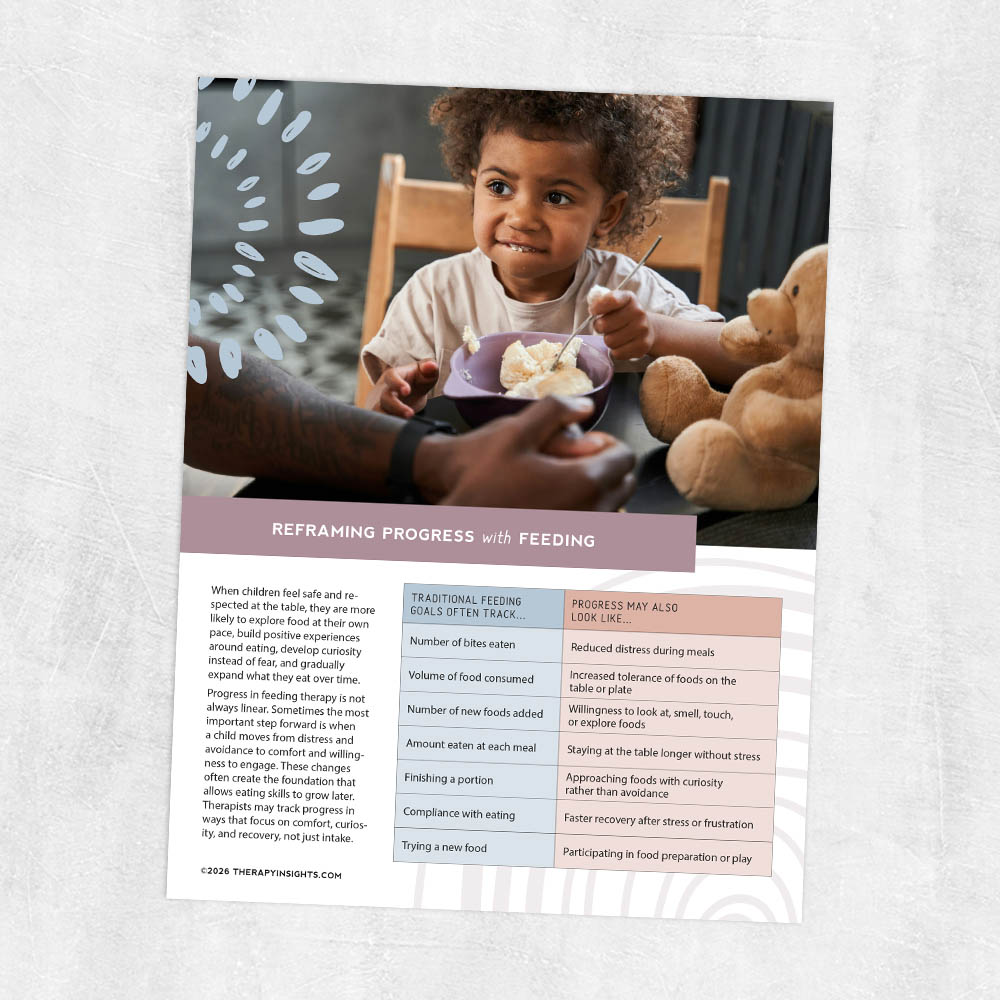
Reframing Progress with Feeding
This handout helps families recognize meaningful progress beyond bites and food counts. It shifts the conversation toward reduced stress, increased tolerance, and growing curiosity around food.
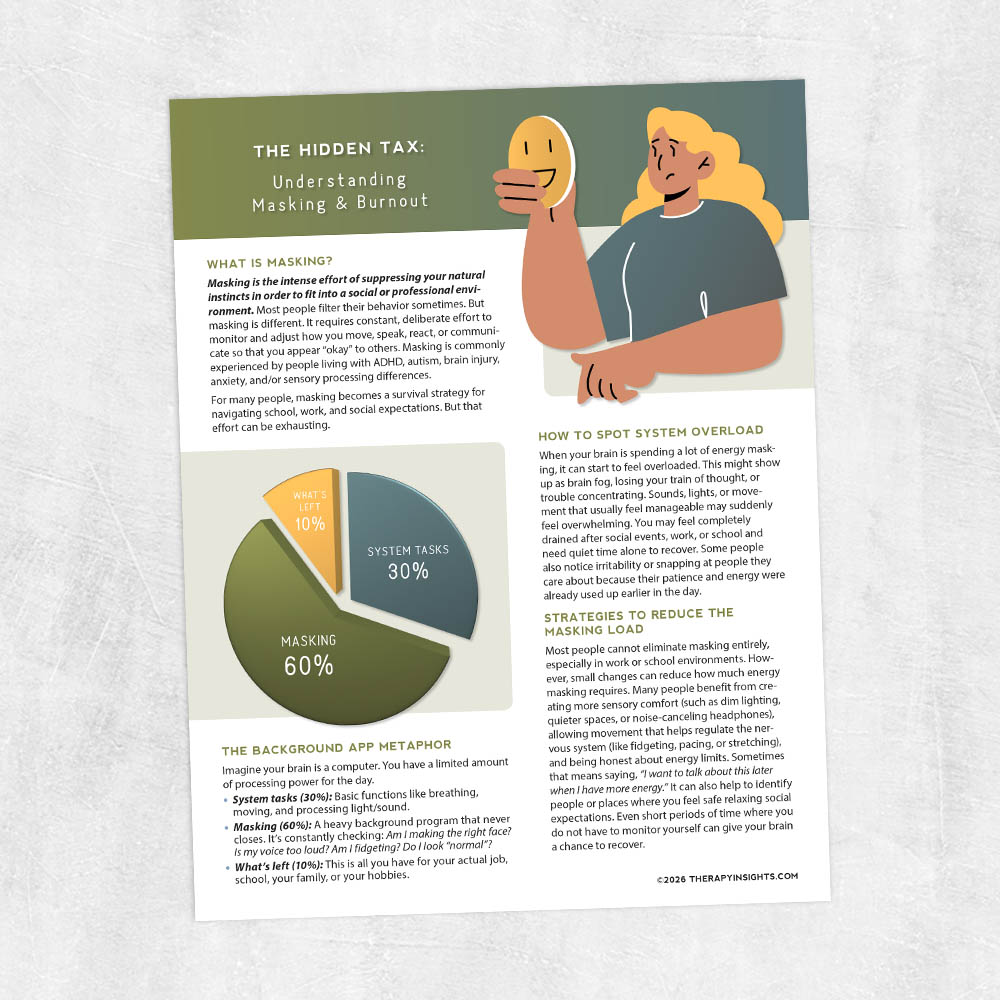
The Hidden Tax: Understanding Masking and Burnout
A clear, accessible explanation of masking and the effort it takes to navigate social expectations. Use it to help clients understand their own experiences and explore ways to reduce cognitive load and recover from burnout.
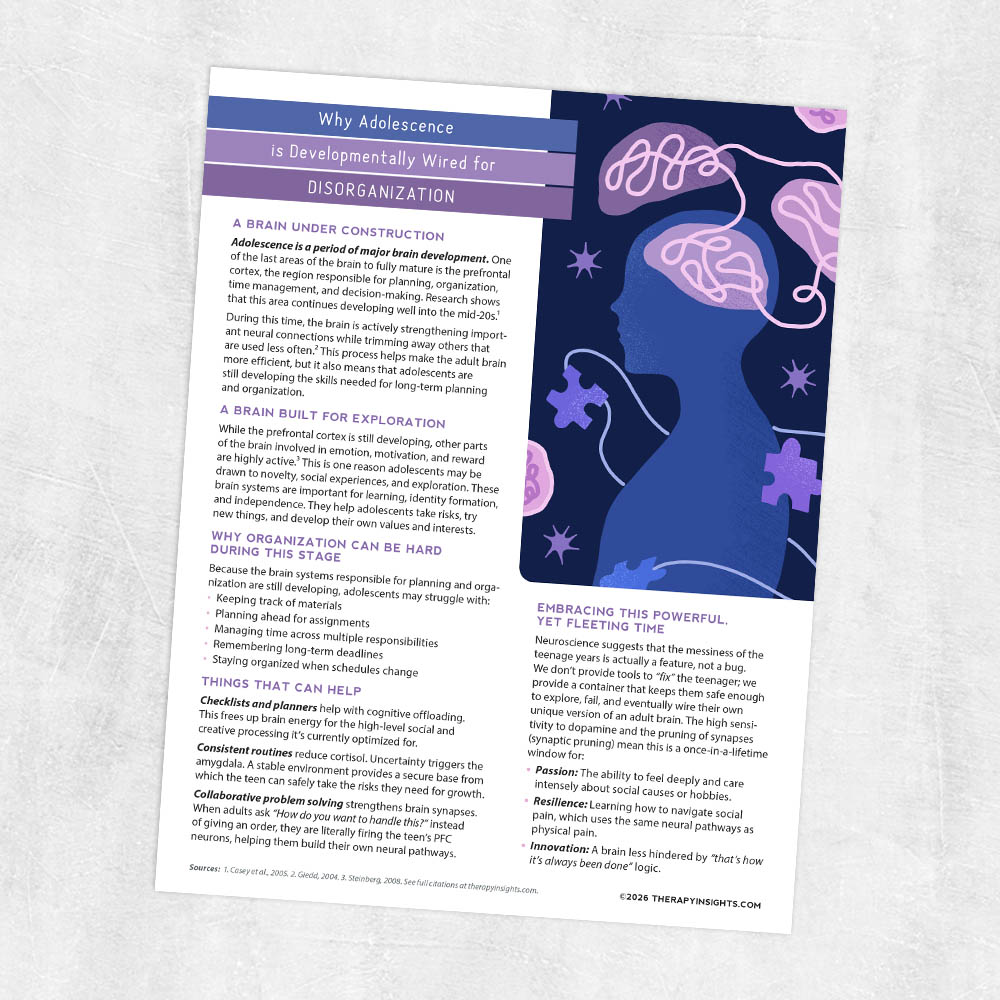
Why Adolescence is Developmentally Wired for Disorganization
This resource reframes adolescent disorganization as part of brain development rather than a behavioral failure. It supports therapists in guiding parents toward mentorship, scaffolding, and realistic expectations.
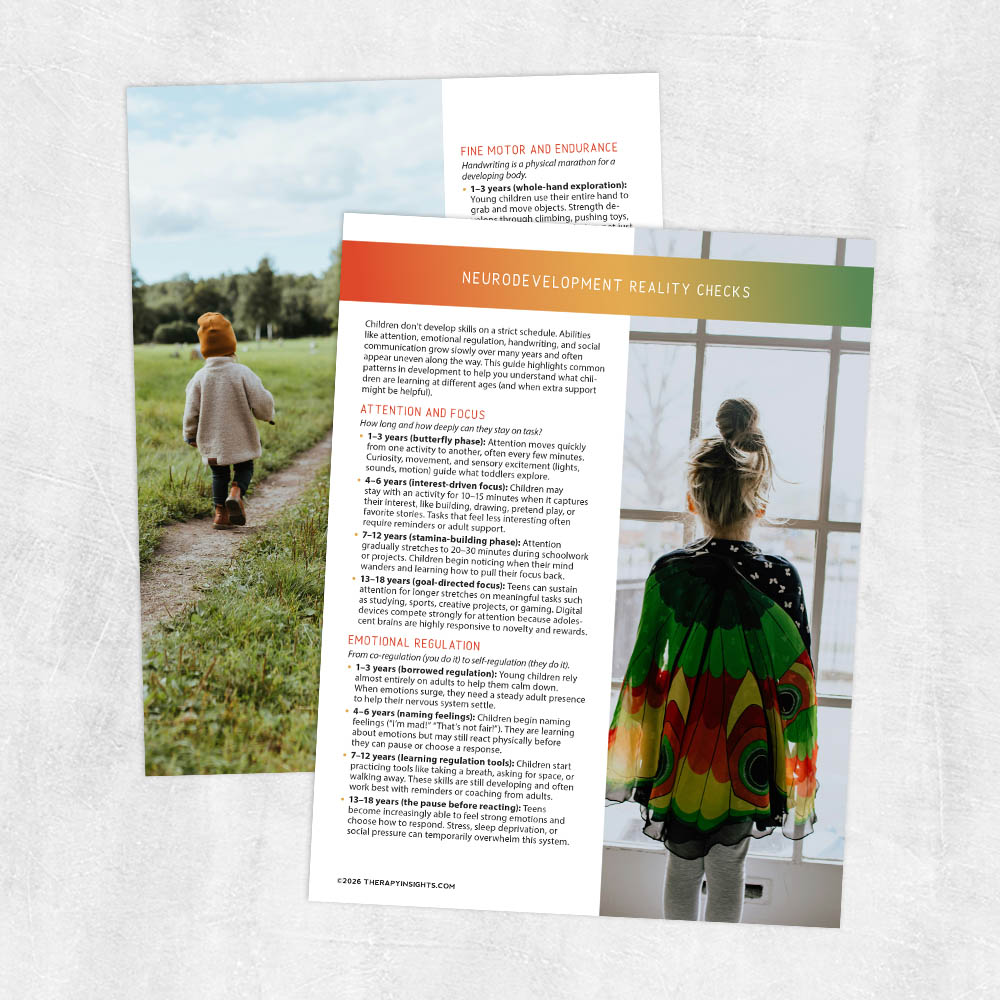
Neurodevelopment Reality Checks
A handout that helps families view challenges through a developmental lens instead of a checklist. It supports conversations that normalize variability while identifying when additional support may be helpful.
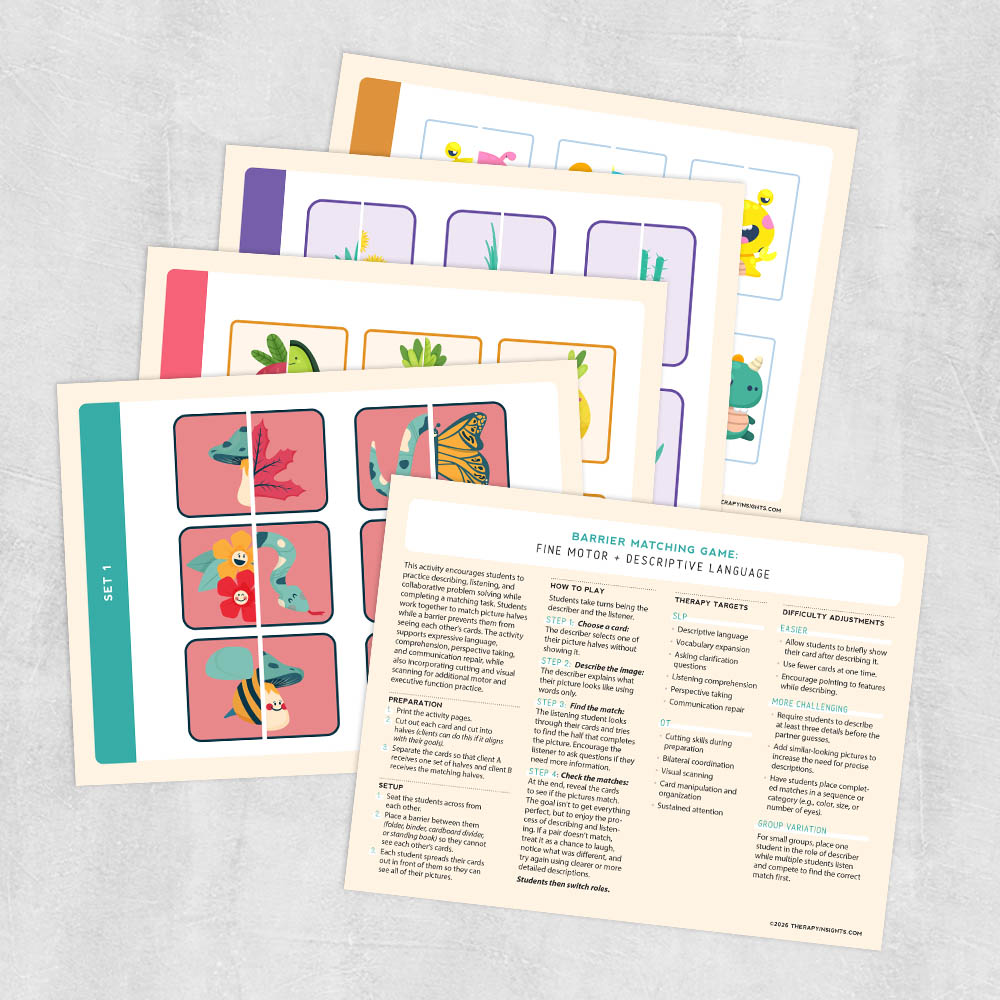
Barrier Matching Game: Fine Motor + Descriptive Language
A collaborative activity that targets expressive language, listening, and problem-solving while integrating fine motor skills. It encourages communication repair, turn-taking, and shared problem-solving in a low-pressure format.
What’s Coming in June…
- A deeper look at stimming as self-regulation
- Resources on listening fatigue and cognitive load in Deaf and hard-of-hearing students
- Feeding therapy shifts that center autonomy over compliance
- Practical tools for reducing pressure and increasing observation in feeding
- Play-based approaches to exploring food aversion