
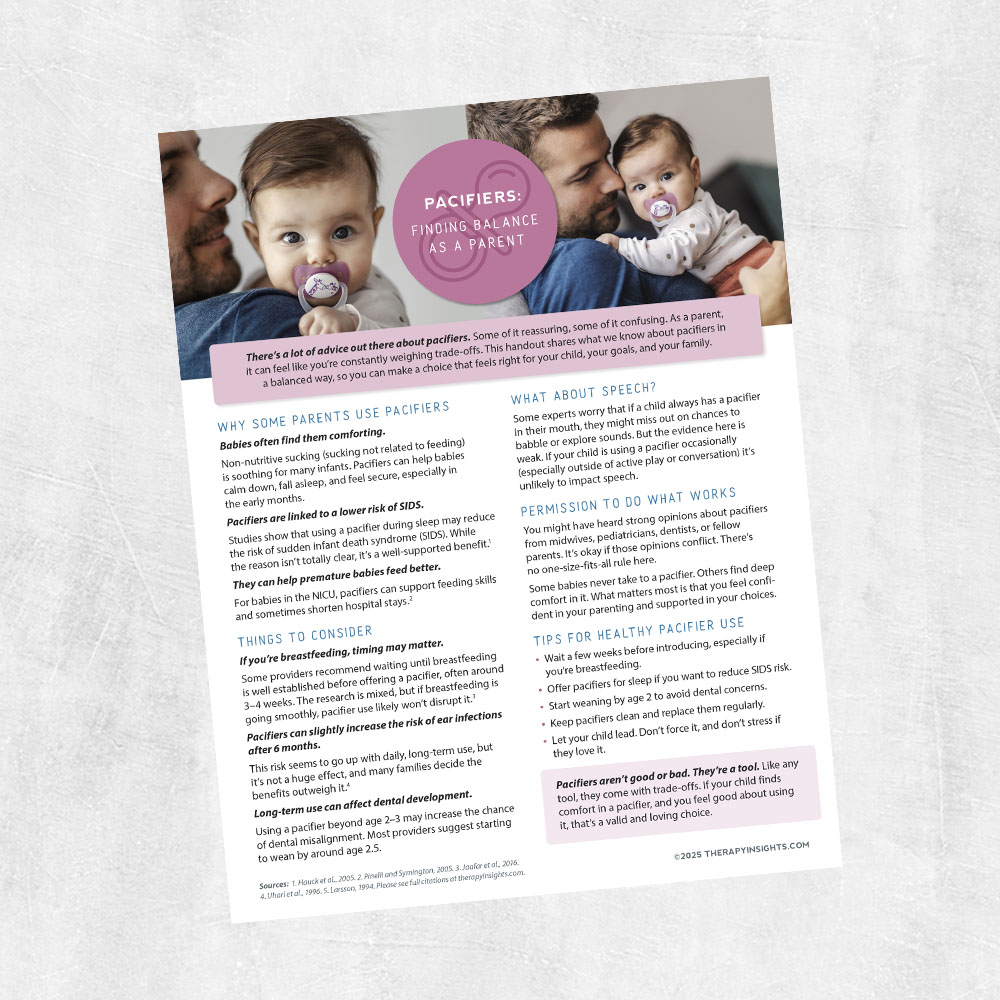
Pacifiers: Finding Balance as a Parent

Population:
PediatricDiscipline:
OTSLPDiagnosis:
Feeding and SwallowingLanguage DevelopmentSensoryReferences:
- Hauck, F. R., Omojokun, O. O., & Siadaty, M. S. (2005). Do pacifiers reduce the risk of sudden infant death syndrome? A meta-analysis. Pediatrics, 116(5), e716–e723.
- Jaafar, S. H., Ho, J. J., & Jahanfar, S. (2016). Effect of restricted pacifier use in breastfeeding term infants for increasing duration of breastfeeding. Cochrane Database of Systematic Reviews, 2016(8), CD007202.
- Pinelli, J., & Symington, A. J. (2005). Non-nutritive sucking for promoting physiologic stability and nutrition in preterm infants. Cochrane Database of Systematic Reviews, 2005(4), CD001071.
- Uhari, M., Mäntysaari, K., & Niemelä, M. (1996). A meta-analytic review of the risk factors for acute otitis media. Clinical Infectious Diseases, 22(6), 1079–1083.
- Larsson, E. (1994). Dummy- and finger-sucking habits with respect to oral development. Swedish Dental Journal, 18(4), 139–143.
This handout offers a balanced, compassionate overview of pacifier use, helping parents understand both the benefits and considerations without overwhelming them with conflicting advice. It’s a supportive tool for therapists to guide conversations about infant soothing, feeding, and developmental choices in a judgment-free way. This printable handout is for occupational therapists and speech-language pathologists working with pediatric patients, covering Feeding and Swallowing, Language Development and Sensory. Print Resource, US Letter, 1 page. Members can view and print it.
Use this resource when a patient, family, or colleague asks:
- Are pacifiers safe for babies?
- Do pacifiers affect speech or development?
Want access to this printable resource and hundreds more? Subscribe to Therapy Insights.
Subscribe to get instant and easy access to handouts, therapy materials, and clinical tools so that you can spend your valuable time doing what you do best: Connecting with your patients and changing lives for the better.
Already subscribed to Therapy Insights? Log in to access this member exclusive.
Related resources
Daily Resource Limit
There was an issue loading this asset. Please try again or contact customer support.