
Clinical Reference
Considerations for Augmentative and Alternative Communication in Adults
Therapy Insights
Member Exclusive
Print Resource
— US Letter — 3 pages
Population:
AdultDiscipline:
SLPDiagnosis:
AphasiaBrain InjuryStrokeReferences:
- Fried-Oken, M., Beukelman, D. R., & Hux, K. (2012). Current and future AAC research considerations for adults with acquired cognitive and communication impairments. Assistive Technology, 24(1), 56-66.
- Fried-Oken, M. (2008). Augmentative and alternative communication treatment for persons with primary progressive aphasia. Perspectives on Augmentative and Alternative Communication, 17(3), 99-104.
- McKelvey, M. L., Hux, K., Dietz, A., & Beukelman, D. R. (2010). Impact of personal relevance and contextualization on word-picture matching by people with aphasia.
- Fried-Oken, M., Howard, J., & Stewart, S. R. (1991). Feedback on AAC intervention from adults who are temporarily unable to speak. Augmentative and Alternative Communication, 7(1), 43-50.
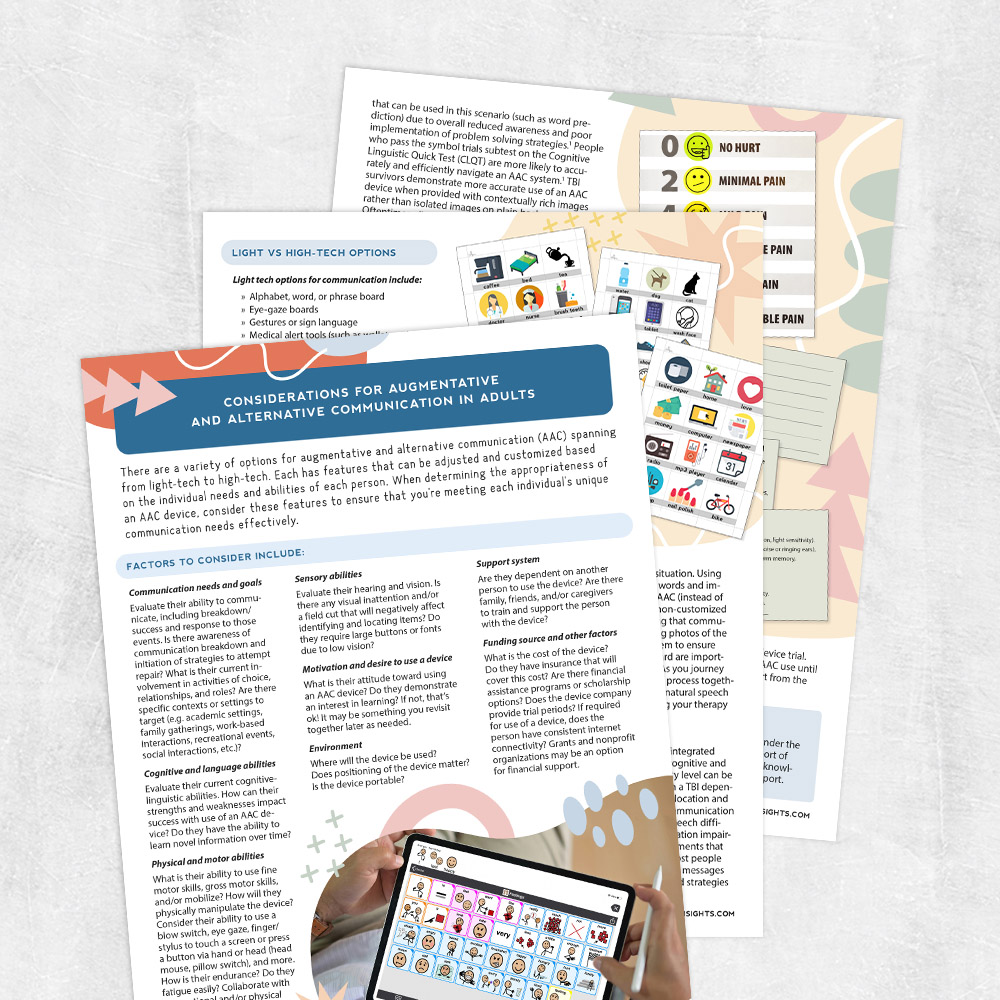
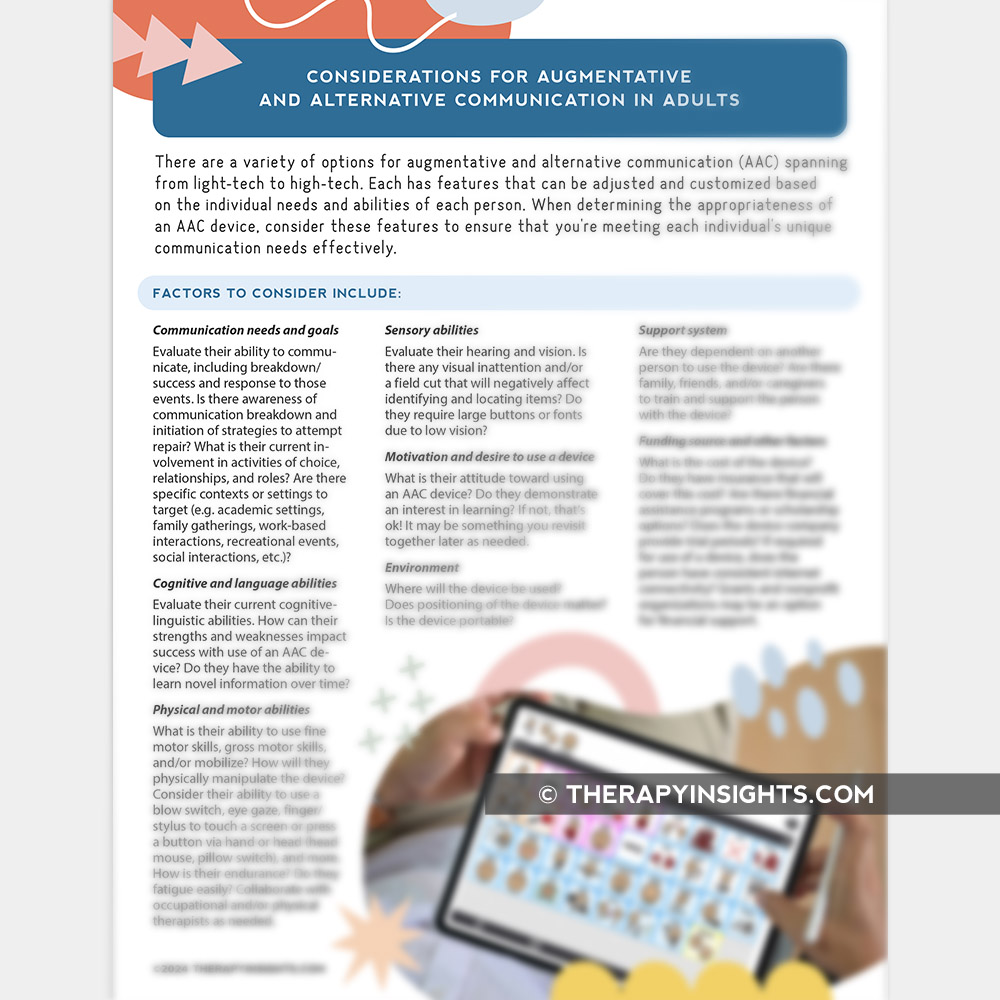
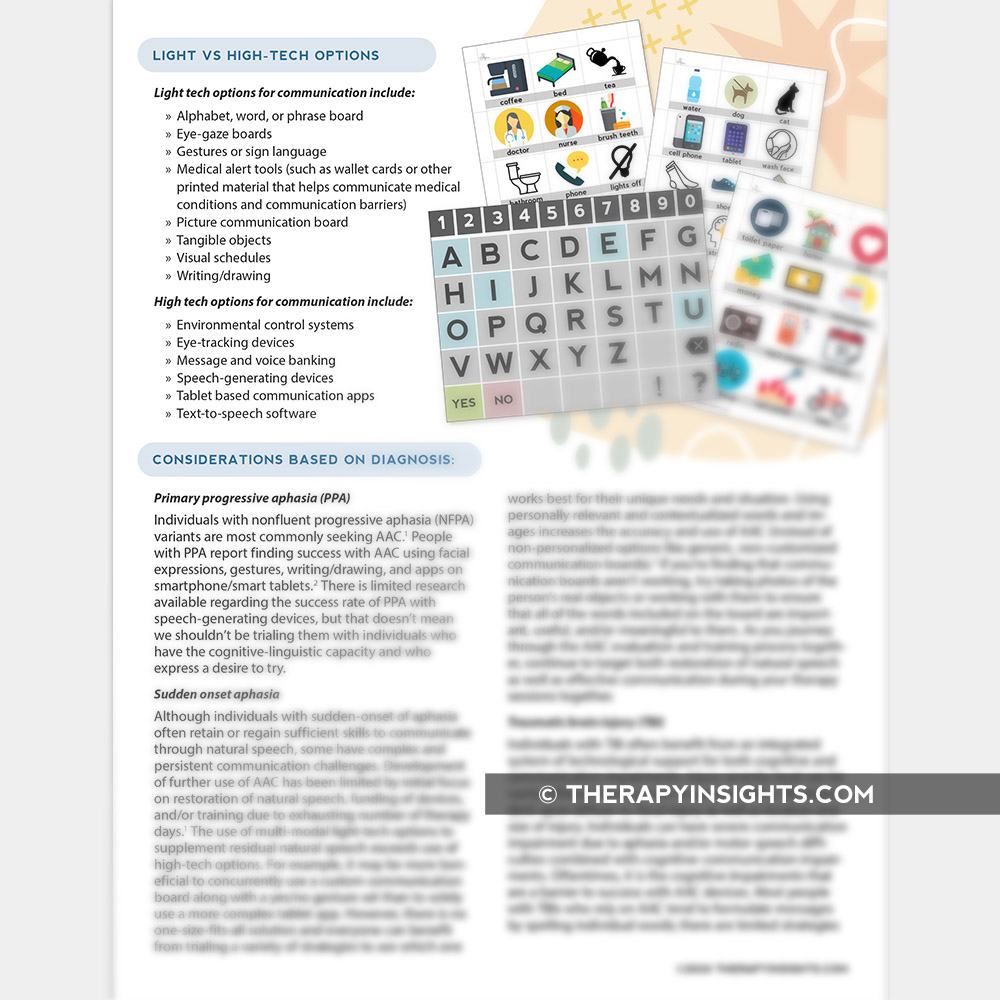
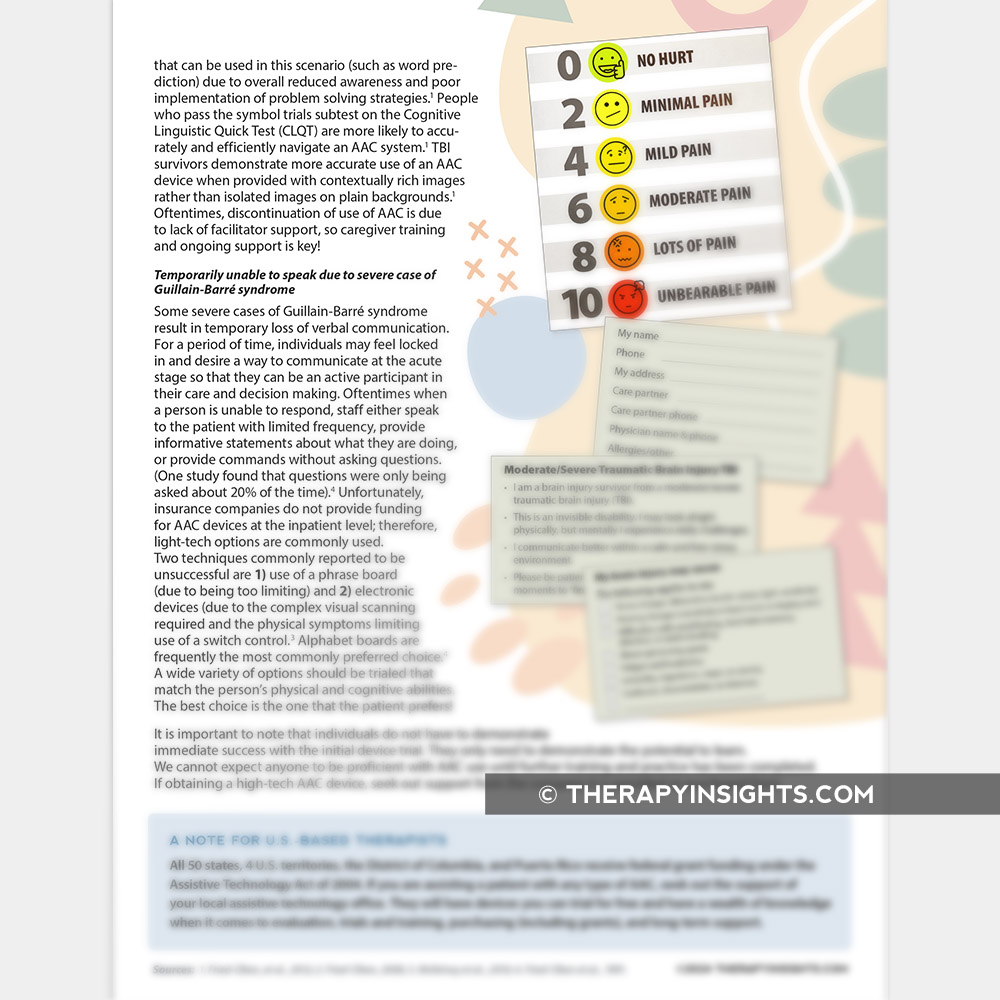
Considering low-tech vs. high-tech options for AAC for adults? Gain insight into factors to consider at the beginning of the process.
Want access to this printable resource and hundreds more? Subscribe to Therapy Insights.
Subscribe to get instant and easy access to handouts, therapy materials, and clinical tools so that you can spend your valuable time doing what you do best: Connecting with your patients and changing lives for the better.
Subscribe now
Already subscribed to Therapy Insights? Log in to access this member exclusive.
Related resources
Handout
Avoiding Red Lights: Pacing for Progress
Clinical Reference
Talking About Money After Illness or Injury: A Clinical Guide
Therapy Activity
Hockey Play-by-Play: Tracking Changing Information
Handout
Beyond Exercise: Fun Ways to Stay Active
Handout
Your Concussion Recovery Roadmap
Handout
Changes in Speech Fluency After a Neurologic Injury
Daily Resource Limit
There was an issue loading this asset. Please try again or contact customer support.