
New in March: Tools for Sustainable Progress and Shared Decision-Making

Adult Neuro: New Therapy Tools for March
March’s collection centers on real-world safety, sustainable progress, and decision-making that reflects the person behind the diagnosis. These resources are designed to move beyond worksheets and into meaningful conversations about identity, technology, pacing, communication, and care planning.

Safety: A Framework for Real-World Conversations
This resource offers a practical framework for addressing safety through individualized conversations instead of outdated, infantilizing photo cards. Use it to explore daily routines, risk tolerance, and environmental supports in a way that preserves dignity and autonomy while still addressing real concerns.
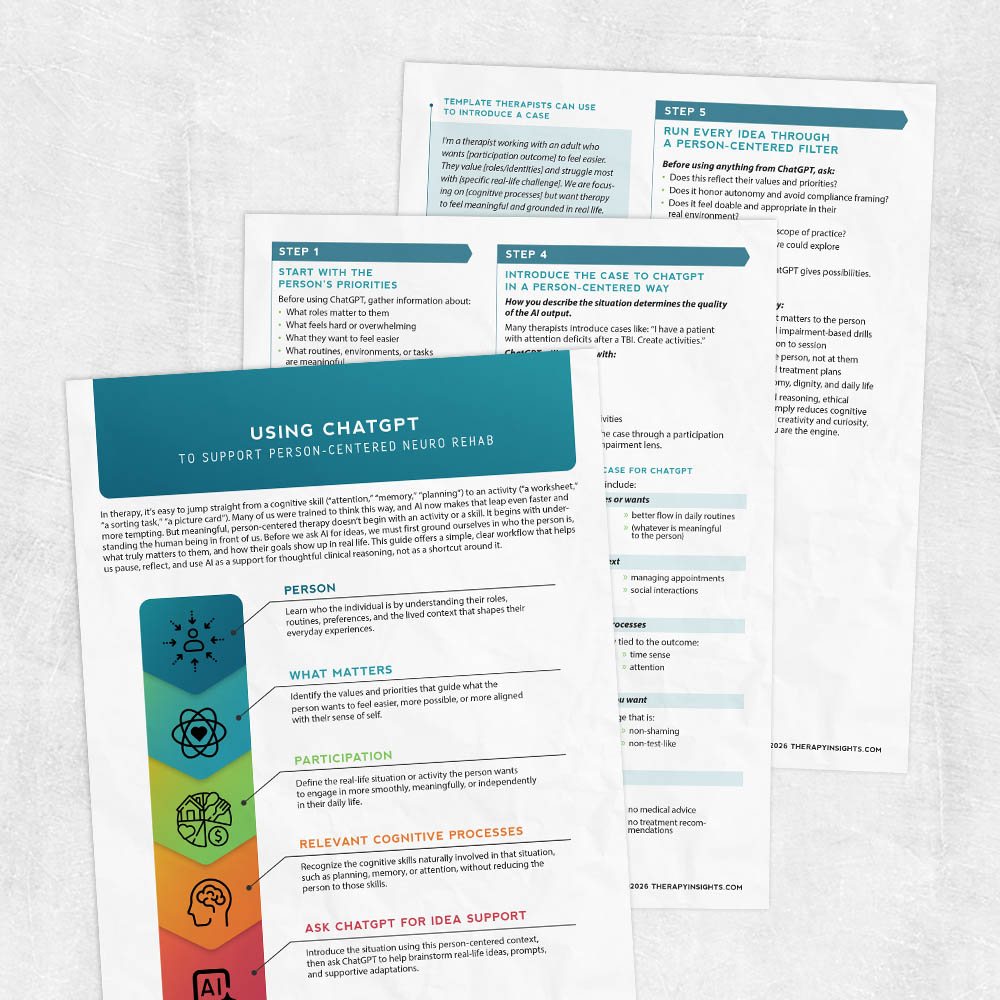
Using ChatGPT to Support Person-Centered Neuro Rehab
This guide walks therapists through a structured workflow for using AI to support person-centered thinking. Instead of jumping from a cognitive skill to a generic activity, this resource helps you clarify what matters most to the person and use ChatGPT to brainstorm meaningful, real-life applications.
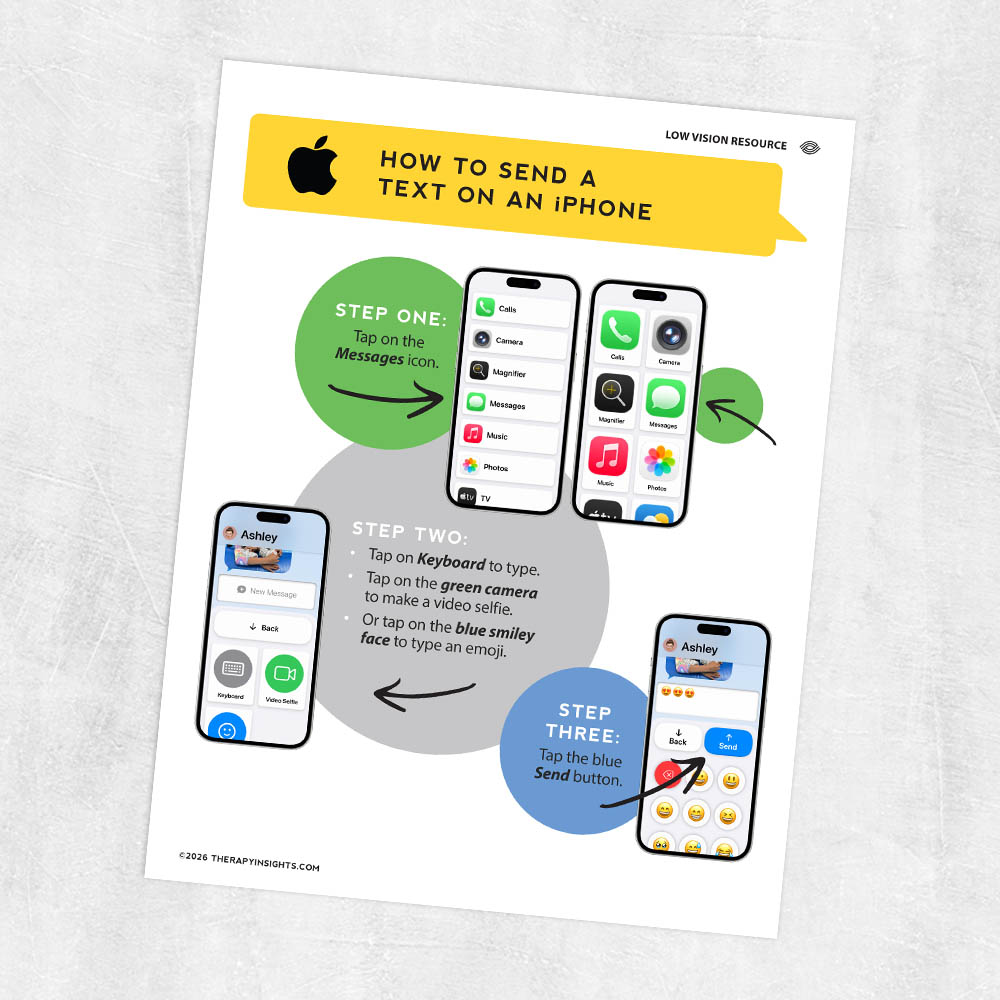
How to Send a Text on an iPhone: A Low-Vision Guide
A clear, large-print visual guide that supports low-vision users in sending text messages step by step. Use it in therapy to build confidence around real-world communication tasks and reinforce independence with familiar technology.
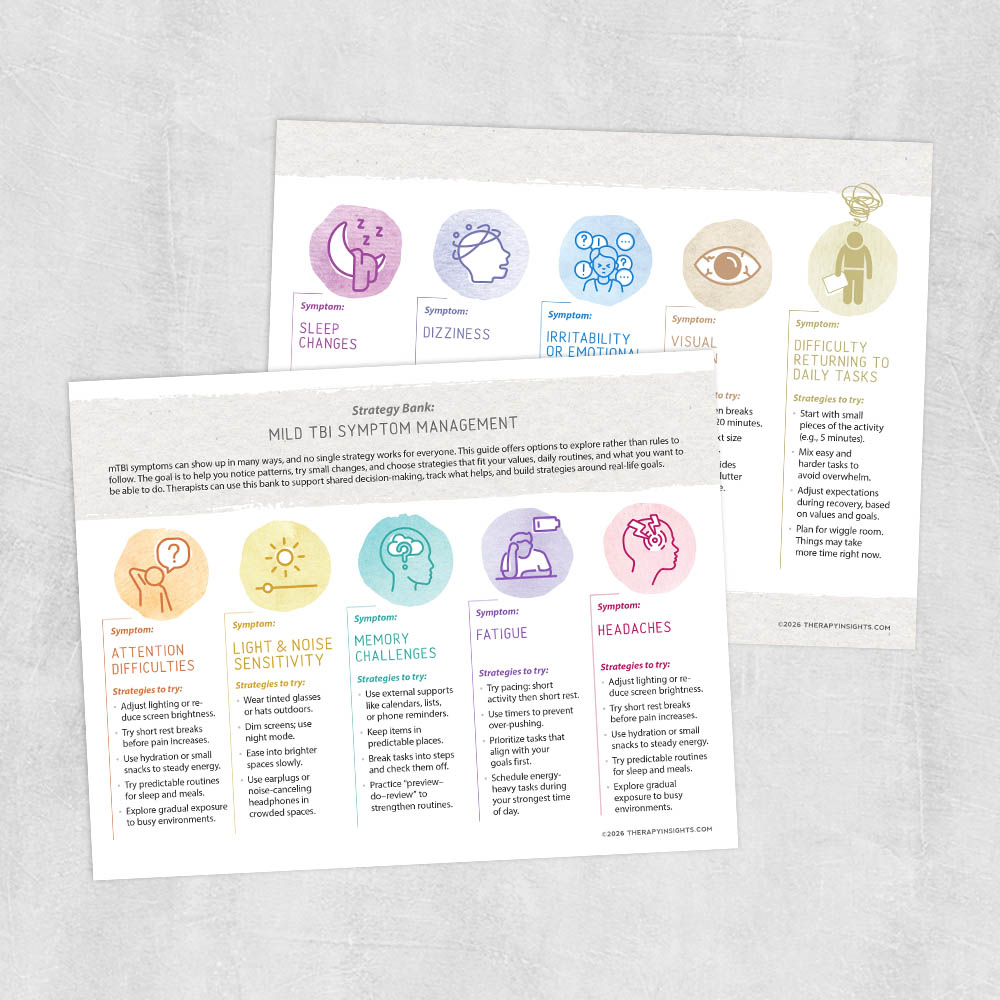
Mild TBI Symptom Management Strategy Bank
This strategy bank supports people with mild TBI in exploring symptom-management approaches that align with their daily routines, values, and goals. Use it to guide shared decision-making, track what helps, and build sustainable plans that support meaningful participation.
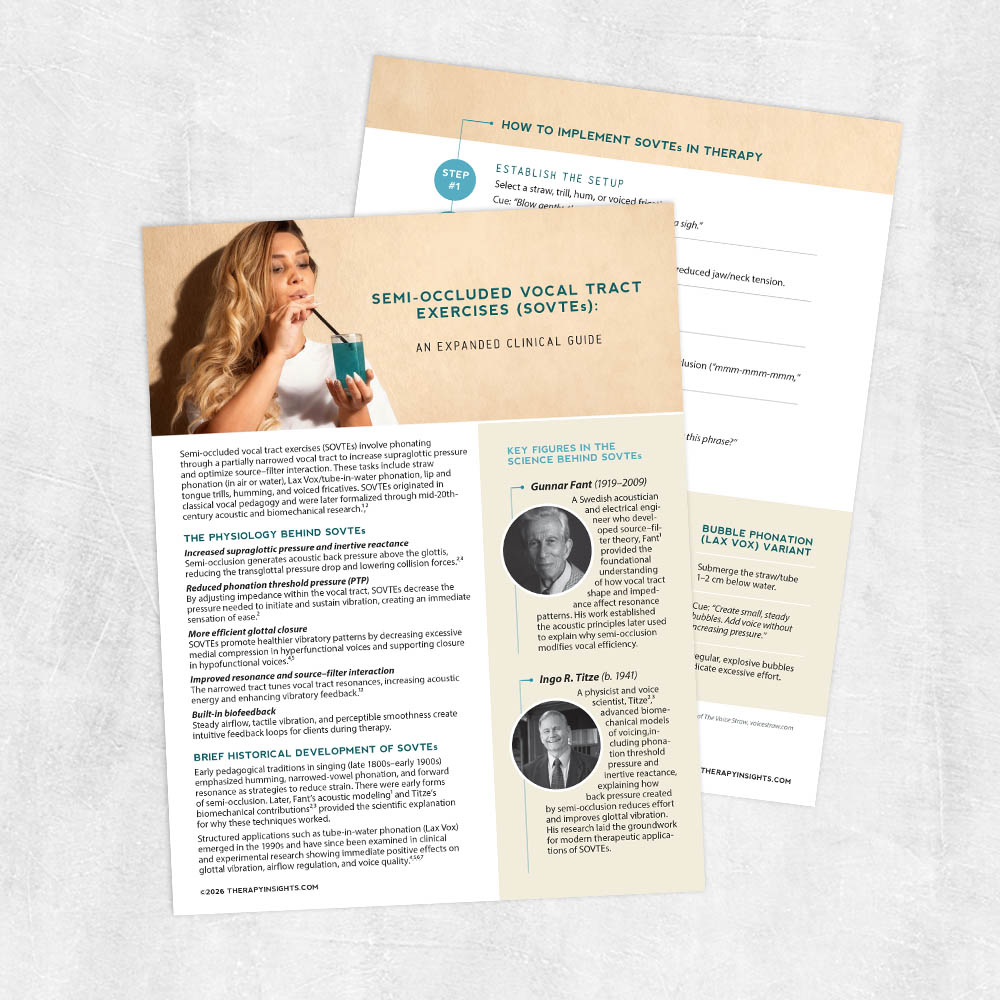
Semi-Occluded Vocal Tract Exercises (SOVTEs): An Expanded Clinical Guide
This clinical guide breaks down the science and application of SOVTEs so you can clearly explain why they work and tailor them to each individual. The focus stays on functional voice use, helping clients feel immediate vocal ease and carry that efficiency into everyday communication.
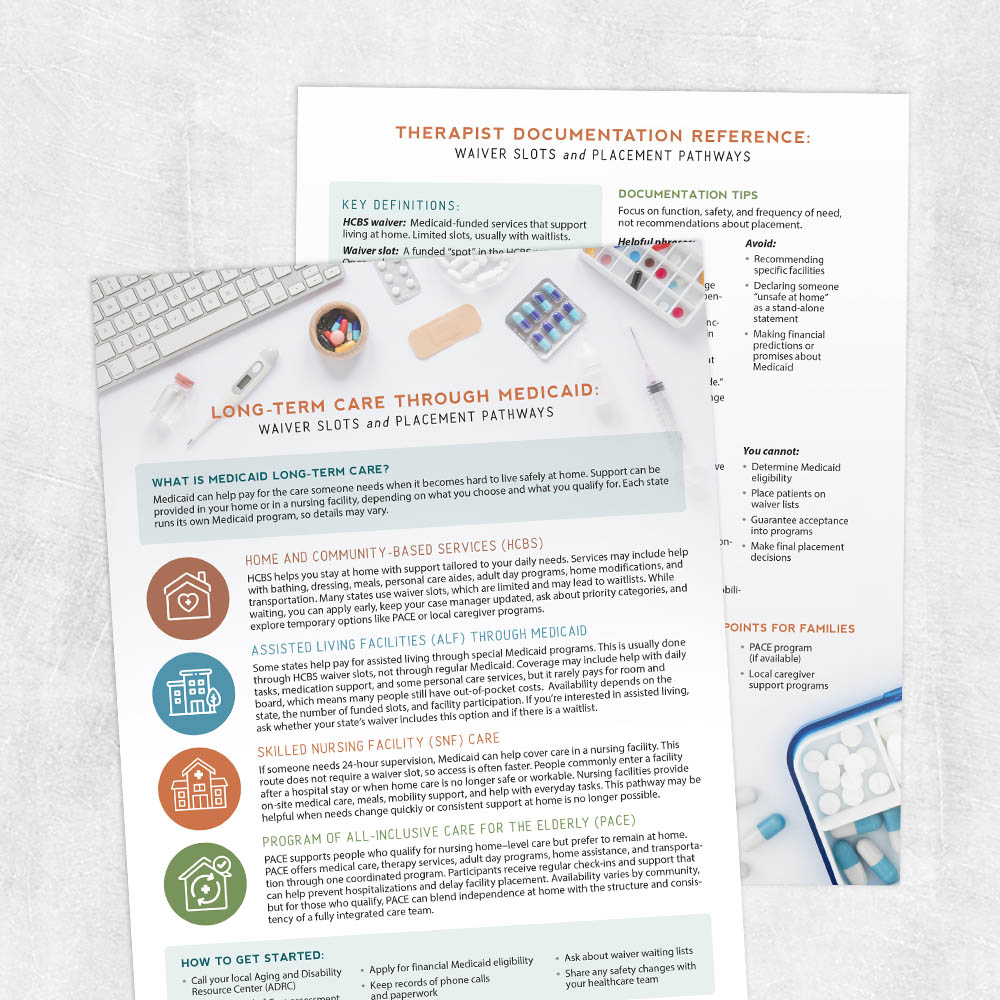
Long-Term Care Through Medicaid: Waiver Slots and Placement Pathways (United States)
This resource provides a clear, patient-friendly overview of Medicaid long-term care pathways, including HCBS waivers, nursing facility coverage, PACE, and assisted living. It includes a companion documentation reference page to support interdisciplinary clarity while helping families make informed, values-based decisions.
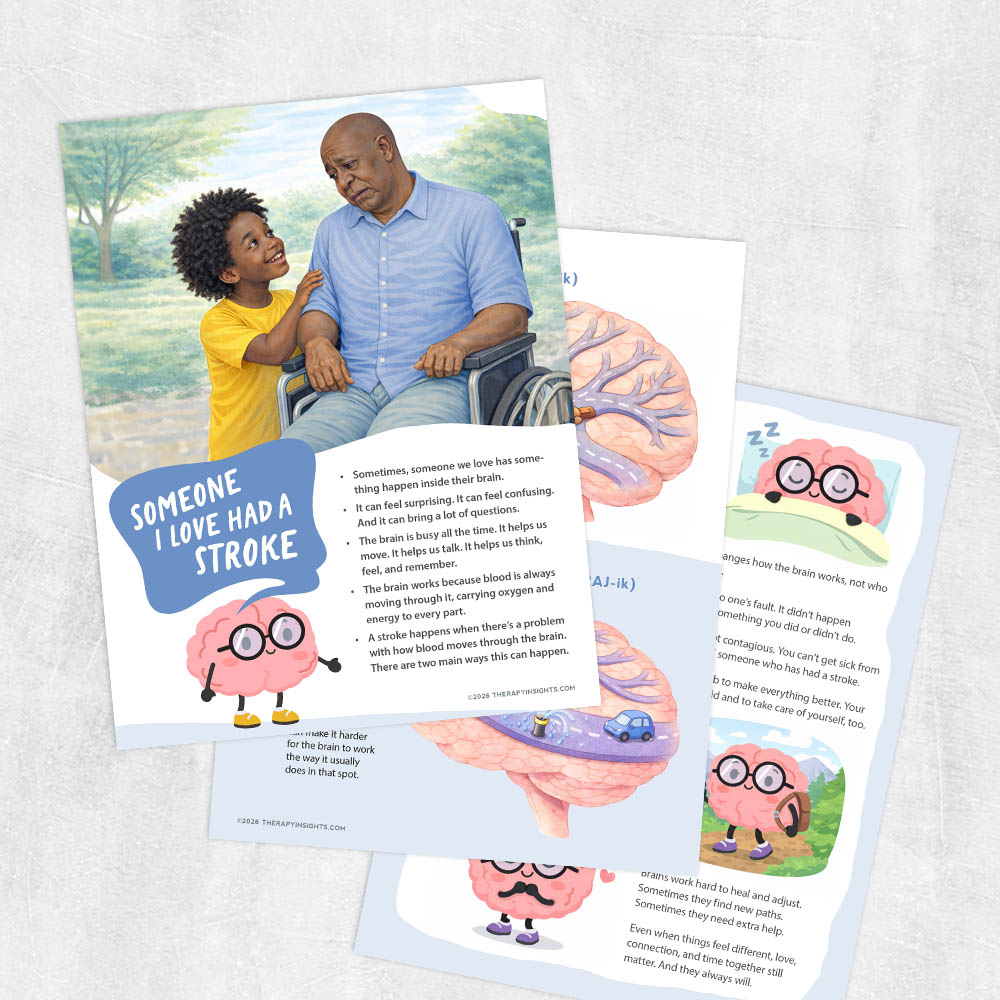
Understanding Stroke: A Guide for Kids
A compassionate, developmentally appropriate guide that helps children make sense of stroke without fear or overwhelm. Use it to center reassurance, emotional safety, and continuity during difficult family transitions.
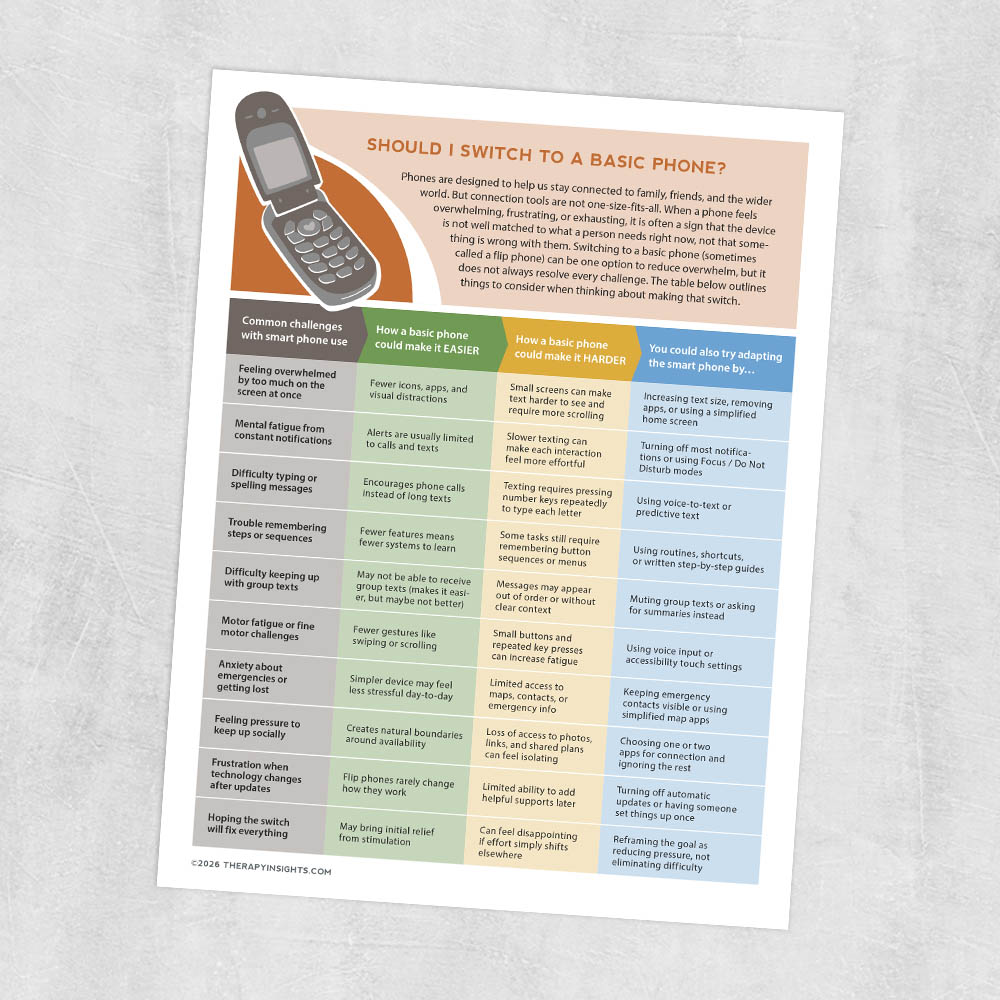
Should I Switch to a Basic Phone?
This handout guides people through the cognitive and practical trade-offs between smart phones and basic phones. Use it to support collaborative decision-making that considers cognitive load, communication needs, and personal comfort with technology.
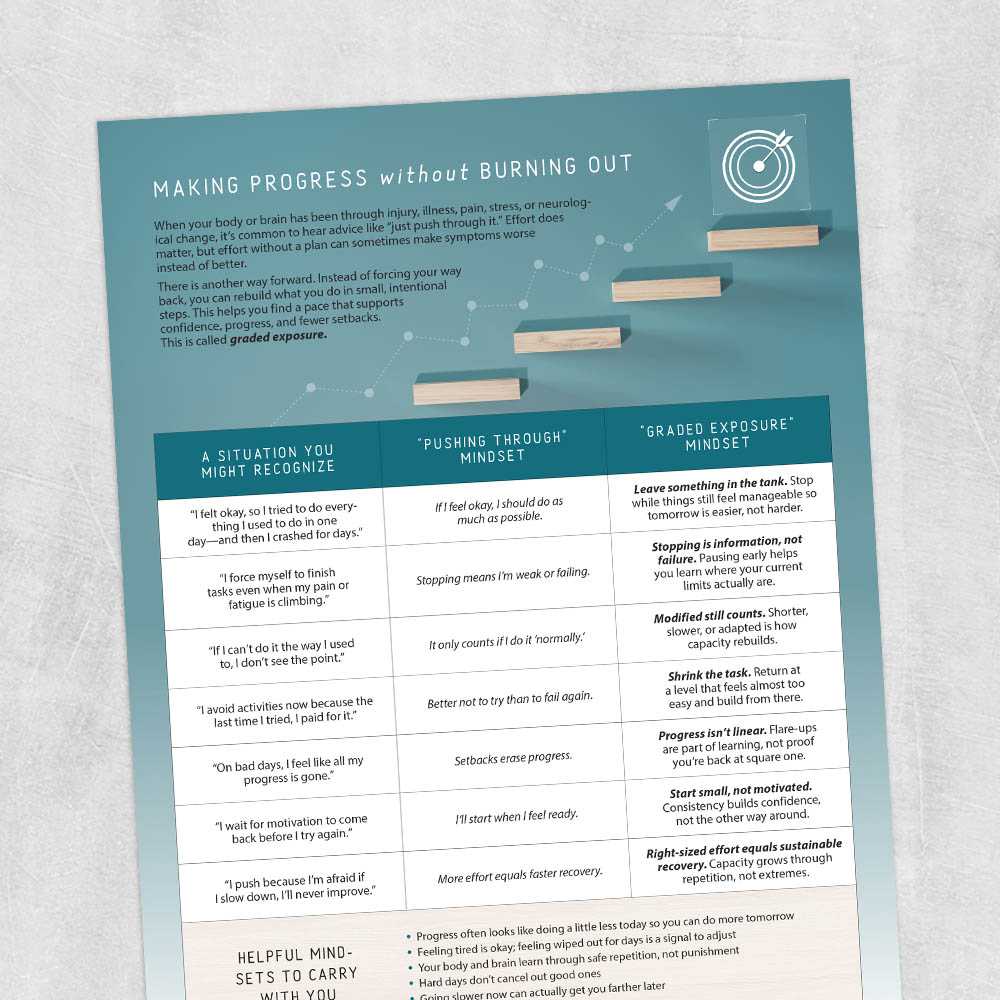
Making Progress Without Burning Out
This handout contrasts “pushing through” with graded exposure using relatable scenarios and pacing strategies. Use it to guide conversations about sustainable progress and reinforce approaches that reduce symptom flare-ups and long-term fatigue.
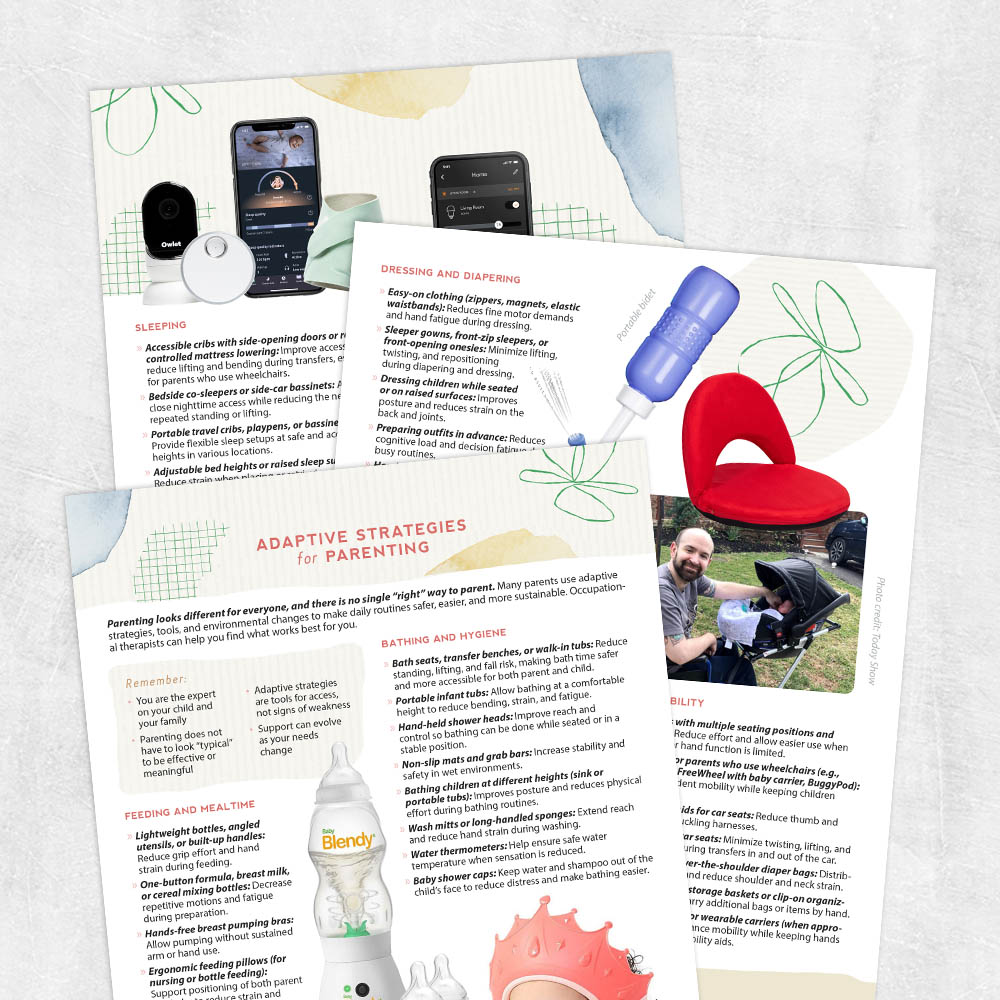
Adaptive Strategies for Parenting
A practical handout therapists can share to help parents explore adaptive strategies that make daily caregiving safer, easier, and more sustainable. This resource reframes adaptations as tools for access and empowers families to find routines that work for their unique needs.
What’s Coming in April…
-
Real-world executive function tasks like Inbox Triage
-
Visual explainers for Guillain-Barré syndrome and nerve recovery
-
Clinical guides focused on manual wheelchair participation and care
-
Resources for stoma care and unilateral vocal fold paralysis
-
Balanced education on thickened liquids, hydration, and UTIs
-
Step-by-step technology supports like using the iPhone calendar app
-
A new Neuro-FAST subtest focused on life roles and identity integration
Clinical Pediatrics: New Therapy Tools for March
March’s pediatric resources focus on autonomy, collaboration, and helping adults shift from control-based approaches to partnership-based support. These tools are designed to strengthen connection, reduce shame, and build insight in ways that feel developmentally appropriate and emotionally safe.
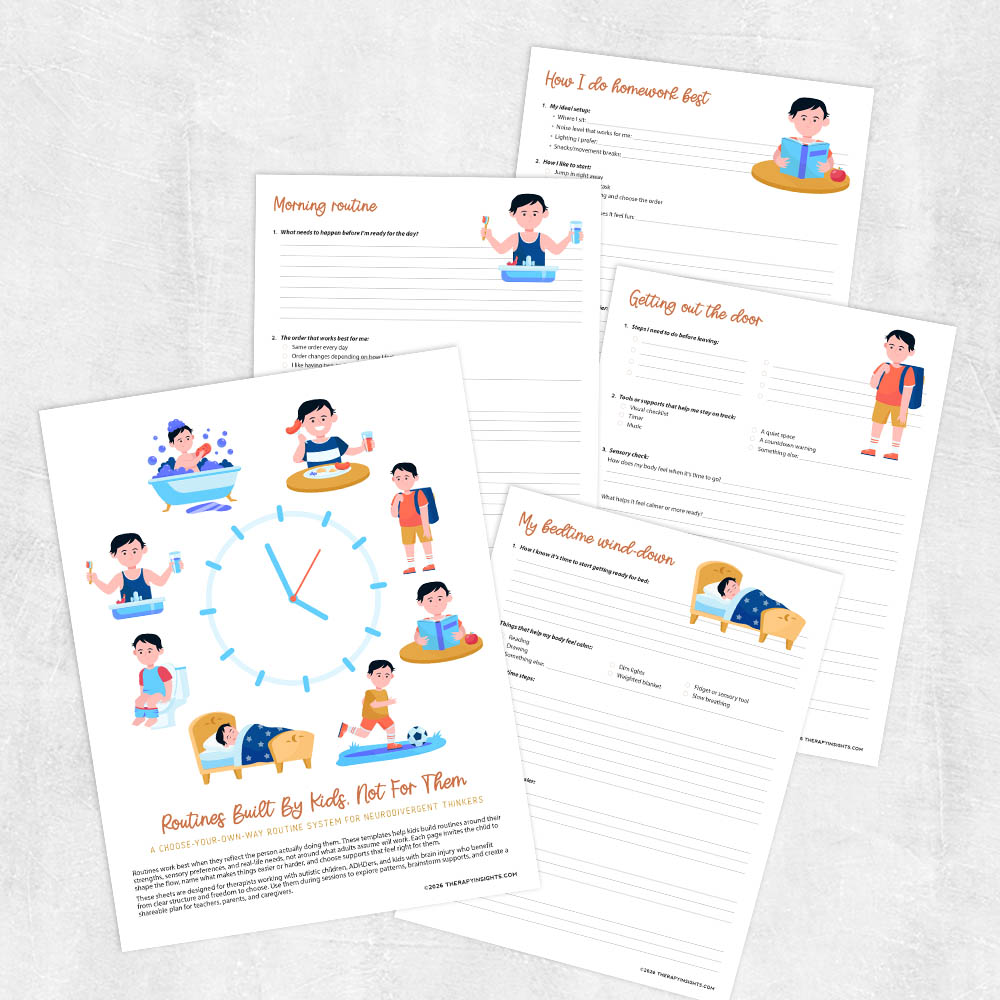
Routines Built By Kids, Not For Them
This resource gives kids the lead in shaping their own routines. Instead of imposing adult-designed systems, you can use these templates to co-create plans that reflect what makes transitions easier and what supports each child prefers. The result is a routine that feels shared, realistic, and more likely to stick.
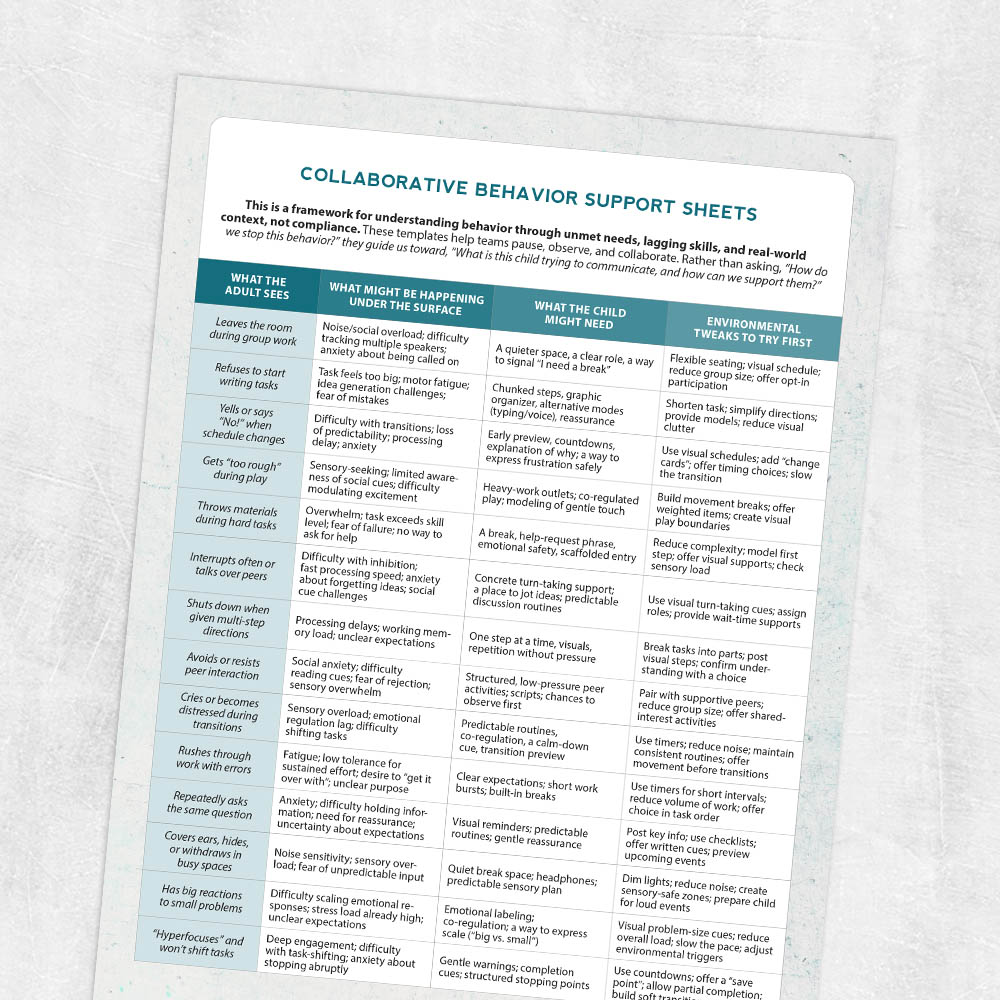
Collaborative Behavior Supports
This resource reframes challenging behaviors as signals of unmet needs, lagging skills, or environmental mismatches. The table format helps you work alongside families and schools to identify what’s happening beneath the surface and choose strategies that honor each child’s nervous system and autonomy rather than relying on compliance.
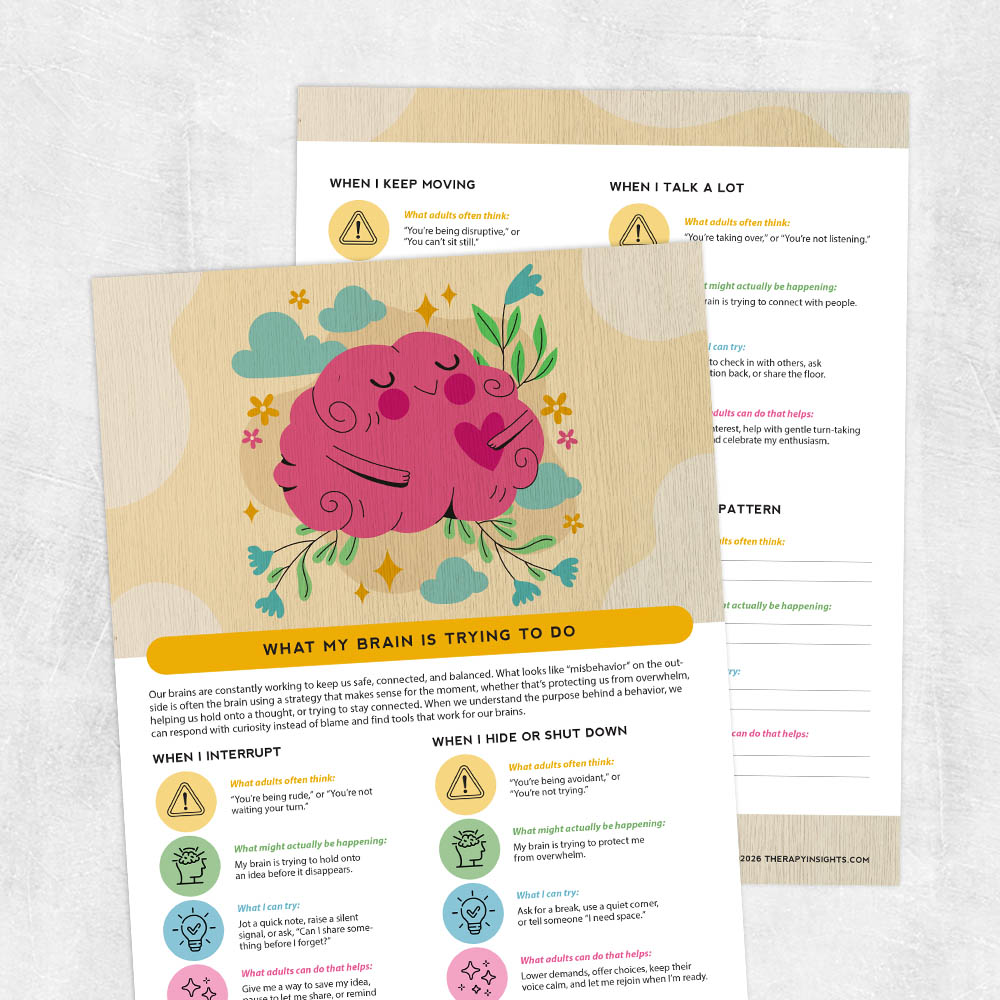
What My Brain Is Trying to Do
This handout helps kids build insight by reframing behaviors as adaptive brain strategies rather than problems to fix. It supports compassionate conversations about regulation, effort, and learning, helping children collaborate with adults instead of feeling corrected by them.
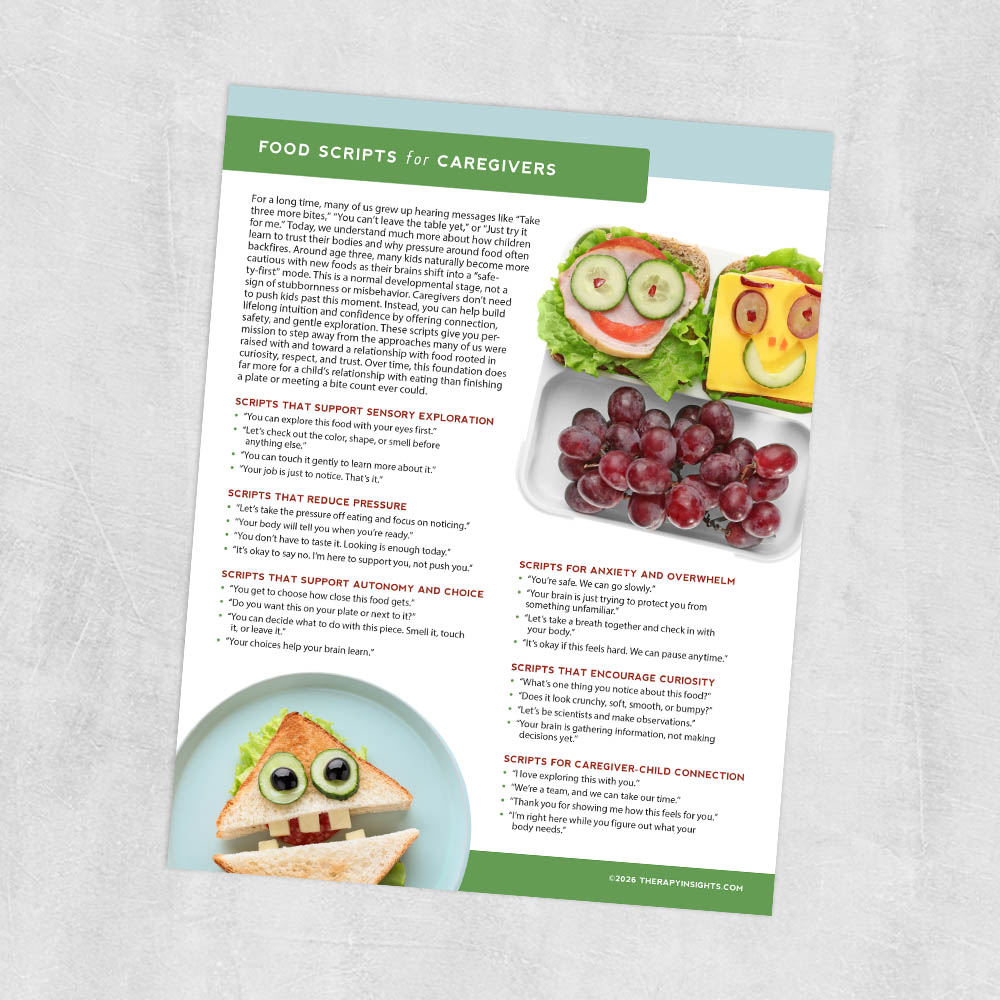
Food Scripts for Caregivers
This handout provides simple, supportive language caregivers can use during mealtime to reduce pressure and anxiety. It models curiosity and autonomy while honoring each child’s sensory and emotional experience with food, without offering nutrition advice or pushing intake.
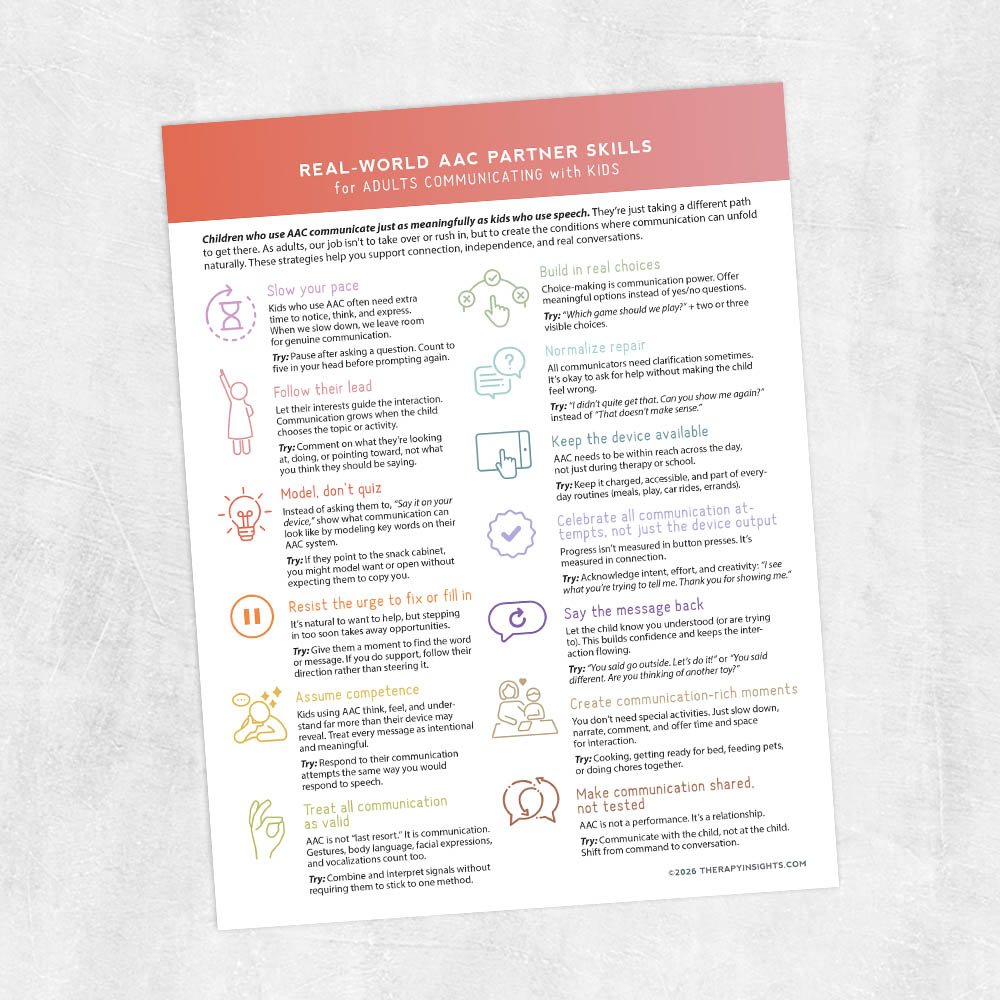
Real-World AAC Partner Skills (For Adults Communicating With Kids)
This handout teaches adults how to support authentic communication with children who use AAC. It focuses on respectful partner strategies that build confidence and independence rather than prompting or correcting. Use it to guide families, teachers, and caregivers toward interactions that strengthen connection and autonomy.
What’s Coming in April…
-
Tools that explain infant anatomy and feeding coordination in family-friendly ways
-
Resources for reducing PICU sensory overload
-
Activities that support global visual processing and gestalt language
-
Clear visuals explaining the suck–swallow–breathe reflex
-
Anatomy guides comparing the infant and adult airway