
Tips To Improve Physiological Age

Population:
AdultDiscipline:
OTSLPDiagnosis:
AgingHealth Management and Self AdvocacyReferences:
- V. Mendonca, G., Pezarat-Correia, P., R. Vaz, J., Silva, L., D. Almeida, I., & S. Heffernan, K. (2016). Impact of exercise training on physiological measures of physical fitness in the elderly. Current Aging Science, 9(4), 240-259.
- Diebel, L. W., & Rockwood, K. (2021). Determination of biological age: Geriatric assessment vs biological biomarkers. Current Oncology Reports, 23(9).
- Quach, A., Levine, M. E., Tanaka, T., Lu, A. T., Chen, B. H., Ferrucci, L., Ritz, B., Bandinelli, S., Neuhouser, M. L., Beasley, J. M., Snetselaar, L., Wallace, R. B., Tsao, P. S., Absher, D., Assimes, T. L., Stewart, J. D., Li, Y., Hou, L., Baccarelli, A. A., … Horvath, S. (2017). Epigenetic clock analysis of diet, exercise, education, and lifestyle factors. Aging, 9(2), 419-446.
- Horvath, S. (2013). DNA methylation age of human tissues and cell types. Genome Biology, 14(10), R115.
- Adler, N., Pantell, M. S., O’Donovan, A., Blackburn, E., Cawthon, R., Koster, A., Opresko, P., Newman, A., Harris, T. B., & Epel, E. (2013). Educational attainment and late life telomere length in the health, aging and body composition study. Brain, Behavior, and Immunity, 27, 15-21.
- Fiorito, G., McCrory, C., Robinson, O., Carmeli, C., Rosales, C. O., Zhang, Y., Colicino, E., Dugué, P., Artaud, F., McKay, G. J., Jeong, A., Mishra, P. P., Nøst, T. H., Krogh, V., Panico, S., Sacerdote, C., Tumino, R., Palli, D., & Matullo, G. (2019). Socioeconomic position, lifestyle habits and biomarkers of epigenetic aging: A multi-cohort analysis. Aging, 11(7), 2045-2070.
- García-Hermoso, A., Cavero-Redondo, I., Ramírez-Vélez, R., Ruiz, J. R., Ortega, F. B., Lee, D., & Martínez-Vizcaíno, V. (2018). Muscular strength as a predictor of all-cause mortality in an apparently healthy population: A systematic review and meta-analysis of data from approximately 2 million men and women. Archives of Physical Medicine and Rehabilitation, 99(10), 2100-2113.e5.
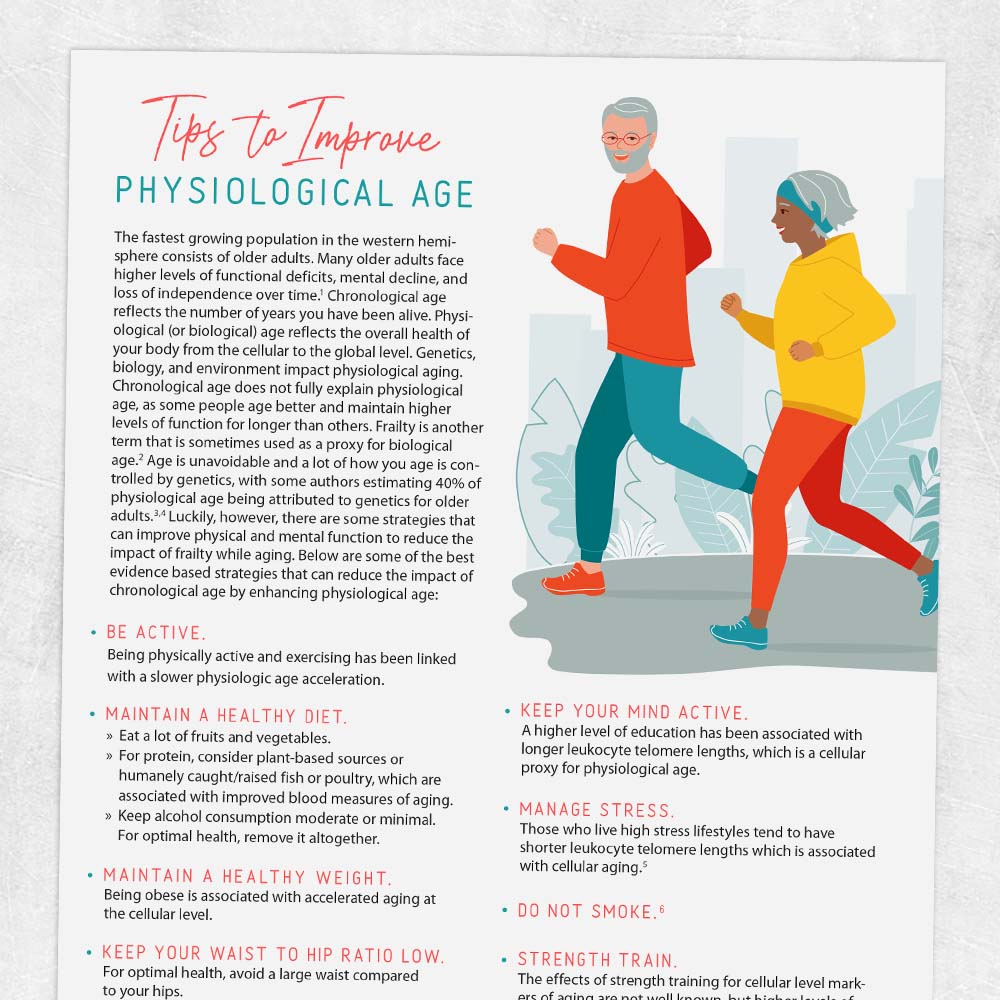
There is nothing we can do about our chronological age, but we can still improve our functioning and health by improving our physiological age. This handout is a nice resource for older adults who may feel the golden years aren’t so golden. This printable handout is for occupational therapists and speech-language pathologists working with adult patients, covering Aging and Health Management and Self Advocacy. Print Resource, US Letter, 1 page. Members can view and print it.
Use this resource when a patient, family, or colleague asks:
- What lifestyle factors influence physiological aging?
- How can older adults improve physiological age and reduce frailty?
- What evidence based strategies support healthy aging and longevity?
Want access to this printable resource and hundreds more? Subscribe to Therapy Insights.
Subscribe to get instant and easy access to handouts, therapy materials, and clinical tools so that you can spend your valuable time doing what you do best: Connecting with your patients and changing lives for the better.
Already subscribed to Therapy Insights? Log in to access this member exclusive.
Related resources
Daily Resource Limit
There was an issue loading this asset. Please try again or contact customer support.

If you want to own this resource and save it to your device, it is also available for purchase (download) on Etsy.
View on Etsy