
Clinical Reference
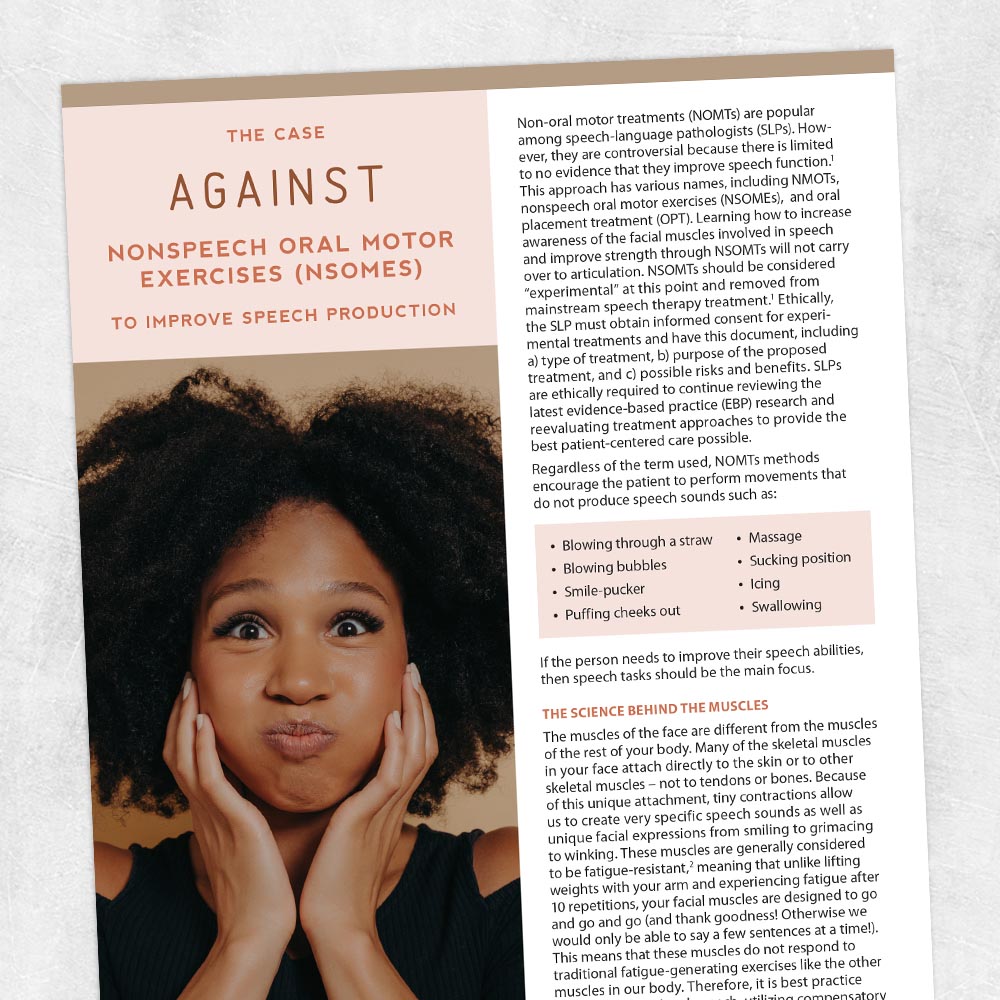
The Case Against Nonspeech Oral Motor Exercises (NSOMEs) to Improve Speech Production
Therapy Insights
Member Exclusive
Print Resource
— US Letter — 1 page
Population:
AdultDiscipline:
SLPDiagnosis:
Motor Speech/Dysarthria/ApraxiaReferences:
- Lass, N. J., & Pannbacker, M. (2008). The application of evidence-based practice to Nonspeech oral motor treatments. Language, Speech, and Hearing Services in Schools, 39(3), 408-421.
- Solomon, N. P. (2006, November). What is orofacial fatigue and how does it affect function for swallowing and speech?. In Seminars in speech and language (Vol. 27, No. 04, pp. 268-282). Copyright© 2006 by Thieme Medical Publishers, Inc., 333 Seventh Avenue, New York, NY 10001, USA.
Dive into the evidence-base indicating lack of strong support for nonspeech oral motor exercises to address speech sound production for patients with dysarthria or apraxia of speech.
Want access to this printable resource and hundreds more? Subscribe to Therapy Insights.
Subscribe to get instant and easy access to handouts, therapy materials, and clinical tools so that you can spend your valuable time doing what you do best: Connecting with your patients and changing lives for the better.
Subscribe now
Already subscribed to Therapy Insights? Log in to access this member exclusive.
Related resources
Handout
Avoiding Red Lights: Pacing for Progress
Clinical Reference
Talking About Money After Illness or Injury: A Clinical Guide
Therapy Activity
Hockey Play-by-Play: Tracking Changing Information
Handout
Beyond Exercise: Fun Ways to Stay Active
Handout
Your Concussion Recovery Roadmap
Handout
Changes in Speech Fluency After a Neurologic Injury
Daily Resource Limit
There was an issue loading this asset. Please try again or contact customer support.

If you want to own this resource and save it to your device, it is also available for purchase (download) on Etsy.
View on Etsy