
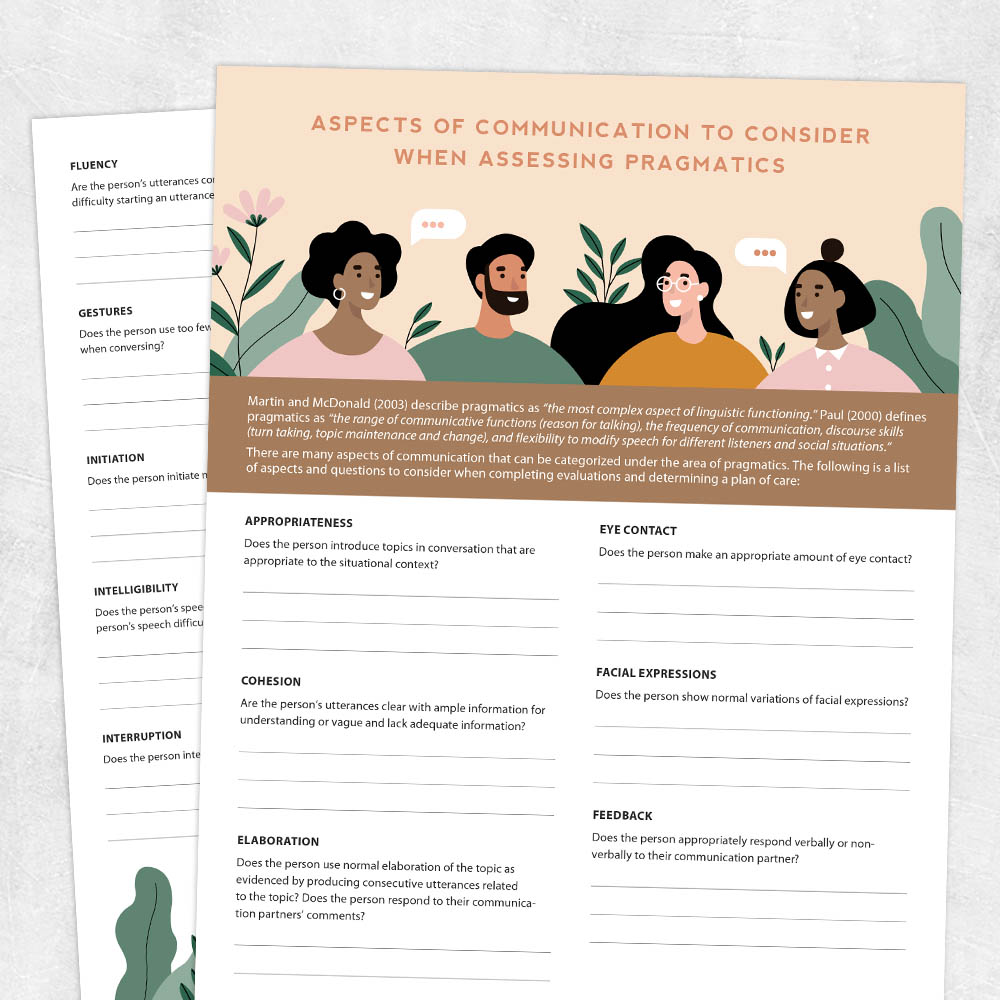
Aspects of Communication to Consider When Assessing Pragmatics


Population:
AdultDiscipline:
SLPDiagnosis:
Brain InjuryReferences:
- Martin, I., & McDonald, S. (2003). Weak coherence, no theory of mind, or executive dysfunction? Solving the puzzle of pragmatic language disorders. Brain and Language, 85, 451-466.
- Paul, R. (2000). Language disorders from infancy through adolescence: assessment and intervention. Philadelphia: Mosby.
Consider these things when assessing pragmatics and writing goals. This printable clinical reference is for speech-language pathologists working with adult patients, covering Brain Injury. Print Resource, US Letter, 2 pages. Members can view and print it.
Use this resource when a patient, family, or colleague asks:
- What behaviors should I observe during a pragmatics evaluation?
- How do I identify social communication deficits in conversation?
- How do I assess pragmatic communication skills in adults or children?
Want access to this printable resource and hundreds more? Subscribe to Therapy Insights.
Subscribe to get instant and easy access to handouts, therapy materials, and clinical tools so that you can spend your valuable time doing what you do best: Connecting with your patients and changing lives for the better.
Already subscribed to Therapy Insights? Log in to access this member exclusive.
Related resources
Daily Resource Limit
There was an issue loading this asset. Please try again or contact customer support.

If you want to own this resource and save it to your device, it is also available for purchase (download) on Etsy.
View on Etsy