
Handout
Advocating for Anesthesia Preferences
Therapy Insights
Member Exclusive

Print Resource
— US Letter — 1 page
Population:
AdultDiscipline:
OTSLPDiagnosis:
AgingDementiaProgressive Neurological ConditionsStrokeReferences:
- Evered, L., Silbert, B., Knopman, D. S., Scott, D. A., DeKosky, S. T., Rasmussen, L. S., ... & Nomenclature Consensus Working Group. (2018). Recommendations for the nomenclature of cognitive change associated with anaesthesia and surgery—2018. Journal of Alzheimer’s Disease, 66(1), 1-10.
- Inouye, S. K., Westendorp, R. G., & Saczynski, J. S. (2014). Delirium in elderly people. The lancet, 383(9920), 911-922.
- Aldecoa, C., Bettelli, G., Bilotta, F., Sanders, R. D., Audisio, R., Borozdina, A., ... & Spies, C. D. (2017). European Society of Anaesthesiology evidence-based and consensus-based guideline on postoperative delirium. European Journal of Anaesthesiology| EJA, 34(4), 192-214.
- Hughes, C. G., Boncyk, C. S., Culley, D. J., Fleisher, L. A., Leung, J. M., McDonagh, D. L., ... & Perioperative Quality Initiative. (2020). American society for enhanced recovery and perioperative quality initiative joint consensus statement on postoperative delirium prevention. Anesthesia & Analgesia, 130(6), 1572-1590.
- Punjasawadwong, Y., Phongchiewboon, A., & Bunchungmongkol, N. (2014). Bispectral index for improving anaesthetic delivery and postoperative recovery. Cochrane database of systematic reviews, (6).
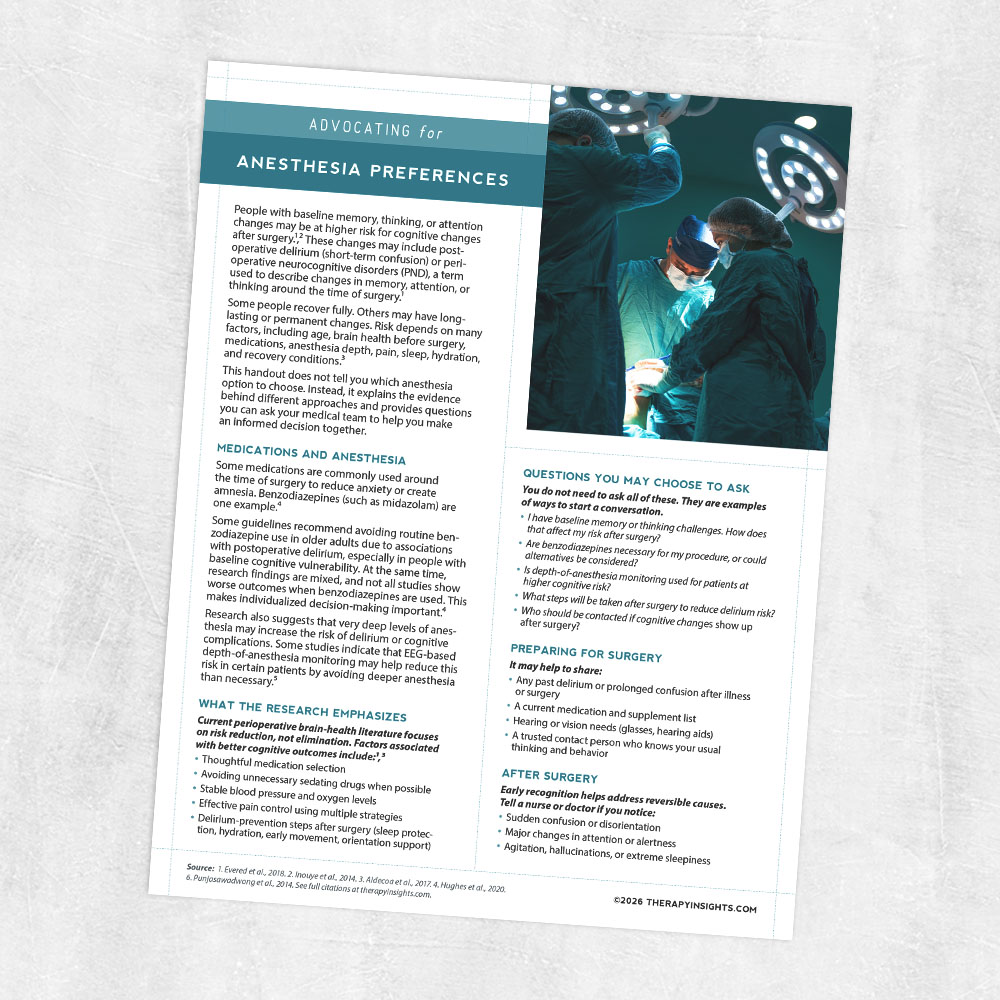
This handout helps you support informed, patient-centered conversations about cognitive risks related to surgery and anesthesia in individuals with baseline memory or thinking changes. You can use it to help patients and families understand perioperative brain health, prepare questions for the medical team, and recognize warning signs of delirium or cognitive changes after surgery.
Want access to this printable resource and hundreds more? Subscribe to Therapy Insights.
Subscribe to get instant and easy access to handouts, therapy materials, and clinical tools so that you can spend your valuable time doing what you do best: Connecting with your patients and changing lives for the better.
Subscribe now
Already subscribed to Therapy Insights? Log in to access this member exclusive.
Related resources
Handout
Avoiding Red Lights: Pacing for Progress
Clinical Reference
Shoulder Exercise Program Based on the STOMPS Protocol
Handout
Beyond Exercise: Fun Ways to Stay Active
Handout
Can I Drink Through a Straw?
Clinical Reference
Talking About Money After Illness or Injury: A Clinical Guide
Handout
Neuromuscular Electrical Stimulation (NMES)
Daily Resource Limit
There was an issue loading this asset. Please try again or contact customer support.