
August 2026 Resources: Making the Invisible Understandable

Adult Neuro: New Therapy Tools for August
Many of this month’s adult neuro resources focus on helping patients, families, and interdisciplinary teams understand changes that aren’t always visible. From swallowing physiology and cognitive changes to right hemisphere injury, dementia, and executive functioning, these resources make complex neurological concepts easier to explain while providing practical strategies that support everyday participation.
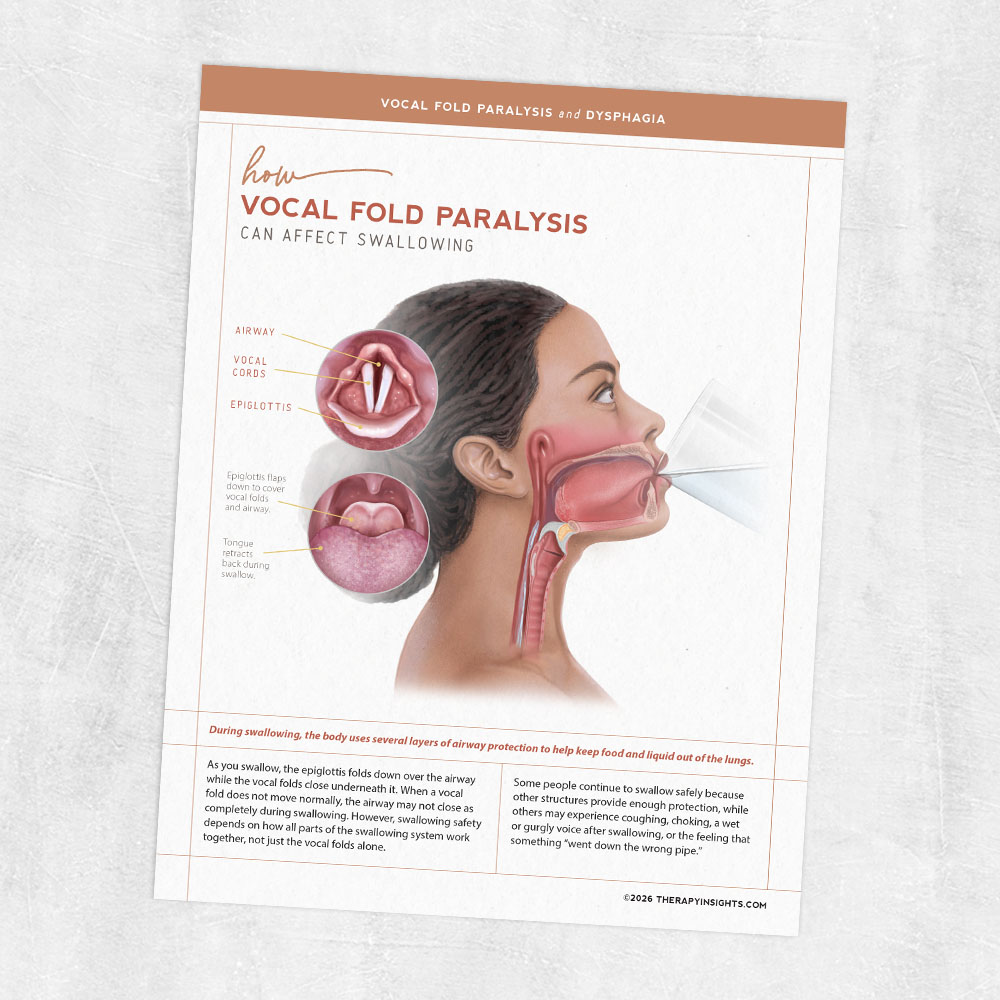
Vocal Fold Paralysis and Dysphagia
Help patients understand how vocal fold paralysis can affect swallowing using clear visuals and accessible explanations of airway protection. This resource explains how swallowing structures work together and why dysphagia can look different from one person to the next.
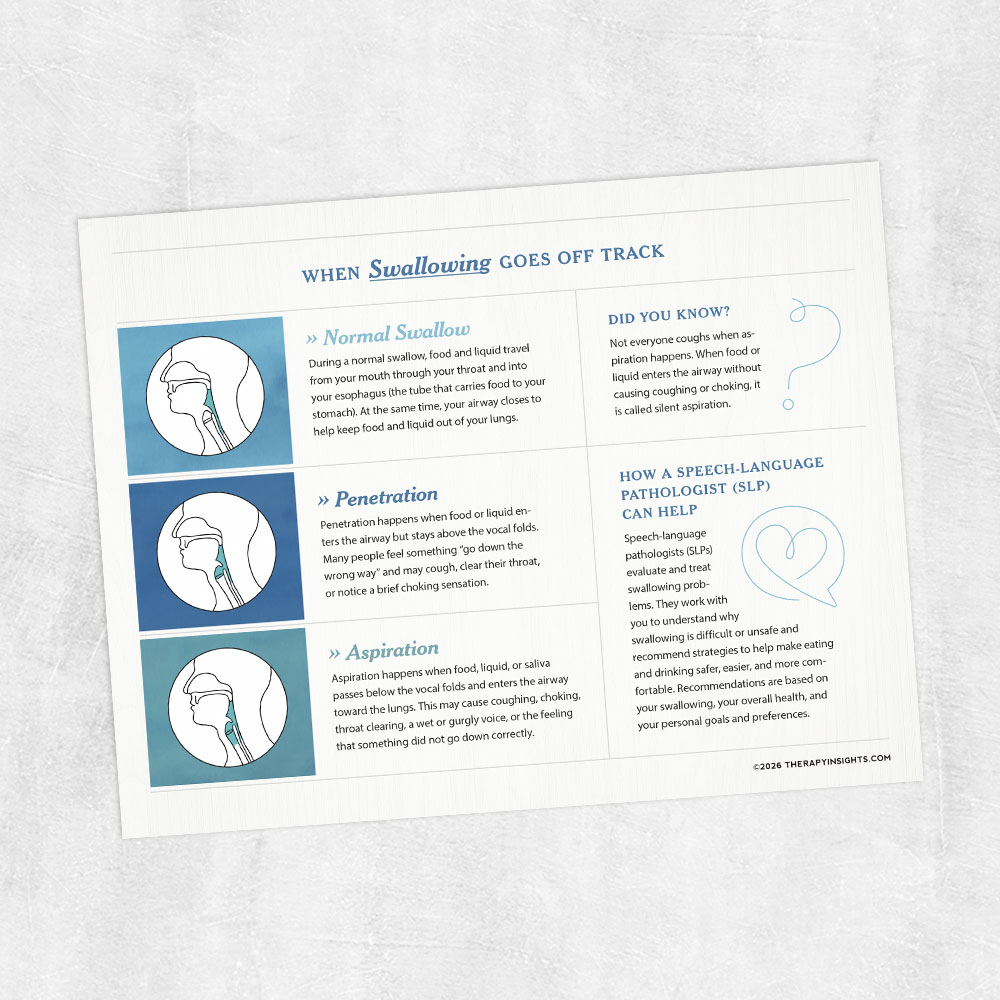
When Swallowing Goes Off Track
An approachable guide to penetration, aspiration, and silent aspiration that helps patients and families better understand swallowing safety. Use it to support education, reduce fear, and explain how speech therapy can improve swallowing function.
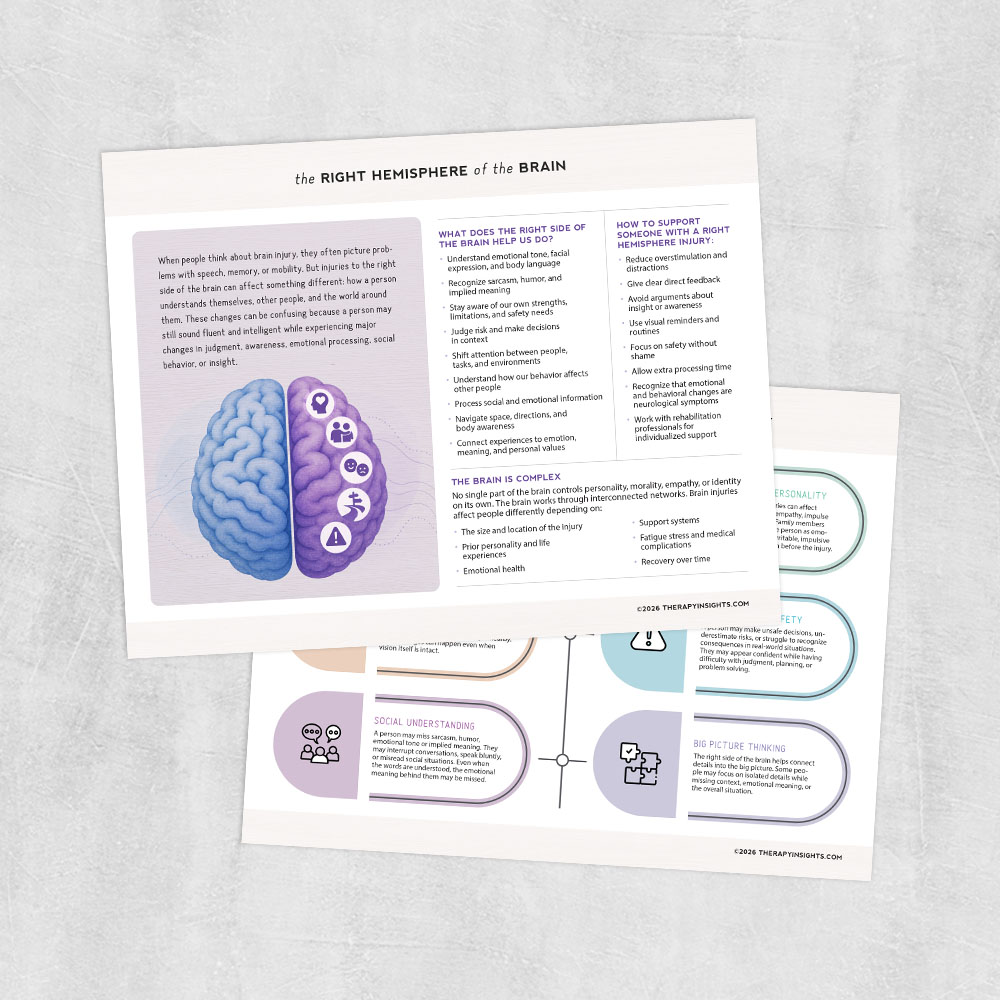
The Right Hemisphere of the Brain
An infographic-style handout that explains the often misunderstood effects of right hemisphere brain injury, including changes in insight, judgment, emotional processing, and social communication. It provides an accessible way to explain behavioral changes as neurological rather than intentional.
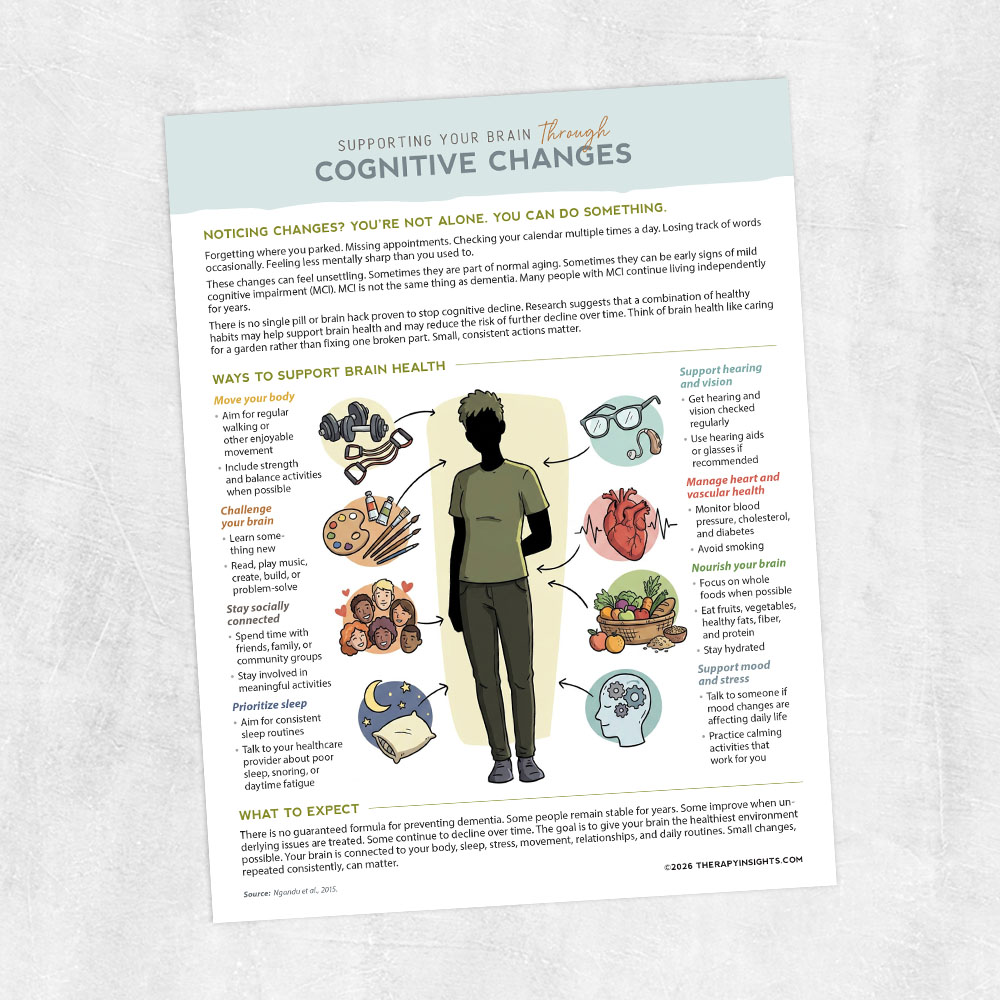
Supporting Your Brain Through Cognitive Changes
A patient-friendly guide that introduces evidence-informed lifestyle factors that may support brain health while encouraging realistic, hopeful conversations about cognitive changes without fear or false promises.
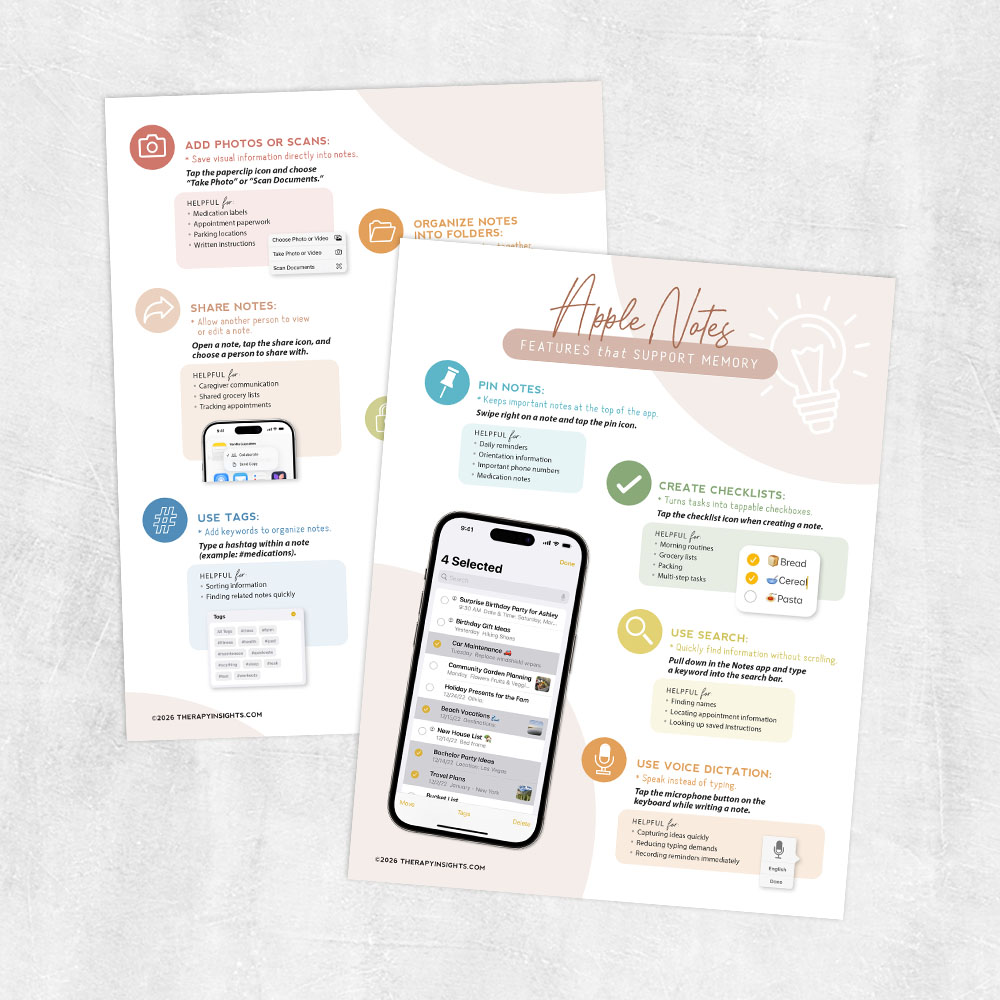
Apple Notes Features That Support Memory
Explore practical ways the Apple Notes app can support memory, organization, and follow-through in everyday life. Therapists can introduce features like checklists, voice dictation, and pinned notes as functional cognitive supports outside of therapy.
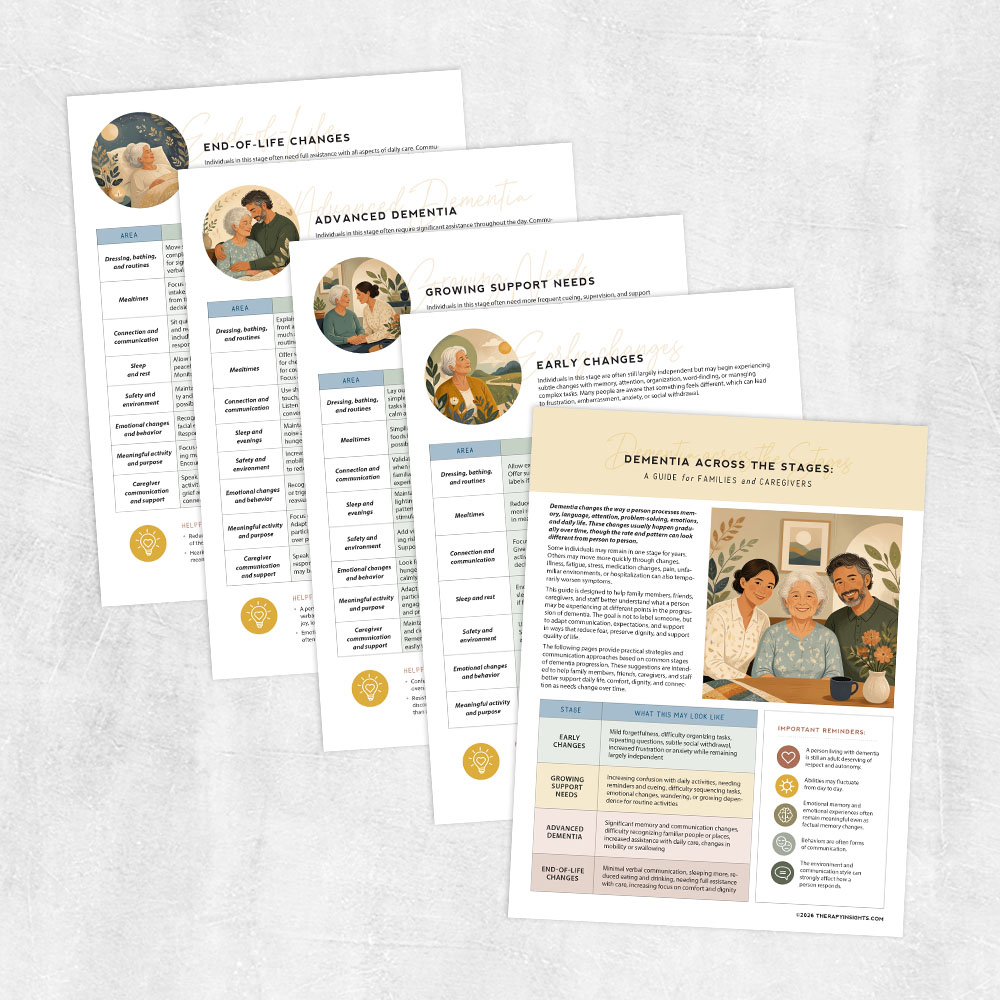
Dementia Across the Stages: A Guide for Families and Caregivers
A stage-based overview that helps families, caregivers, and staff understand how support needs may change throughout dementia. The guide emphasizes communication, dignity, safety, comfort, and maintaining meaningful connection at every stage.
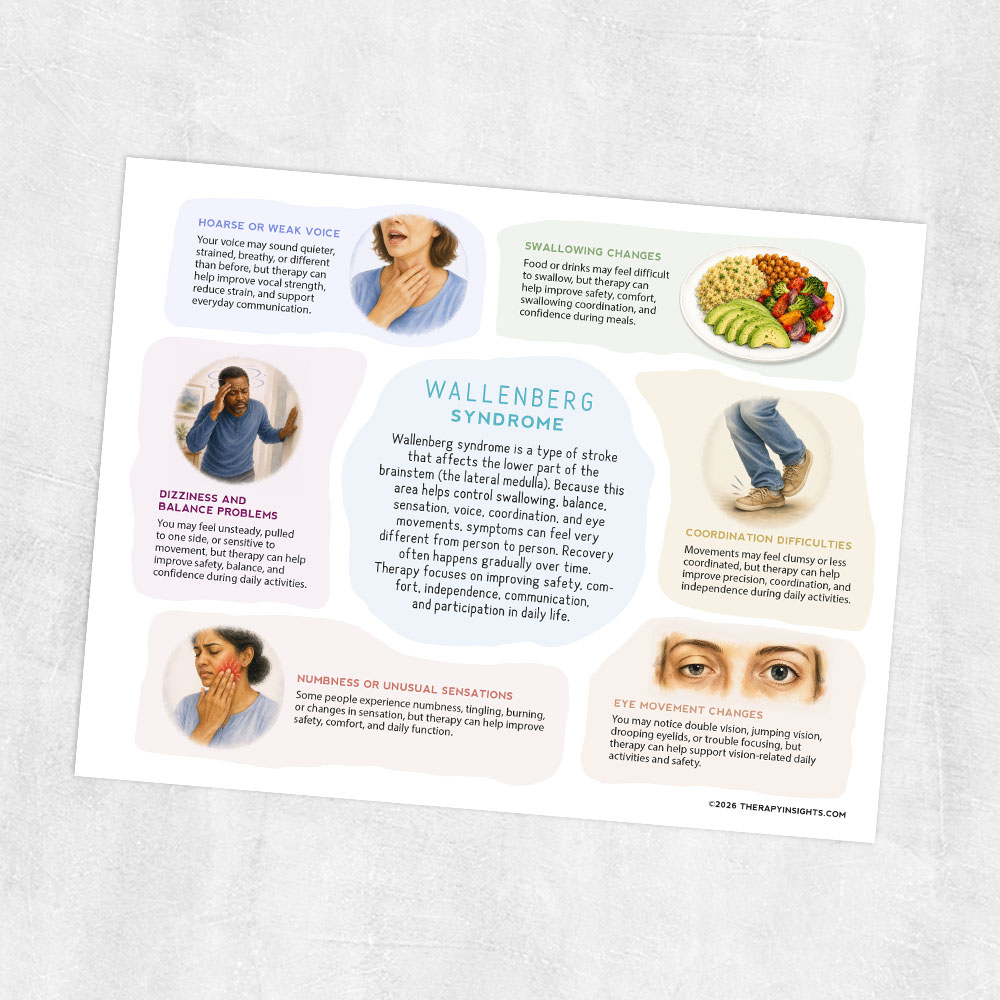
Wallenberg Syndrome
A clear explanation of the common symptoms associated with Wallenberg syndrome and how rehabilitation can support recovery. Designed to reduce overwhelm after diagnosis while helping patients and families better understand what to expect.
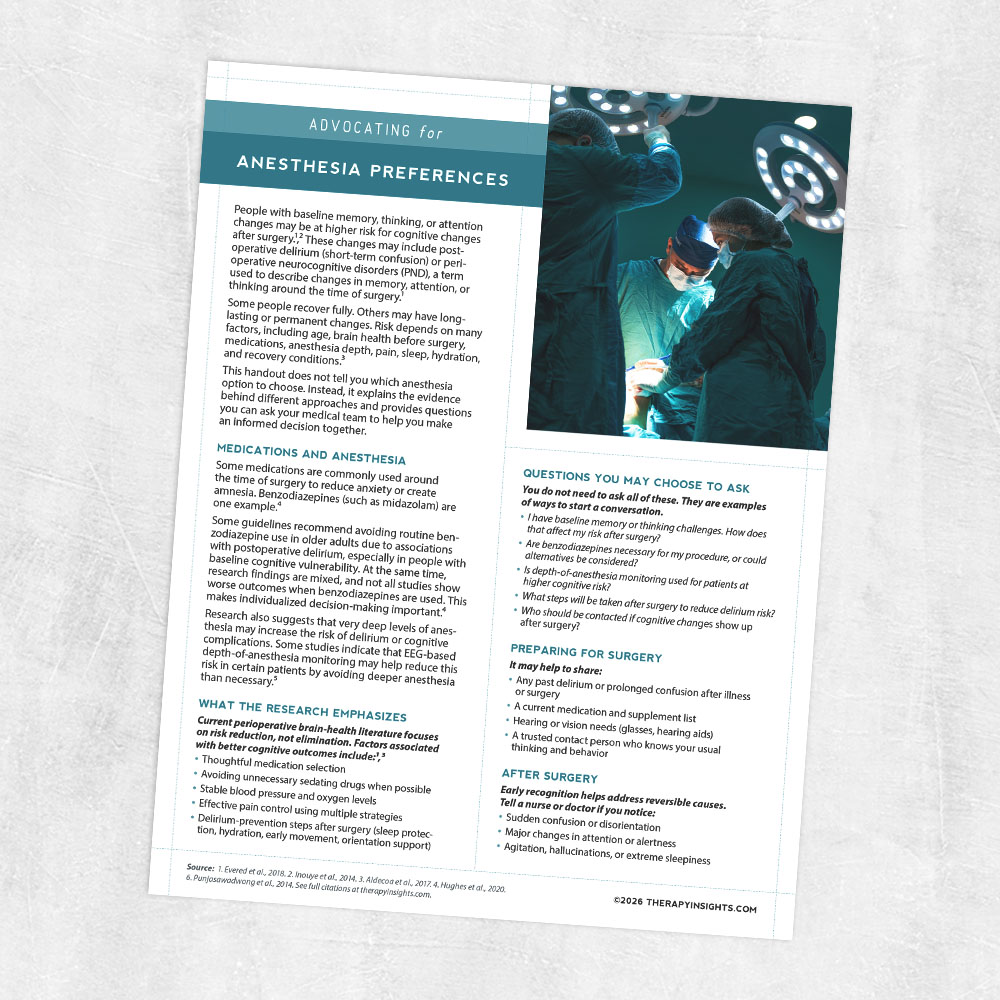
Advocating for Anesthesia Preferences
Help patients and families have informed conversations about perioperative brain health when cognitive changes are already present. This resource supports shared decision-making before surgery while introducing important questions and warning signs to discuss with the healthcare team.
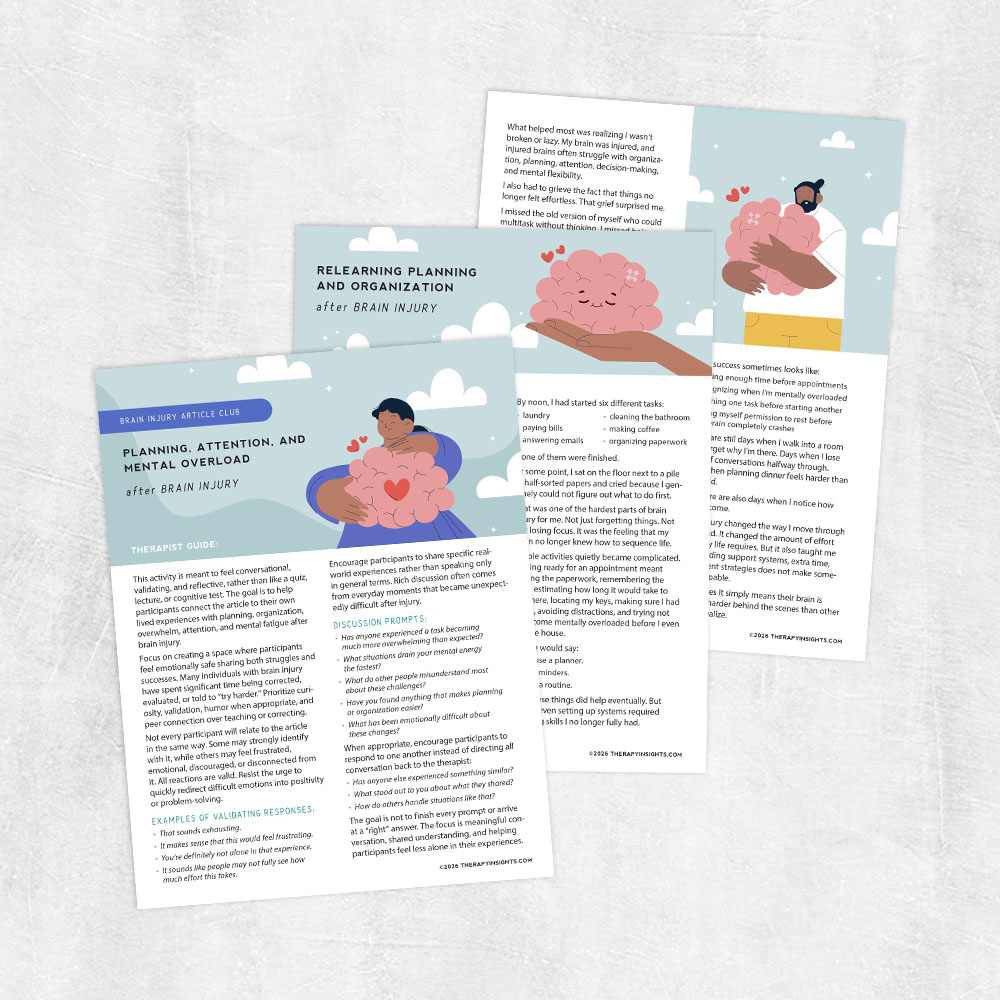
Brain Injury Article Club: Planning, Attention, and Mental Overload After Brain Injury
A discussion-based activity built around lived experience rather than clinical terminology. The accompanying discussion guide encourages conversations about executive functioning, mental fatigue, identity, and practical coping strategies in group therapy.
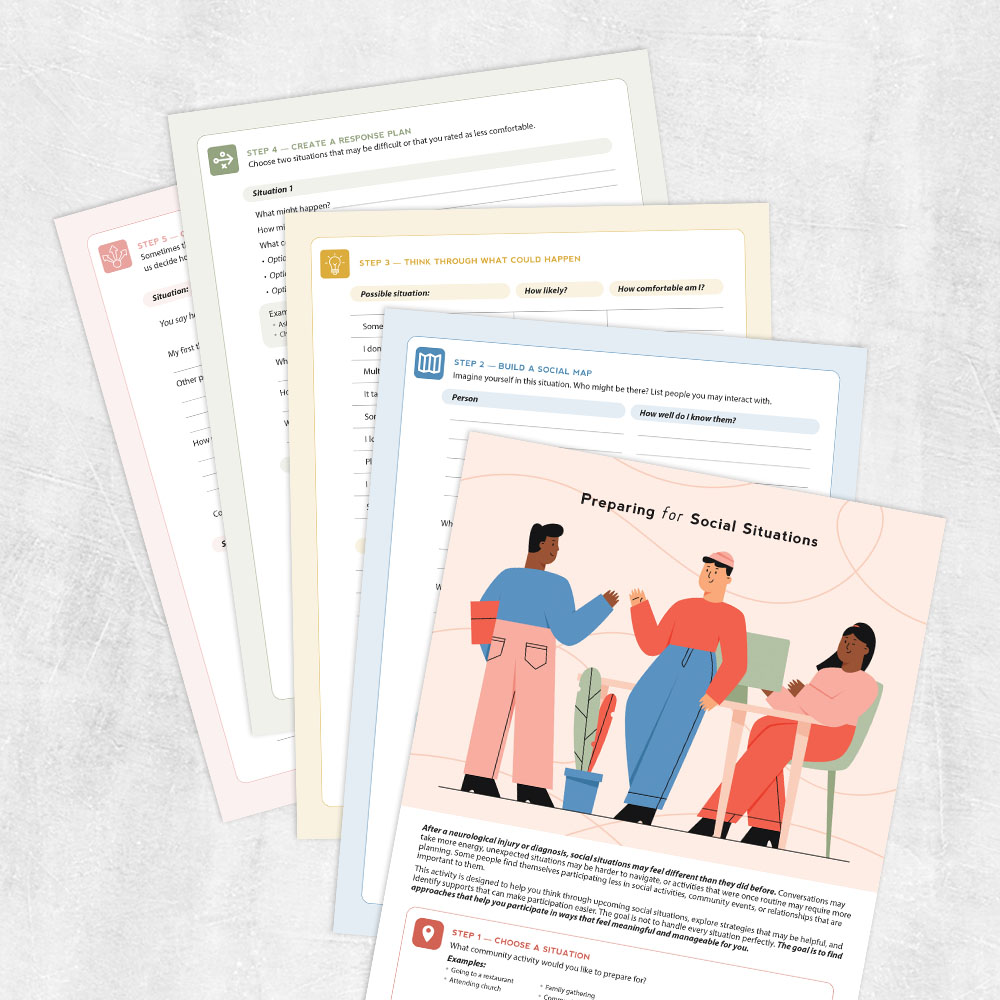
Preparing for Social Situations
A participation-focused planning activity that helps individuals anticipate challenges, identify supports, and build confidence before meaningful social and community activities.
What’s Coming in September…
-
- Swallowing education, including IDDSI support plans, epiglottic inversion, and speech, voice, and swallowing changes after carotid endarterectomy.
- Executive functioning, with realistic activities centered on sports management, veterinary discharge planning, and workplace communication.
- Adaptive daily living, including one-handed kitchen tools and adaptive cleaning strategies.
- Neurological education, featuring spinal cord anatomy and everyday function.
- Communication after neurological injury, with collaborative treatment planning for neurogenic dysfluency
Clinical Pediatrics: New Therapy Tools for August
This month’s pediatric resources help adults better understand children’s internal experiences while providing practical ways to support communication, regulation, and participation. Rather than focusing on correcting behavior, these resources encourage curiosity, connection, and collaborative problem-solving across home, school, and community settings.
Big Feelings in My Body
Help children recognize how emotions such as anxiety and shame can show up physically through sensory awareness, body cues, and self-reflection. This resource supports conversations about interoception, emotional regulation, and identifying strategies that help children feel safe and supported.
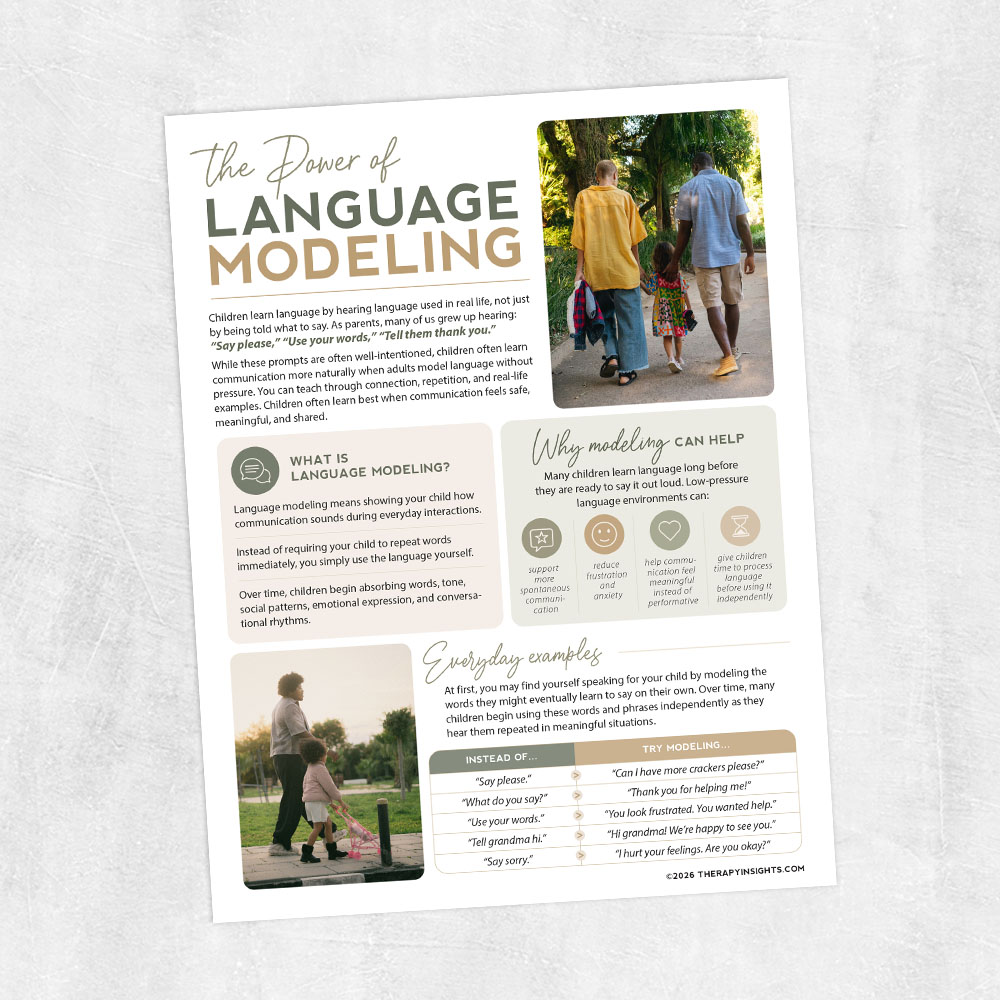
The Power of Language Modeling
A practical guide that helps parents understand how children learn language through repeated, low-pressure exposure rather than constant prompting or correction. Therapists can use this handout to coach families on incorporating language modeling naturally into everyday routines.
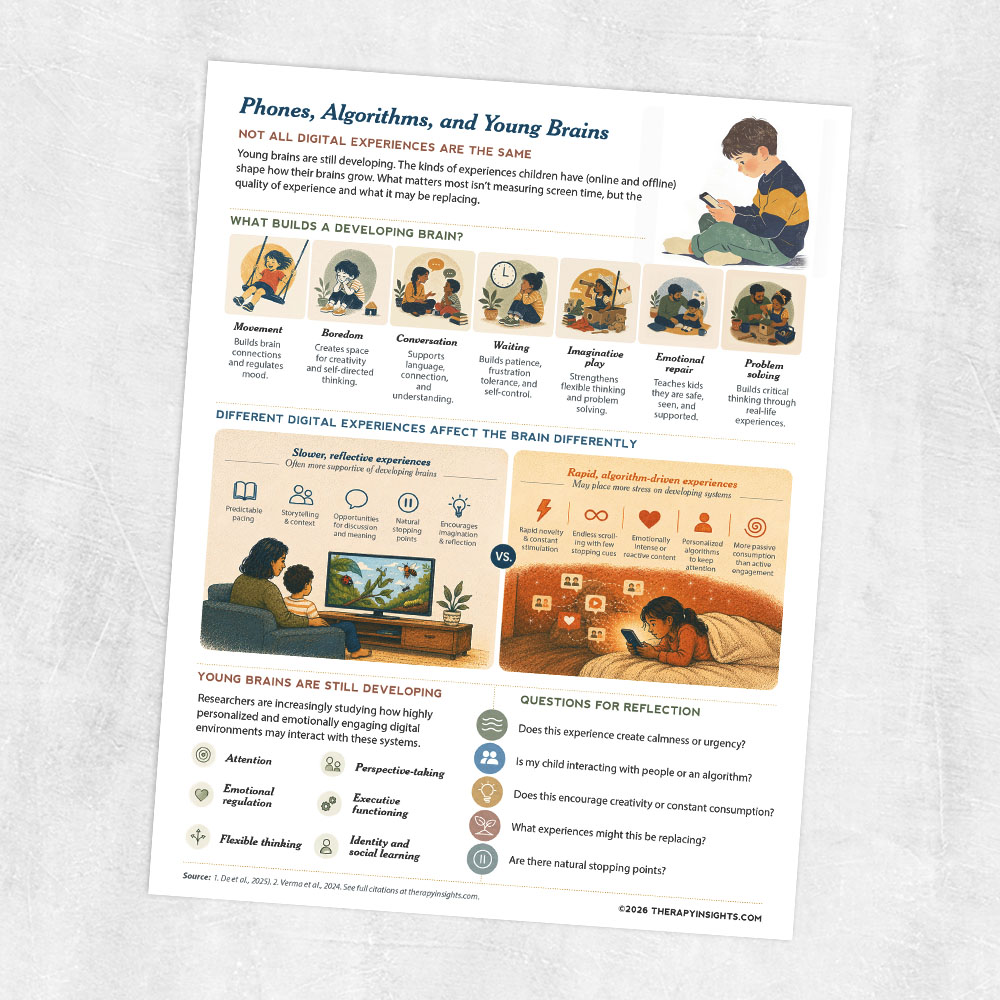
Phones, Algorithms, and Young Brains
Support thoughtful conversations with families about how digital environments may influence attention, emotional regulation, social learning, and flexible thinking. This resource shifts the discussion beyond screen time toward the quality and emotional impact of children’s online experiences.
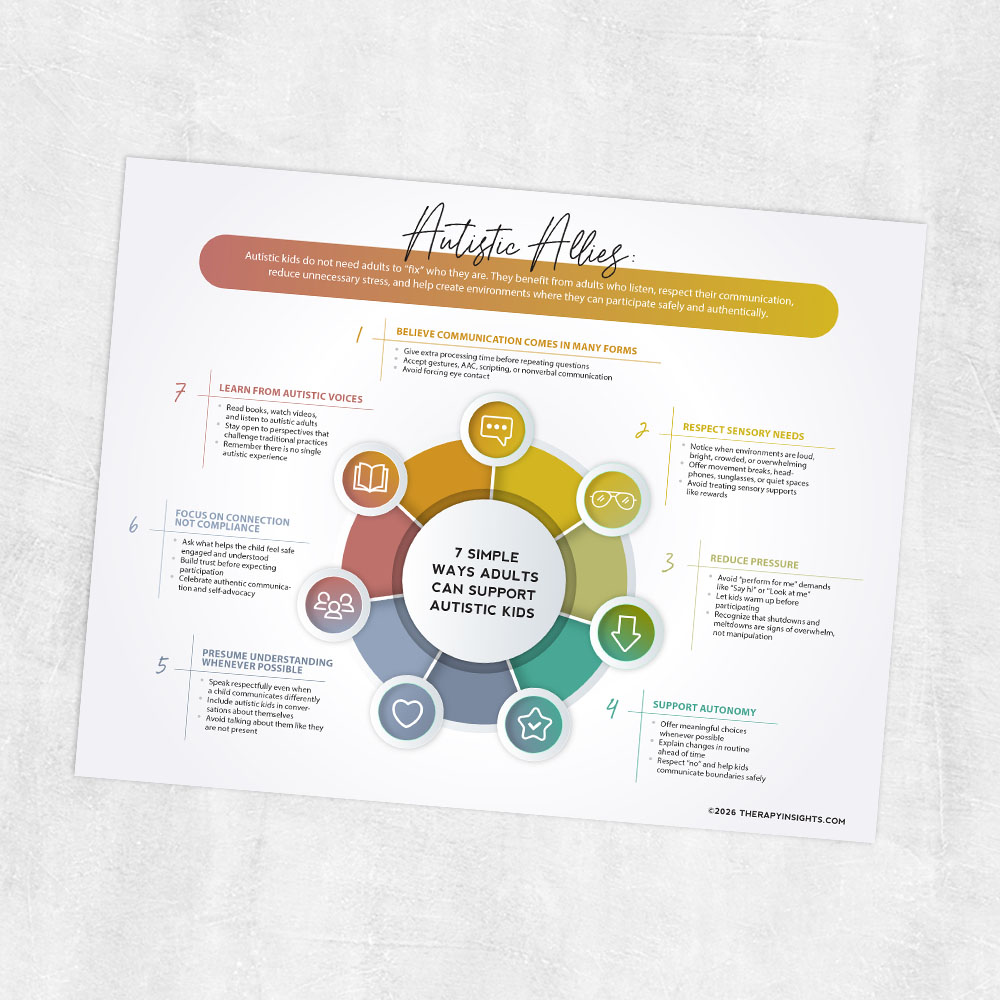
Autistic Allies: Simple Ways Adults Can Support Autistic Kids
A neurodiversity-affirming guide that offers practical strategies for creating more supportive environments at home, school, and in the community. The emphasis is on connection, autonomy, communication access, and reducing unnecessary pressure.
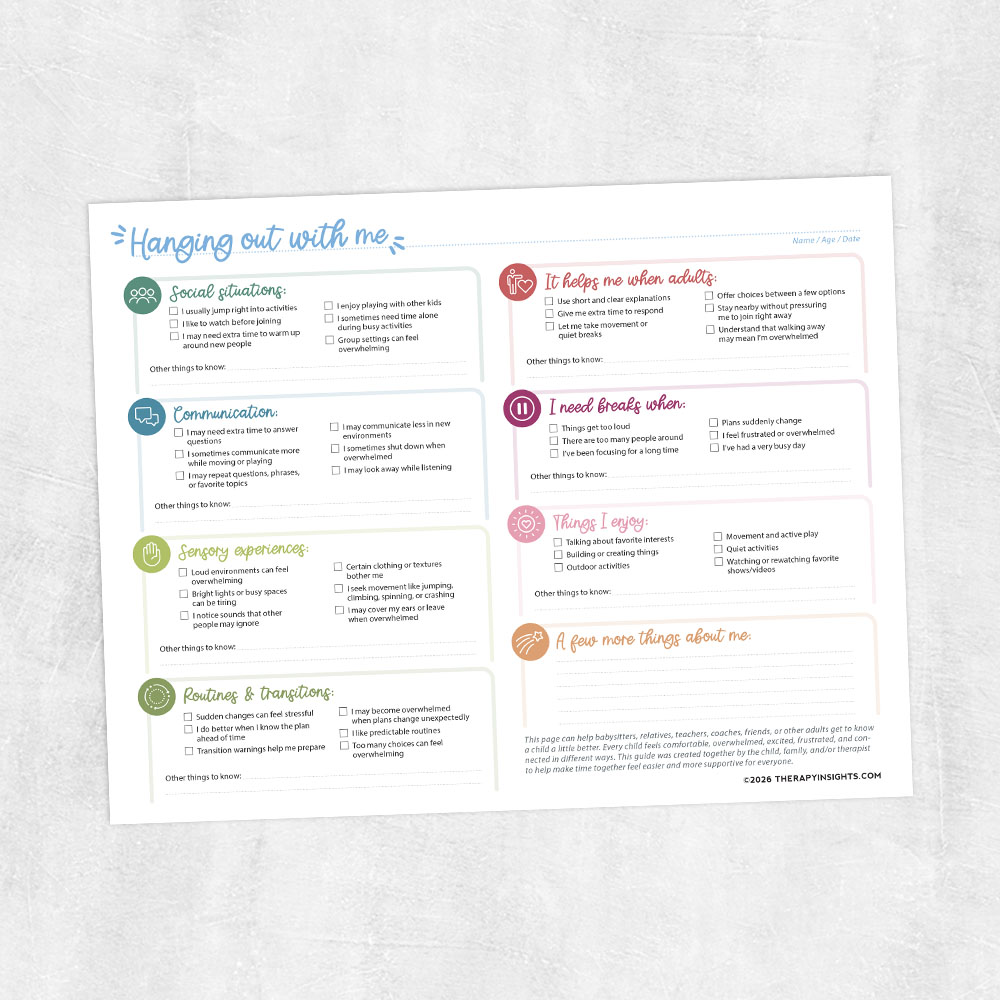
Hanging Out With Me
A strengths-based profile that helps children and families describe communication styles, sensory preferences, routines, and support needs using everyday language. It provides an accessible way to share meaningful information with teachers, coaches, relatives, babysitters, and other important adults.
What’s Coming in September…
-
- Friendships and social relationships through reflection, self-awareness, and healthy boundaries.
- Self-advocacy and communication by preparing teens for difficult conversations and workplace discussions.
- Transition to employment, with strengths-based workplace accommodation planning.
- Choice, dignity, and participation for children with tracheostomies and ventilators.
- Swallow study preparation, using a child-friendly social story to reduce uncertainty before a modified barium swallow study.