
Therapy That Fits Real Life: June’s New Resources

Adult Neuro: New Therapy Tools for June
This month’s adult neuro resources focus on helping people navigate the complicated realities of daily life after neurological change. Across these tools, the emphasis is on reducing cognitive load, preserving dignity, and supporting participation in meaningful ways, whether that means voting from home, reconnecting with music, organizing medications, or preparing to return to work.
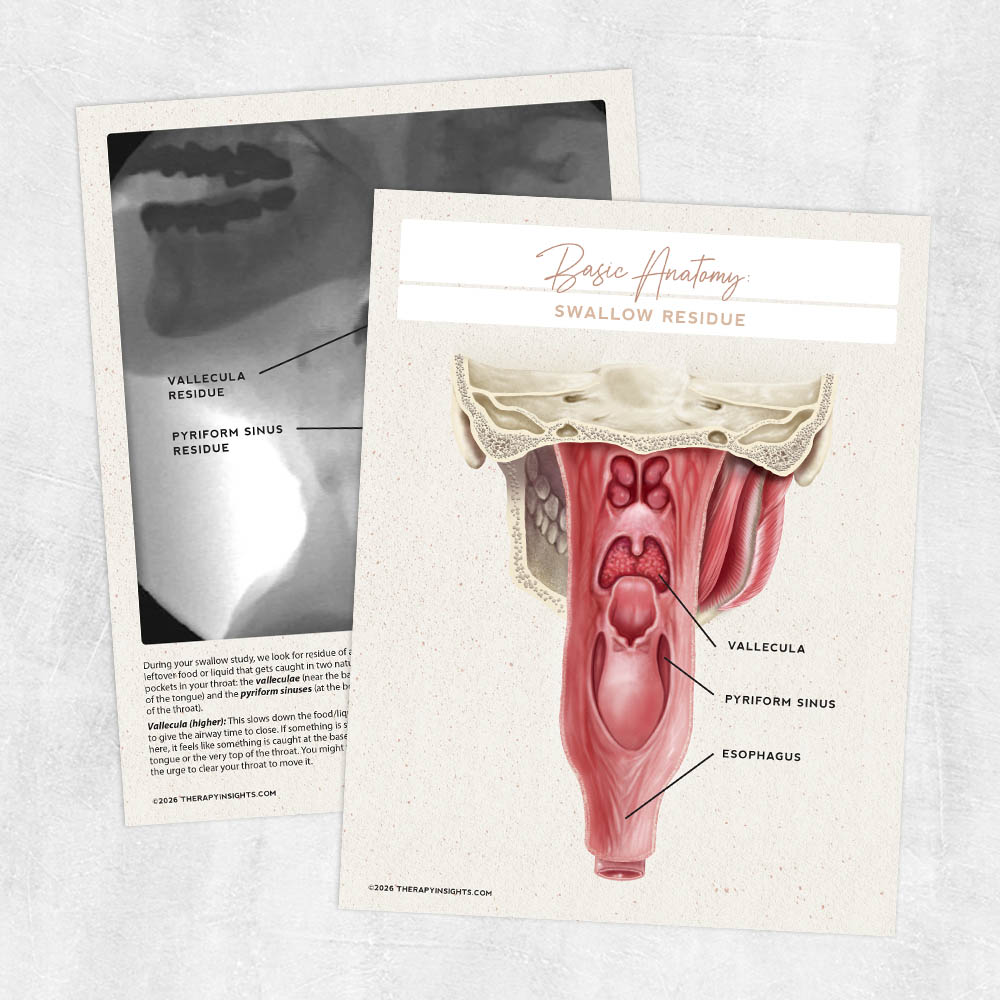
Basic Anatomy: Swallow Residue
This handout helps people understand what pharyngeal residue looks and feels like using simple visuals and explanations. Use it to support swallow education and reinforce practical clearing strategies during therapy.
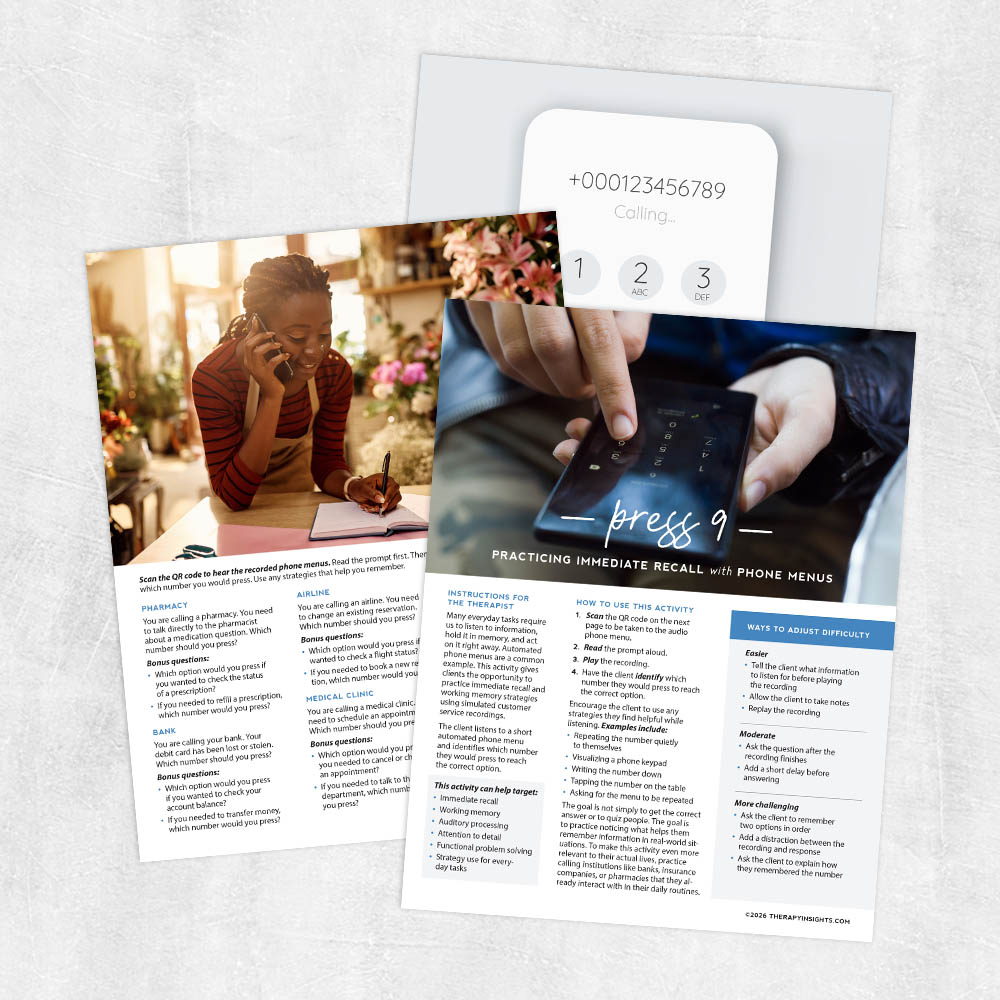
Press 9: Practicing Immediate Recall with Phone Menus
A functional cognitive activity built around realistic automated phone menus. Clients listen to customer service prompts and practice strategies that support working memory and immediate recall in real-world situations.
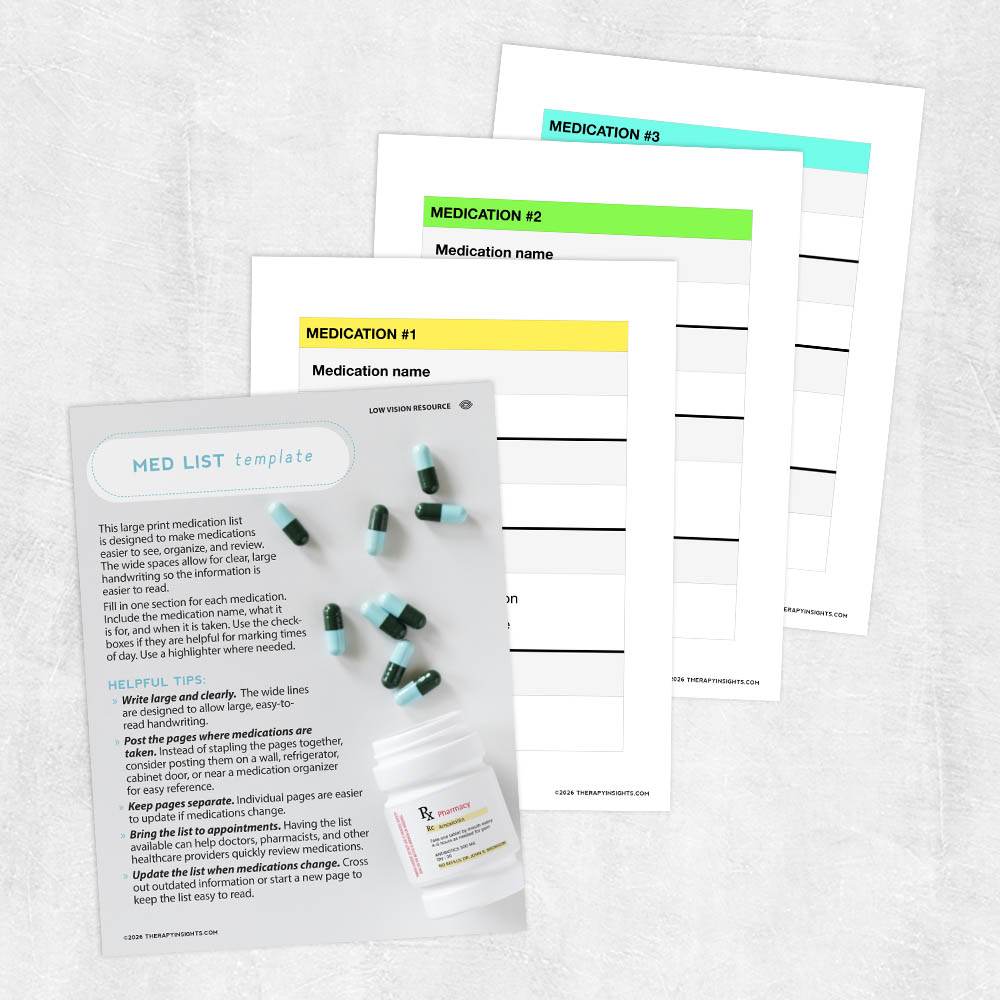
Low Vision Med List Template
A large-print medication list designed to support organization and independence for people with low vision. The high-contrast format makes information easier to reference at home for clients, caregivers, and healthcare providers.
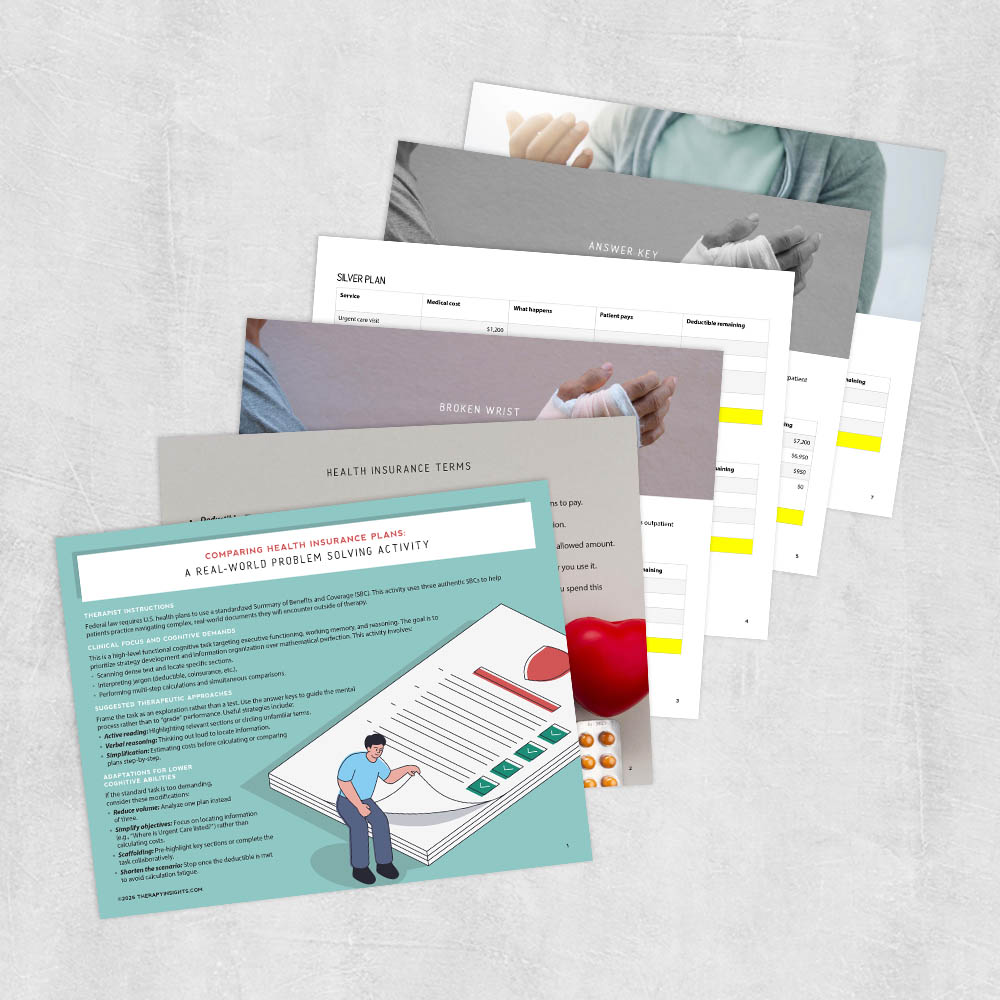
Comparing Health Insurance Plans: A Real-World Problem Solving Activity
This activity guides people through comparing realistic insurance plans while reasoning through medical scenarios and out-of-pocket costs. It supports high-level functional cognition and real-world decision-making around healthcare access.
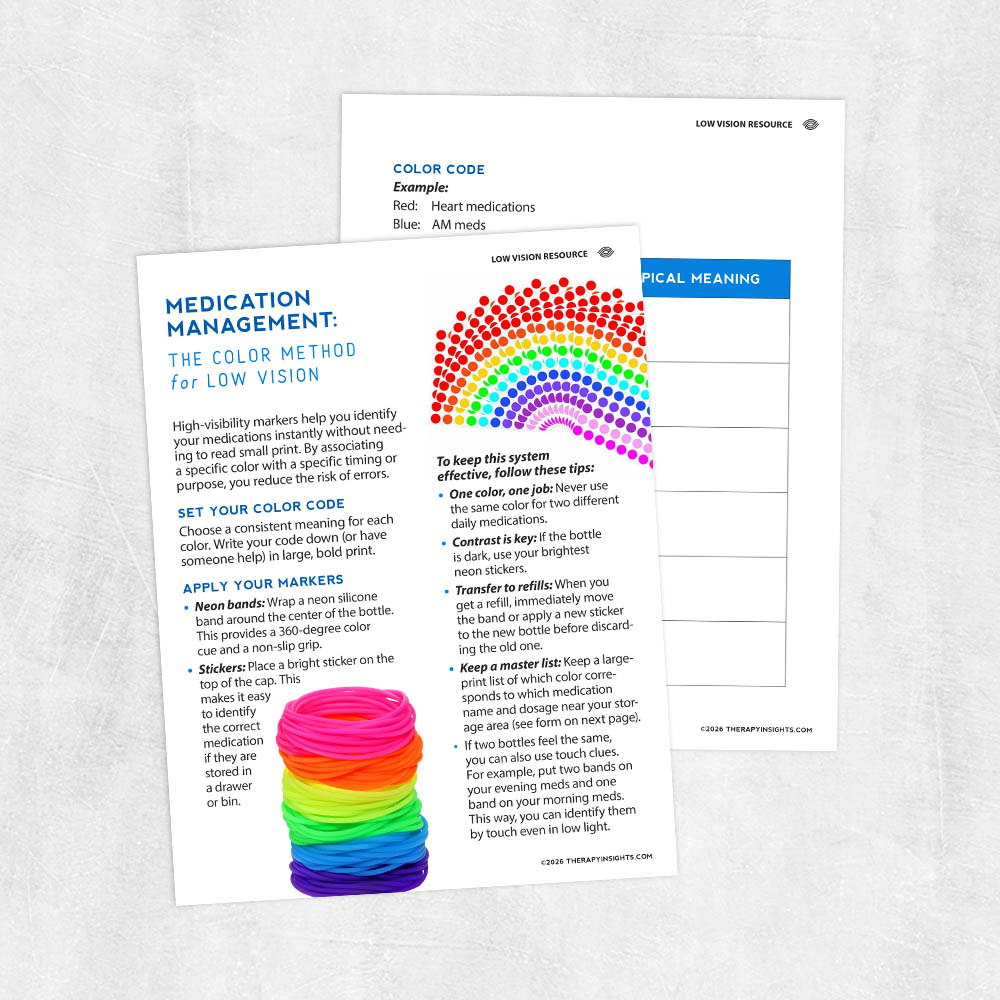
Medication Management: The Color Method for Low Vision
A practical medication management framework that uses tactile bands and color-coded visual cues to support safer, more independent medication routines for people with low vision.
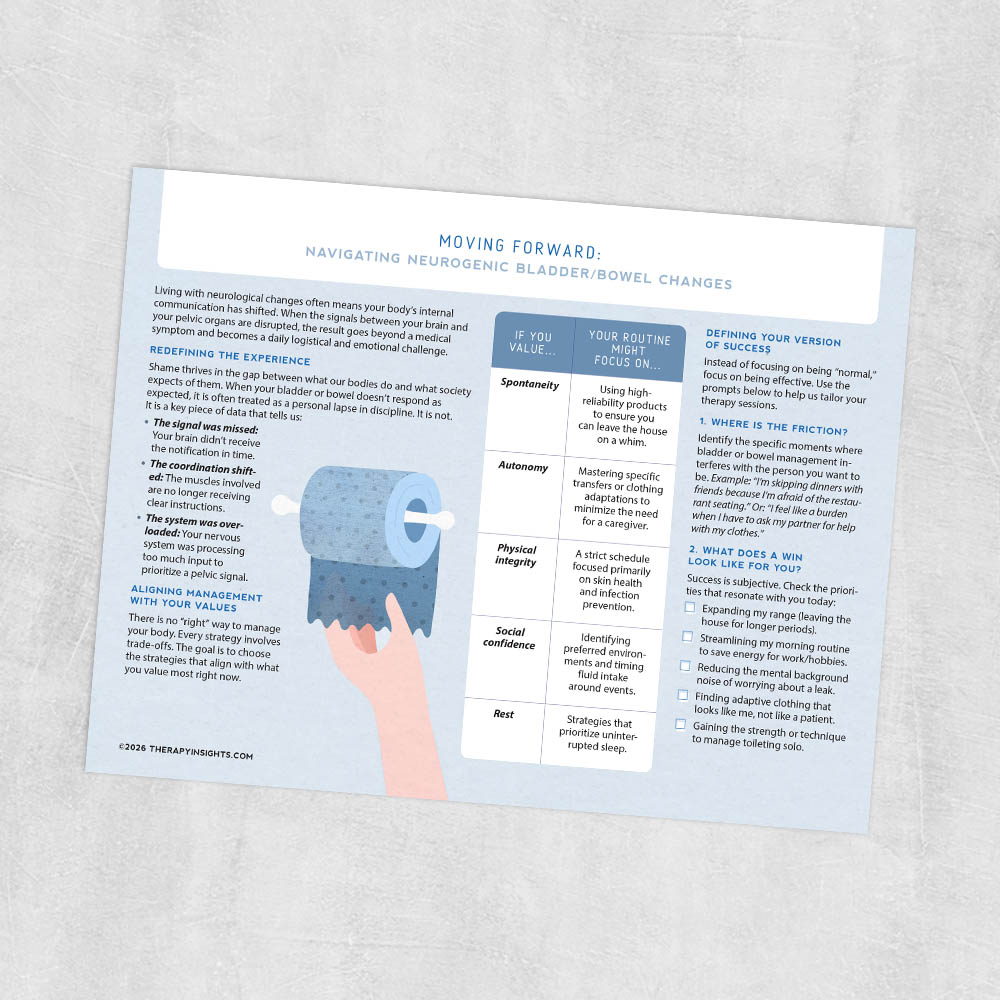
Moving Forward: Navigating Neurogenic Bladder/Bowel Changes
This dignity-centered resource reframes accidents as neurological events rather than personal failures. It supports collaborative conversations around autonomy, lifestyle goals, and practical management strategies without shame-based messaging.
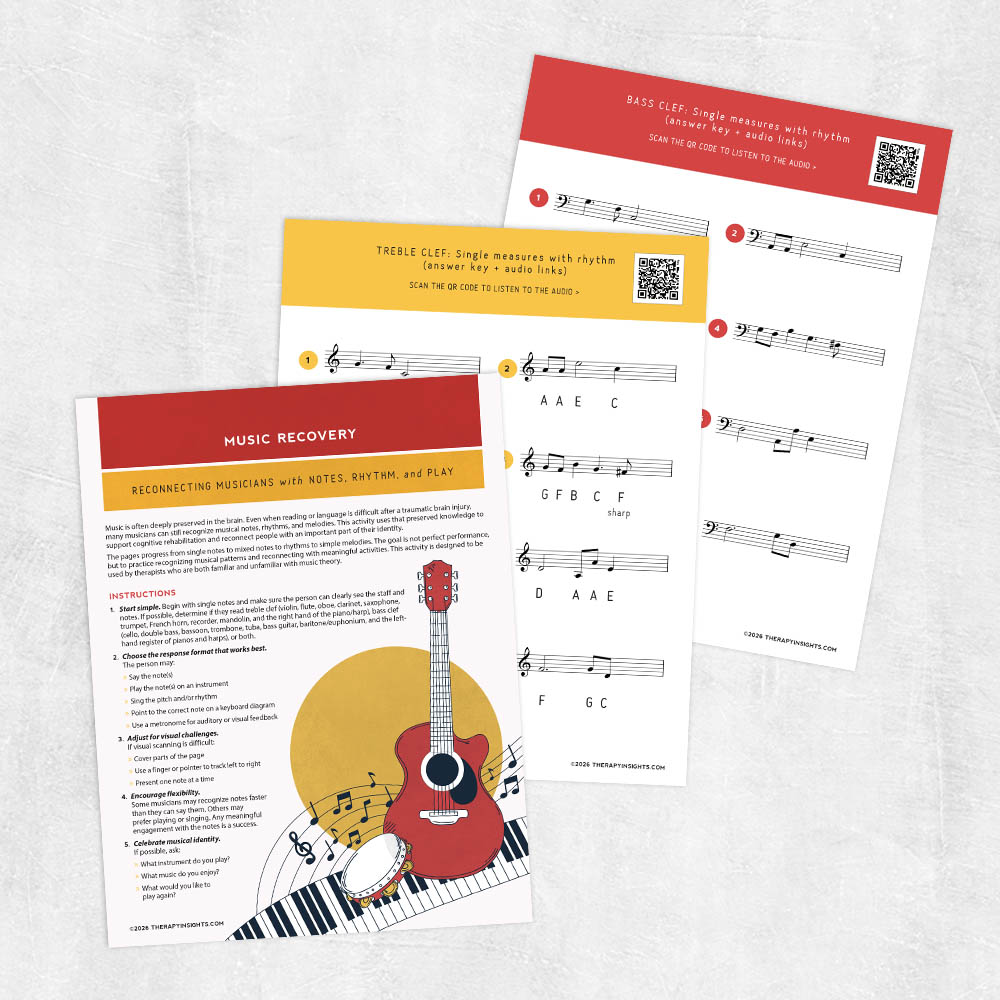
Music Recovery: Reconnecting Musicians with Notes, Rhythm, and Play
A music-based rehabilitation activity designed to support visual scanning, cognition, and identity-based engagement after brain injury. Use it to reconnect musicians with meaningful participation through rhythm and melody.
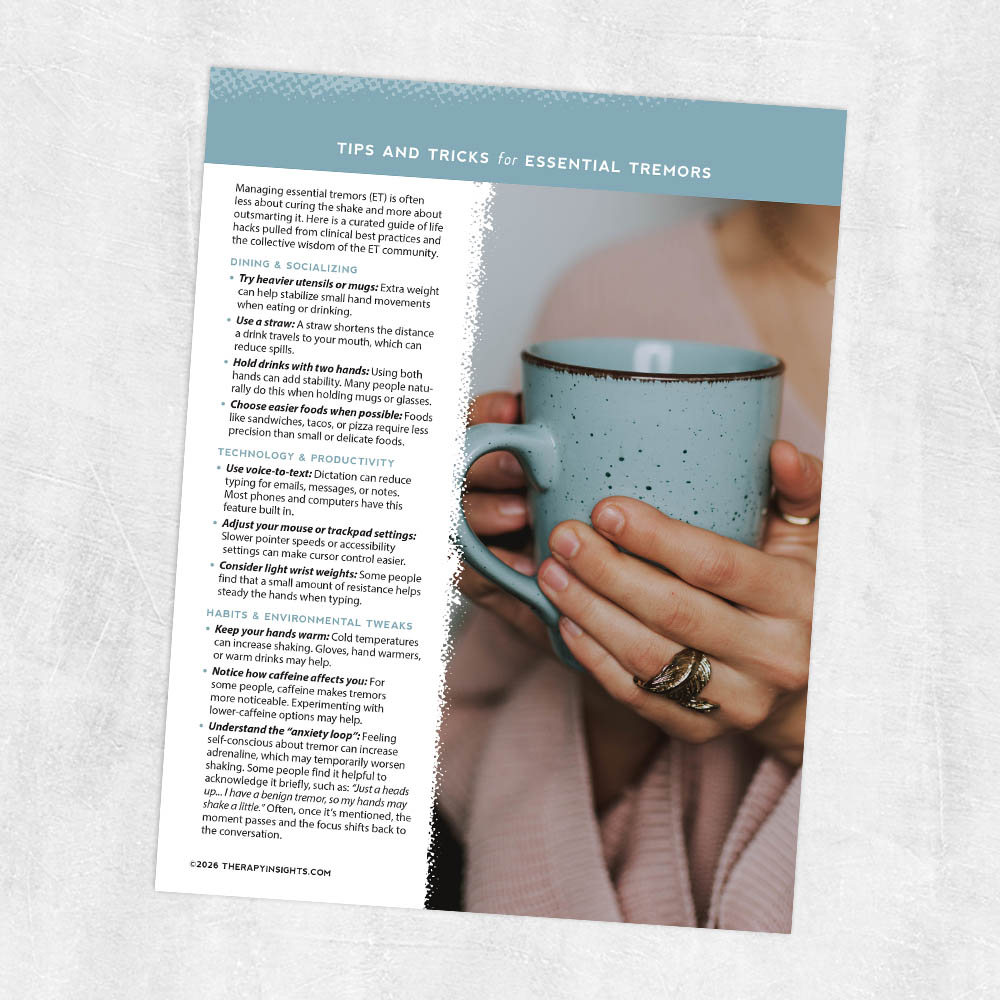
Tips and Tricks for Essential Tremors
This handout introduces practical adaptations and environmental strategies that can make everyday activities easier for people living with tremor. It supports conversations about independence, stigma reduction, and real-world participation.
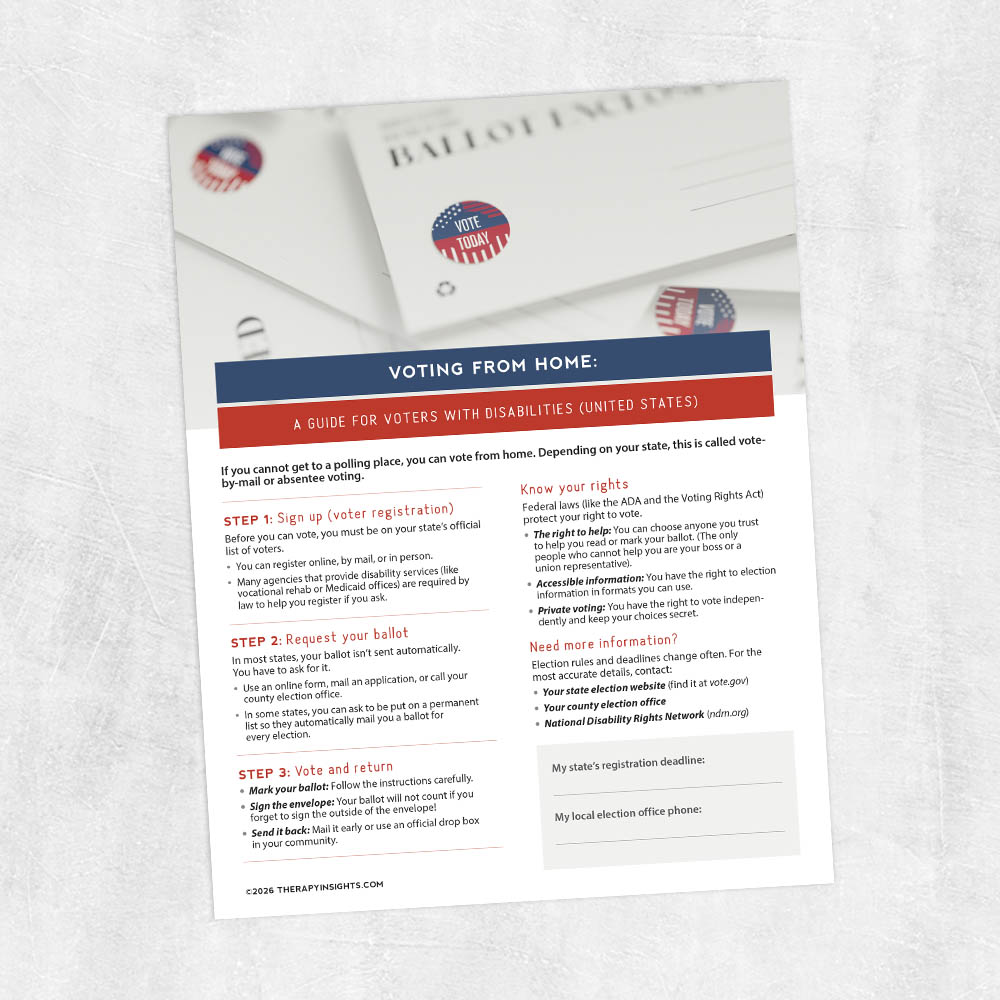
Voting From Home: A Guide for Voters with Disabilities (United States)
A practical guide that walks people through voting from home with clarity and support. Use it to reinforce autonomy, civic participation, and access to voting for people navigating disability-related barriers.
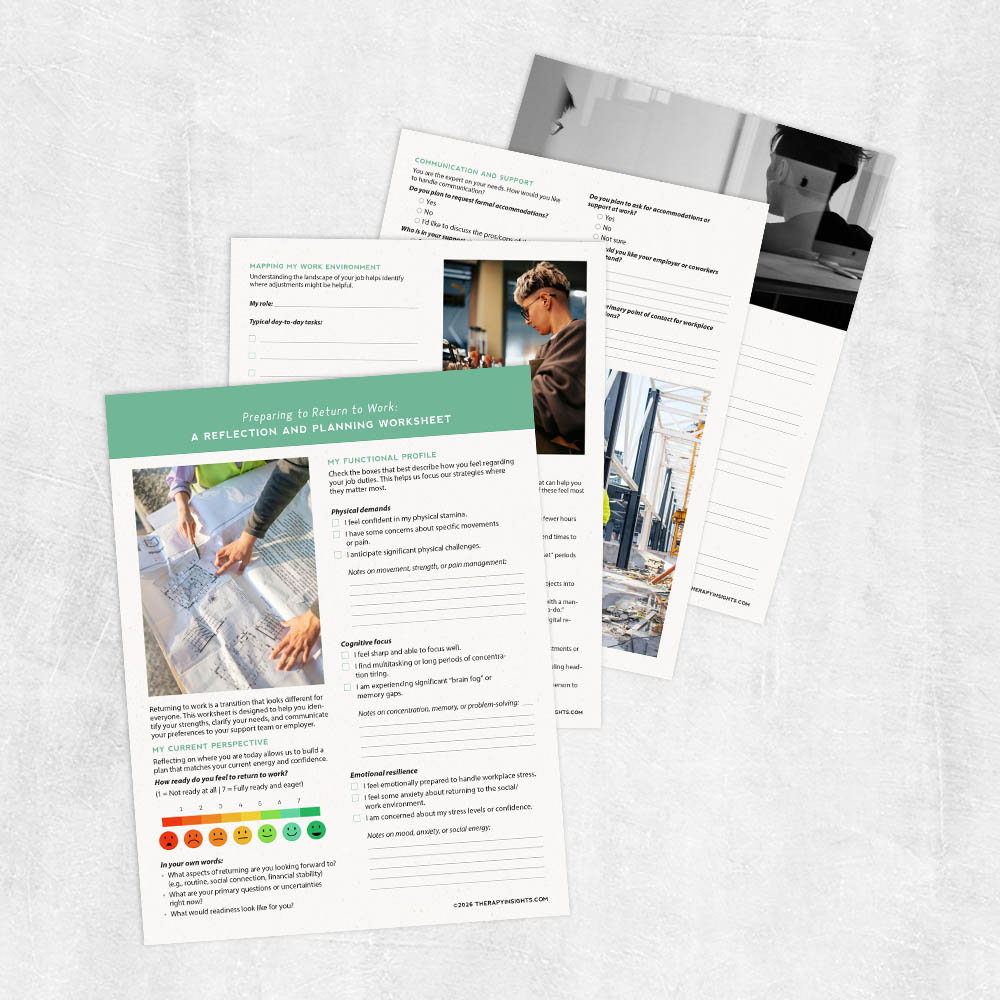
Preparing to Return to Work: A Reflection and Planning Worksheet
A collaborative worksheet that helps people identify workplace needs, communication preferences, and accommodations during the return-to-work process. It shifts vocational planning toward autonomy and shared decision-making.
What’s Coming in July…
-
Functional scheduling and executive functioning tools like The Calendar Pivot
-
Resources connecting anxiety, emotional regulation, and recovery after stroke
-
Aphasia-friendly activities designed to support connection across generations
-
Person-centered education around intelligence, cognition, and infantilization
-
Practical guidance for responding to confabulation
-
Flexible cognitive support tools like the BRAIN Strategy Board
-
Real-world accessibility resources for air travel and adaptive grooming
-
Visual education on coup-contrecoup injuries
-
Reflective tools exploring fatigue, pacing, and emotional balance
Clinical Pediatrics: New Therapy Tools for June
June’s pediatric resources focus on reducing pressure, supporting regulation, and helping families shift from compliance-based approaches toward collaboration, trust, and sensory safety. These tools are designed to help therapists guide conversations that feel supportive instead of corrective.
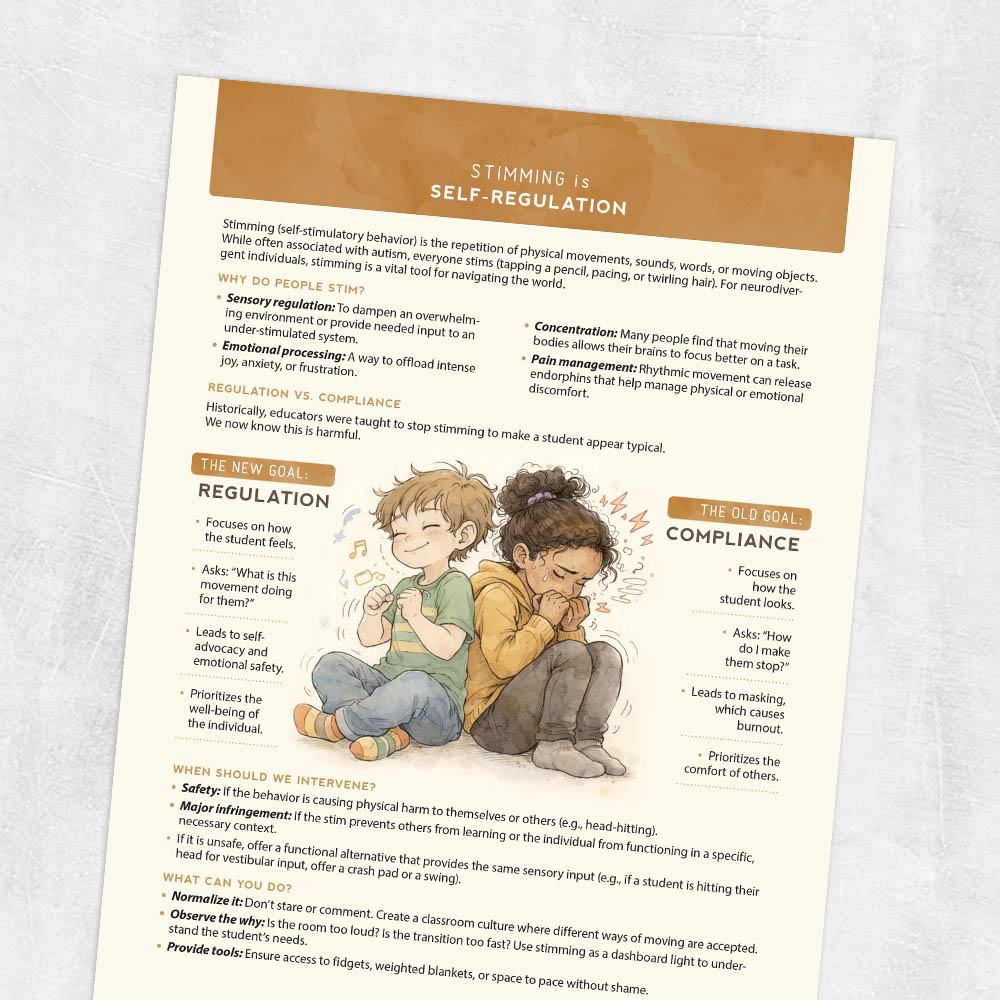
Stimming is Self-Regulation
This resource helps caregivers and educators understand stimming as a meaningful sensory regulation tool rather than a behavior to eliminate. It supports more affirming, supportive environments at home and school.
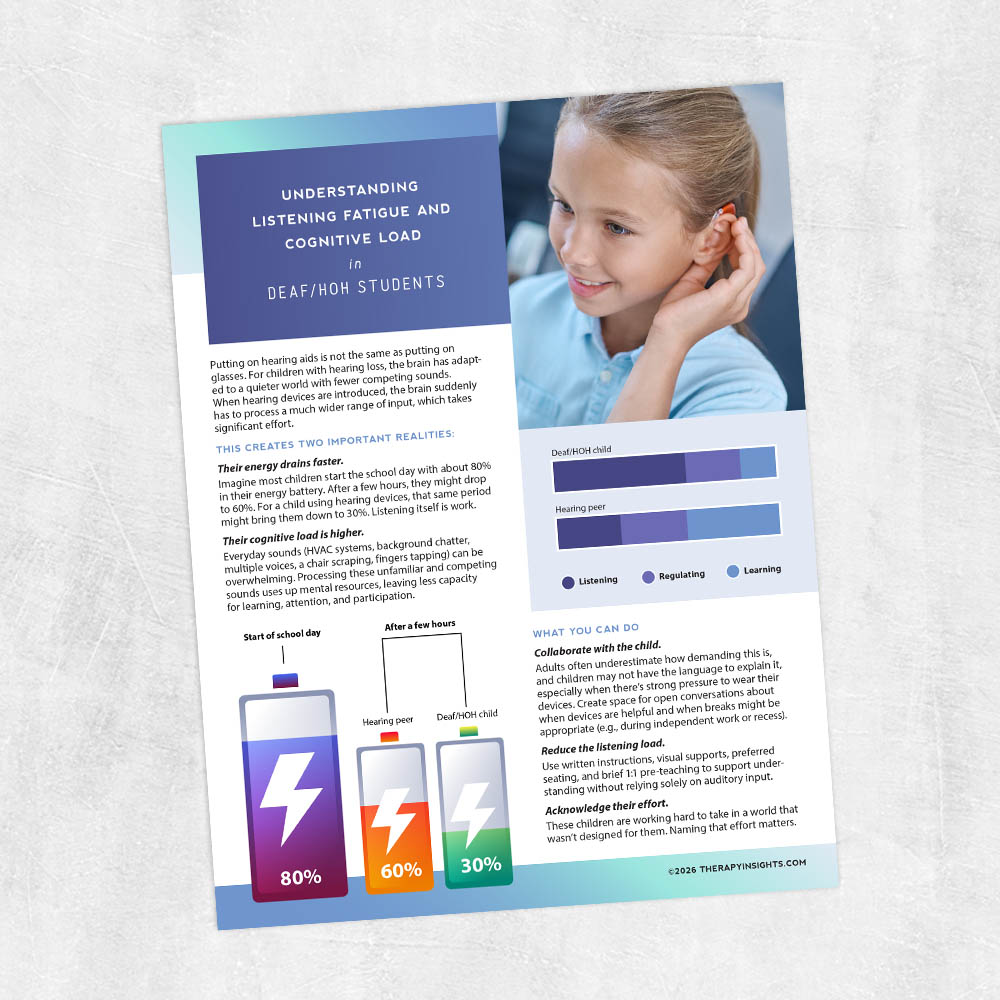
Understanding Listening Fatigue and Cognitive Load in Deaf/HOH Students
A practical handout that explains the hidden effort involved in listening with hearing devices. Use it to guide conversations about energy conservation, cognitive load, and creating environments that better support participation.
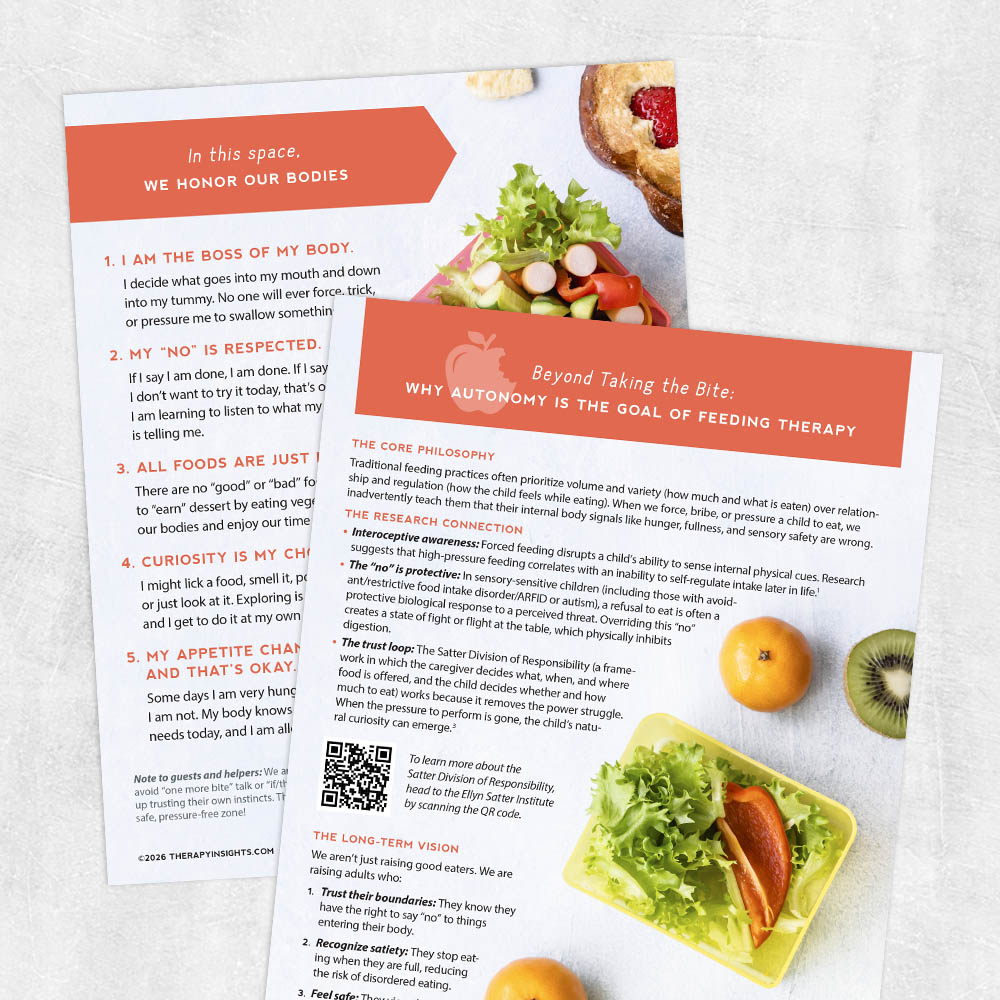
Beyond Taking the Bite: Why Autonomy is the Goal of Feeding Therapy
This resource reframes feeding therapy around interoception, trust, and body autonomy instead of compliance. It helps therapists support families in moving away from mealtime power struggles and toward safer, more collaborative feeding experiences.
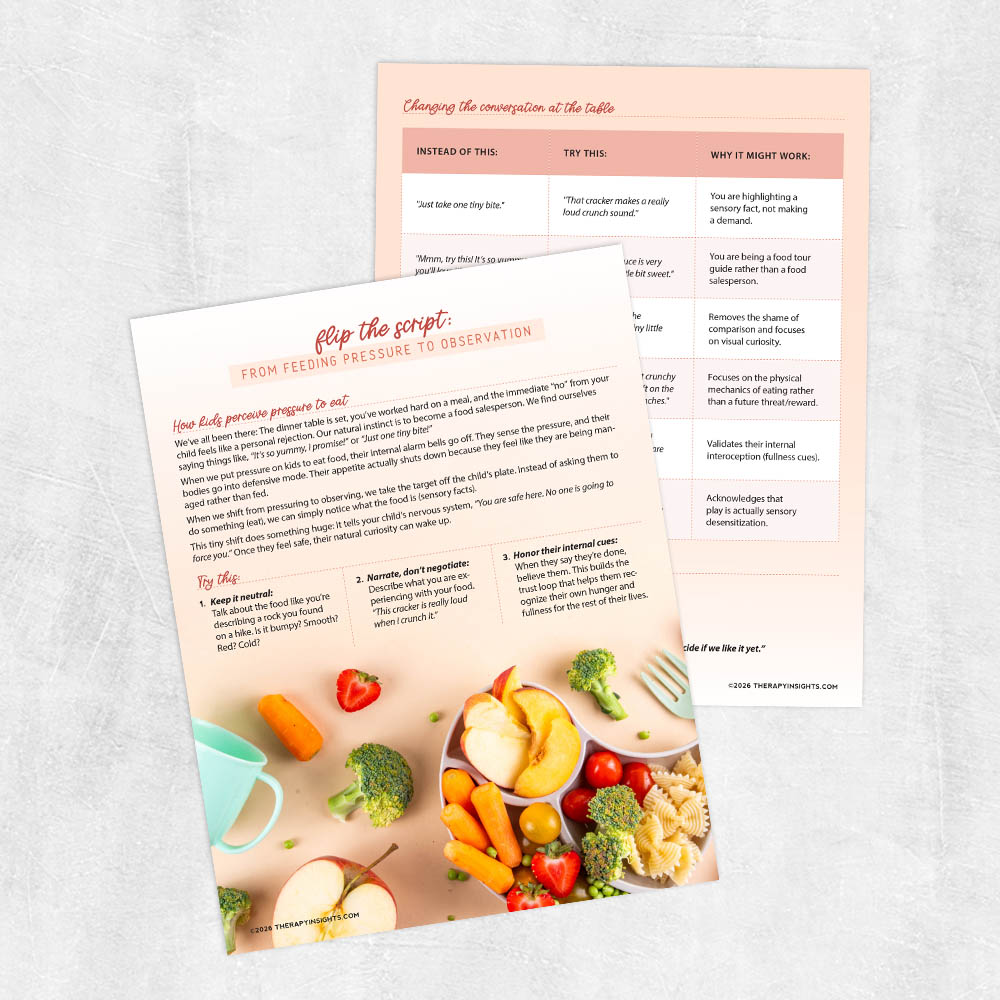
Flip the Script: From Feeding Pressure to Observation
A practical resource that helps caregivers shift from persuasion and pressure toward neutral observation and sensory curiosity during meals. Includes language swaps that reduce nervous system overwhelm and support trust-building.
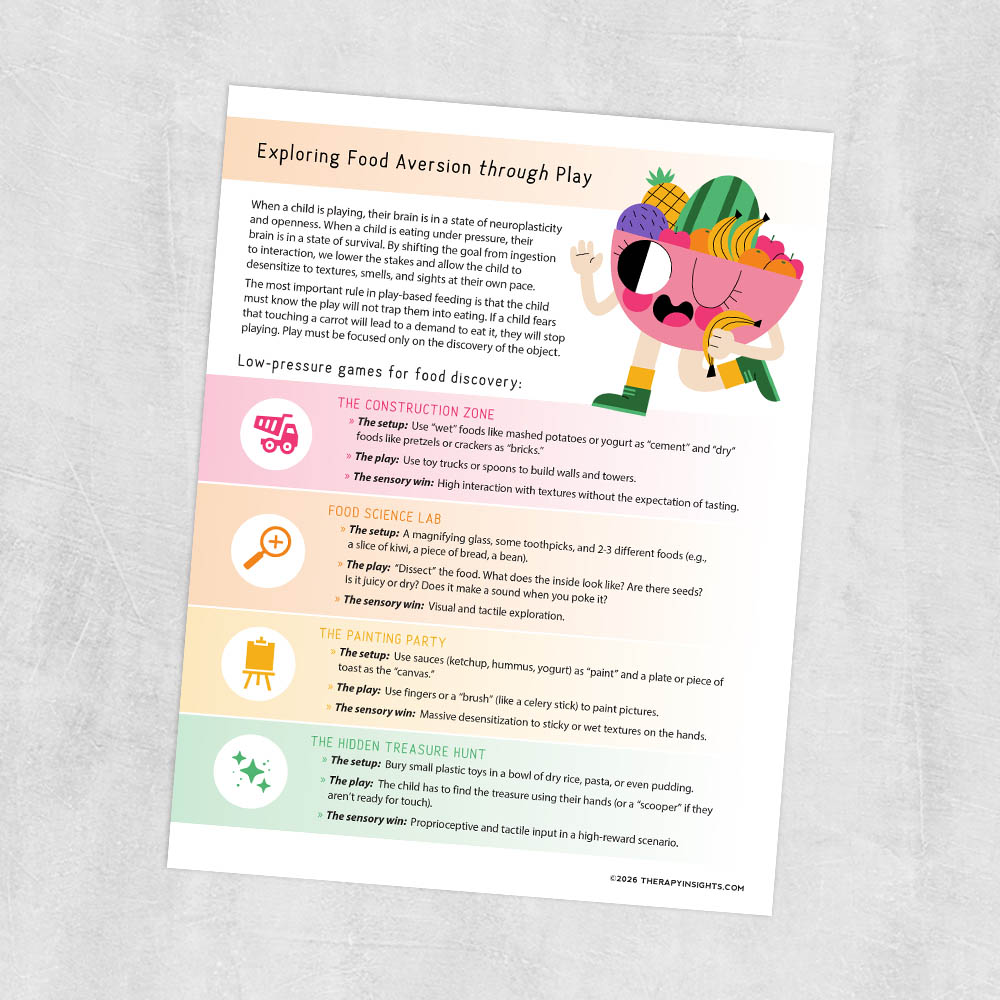
Exploring Food Aversion Through Play
A playful, sensory-based framework for helping children explore food without the pressure of eating. Use it to guide low-stakes interaction, tactile exploration, and gradual desensitization while honoring boundaries.
What’s Coming in July…
-
New ways of reframing ADHD behaviors as self-regulation attempts
-
Collaborative activities that invite kids into therapy goal planning
-
Child-friendly tools for understanding brain injury changes
-
Resources that support interoception and body cues around food
-
Practical guidance for supporting highly sensitive children