
September Therapy Resources: Navigating Real Life

Adult Neuro: New Therapy Tools for September
Therapy becomes more meaningful when clinical information connects to the things people actually need and want to do. This month’s adult neuro resources span across understanding swallowing physiology and neurological changes to cooking, cleaning, returning to work, and finding communication strategies that fit real-life situations.
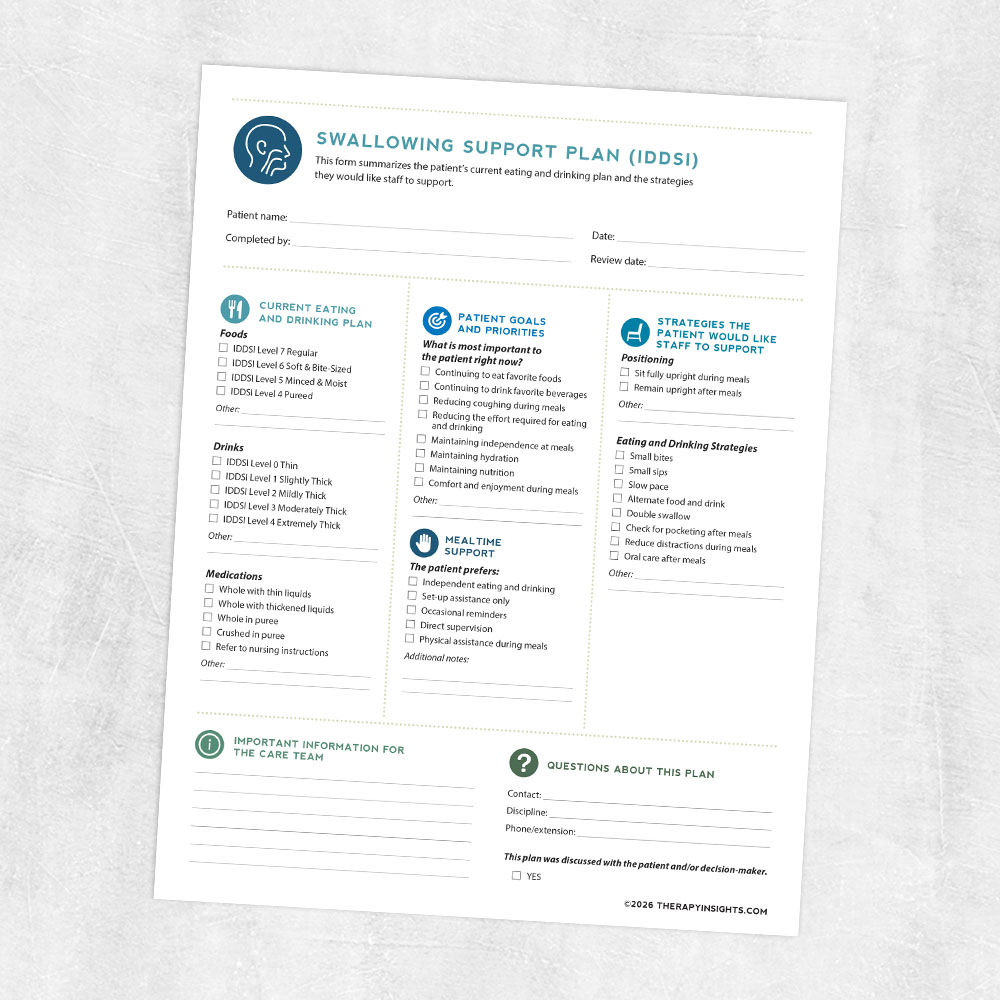
Swallowing Support Plan (IDDSI)
A clear, organized way to communicate a person’s current eating and drinking plan across the care team. This resource brings together IDDSI levels, mealtime supports, and individualized swallowing strategies while keeping the patient’s goals and priorities visible.
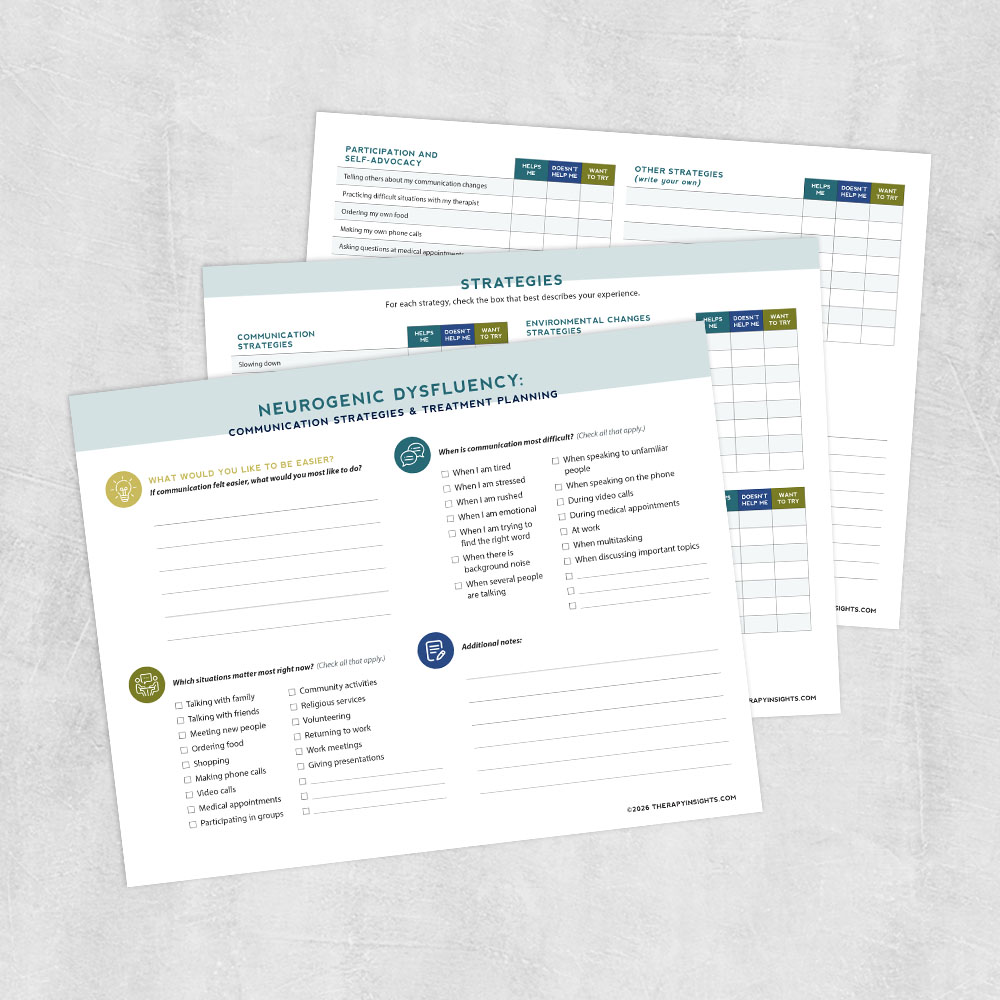
Neurogenic Dysfluency: Communication Strategies & Treatment Planning
A collaborative tool for exploring how changes in fluency affect communication in situations that matter to the individual. Patients can identify what makes communication easier or harder, consider strategies they want to try, and help shape therapy around their own priorities.
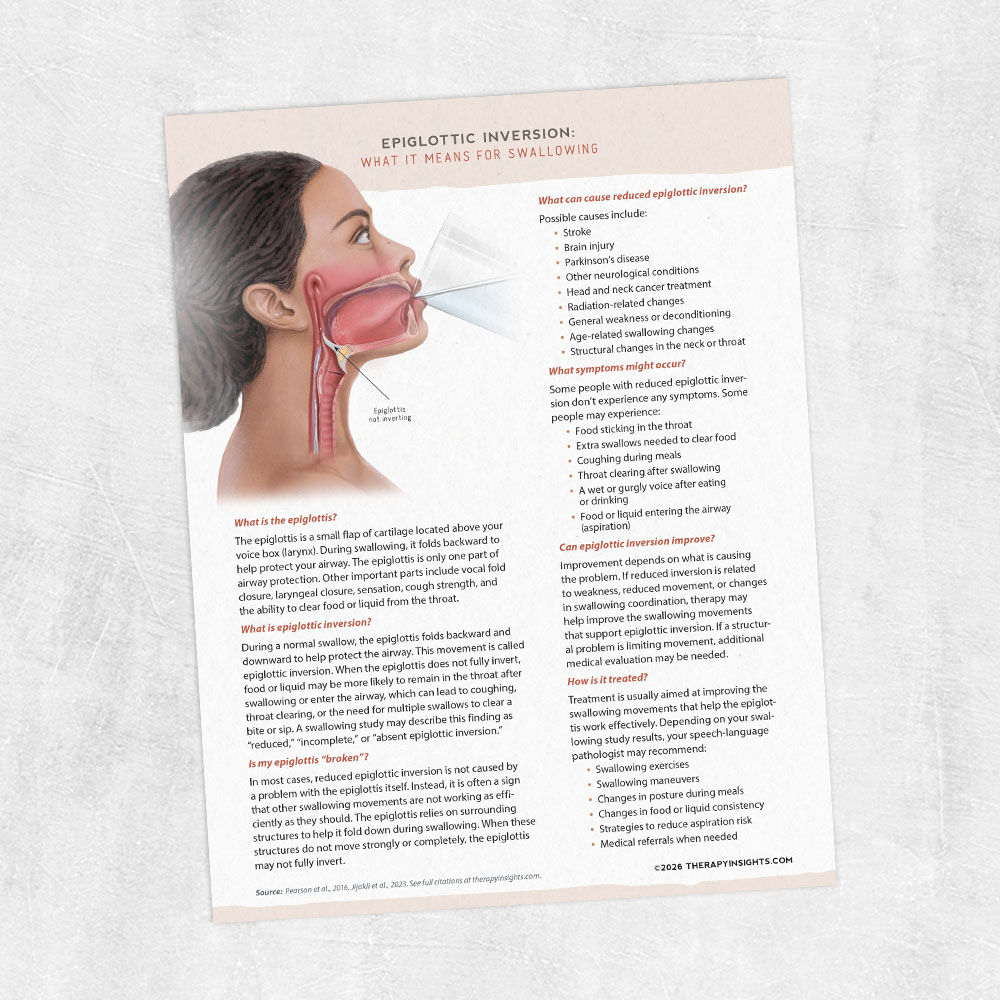
Epiglottic Inversion: What It Means for Swallowing
Help patients understand what epiglottic inversion is and what reduced, incomplete, or absent inversion on a swallow study may mean. Clear explanations connect swallowing physiology with function, making it easier to discuss assessment findings and treatment recommendations.
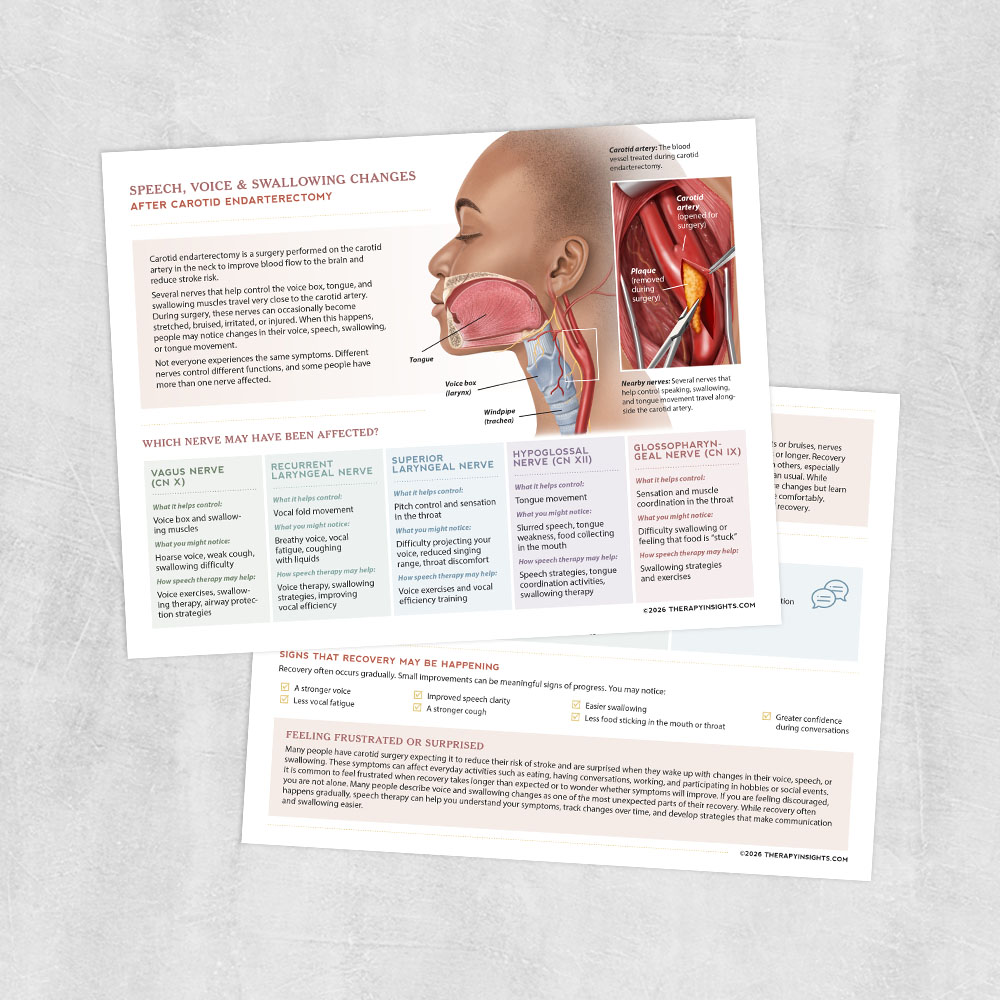
Speech, Voice, and Swallowing Changes After Carotid Endarterectomy
A patient-friendly explanation of why changes in speech, voice, or swallowing can sometimes occur after carotid endarterectomy. This resource introduces the nearby nerves that may be affected, what recovery can look like, and how speech therapy may support the healing process.
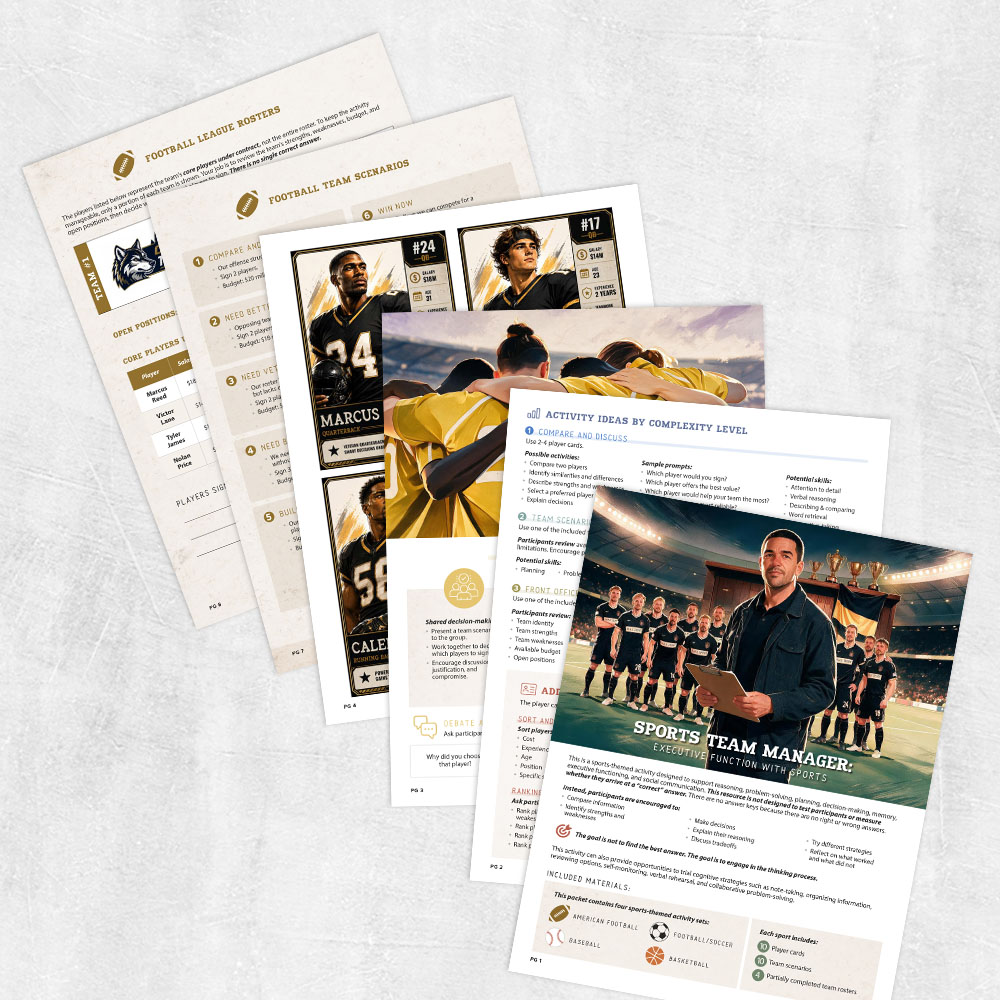
Sports Team Manager: Executive Function with Sports
Turn roster building into a flexible cognitive-communication challenge. Using player cards and team scenarios across four sports, participants practice reasoning, organization, problem-solving, and weighing tradeoffs without working toward a single “correct” answer.
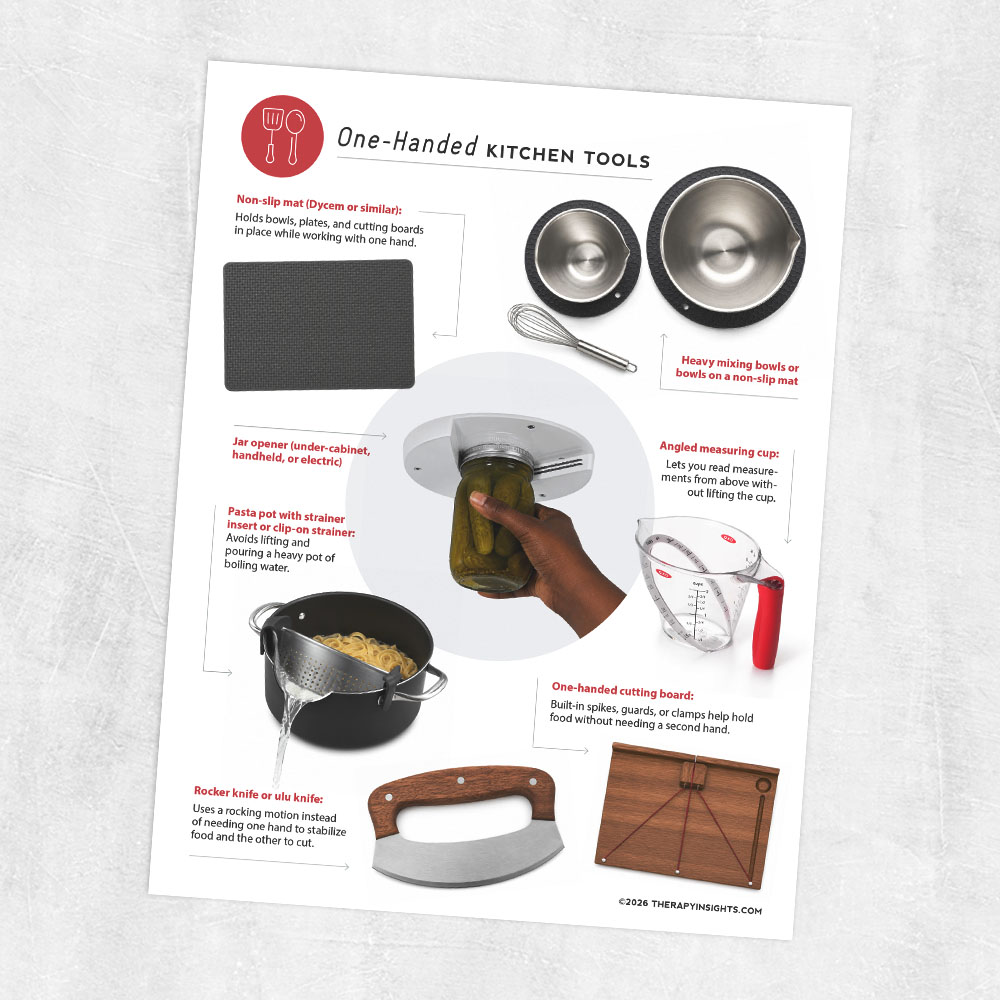
One-Handed Kitchen Setup
Explore adaptive tools that can make cooking safer and more manageable when using one hand. This resource provides a practical starting point for identifying equipment and strategies that fit the person’s actual kitchen, routines, and cooking priorities.
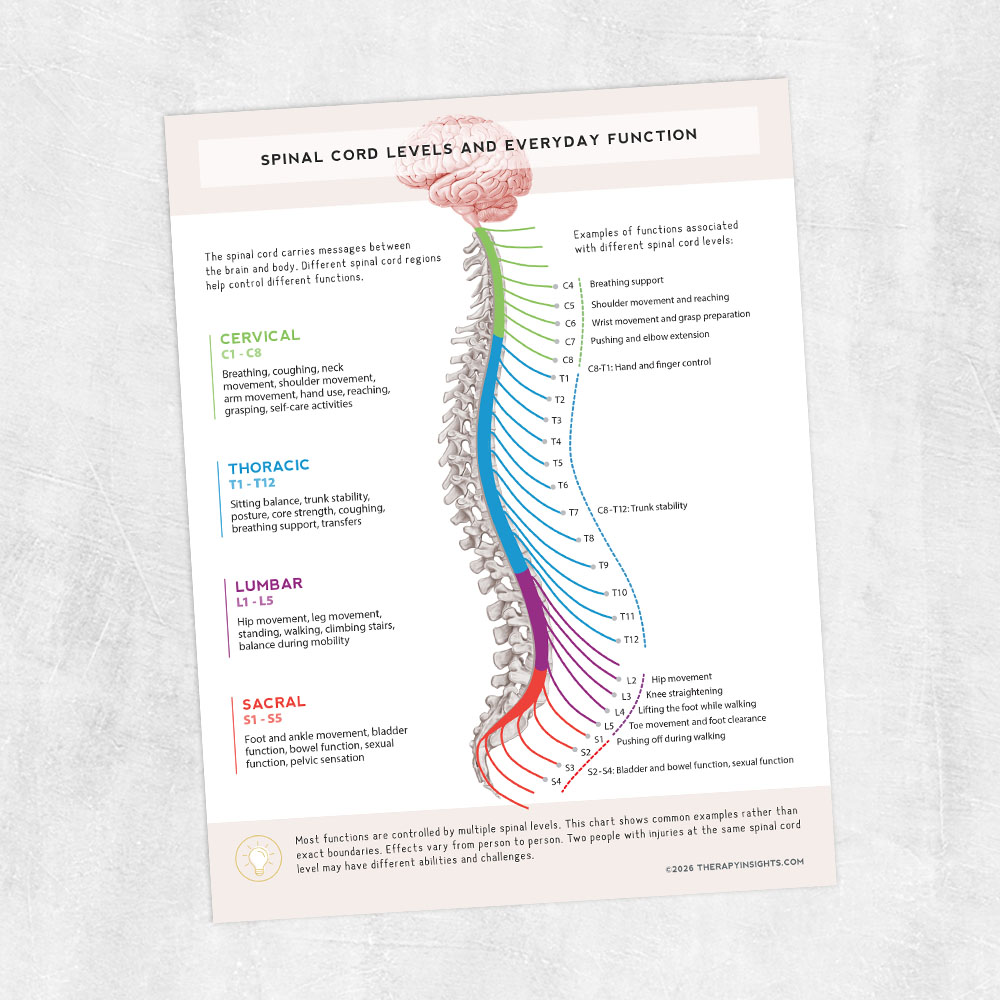
Spinal Cord Levels and Everyday Function
A visual guide connecting spinal cord levels with functions such as breathing, hand use, walking, and bladder and bowel control. Use it to make complex anatomy more understandable while supporting conversations about everyday function during rehabilitation.
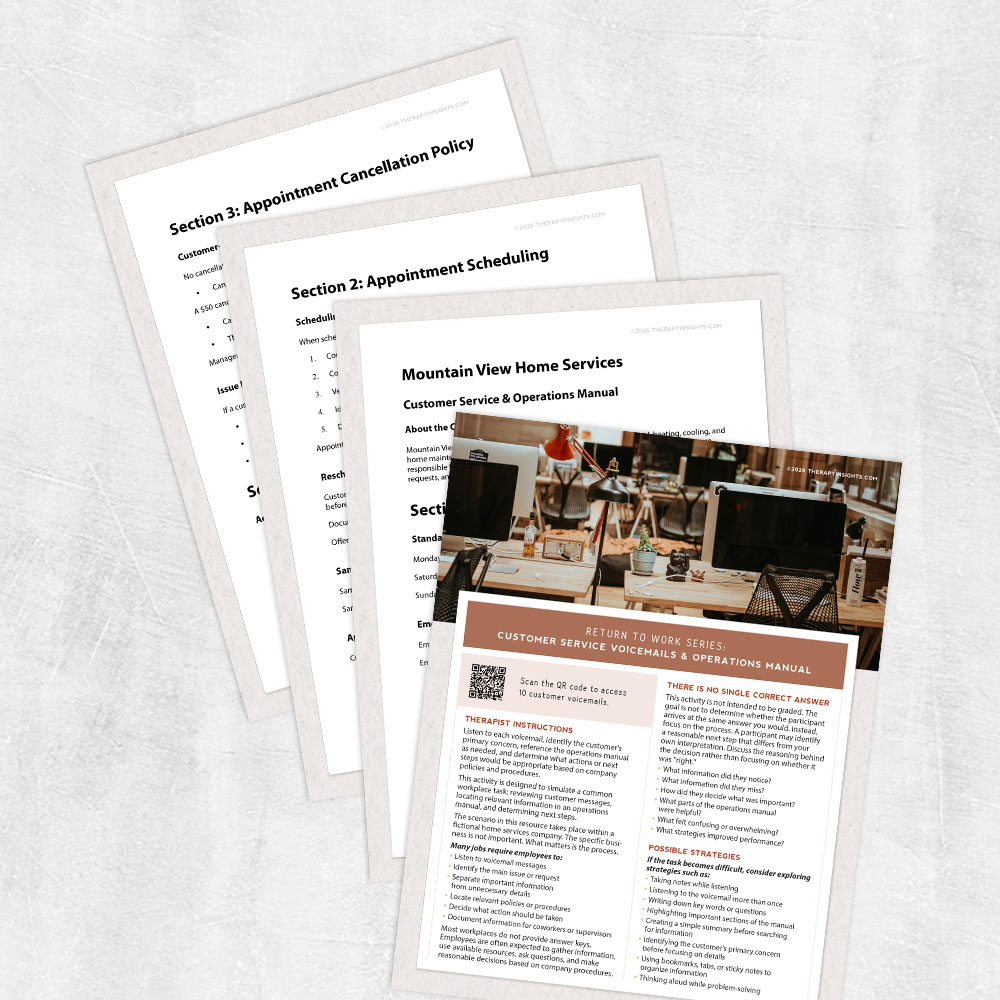
Return to Work Series: Customer Service Voicemails & Operations Manual
A realistic workplace simulation that asks participants to listen to customer voicemails, navigate an operations manual, and determine appropriate next steps. The activity brings auditory comprehension, executive functioning, information management, problem-solving, and workplace communication together in one functional task.
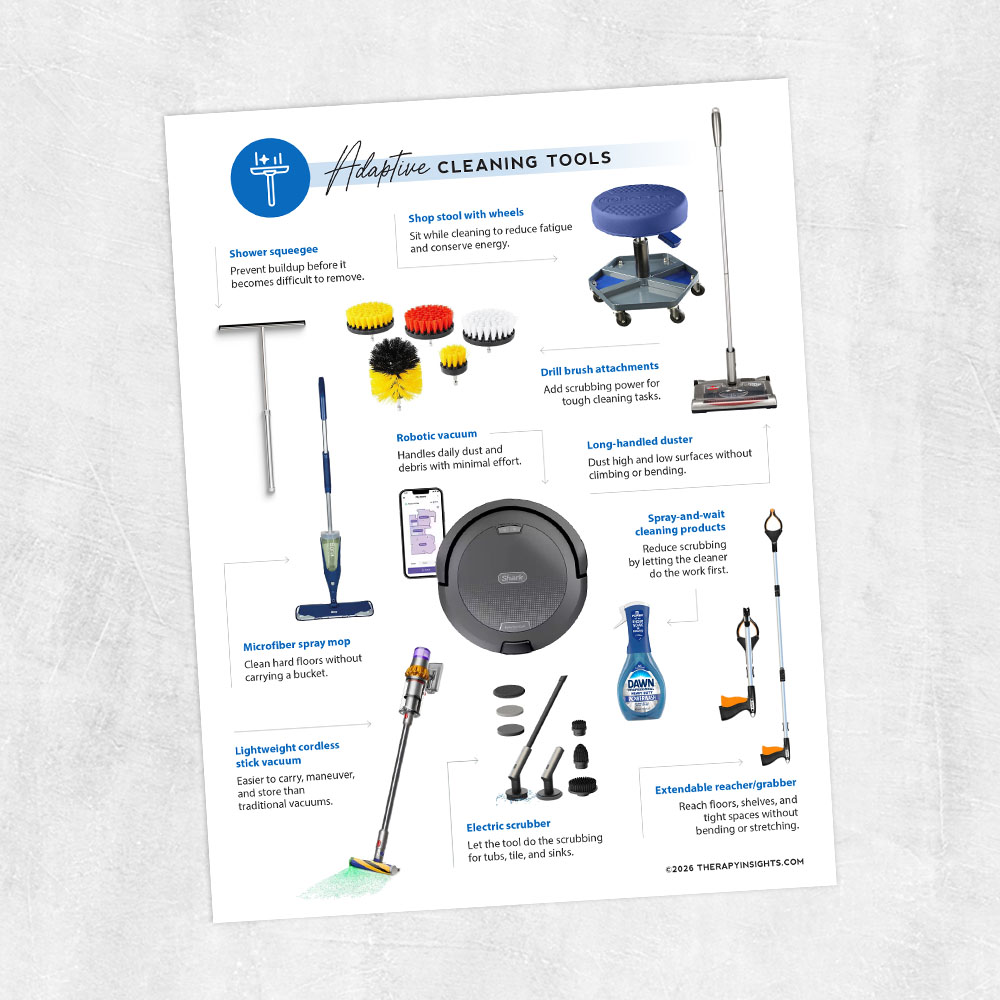
Adaptive Cleaning Tools
Explore tools and strategies that can reduce effort and make household cleaning more manageable for people experiencing fatigue, pain, mobility limitations, balance challenges, or reduced strength. Use this resource to help individuals identify adaptations that fit their abilities, priorities, and home routines.
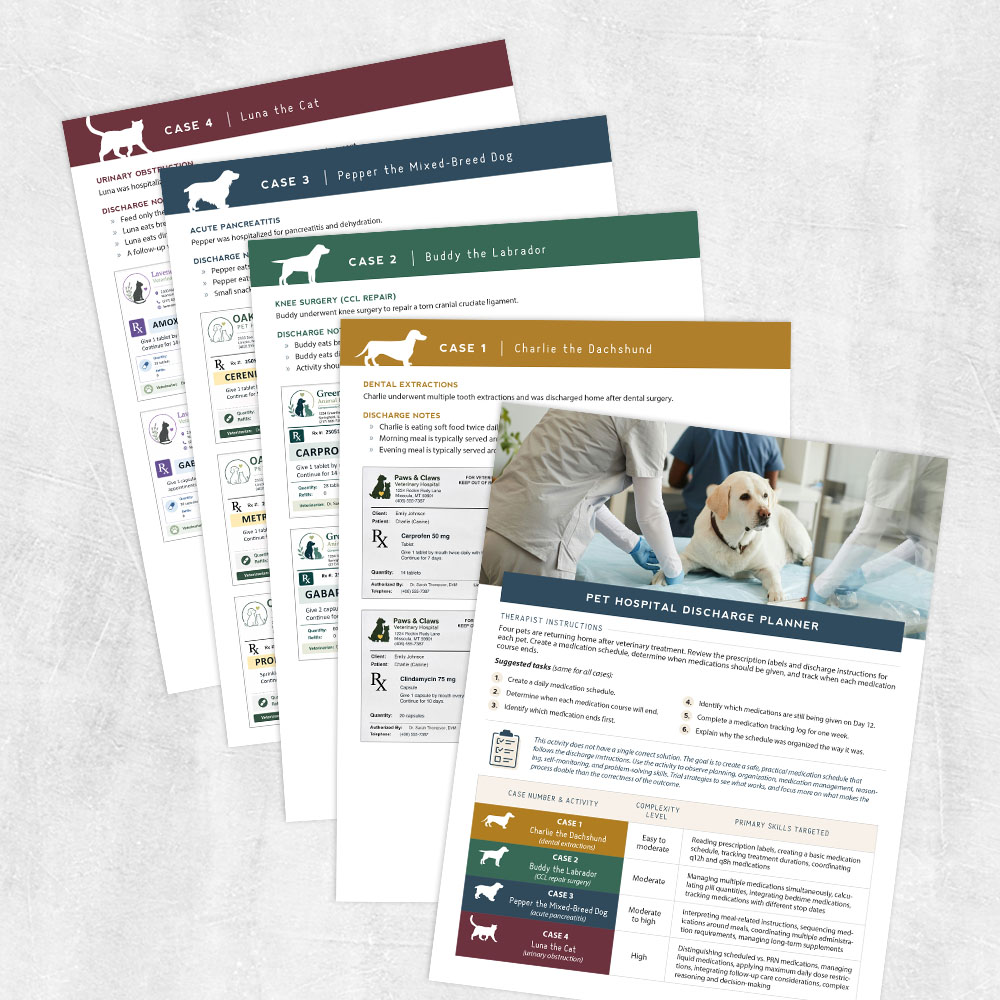
Pet Hospital Discharge Planner
|
Help patients practice medication management and executive functioning skills using realistic veterinary discharge instructions. These four pet-care scenarios challenge patients to create medication schedules, track treatment durations, interpret prescription labels, and coordinate complex dosing requirements in a functional, engaging context. |
What’s Coming in October…
- Dysphagia education and clinical practice, including straw use and a clinician guide for moving beyond diet waivers toward informed choice.
- Neurological recovery and education, with resources on concussion recovery and changes in speech fluency after neurological injury.
- Activity, pacing, and physical participation, including enjoyable alternatives to traditional exercise, pacing strategies, NMES education, and an evidence-based shoulder program for manual wheelchair users.
- Functional cognitive rehabilitation, with a fast-paced hockey activity targeting attention, working memory, organization, and cognitive flexibility.
- Financial rehabilitation, with a clinical guide for approaching money management after illness or injury through conversation, autonomy, and individualized goals.
Clinical Pediatrics: New Therapy Tools for September
Growing independence often means navigating increasingly complex situations, including friendships, work, difficult conversations, medical care, and advocating for what you need. This month’s pediatric resources provide practical tools for approaching those experiences.
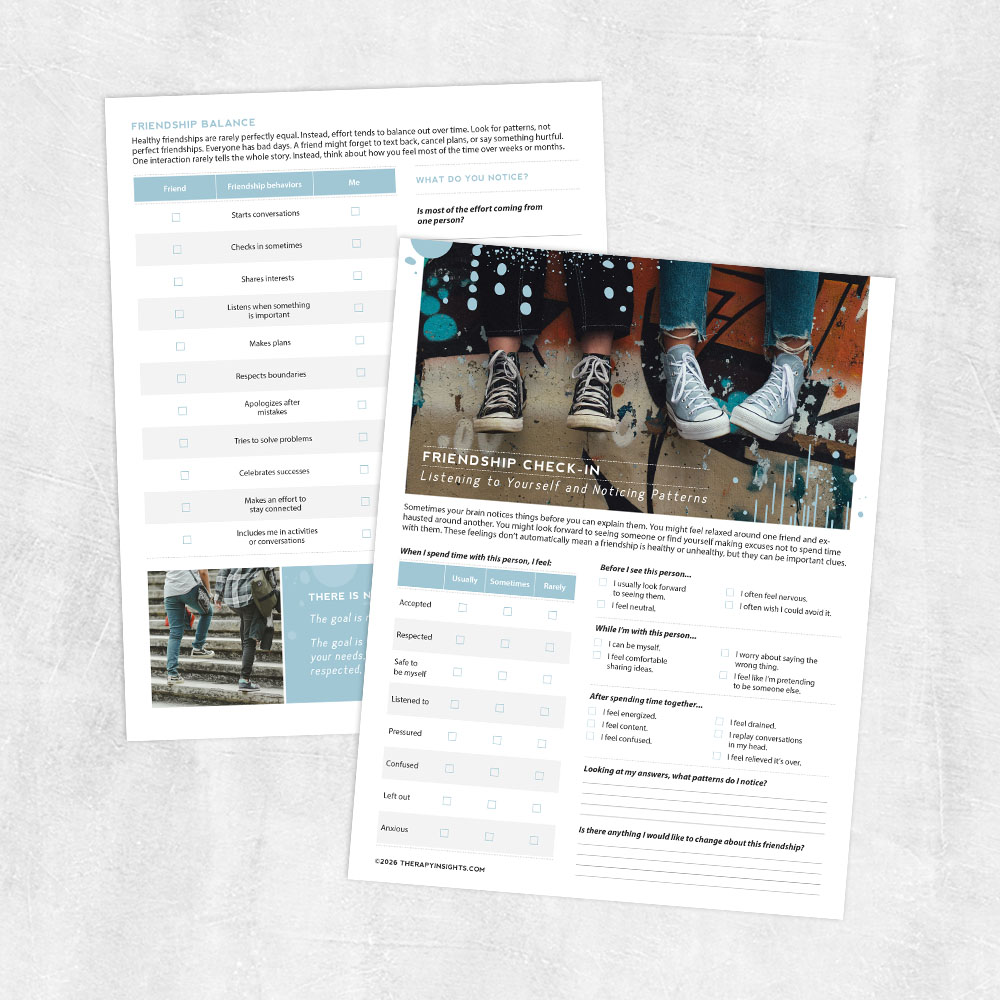
Friendship Check-In: Listening to Yourself and Noticing Patterns
Help middle school and teen clients reflect on how their friendships actually feel rather than measuring them against rigid social rules. This neurodiversity-affirming resource encourages teens to notice patterns, consider how effort is shared, and better understand their own needs and boundaries in relationships.
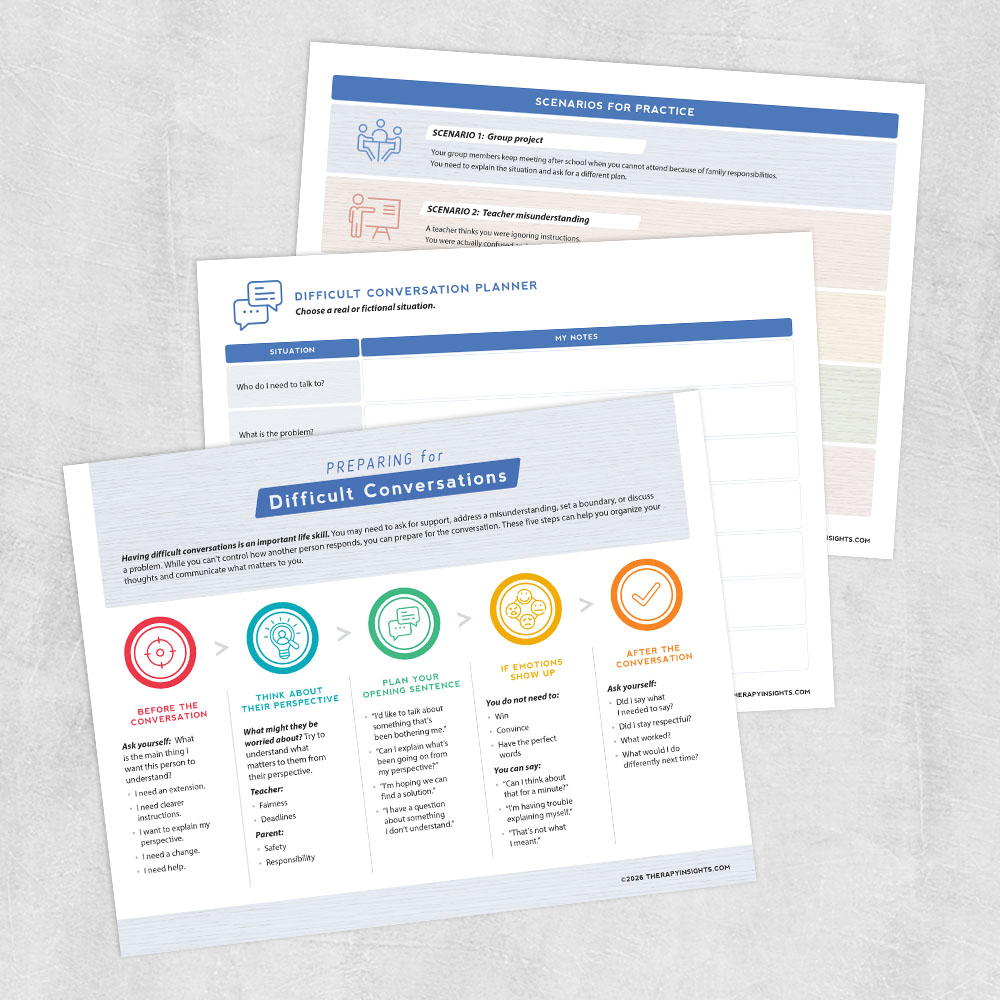
Preparing for Difficult Conversations
A structured planning tool that helps teens prepare for conversations that may feel uncomfortable or high-stakes. Use it to explore what they want to communicate, consider another person’s perspective, and practice self-advocacy before talking with teachers, parents, coaches, employers, friends, or other important people.
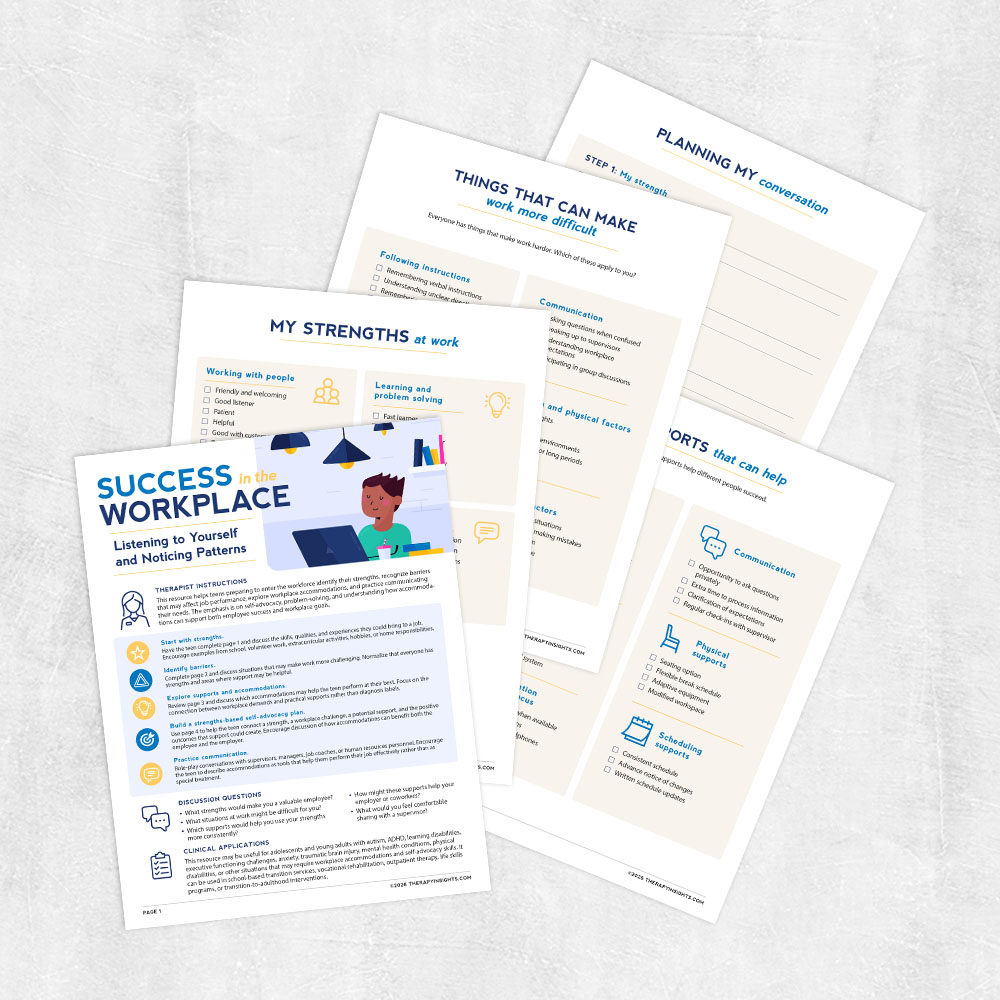
Workplace Success: Identifying Strengths, Supports, and Accommodations
Help teens preparing for employment identify what they bring to the workplace as well as the supports that may help them succeed. This resource connects strengths, potential challenges, accommodations, and workplace goals while providing opportunities to practice discussing support needs professionally.
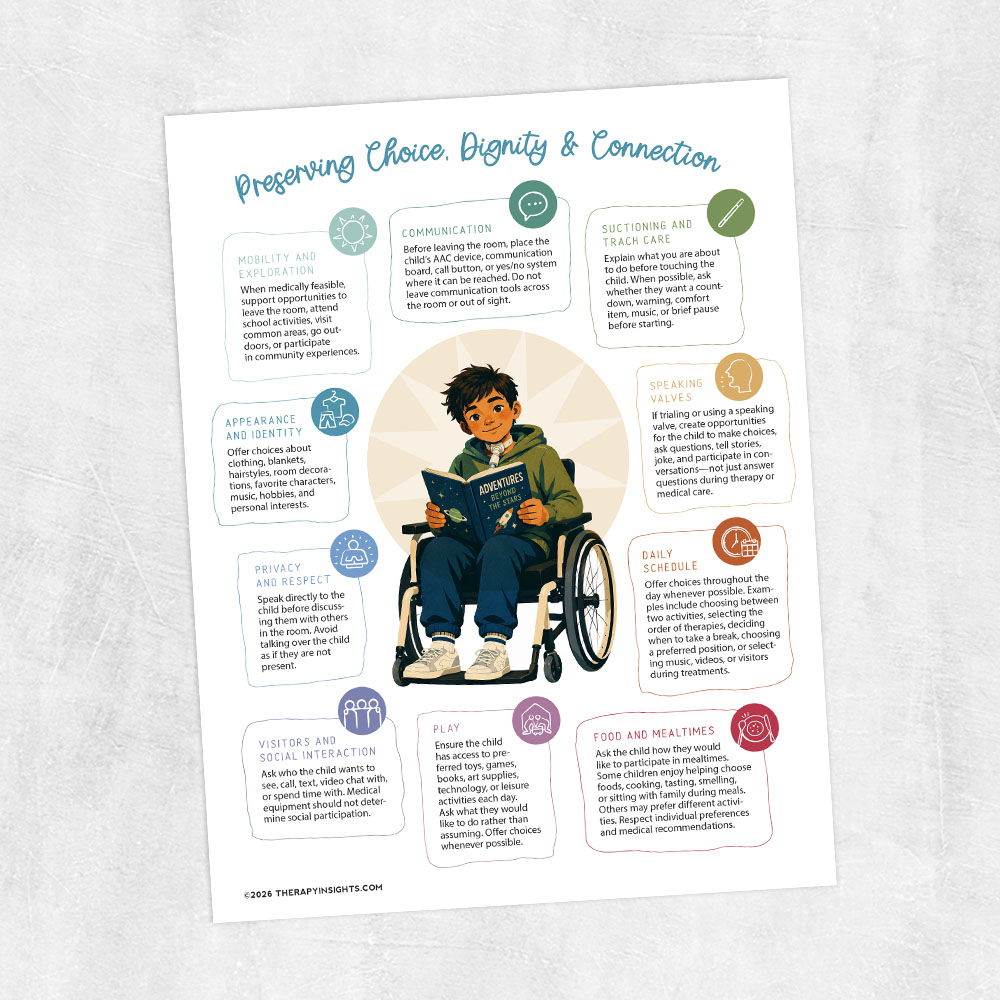
Preserving Choice, Dignity, and Connection
A practical guide for supporting children with tracheostomies and ventilators as children first. Concrete suggestions help families, caregivers, and interdisciplinary teams preserve opportunities for communication, play, identity, autonomy, connection, and meaningful choice throughout medical care.
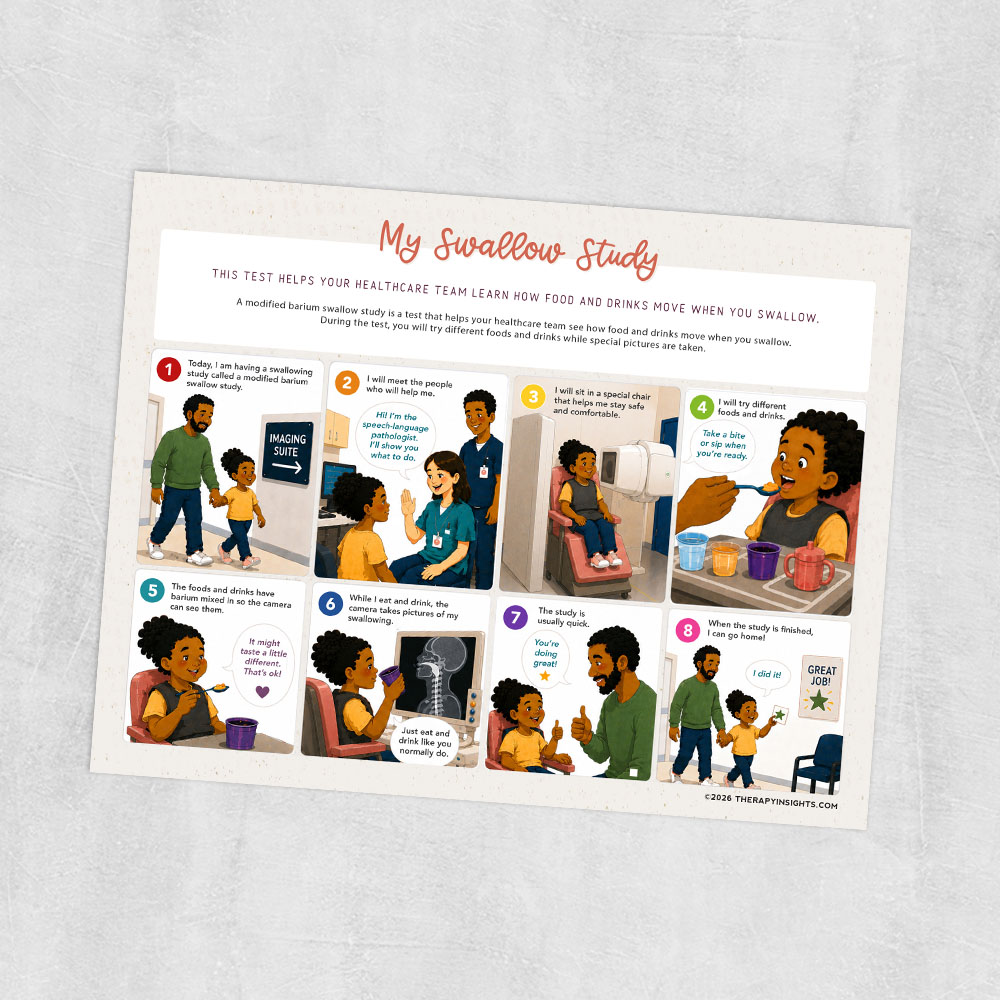
My Swallow Study
A visual social story that walks children and families through what to expect before, during, and after a modified barium swallow study. Simple language and step-by-step illustrations can reduce uncertainty and help children participate more actively in the experience.
What’s Coming in October…
- Friendship and social problem-solving, with visual scenarios exploring friendship, personal space, consent, kindness, and everyday interactions.
- Communication access and self-advocacy, including strategies for AAC users to repair communication breakdowns and guidance for communication partners on giving children adequate processing time.
- Feeding evaluation and family collaboration, with a comprehensive questionnaire that explores feeding history alongside family culture, priorities, communication, values, and previous therapy experiences.
- 22q11.2 deletion syndrome, with therapy considerations related to speech, feeding, development, and meaningful participation.