
November 2026: New Therapy Resources for Everyday Challenges

Adult Neuro: New Therapy Tools for November
What do browsing Zillow, brushing your teeth, and setting up an iPhone automation have in common? They’re all opportunities to explore how people manage everyday tasks after neurological injury or illness. This month’s adult neuro resources also take on some bigger clinical questions, including how to approach acquired alexia, navigate AAC device selection, and help people make decisions about their future after a dementia diagnosis.
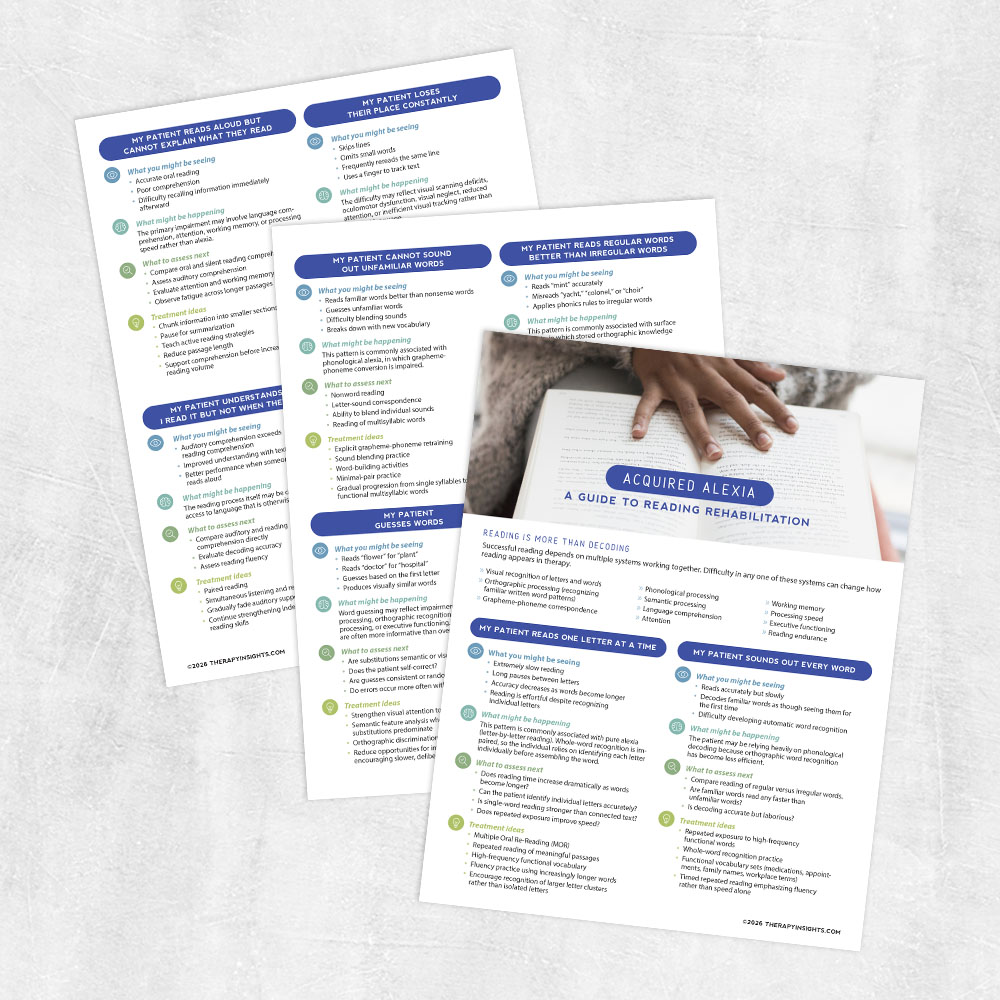
Acquired Alexia: A Clinical Guide to Rebuilding Reading Skills
Reading difficulties after brain injury can take different forms, and treatment should reflect the specific pattern of breakdown. This clinical guide helps therapists recognize common presentations of acquired alexia, select targeted interventions, and connect reading practice to meaningful activities.
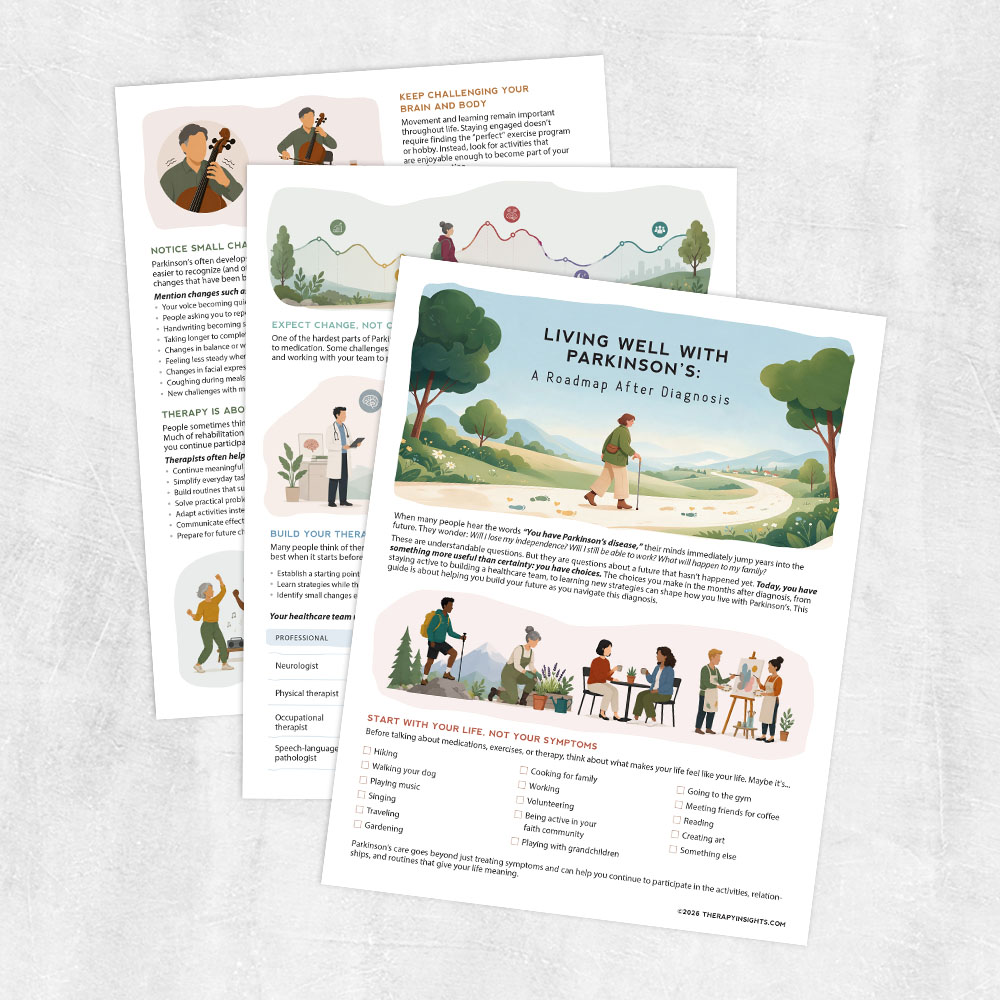
Living Well With Parkinson’s: A Roadmap After Diagnosis
A Parkinson’s diagnosis can bring plenty of questions about what comes next. This handout helps patients explore ways to stay physically active, maintain social connections, and continue participating in hobbies and activities they enjoy as their needs change.
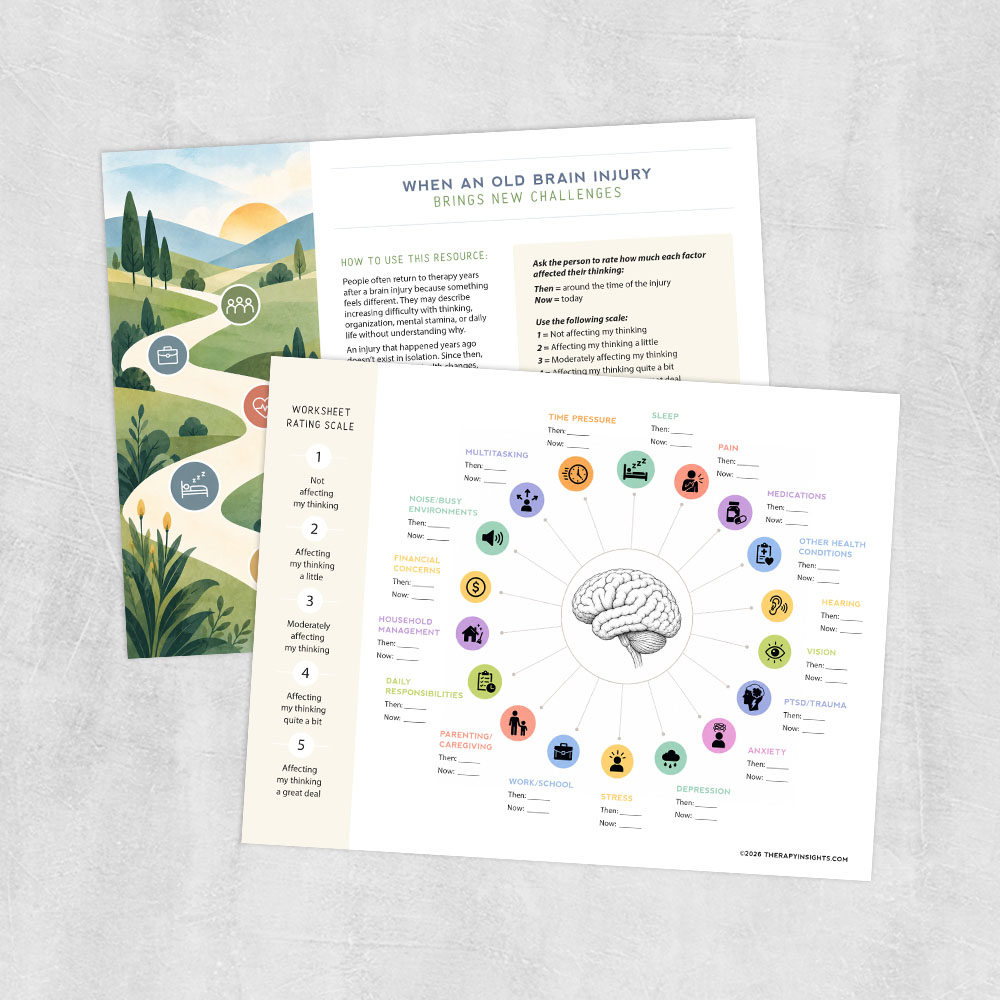
When an Old Brain Injury Brings New Challenges
What happens when someone who sustained a brain injury years ago begins noticing new difficulties with thinking or daily function? This guided reflection activity helps individuals compare their circumstances then and now, consider factors that may be contributing to changes, and identify priorities for further discussion.
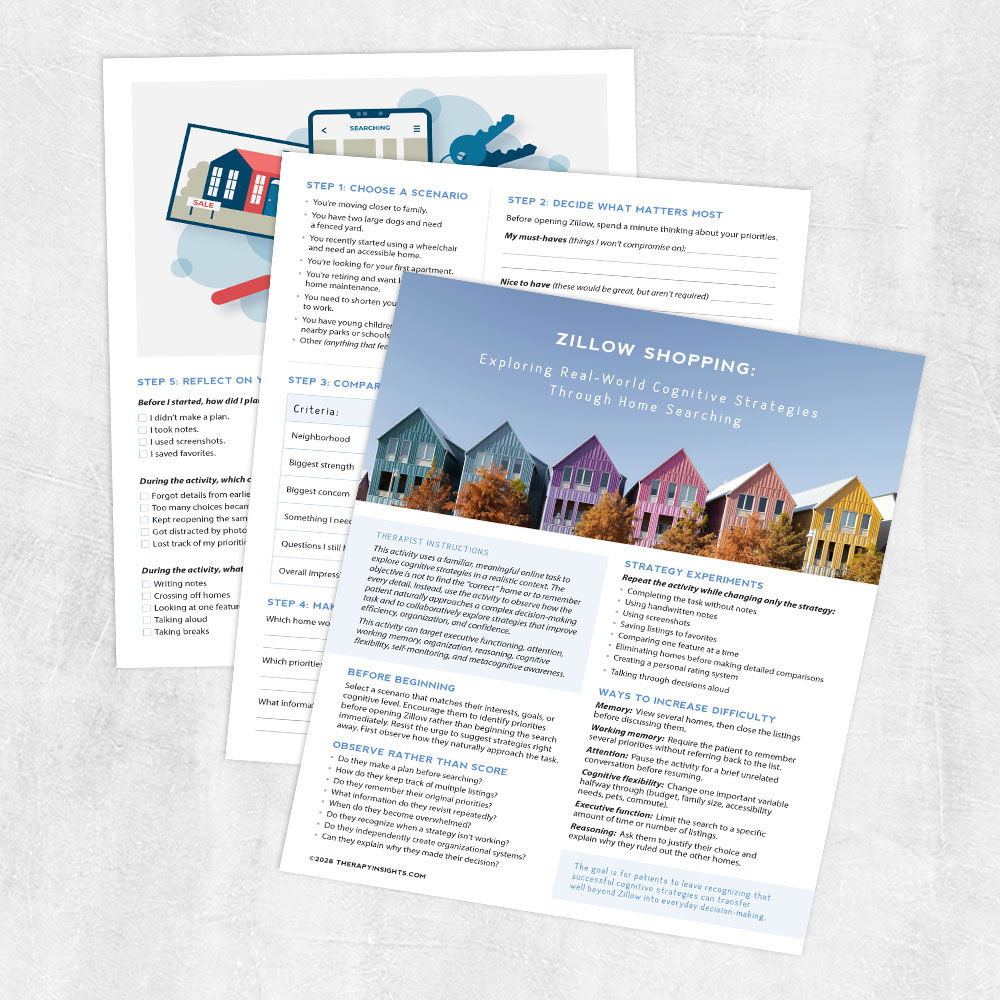
Zillow Shopping: Exploring Real-World Cognitive Strategies Through Home Searching
Turn browsing real estate listings into a functional cognitive therapy activity. Clients compare homes, organize information, weigh priorities, and experiment with strategies for attention, working memory, reasoning, and decision-making. The emphasis is on discovering which supports work and how those strategies might transfer to other everyday tasks.
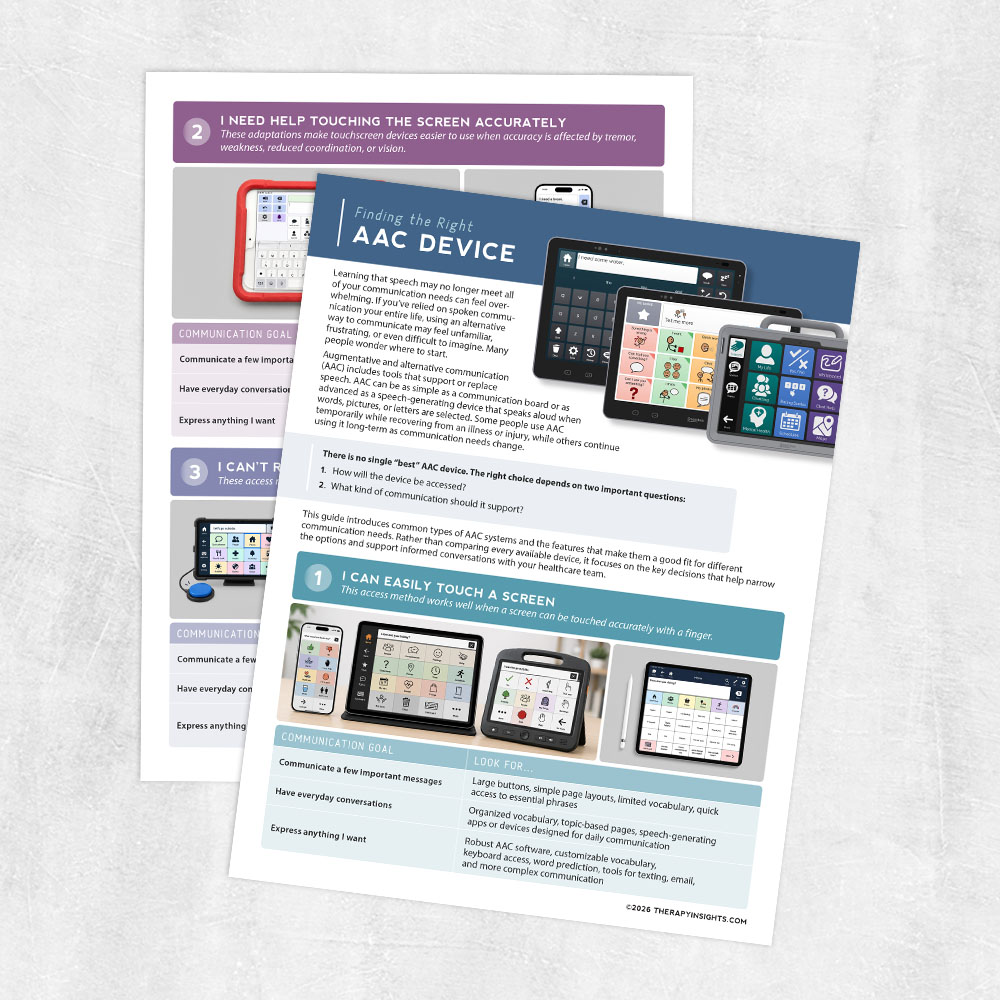
Finding the Right AAC Device
Choosing an AAC device involves more than comparing products. This resource helps therapists and adults explore communication needs, access methods, and device features together, providing a starting point for identifying options worth trying.
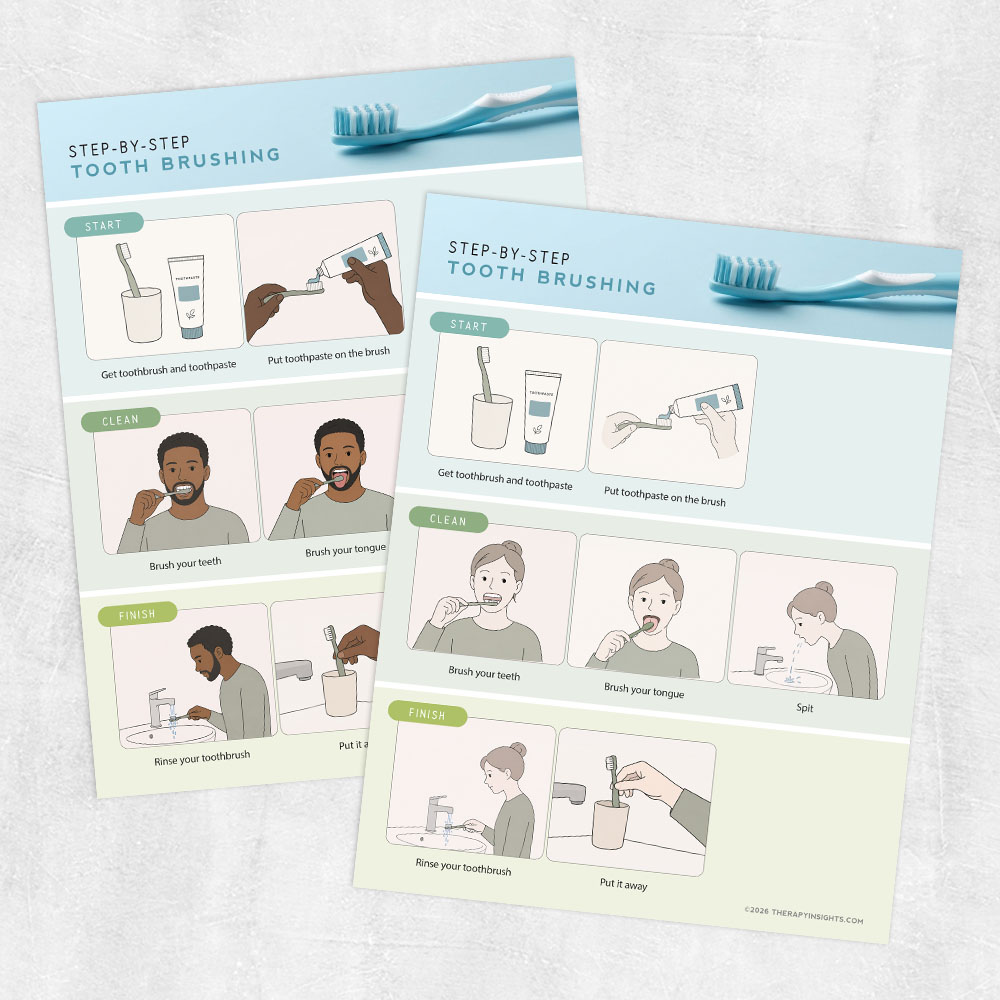
Step-by-Step Tooth Brushing
An adult-friendly visual guide that breaks tooth brushing into manageable steps. Use it to support consistent routines, reduce the need for repeated verbal instructions, and encourage greater independence with personal care.
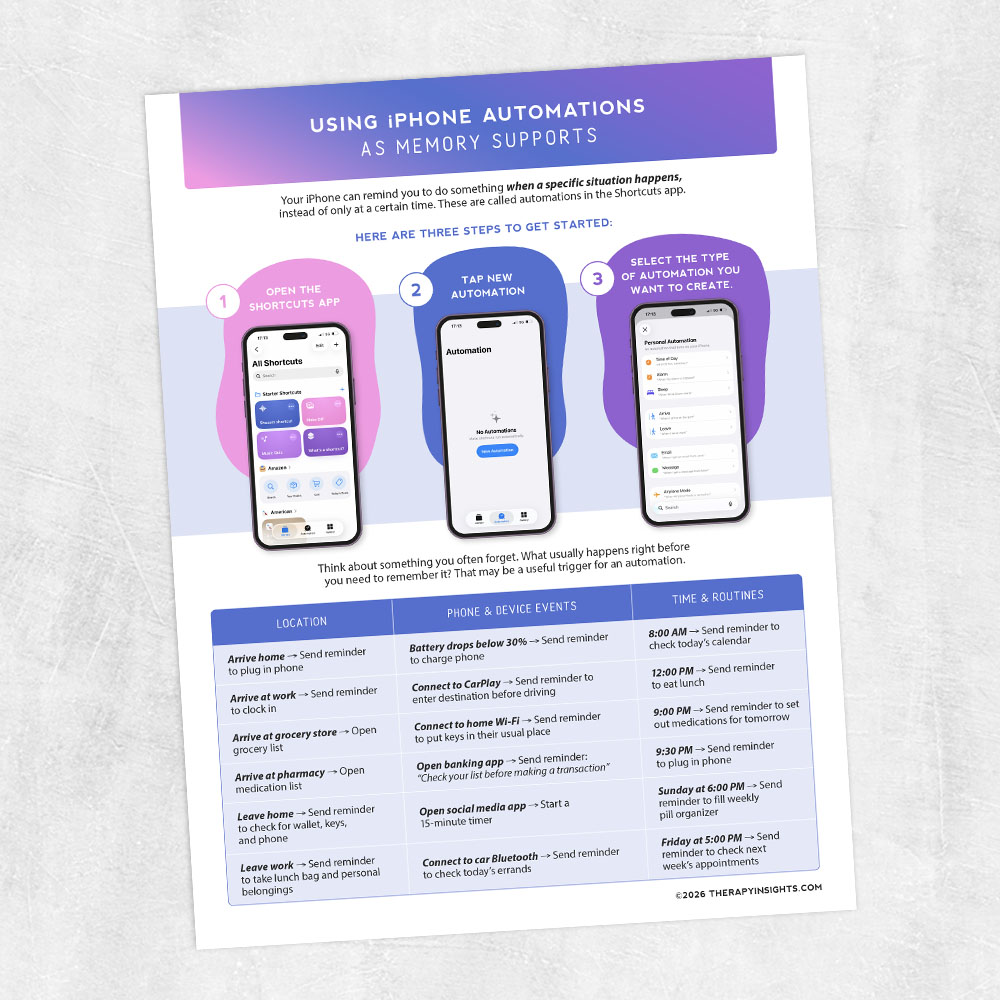
Using iPhone Automations as Memory Supports
What if a reminder appeared exactly when someone needed it? This resource introduces iPhone Shortcuts automations that can help with everyday tasks like remembering belongings, charging a phone, or checking a schedule. Step-by-step instructions help therapists and clients create reminders that fit actual routines.
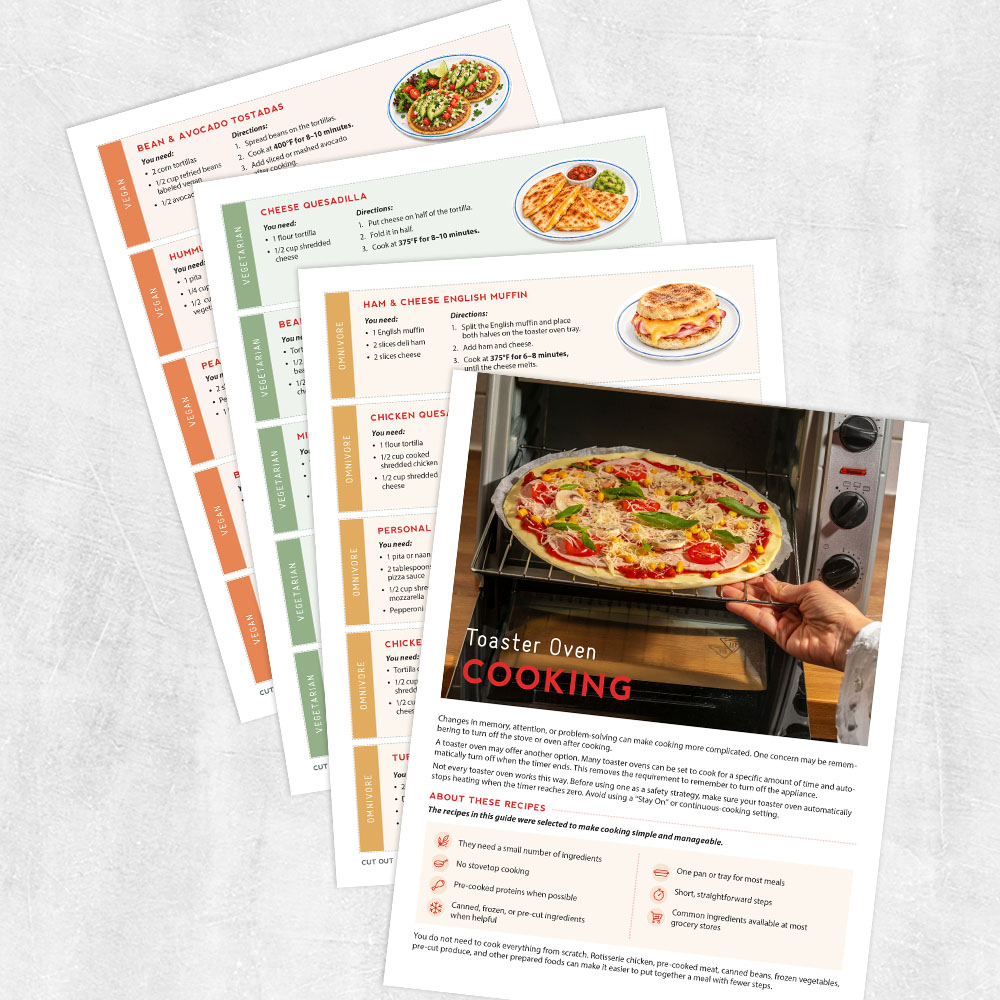
Toaster Oven Cooking
Simple recipes with fewer steps, familiar ingredients, and no stovetop cooking. This resource offers a practical way to explore meal preparation with adults who may benefit from reducing the cognitive or safety demands of cooking.
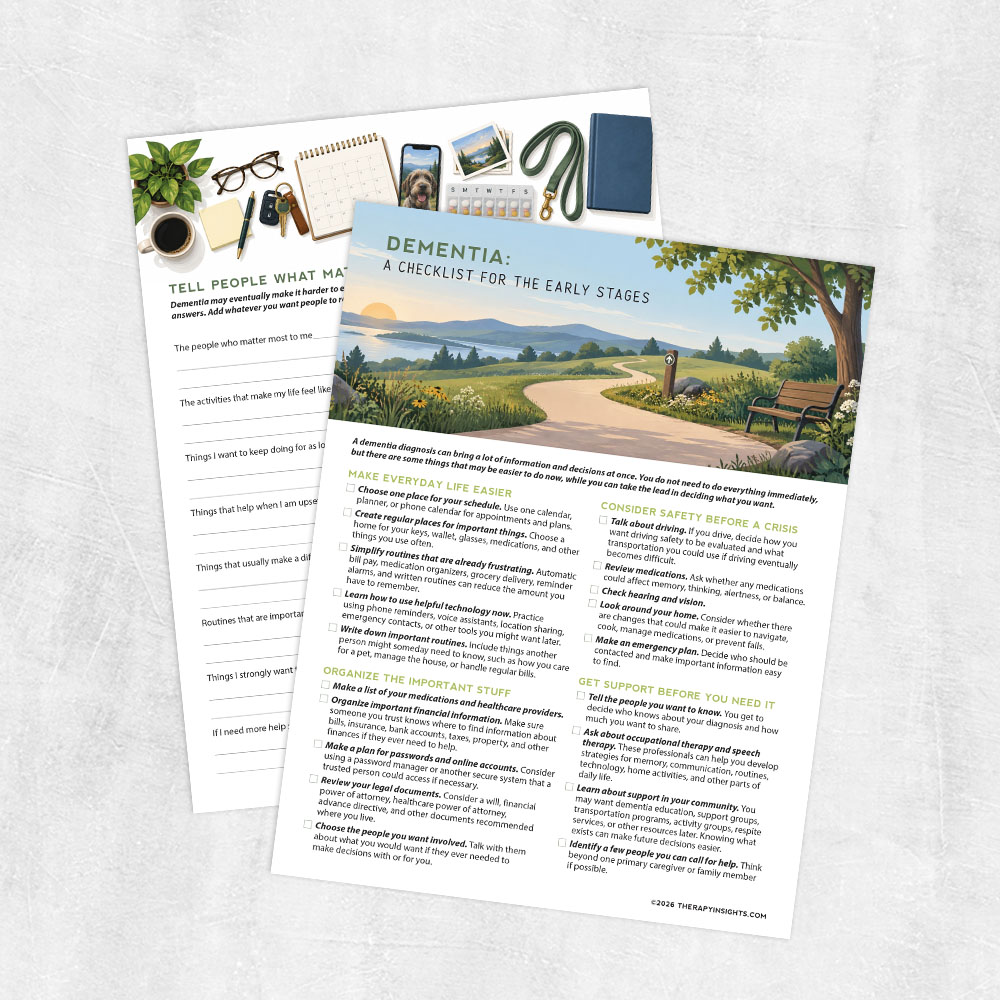
Dementia: A Checklist for the Early Stages
A dementia diagnosis often comes with difficult decisions, but people in the early stages may still be able to actively shape many aspects of their future. This checklist helps individuals and families discuss daily routines, healthcare, finances, safety, and future care while keeping the person’s preferences central to planning.
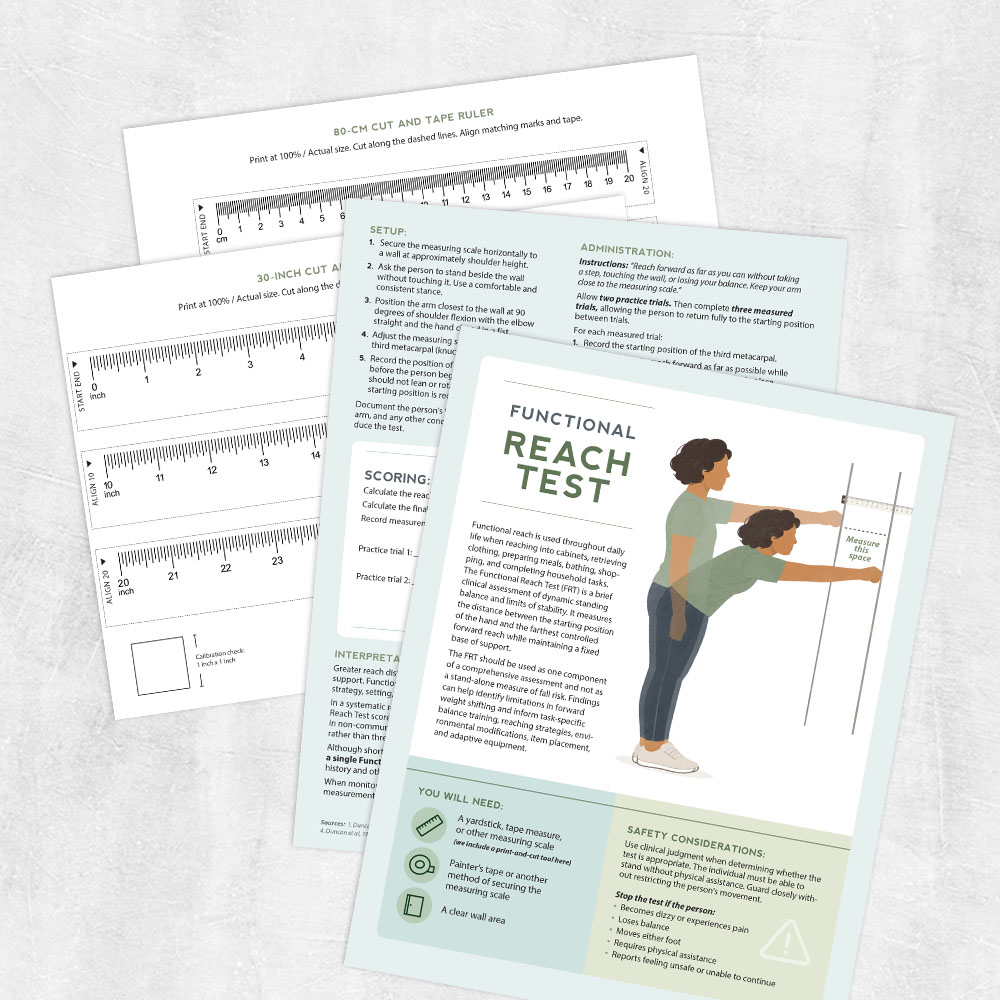
Functional Reach Test
A clinical reference for administering and scoring the Functional Reach Test. Includes standardized instructions, safety considerations, scoring guidance, and evidence-informed interpretation to help therapists assess dynamic standing balance and limits of stability.
What’s Coming in December…
- Neurological education and dementia care, including TIA symptoms, understanding behavior as communication in dementia, and a visual explanation of how the vocal folds open and close.
- Return-to-work skills, with realistic activities involving workplace listening and note-taking, spreadsheet use, online research, and managing a public library book budget.
- Upper extremity rehabilitation, including illustrated active and passive range of motion home exercise programs and practical ways to incorporate an affected arm into daily activities after stroke.
- Living with Parkinson’s disease, with a tracker for recognizing medication-related “on” and “off” periods and planning activities around symptom fluctuations.
- Orthopedic rehabilitation, with a patient-friendly look at how research on hip precautions after total hip replacement has changed.
Clinical Pediatrics: New Therapy Tools for November
This month, we’re tackling a few things that can be tricky to explain to families. Why does a child keep making the same speech sound errors? What are some early signs that a child may struggle with reading? And how do we help families step away from the bargaining, bribing, and pressure that can creep into mealtimes? We’ve also added a silly story activity for those sessions that could use a little more laughter and a lot less worrying about getting the answer right.
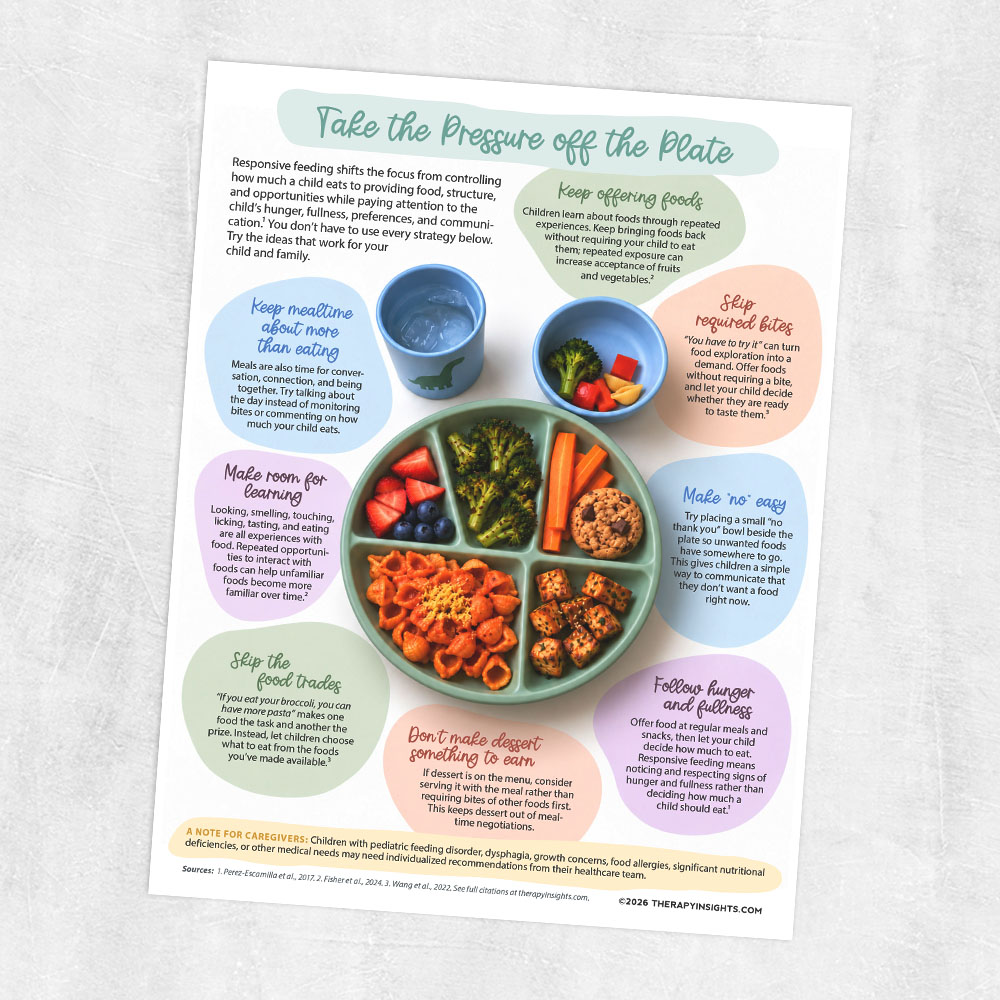
Take the Pressure Off the Plate
Mealtimes can become stressful when the focus shifts toward getting a child to eat a certain food or amount. This resource introduces responsive feeding strategies that respect children’s hunger, fullness, preferences, and communication while helping families find approaches that work in their everyday routines.
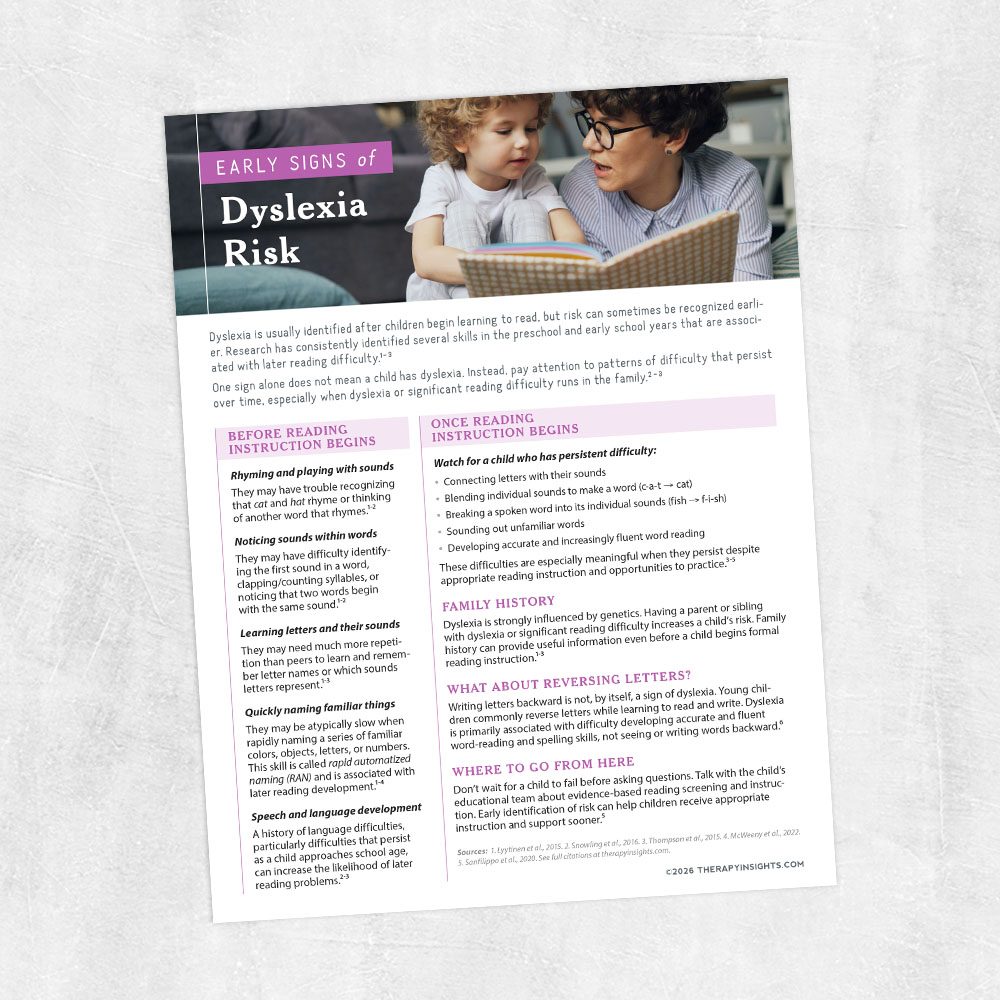
Early Signs of Dyslexia Risk
Help families and educators recognize early patterns that may indicate increased risk for dyslexia, including difficulties with phonological awareness, letter-sound learning, and rapid naming. This handout supports conversations about early screening, appropriate reading instruction, and when additional evaluation may be helpful.
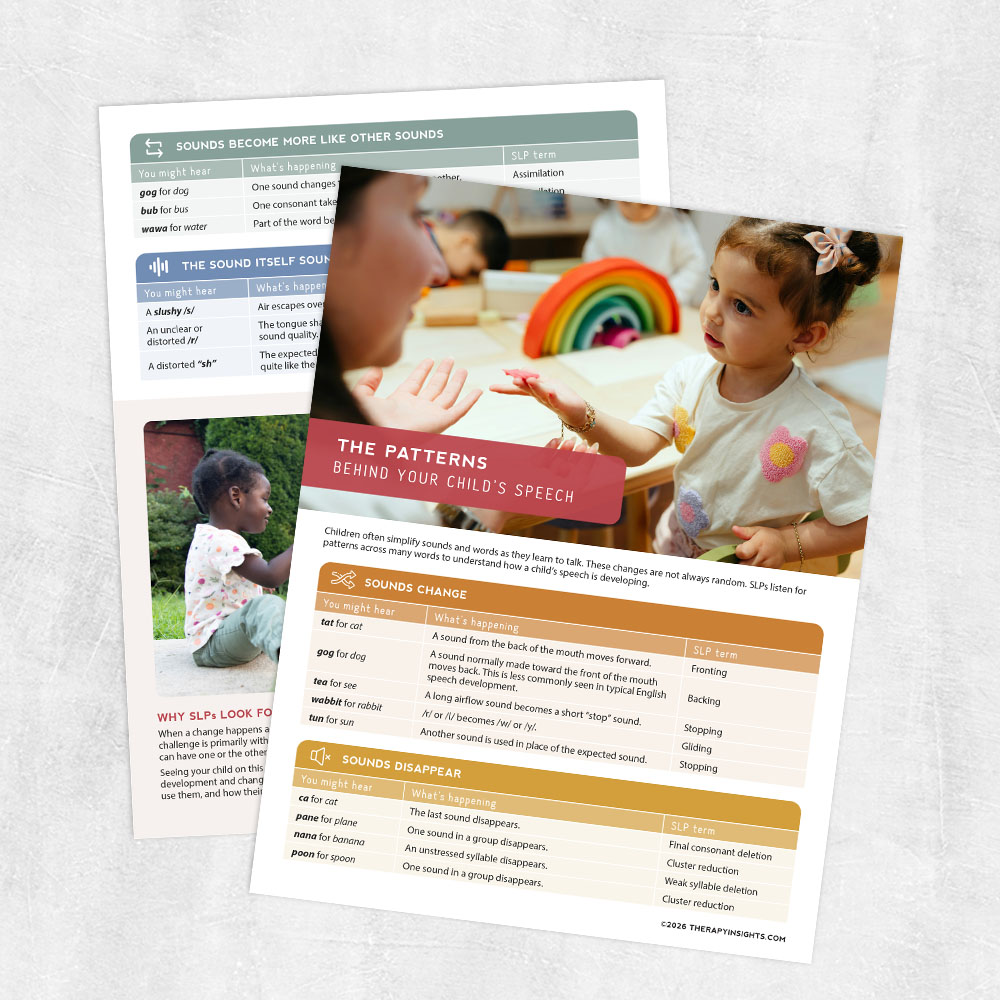
The Patterns Behind Your Child’s Speech
Why does a child consistently change certain sounds or simplify words? This caregiver-friendly handout explains how SLPs look for patterns across a child’s speech rather than focusing only on individual errors. Real-word examples help families understand phonological patterns, articulation differences, and the reasoning behind assessment and treatment.
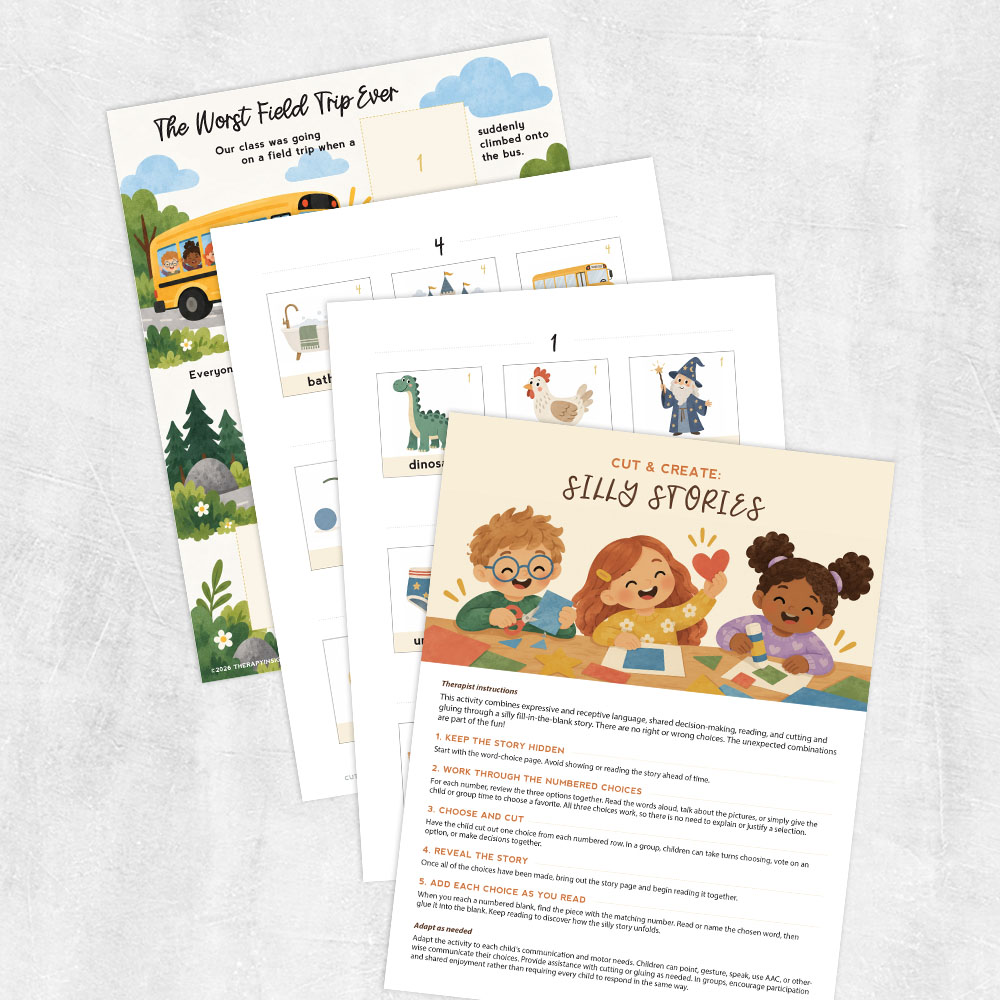
Cut and Create: Silly Stories
A cut-and-paste activity that combines language practice with fine motor skills and a little absurdity. Children choose words to build unpredictable stories, creating opportunities for expressive and receptive language, shared decision-making, and conversation without a single correct outcome.
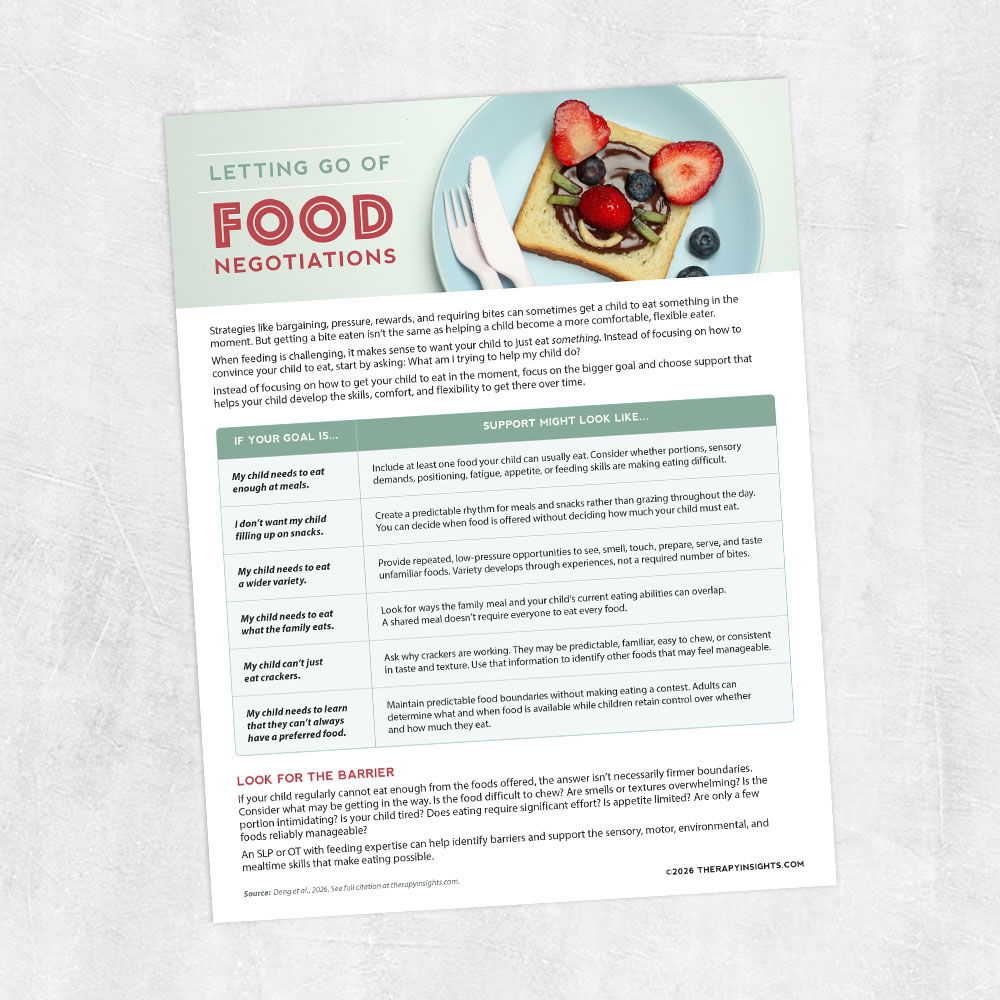
Letting Go of Food Negotiations
Bargaining over bites, offering rewards, and negotiating around food can become familiar parts of family mealtimes. This handout helps caregivers recognize what they’re hoping to accomplish through those interactions and explore other ways to support eating while maintaining predictable boundaries.
What’s Coming in December…
- Early motor development, with practical tummy time options that can be adapted to different positions, routines, and infant needs.
- Fine motor and language practice, featuring a cut-and-paste choice activity that encourages children to express preferences, ask questions, and interact with others.
- Responsive feeding, including the Satter Division of Responsibility in Feeding and a resource that helps families examine what they’re trying to accomplish when addressing picky eating.
- Prader-Willi syndrome, with a clinical guide addressing feeding and swallowing considerations, food security without shame, and collaborative treatment planning.