
New in February: Person-Centered Tools for Therapy Across the Lifespan

Therapy often lives in the space between certainty and uncertainty. We’re supporting people as they rebuild judgment, navigate changing identities, set boundaries, and make sense of systems that don’t always feel designed for them. This month’s new resources reflect that reality.
Across adult neuro and pediatrics, February’s collection centers on autonomy, informed choice, and real-world participation. You’ll find tools that help people reason through daily decisions after brain injury, families understand feeding and communication options without pressure, and caregivers build safety and trust without relying on fear-based approaches. Many of these resources are designed not to give answers, but to support conversations that honor lived experience, dignity, and the complexity of being human.
As always, these tools are meant to be used flexibly, adapted thoughtfully, and shared in ways that center the person in front of you.
Adult Neuro: New Therapy Tools for February
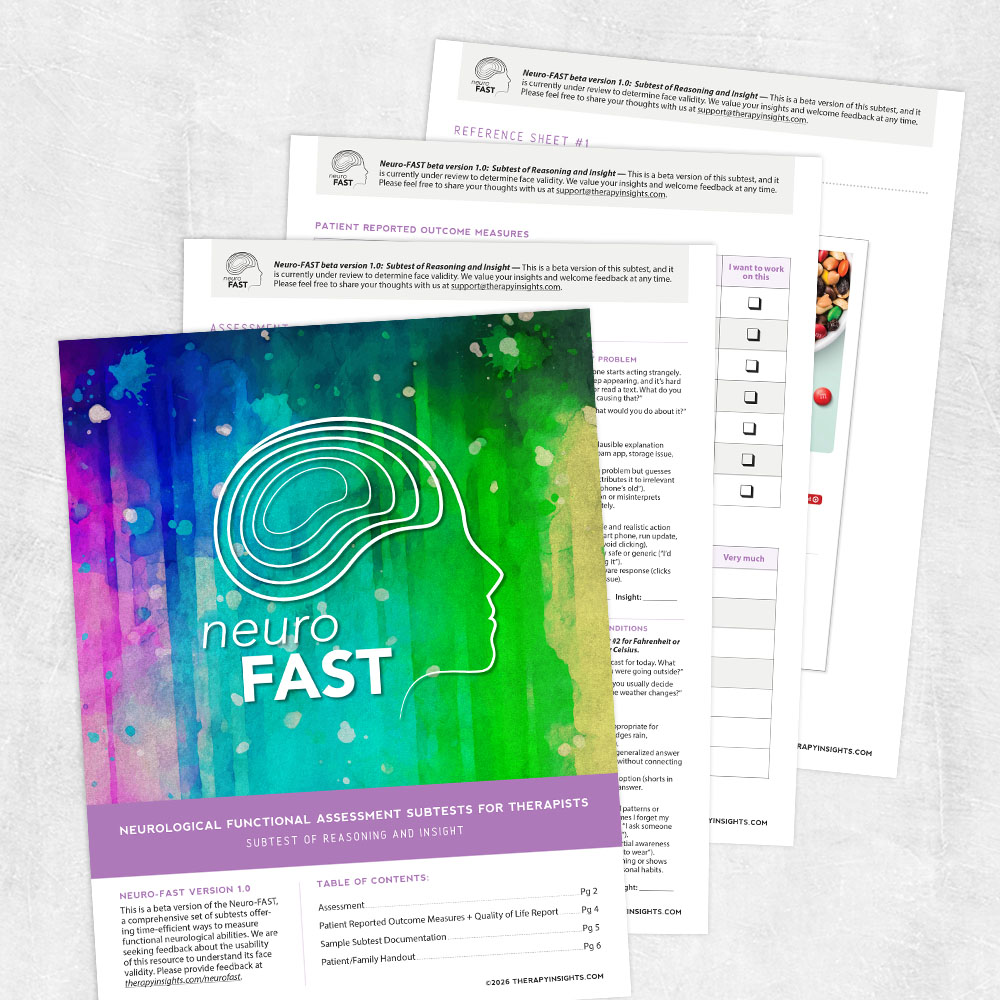
Neuro-FAST (Neurological Functional Assessment Subtests for Therapists): Subtest of Reasoning and Insight
This subtest supports therapists in understanding how someone reasons through everyday decisions after brain injury or stroke. Rather than measuring abstract cognition, it focuses on real-world judgment, safety awareness, and insight as they show up in daily life. Use it to guide therapy that builds confidence, supports independence, and respects where each person is in their recovery.
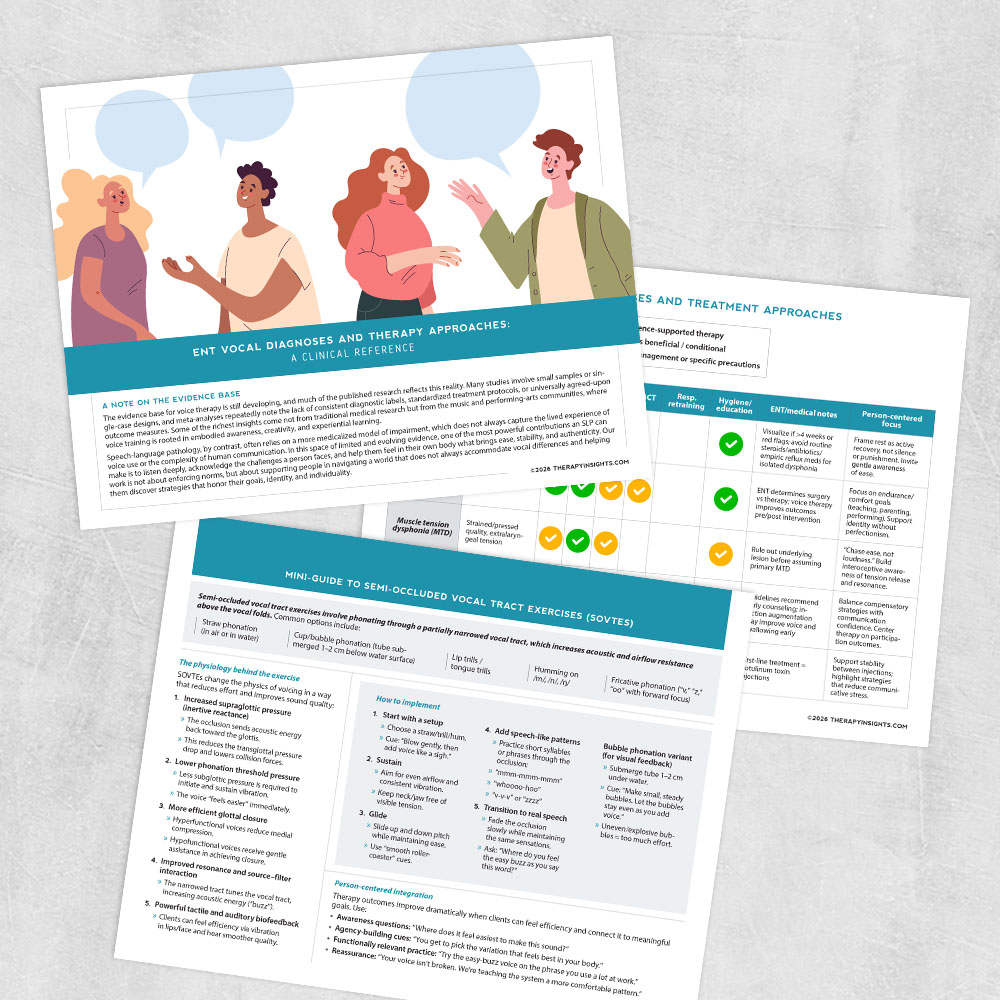
ENT Vocal Diagnoses and Therapy Approaches: A Clinical Reference
This reference offers a clear, person-centered overview of common ENT vocal diagnoses alongside evidence-informed therapy approaches. Designed to support nuance, it helps therapists navigate complex voice presentations while staying grounded in each individual’s goals, values, and embodied experience.

A New Approach to GERD Diet and Education
This resource reframes reflux education by moving away from restrictive, food-shaming advice and toward individualized, behavior-based strategies. It helps therapists stay within scope while supporting people in noticing their own symptom patterns, making informed choices, and prioritizing comfort, autonomy, and real-world function.
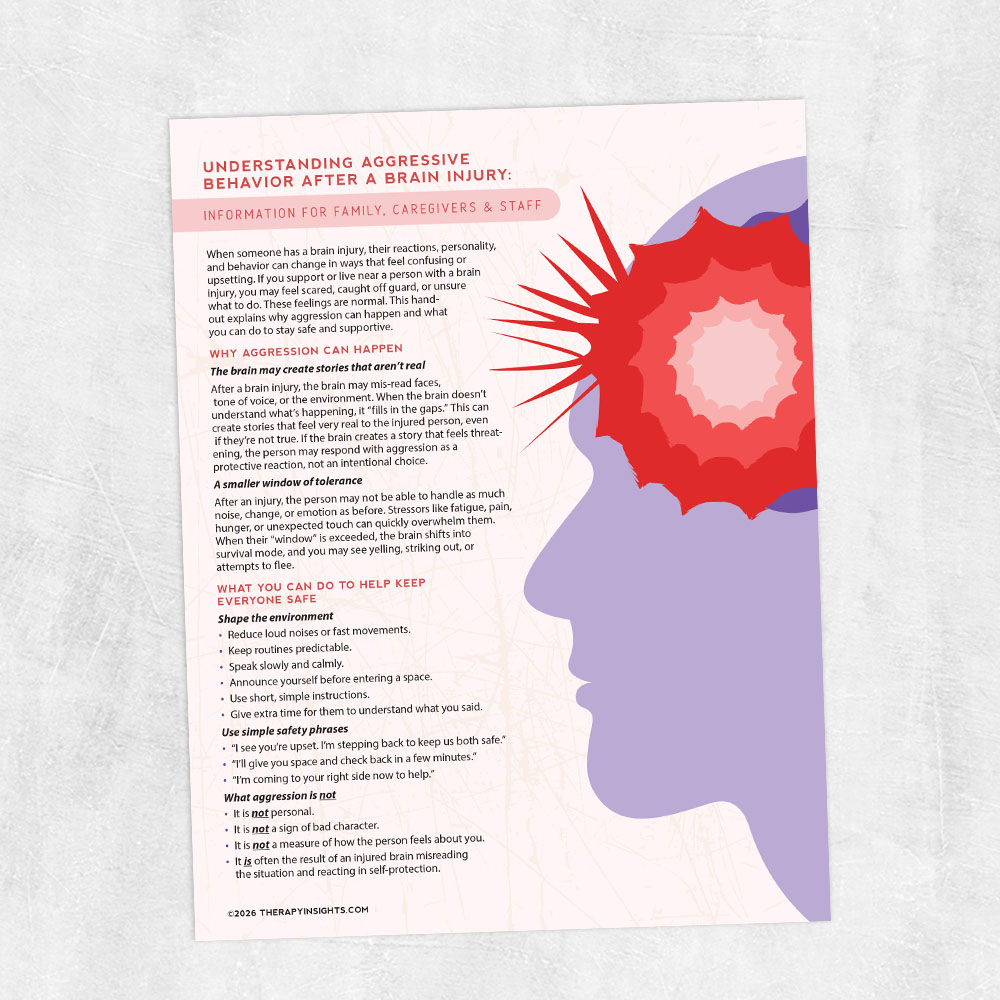
Understanding Aggressive Behavior After a Brain Injury: Information for Family, Caregivers, and Staff
This handout explains why aggressive behavior can emerge after brain injury and offers practical, compassionate strategies to support safety for everyone involved. Use it to normalize difficult reactions, guide shared understanding, and build more predictable, supportive care plans across settings.
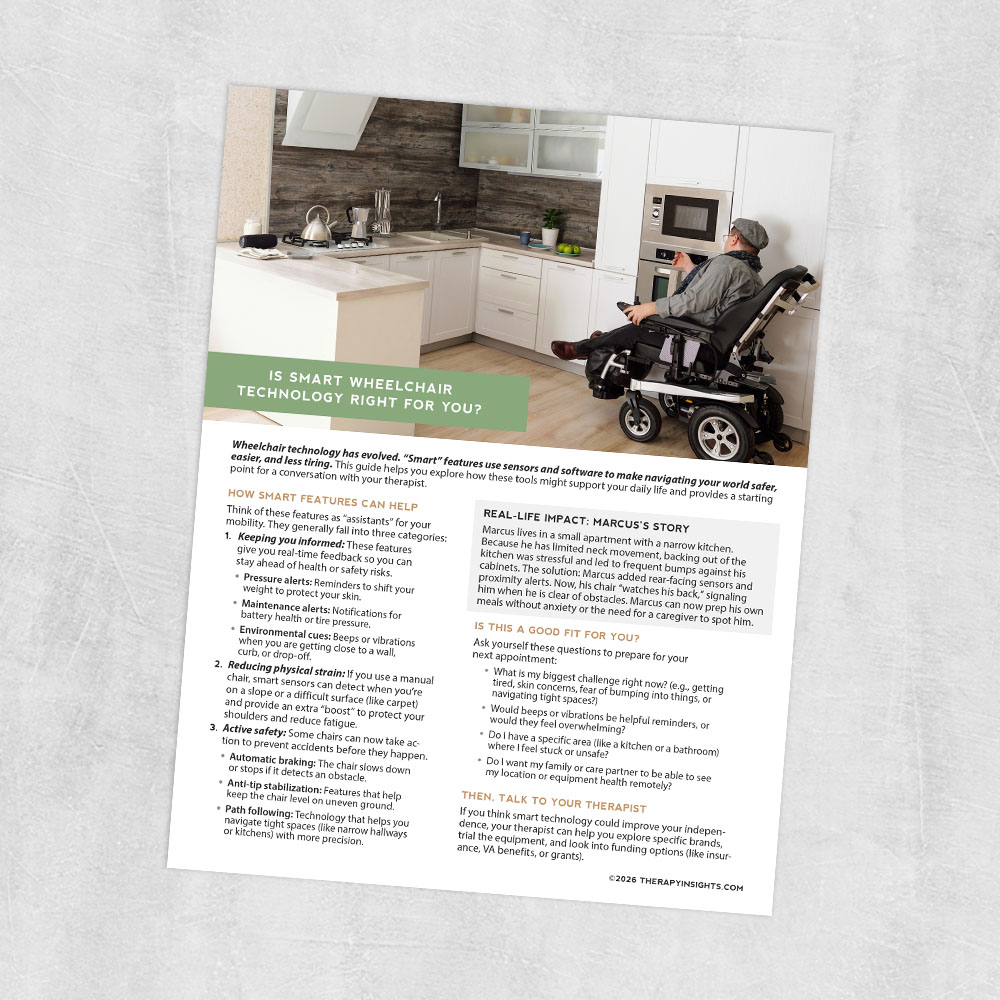
Is Smart Wheelchair Technology Right for You?
This resource provides a clear, non-technical overview of smart wheelchair features and how they may address everyday mobility and safety challenges. Designed to spark collaborative discussion, it supports shared decision-making around equipment choices that promote independence and long-term wellbeing.
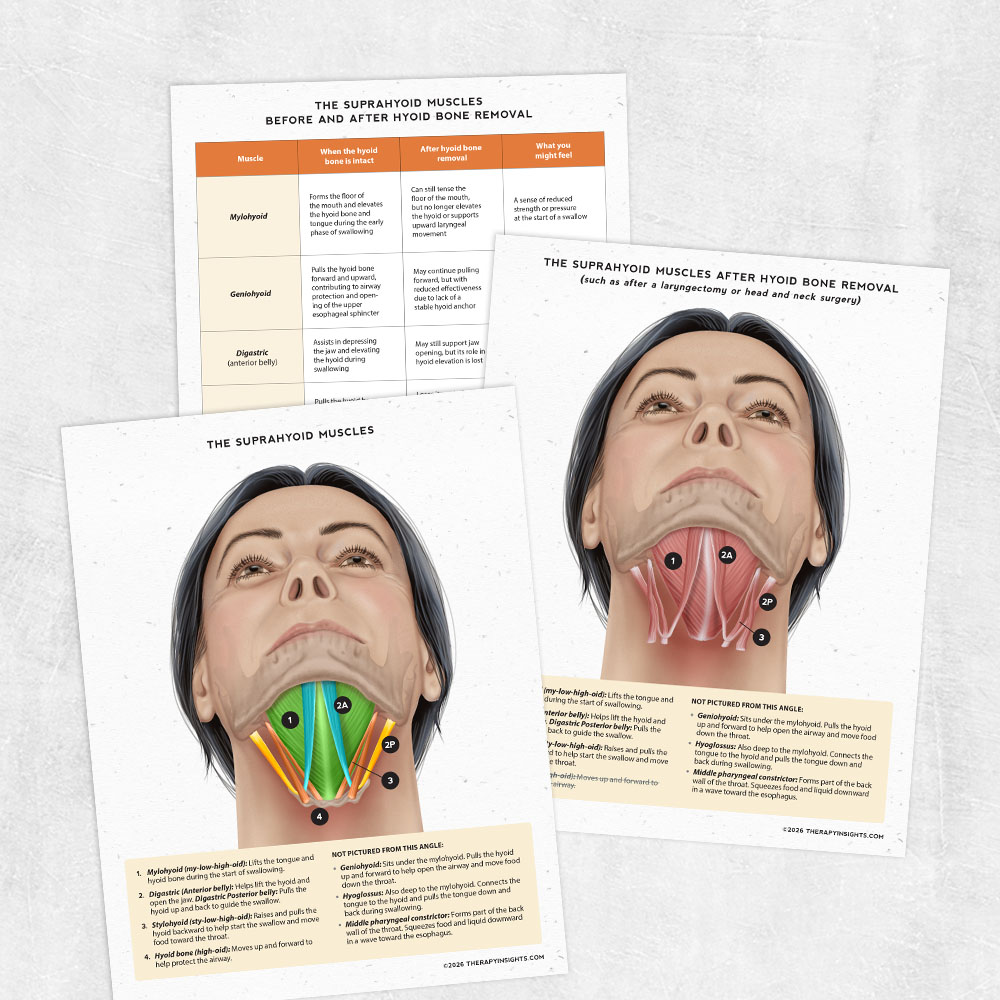
Basic Anatomy: The Suprahyoid Muscles
A visual, patient-friendly anatomy guide that explains how the suprahyoid muscles support swallowing. The resource includes a comparison view for hyoid bone removal, along with guidance on how swallowing may feel afterward, helping people prepare for and better understand their own experiences.
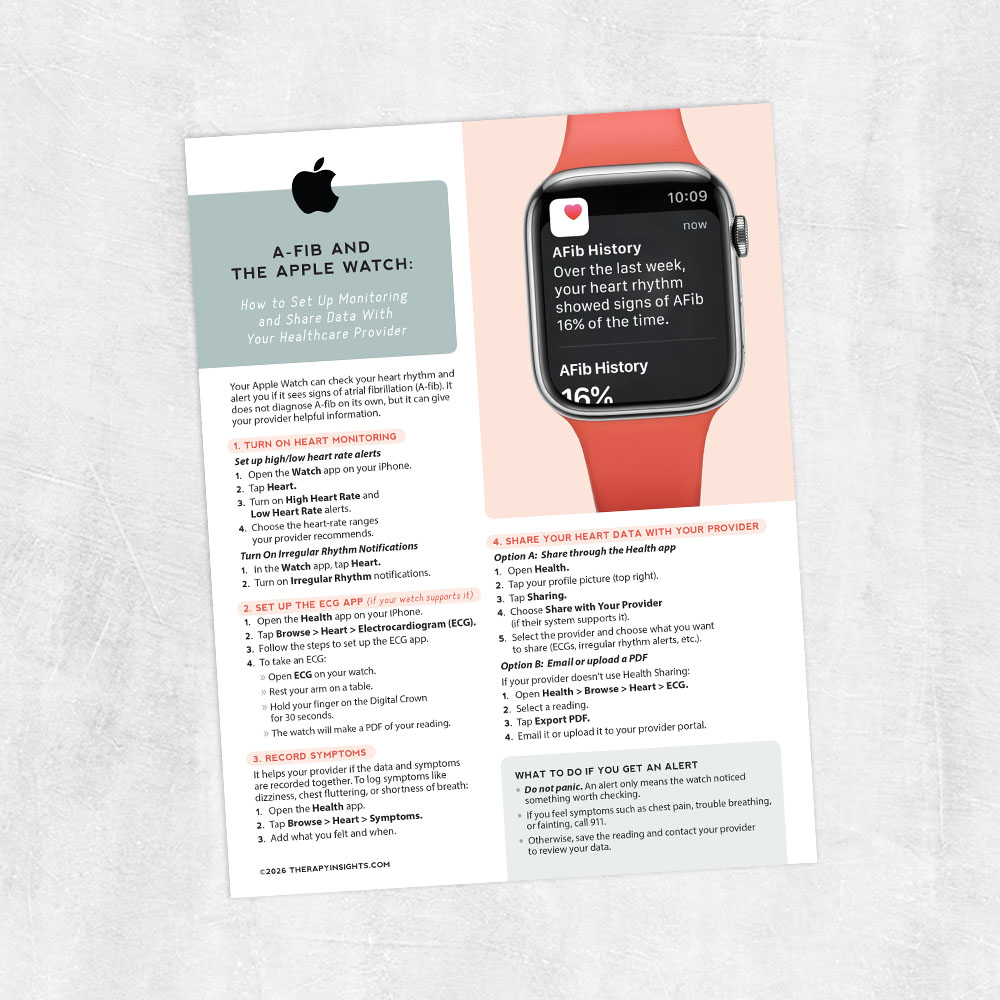
A-Fib and the Apple Watch: How to Set Up Monitoring and Share Data With Your Healthcare Provider
This step-by-step handout supports people in using their Apple Watch to monitor A-fib and share data with their care team. The focus stays on health literacy and independence, reinforcing the therapist’s role in supporting access and understanding rather than managing the medical condition itself.

UTI and Confusion
This handout helps families and staff recognize sudden confusion as a possible early sign of a UTI, particularly in older adults or those with cognitive vulnerabilities. Use it to support interdisciplinary communication when subtle changes in thinking or behavior appear during sessions.

Online Dating With a Disability
This resource supports dignified, respectful conversations about online dating with adults with disabilities. It balances clinical guidance on supporting autonomy without overstepping and includes a practical planning tool to help people navigate identity, boundaries, safety, and self-expression in digital dating spaces.
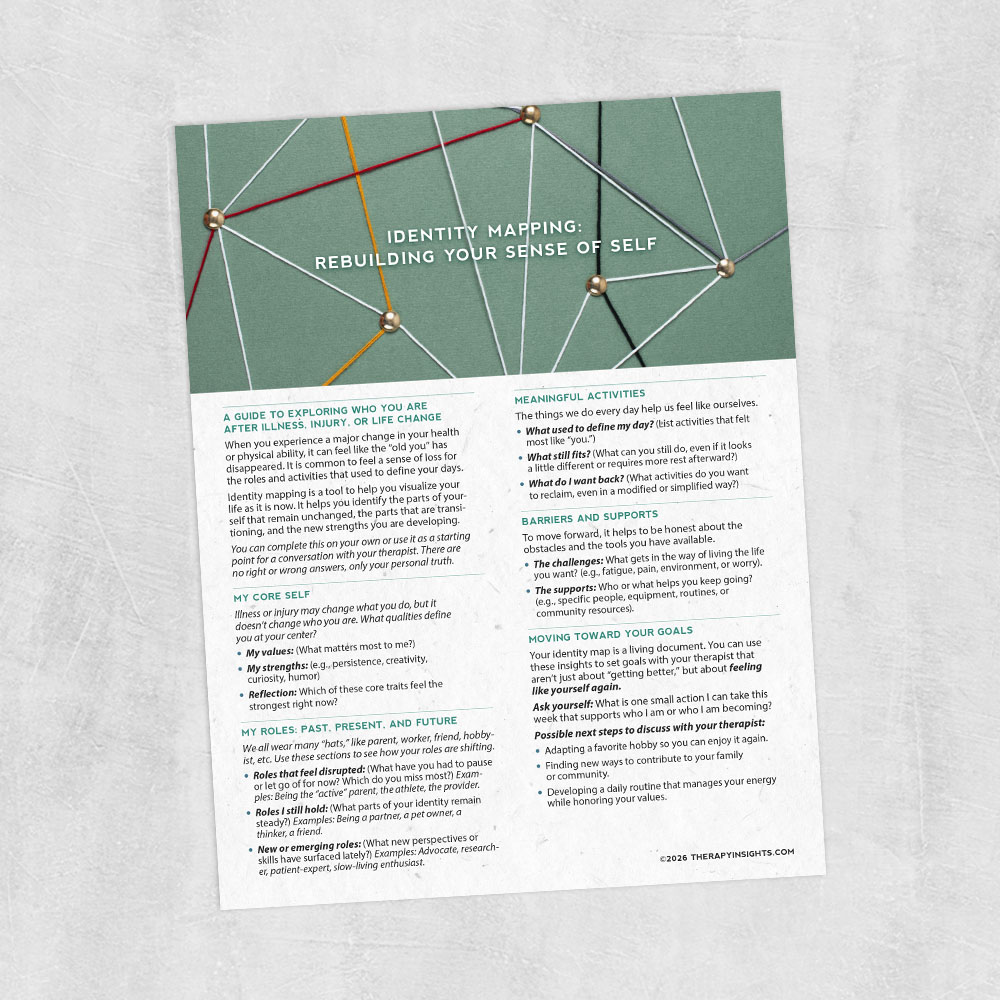
Identity Mapping: Rebuilding Your Sense of Self
This Identity Mapping tool helps therapists guide people through the process of reclaiming and redefining who they are after illness, injury, or disability. By exploring shifting roles and core values, it offers a structured yet empathetic way to bridge who someone was with who they are becoming.
What’s Coming in March…
- A framework for safety-focused conversations grounded in real life
- Guidance on using ChatGPT to support person-centered neuro rehab
- Low-vision technology supports, including how to send a text on an iPhone
- Strategy banks for mild TBI symptom management
- An expanded clinical guide to semi-occluded vocal tract exercises (SOVTEs)
- Clear explanations of long-term care pathways through Medicaid
- A kid-friendly guide to understanding stroke
- Tools for navigating technology choices, burnout, and adaptive parenting
Clinical Pediatrics: New Therapy Tools for February
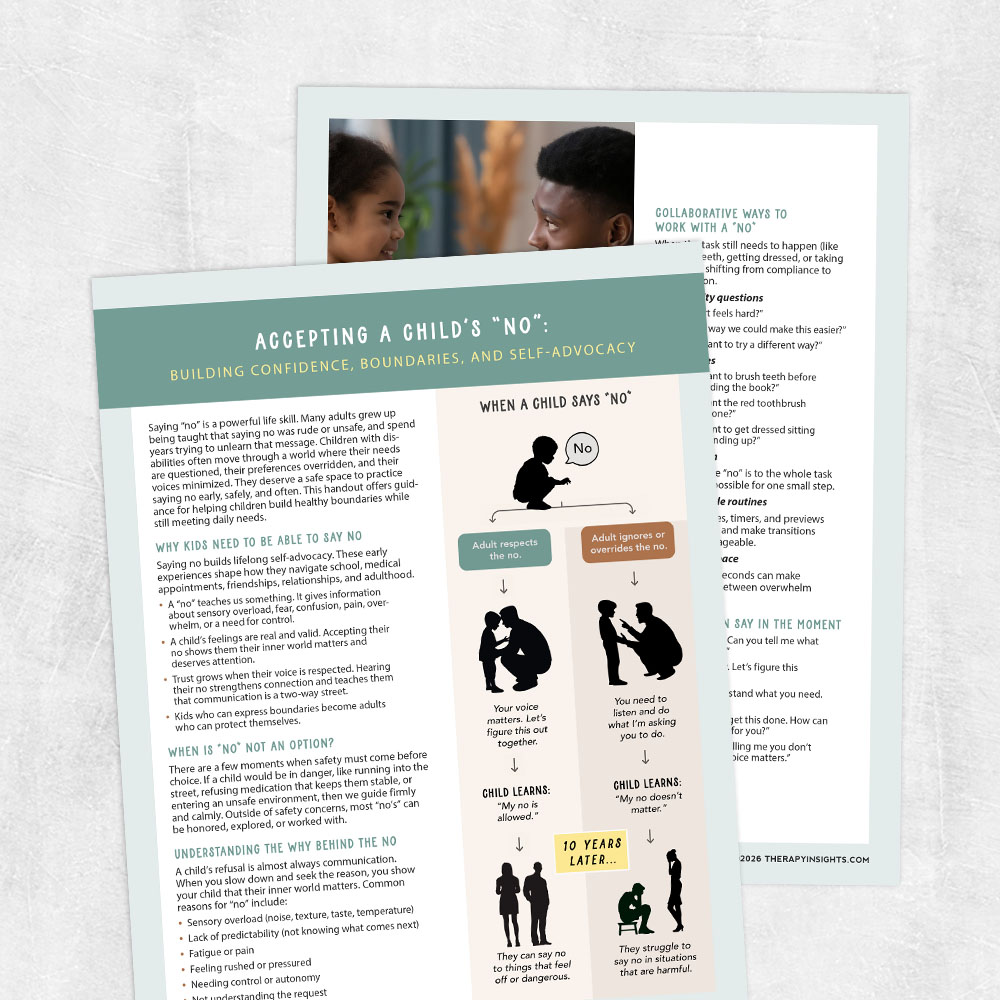
Accepting a Child’s “No”: Building Confidence, Boundaries, and Self-Advocacy
This handout helps parents understand how honoring a child’s “no” builds confidence, trust, and long-term safety. Rather than framing refusal as defiance, it invites families to see boundary-setting as a critical life skill, especially for children with disabilities. Use it to support conversations about cooperation, consent, and a child’s right to have a voice.

How to Spot Predatory Speech and Language Treatments
This resource equips parents with tools to recognize misleading “quick fix” speech and language products and understand why these claims can feel so compelling. Use it to support informed decision-making, reduce pressure, and help families protect themselves from false hope and unnecessary financial strain.

Creating a Realistic and Appropriate Roadmap to Tube Weaning: A Guide for Therapists
This clinical reference offers a clear, staged roadmap for understanding tube weaning and how therapy fits into the process. It helps therapists support oral readiness, caregiver confidence, and interdisciplinary collaboration, while reinforcing that tube weaning is gradual, individualized, and never one-size-fits-all.
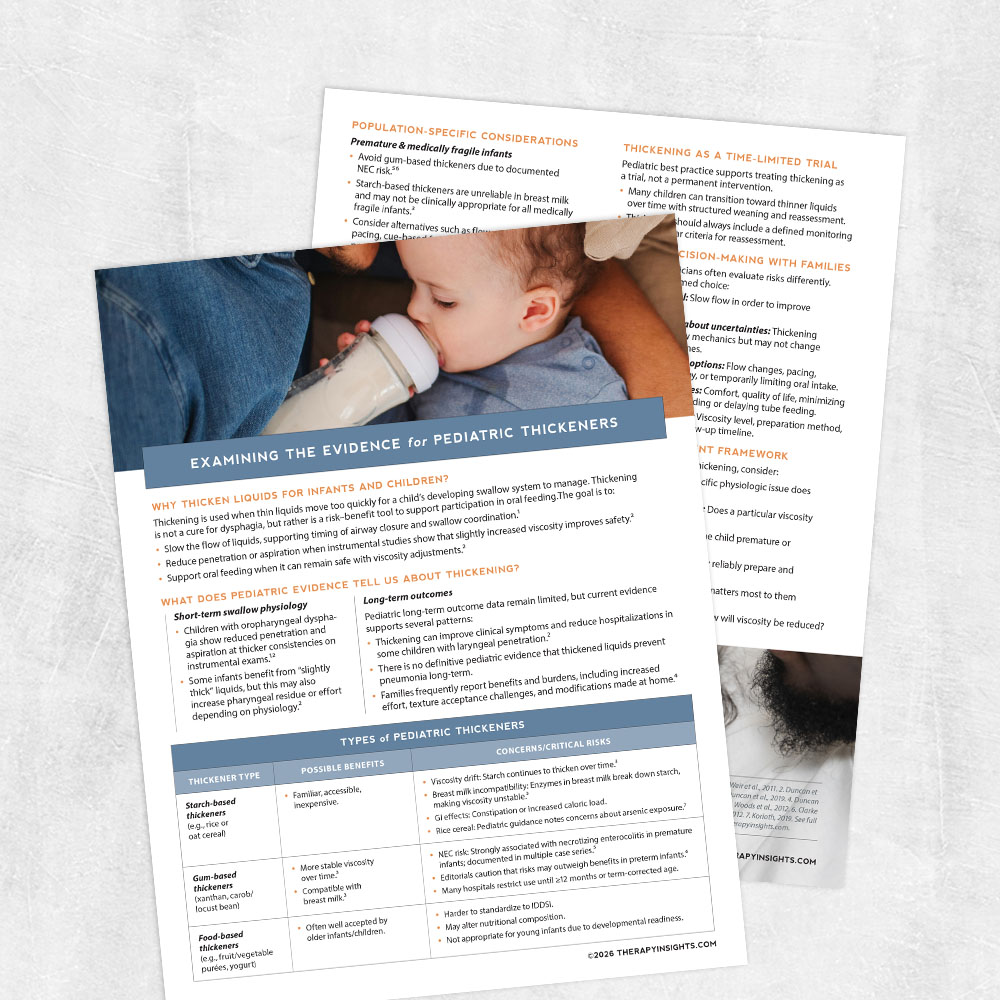
Examining the Evidence for Pediatric Thickeners
This reference breaks down the current evidence behind pediatric thickeners in a clear, balanced way. It supports therapists in navigating when and how thickening may be appropriate, while offering risk considerations and collaborative talking points so feeding decisions reflect both physiology and family values.
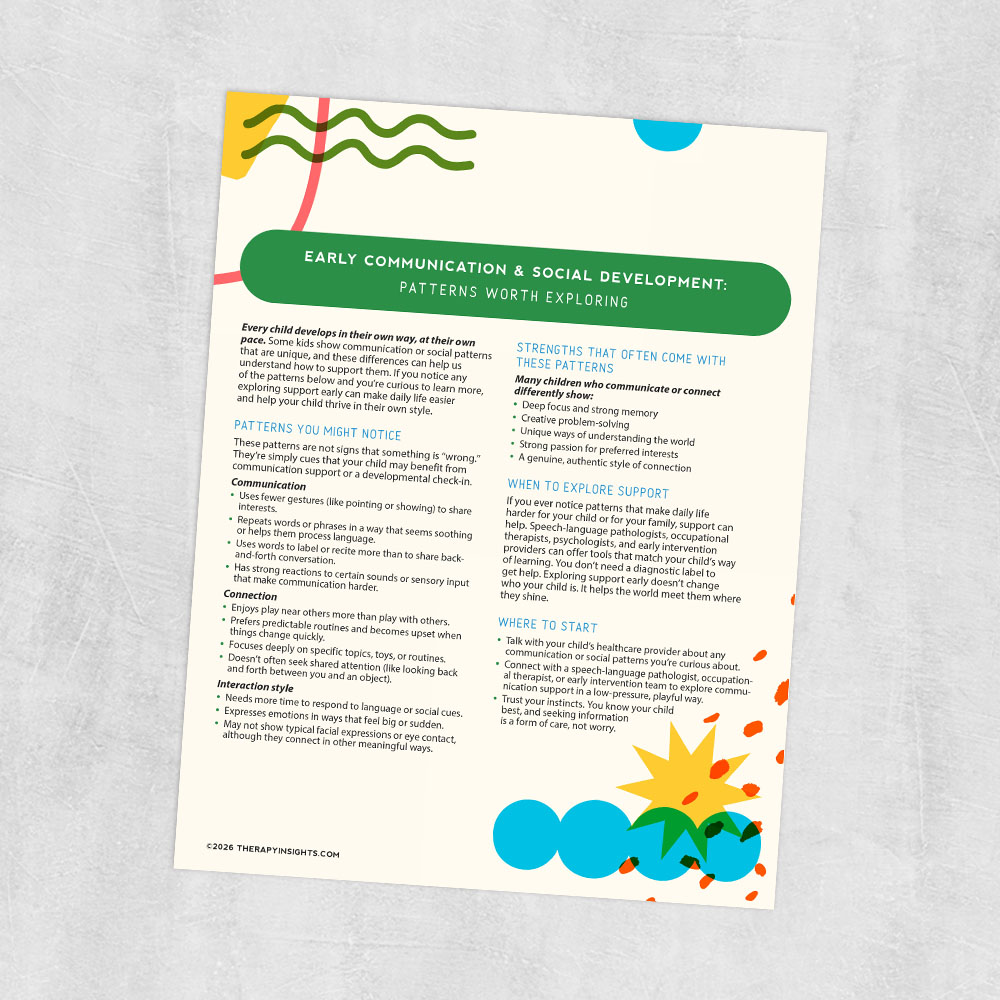
Early Communication and Social Development: Patterns Worth Exploring
This handout provides a warm, neurodiversity-affirming way to talk with families about early communication and social patterns. Use it to open low-pressure, collaborative conversations that highlight strengths, normalize variability, and invite additional support only when it feels helpful and aligned.
What’s Coming in March…
- Resources that help kids build and shape their own routines
- Collaborative tools for behavior support without power struggles
- Guidance for adults on being effective AAC partners
- Child-friendly explanations of how the brain works
- Practical feeding scripts to support caregivers in everyday moments