
Handout
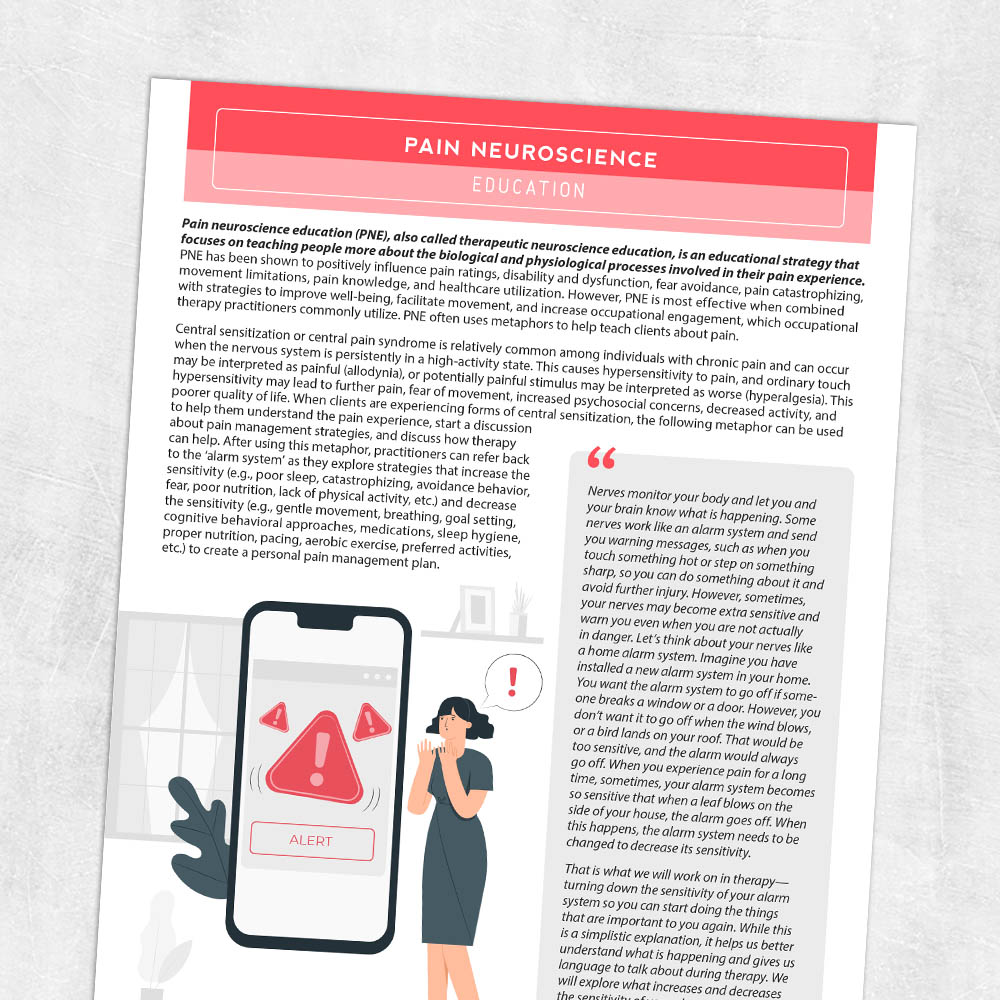
Pain Neuroscience Education
Therapy Insights
Member Exclusive
Print Resource
— US Letter — 1 page
Population:
AdultDiscipline:
OTDiagnosis:
Chronic PainReferences:
- Dydyk, A.M., & Givler, A. (2023). Central Pain Syndrome. In: StatPearls [Internet]. Treasure Island (FL): StatPearls Publishing.
- Lepri, B., Romani, D., Storari, L, & Barbari, V. (2023). Effectiveness of pain neuroscience education in patients with chronic musculoskeletal pain and central sensitization: A systematic review. International Journal of Environmental Research and Public Health, 20(5), 4098.
- Louw, A., Zimney, K., Puentedura, E.J., & Diener, I. (2016). The efficacy of therapeutic neuroscience education on musculoskeletal pain – A systematic review of the literature. Physiotherapy Theory and Practice, 32(5):332-355.
- Louw, A., Diener, I., Butler, D.S.,& Puentedura, E.J. (2011). The effect of neuroscience education on pain, disability, anxiety, and stress in chronic musculoskeletal pain. Archives of Physical Medicine and Rehabilitation, 92(12):2041-2056.
- Ma, X., Chen, R., Li, W., & Huang, P. (2023). A systematic review and meta-analysis of pain neuroscience education for chronic low back pain: short-term outcomes of pain and disability. Physiotherapy Theory and Practice, 1–20.
Use this resource to introduce pain neuroscience education and explain central sensitization using clear, relatable metaphors. It helps you shift conversations away from tissue damage toward nervous system sensitivity and supports more effective, function-focused intervention planning.
Want access to this printable resource and hundreds more? Subscribe to Therapy Insights.
Subscribe to get instant and easy access to handouts, therapy materials, and clinical tools so that you can spend your valuable time doing what you do best: Connecting with your patients and changing lives for the better.
Subscribe now
Already subscribed to Therapy Insights? Log in to access this member exclusive.
Related resources
Handout
Avoiding Red Lights: Pacing for Progress
Therapy Activity
Hockey Play-by-Play: Tracking Changing Information
Clinical Reference
Talking About Money After Illness or Injury: A Clinical Guide
Handout
Beyond Exercise: Fun Ways to Stay Active
Handout
Your Concussion Recovery Roadmap
Handout
Changes in Speech Fluency After a Neurologic Injury
Daily Resource Limit
There was an issue loading this asset. Please try again or contact customer support.

If you want to own this resource and save it to your device, it is also available for purchase (download) on Etsy.
View on Etsy