
Clinical Reference
Embracing Uncertainty: A Realistic Approach to Dysphagia Exercises
Therapy Insights
Member Exclusive
Print Resource
— US Letter — 4 pages
Population:
AdultDiscipline:
SLPDiagnosis:
DysphagiaReferences:
- Logemann, J. A., Rademaker, A., Pauloski, B. R., Kelly, A., Stangl-McBreen, C., Antinoja, J., … & Shaker, R. (2009). A randomized study comparing the Shaker exercise with traditional therapy: a preliminary study. Dysphagia, 24, 403-411.
- Choi, J. B., Shim, S. H., Yang, J. E., Kim, H. D., Lee, D. H., & Park, J. S. (2017). Effects of Shaker exercise in stroke survivors with oropharyngeal dysphagia. NeuroRehabilitation, 41(4), 753-757.
- Adel Ebada El Sayed, R., & Mohamed Khalifa Ewees, A. (2020). Effect of Shaker Exercise on Dysphagia Level among Patients with Cerebral Vascular Stroke. Egyptian Journal of Health Care, 11(1), 477-490.
- Tuomi, L., Dotevall, H., Bergquist, H., Petersson, K., Andersson, M., & Finizia, C. (2022). The effect of the Shaker head‐lift exercise on swallowing function following treatment for head and neck cancer: Results from a randomized, controlled trial with videofluoroscopic evaluation. Head & Neck, 44(4), 862-875.
- Sze, W. P., Yoon, W. L., Escoffier, N., & Rickard Liow, S. J. (2016). Evaluating the training effects of two swallowing rehabilitation therapies using surface electromyography—Chin Tuck Against Resistance (CTAR) exercise and the shaker exercise. Dysphagia, 31, 195-205.
- McCullough, G. H., & Kim, Y. (2013). Effects of the Mendelsohn maneuver on extent of hyoid movement and UES opening post-stroke. Dysphagia, 28, 511-519.
- Inamoto, Y., Saitoh, E., Ito, Y., Kagaya, H., Aoyagi, Y., Shibata, S., … & Palmer, J. B. (2018). The Mendelsohn maneuver and its effects on swallowing: kinematic analysis in three dimensions using dynamic area detector CT. Dysphagia, 33, 419-430.
- Bahia, M. M., & Lowell, S. Y. (2020). A systematic review of the physiological effects of the effortful swallow maneuver in adults with normal and disordered swallowing. American Journal of Speech-Language Pathology, 29(3), 1655-1673.
- Jang, H. J., Leigh, J. H., Seo, H. G., Han, T. R., & Oh, B. M. (2015). Effortful swallow enhances vertical hyolaryngeal movement and prolongs duration after maximal excursion. Journal of Oral Rehabilitation, 42(10), 765-773.
- Park, H. S., Oh, D. H., Yoon, T., & Park, J. S. (2019). Effect of effortful swallowing training on tongue strength and oropharyngeal swallowing function in stroke patients with dysphagia: a double‐blind, randomized controlled trial. International journal of language & communication disorders, 54(3), 479-484.
- Barikroo, A. (2024). Effortful Swallow Maneuver and Modifications on Swallow Dynamics in Healthy Adults. Folia Phoniatrica et Logopaedica: Official Organ of the International Association of Logopedics and Phoniatrics (IALP).
- Fujiu, M., & Logemann, J. A. (1996). Effect of a tongue-holding maneuver on posterior pharyngeal wall movement during deglutition. American Journal of Speech-Language Pathology, 5(1), 23-30.
- Söyler, A. K., Kıylıoğlu, N., Serel Arslan, S., Demir, N., Gök, M., Ertekin, E., & Düger, T. (2024). Do We Know the Long‐Term Effects of the Most Popular Traditional Swallow Maneuvers on the Submental Muscles?. Journal of Oral Rehabilitation.
- Robbins, J., Kays, S. A., Gangnon, R. E., Hind, J. A., Hewitt, A. L., Gentry, L. R., & Taylor, A. J. (2007). The effects of lingual exercise in stroke patients with dysphagia. Archives of physical medicine and rehabilitation, 88(2), 150-158.
- Park, J. S., Hwang, N. K., Kim, H. H., Choi, J. B., Chang, M. Y., & Jung, Y. J. (2019). Effects of lingual strength training on oropharyngeal muscles in South Korean adults. Journal of oral rehabilitation, 46(11), 1036-1041.
- Wakabayashi, H., Matsushima, M., Momosaki, R., Yoshida, S., Mutai, R., Yodoshi, T., … & Ichikawa, H. (2018). The effects of resistance training of swallowing muscles on dysphagia in older people: A cluster, randomized, controlled trial. Nutrition, 48, 111-116.
- Yoon, W. L., Khoo, J. K. P., & Rickard Liow, S. J. (2014). Chin tuck against resistance (CTAR): new method for enhancing suprahyoid muscle activity using a Shaker-type exercise. Dysphagia, 29, 243-248.
- Park, J. S., An, D. H., Oh, D. H., & Chang, M. Y. (2018). Effect of chin tuck against resistance exercise on patients with dysphagia following stroke: a randomized pilot study. NeuroRehabilitation, 42(2), 191-197.
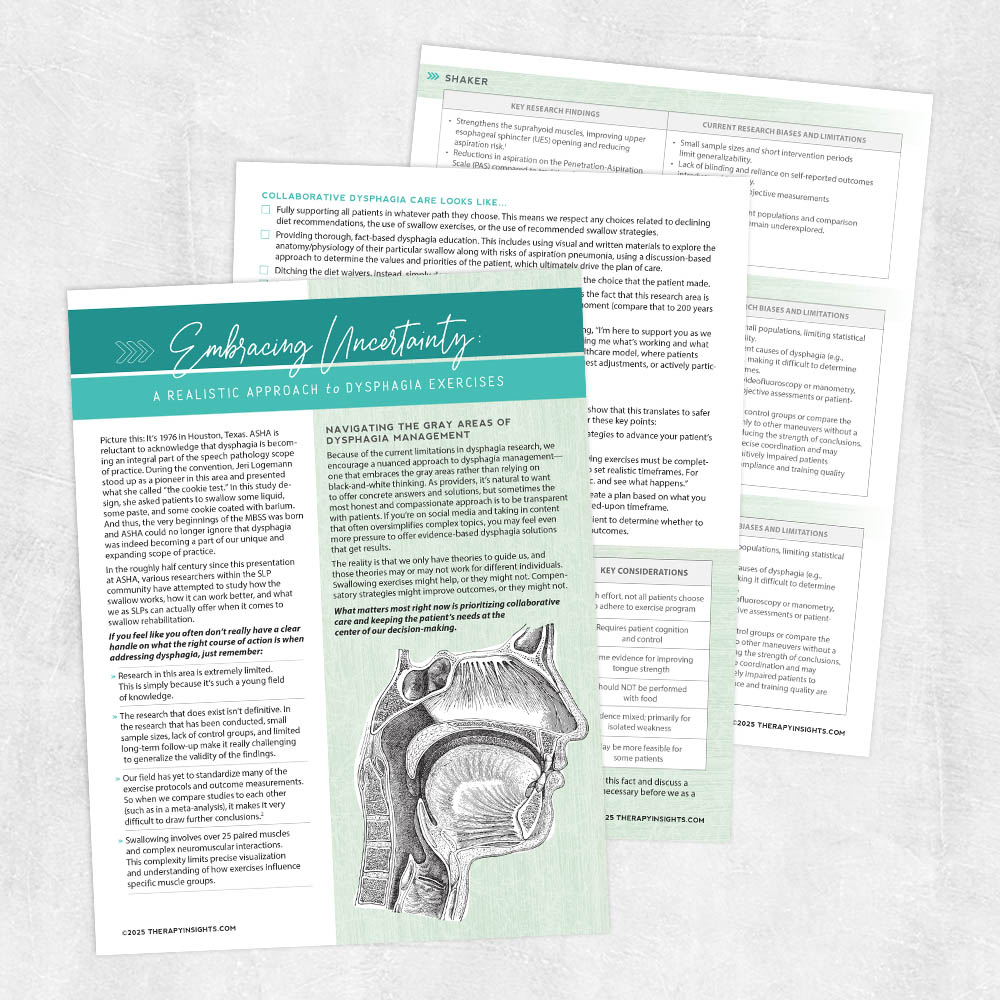
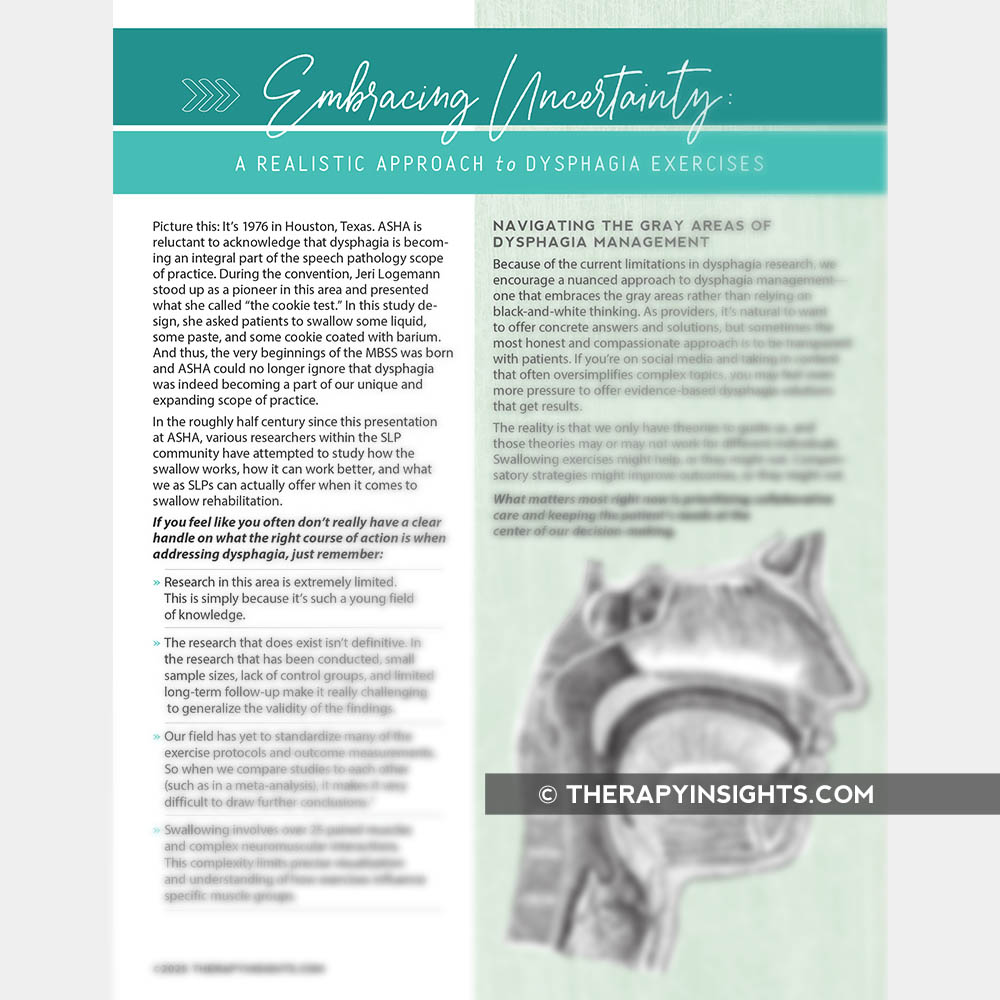
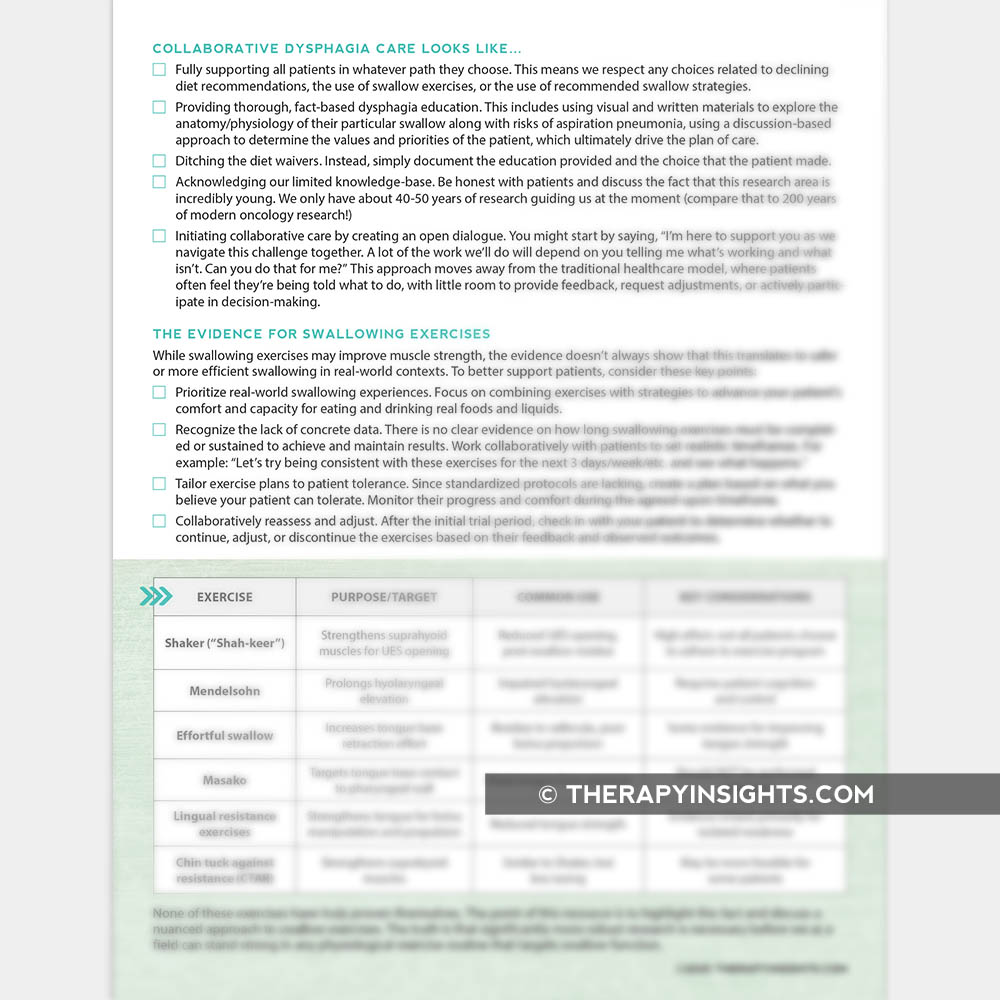
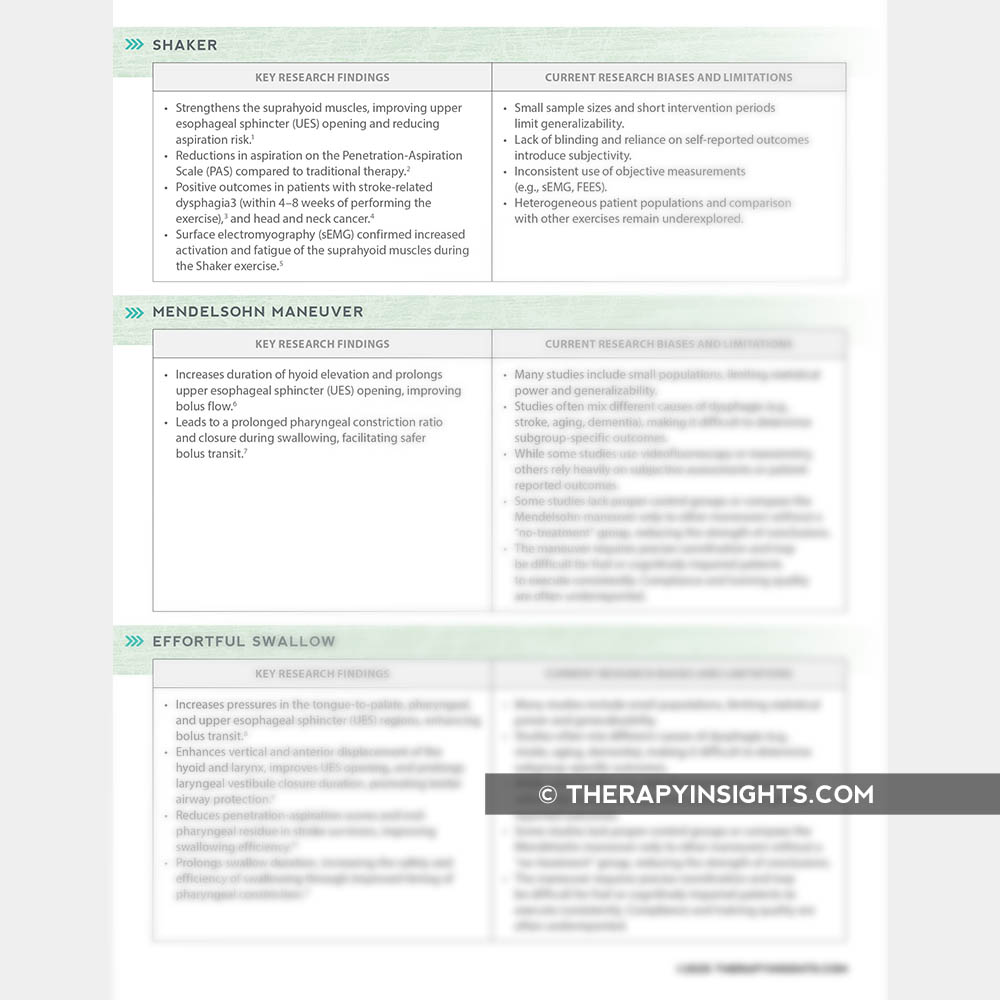
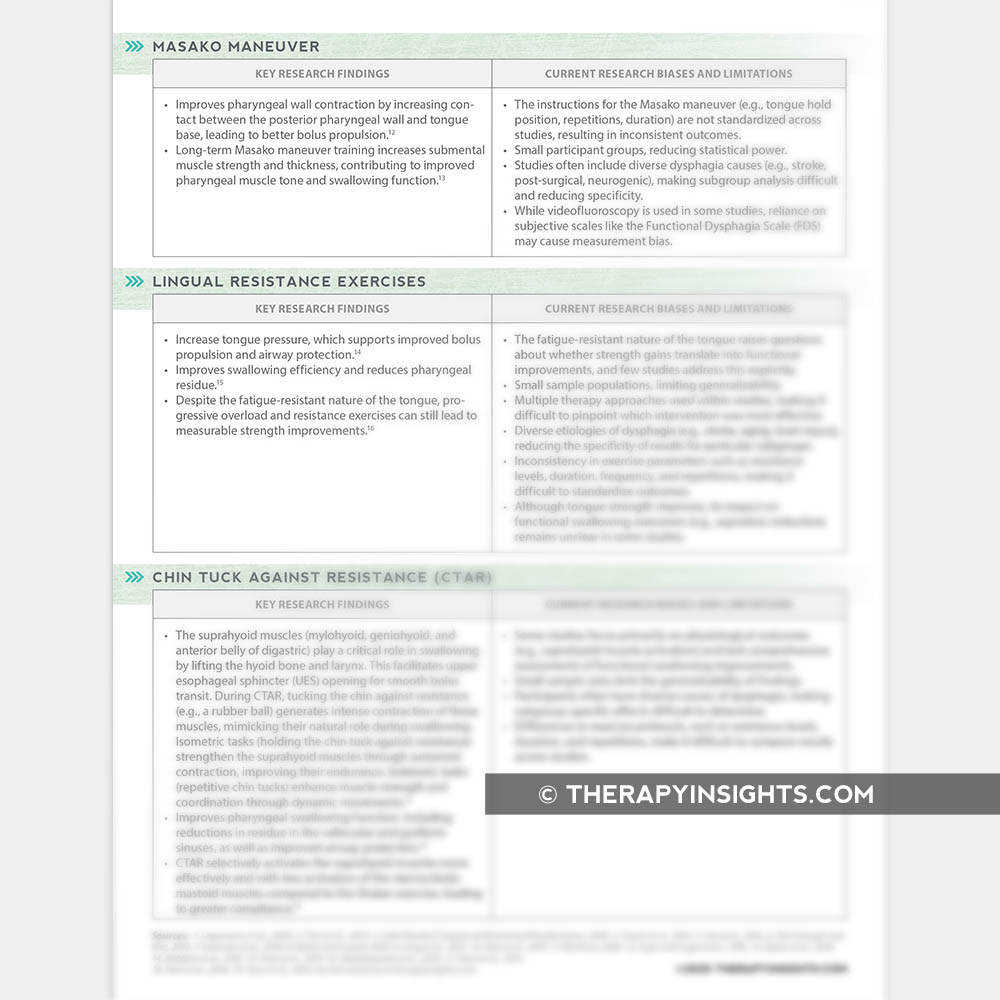
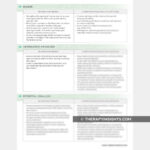
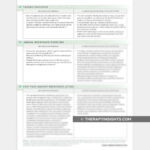
This resource explores the complexities and limitations of dysphagia management, highlighting key swallowing exercises like the Shaker, Mendelsohn, Masako, and CTAR while acknowledging the lack of definitive evidence supporting their efficacy. Designed for therapists, it encourages a patient-centered, collaborative approach that prioritizes real-world outcomes, transparent education, and individualized care amidst the gray areas of current dysphagia research.
Want access to this printable resource and hundreds more? Subscribe to Therapy Insights.
Subscribe to get instant and easy access to handouts, therapy materials, and clinical tools so that you can spend your valuable time doing what you do best: Connecting with your patients and changing lives for the better.
Subscribe now
Already subscribed to Therapy Insights? Log in to access this member exclusive.
Related resources
Handout
Avoiding Red Lights: Pacing for Progress
Clinical Reference
Talking About Money After Illness or Injury: A Clinical Guide
Therapy Activity
Hockey Play-by-Play: Tracking Changing Information
Handout
Beyond Exercise: Fun Ways to Stay Active
Handout
Your Concussion Recovery Roadmap
Handout
Changes in Speech Fluency After a Neurologic Injury
Daily Resource Limit
There was an issue loading this asset. Please try again or contact customer support.