
Tools for Clarity, Dignity, and Connection: Explore August’s New Therapy Resources

Every month, we release new therapy resources across adult neuro and clinical pediatrics. These tools are designed to help you meet real needs with real strategies, whether you’re planning therapy sessions around job readiness, supporting parents through difficult feeding decisions, or helping clients document their wishes with dignity.
In this post, you’ll find:
- New adult neuro tools that support communication, swallowing, cognition, and life participation
- New pediatric resources that center emotional regulation, clarity for caregivers, and connection over correction
Adult Neuro: New Therapy Tools for August
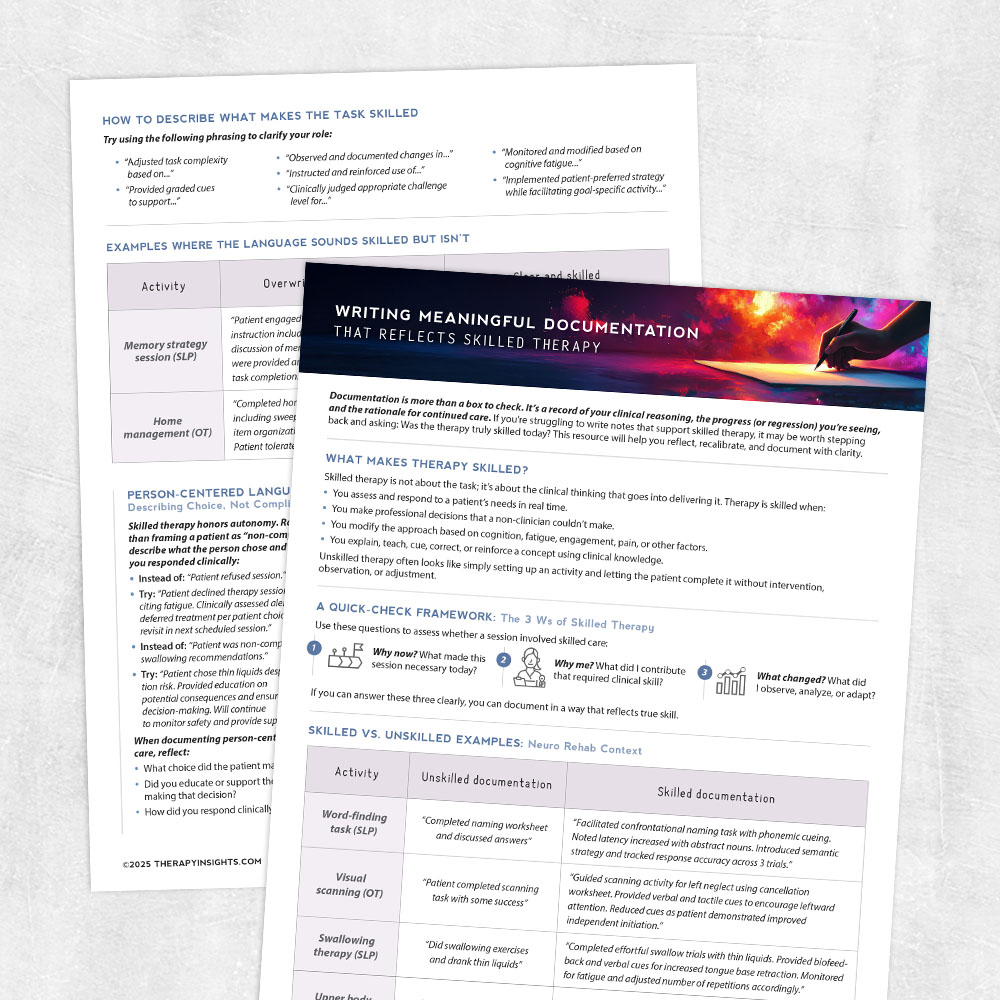
Writing Meaningful Documentation That Reflects Skilled Therapy
A guide to documentation that highlights clinical reasoning and person-centered care without drowning in jargon.
Therapists asked for help making their notes more reflective of real-world thinking. This resource includes examples, rewrite strategies, and prompts to help.
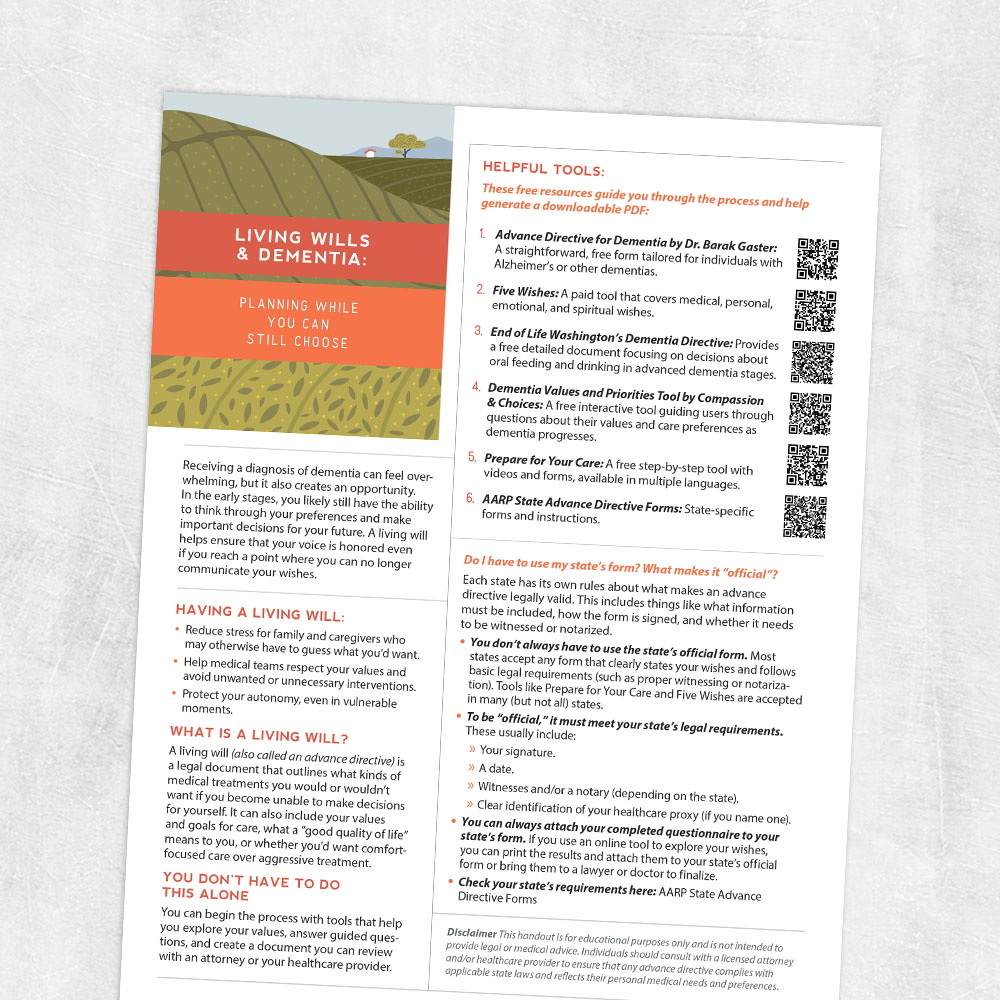
Living Wills and Dementia: Planning While You Can Still Choose
A patient-facing handout to support early planning and values-based care decisions.
Use this to introduce the idea of a living will with sensitivity and clarity, using accessible tools and supportive language.
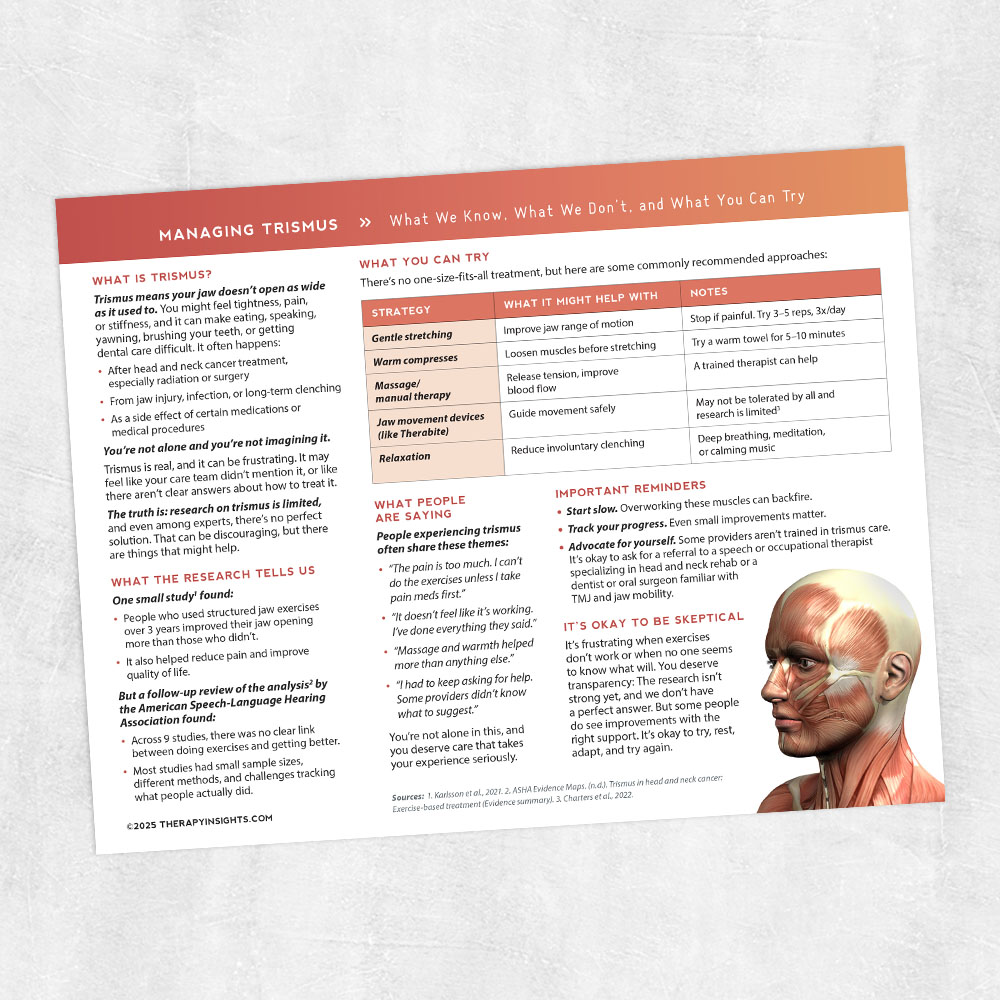
Managing Trismus: What We Know, What We Don’t, and What You Can Try
A clear, compassionate handout for patients navigating trismus.
Explains why it’s so hard to treat and what strategies are available, with a focus on transparency and realistic expectations.
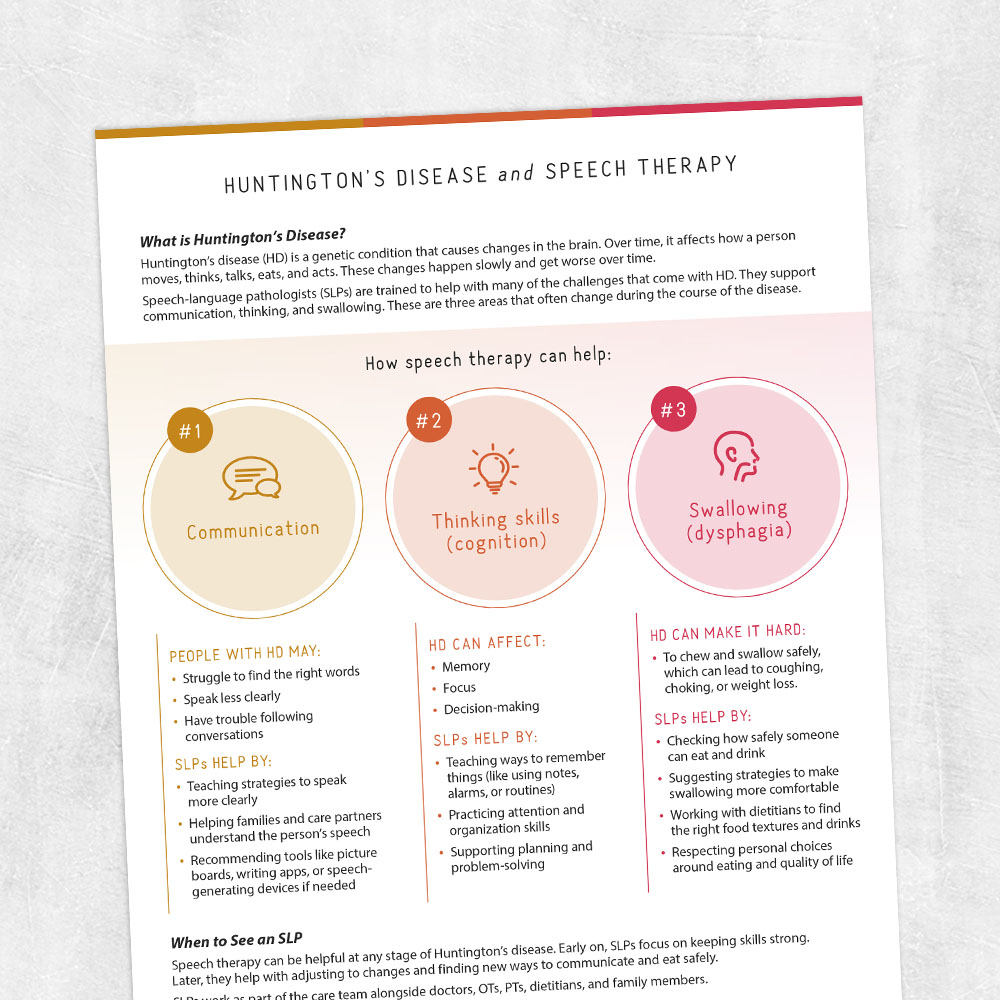
Huntington’s Disease and Speech Therapy
An overview of how SLPs can support cognition, swallowing, and communication at every stage of HD.
Designed to help clarify your role to patients, families, and interdisciplinary teams.
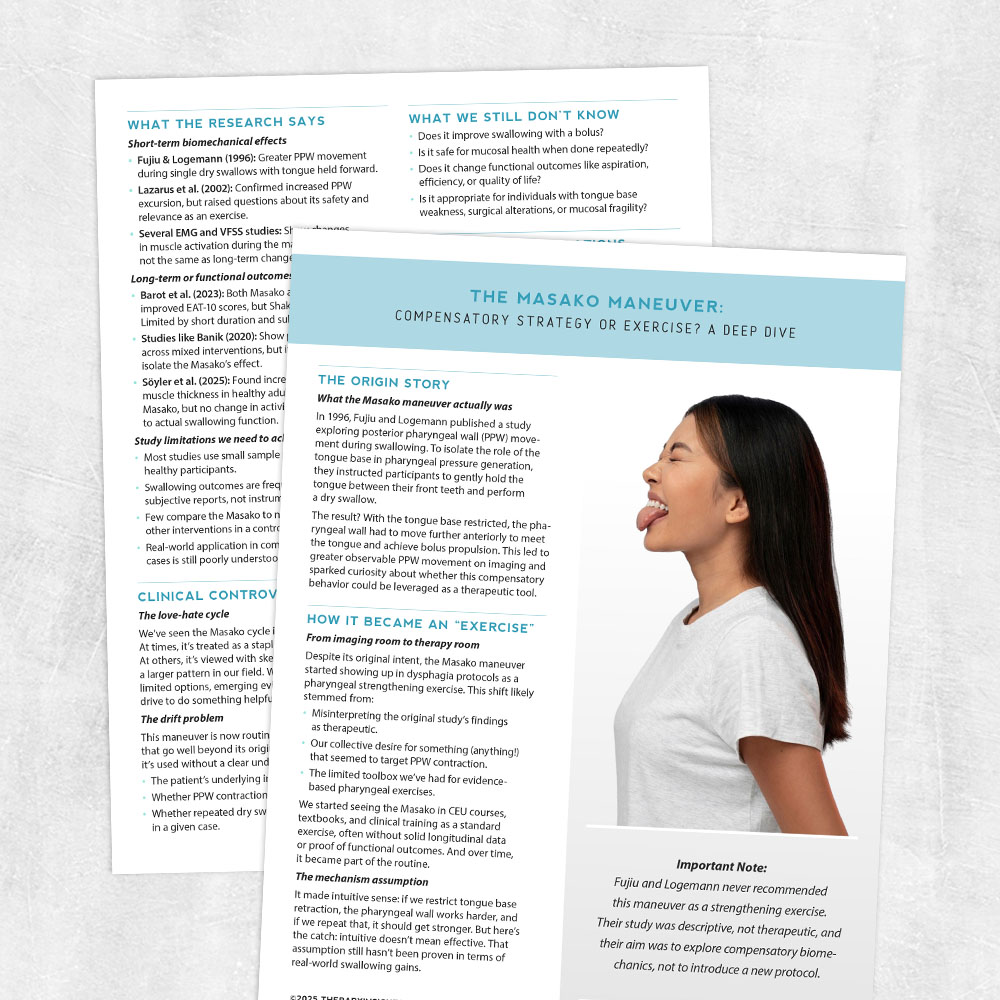
The Masako Maneuver: Compensatory Strategy or Exercise?
A clinical deep dive into one of dysphagia therapy’s most debated techniques.
We break down the evidence, the controversy, and how to make informed decisions in messy clinical territory.
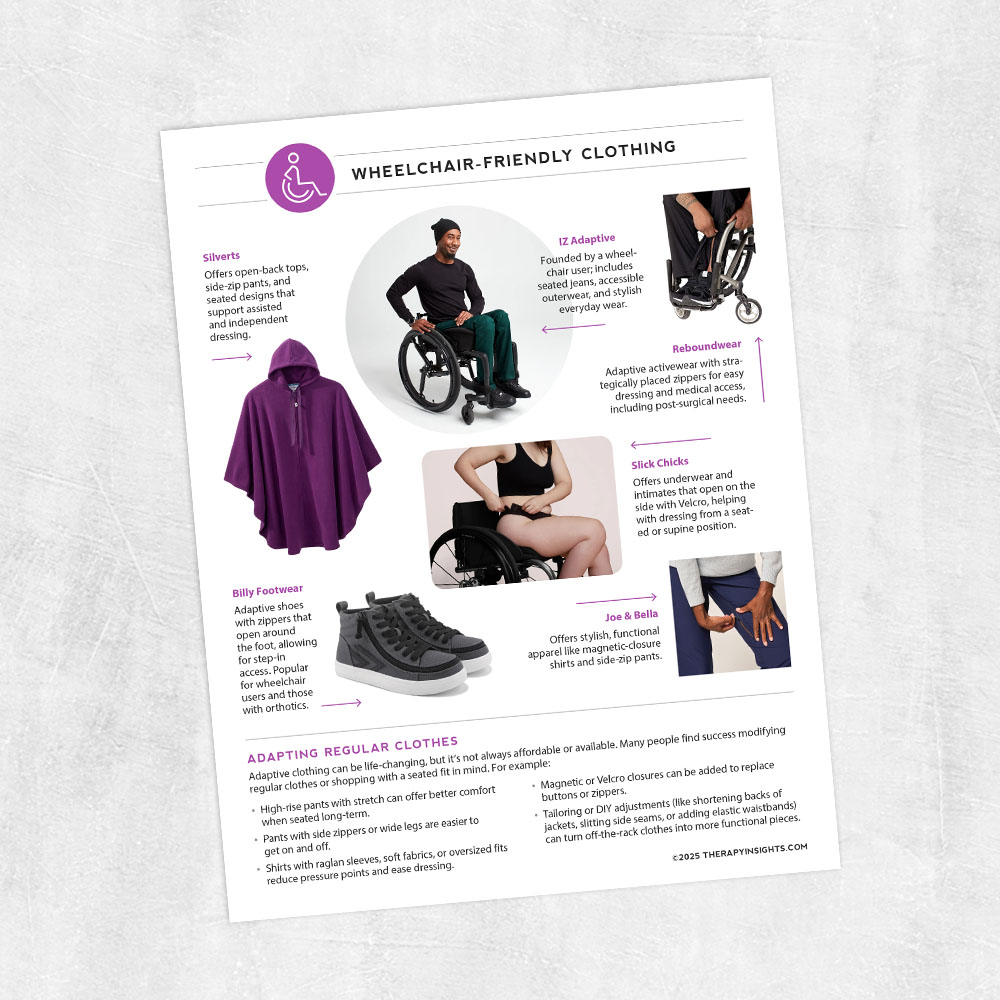
Wheelchair-Friendly Clothing
A visual, patient-centered guide to clothing options that support autonomy and comfort.
Great for sparking conversations about dressing with dignity and adapting clothing for different needs.
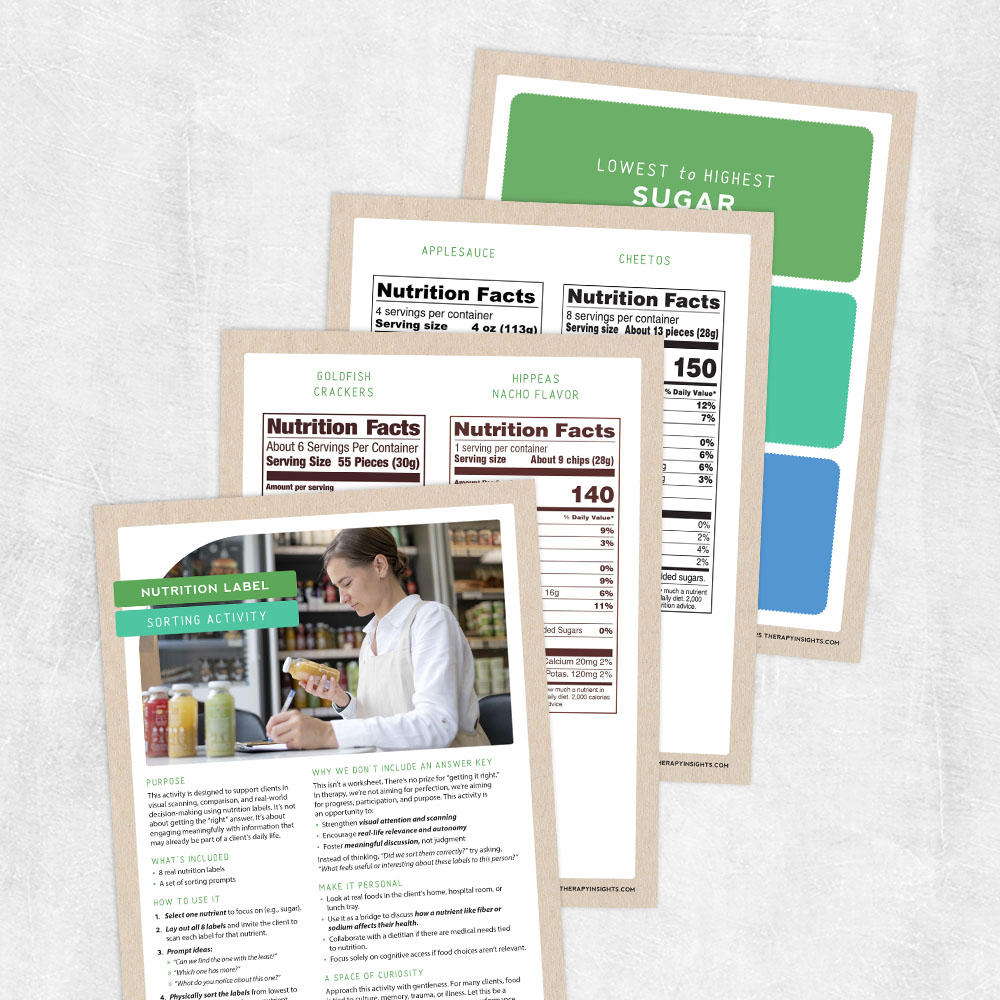
Nutrition Label Sorting Activity
A simplified cognitive task using real-world food labels.
Helps clients work on comparison and visual scanning without relying on “right answers.”
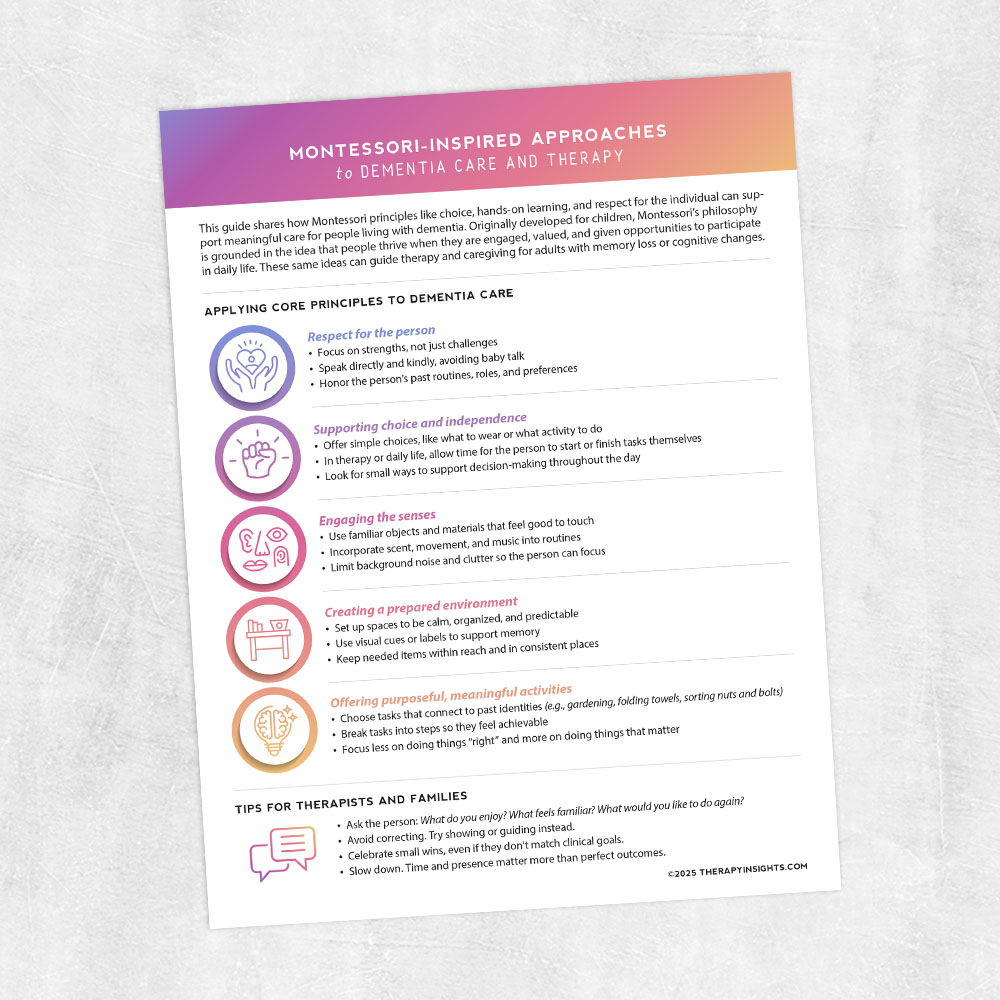
Montessori-Inspired Approaches to Dementia Care and Therapy
A family education tool grounded in Montessori principles.
Offers therapists and caregivers new ways to approach engagement, autonomy, and person-centered support.
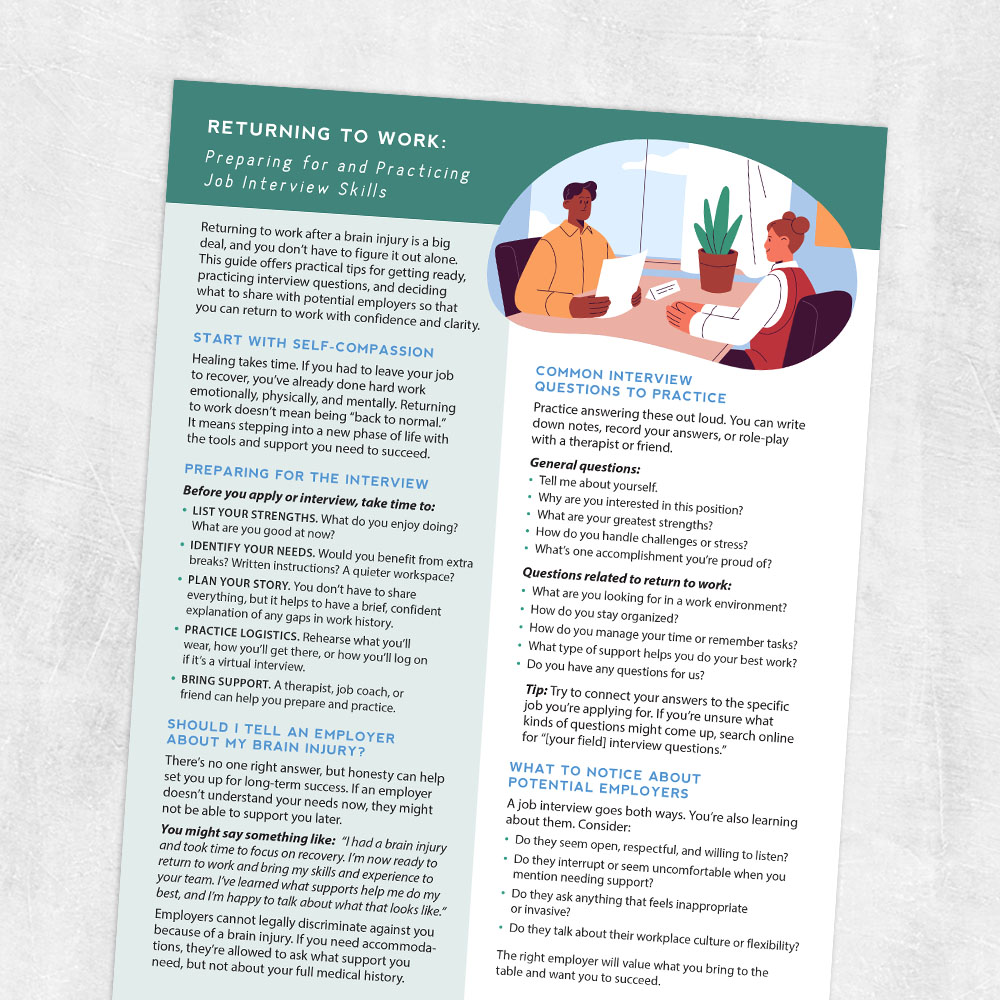
Returning to Work: Preparing for and Practicing Job Interview Skills
A structured toolkit for helping clients prepare for employment.
Includes practice questions, transparency tips, and discussion prompts to support confidence and advocacy.
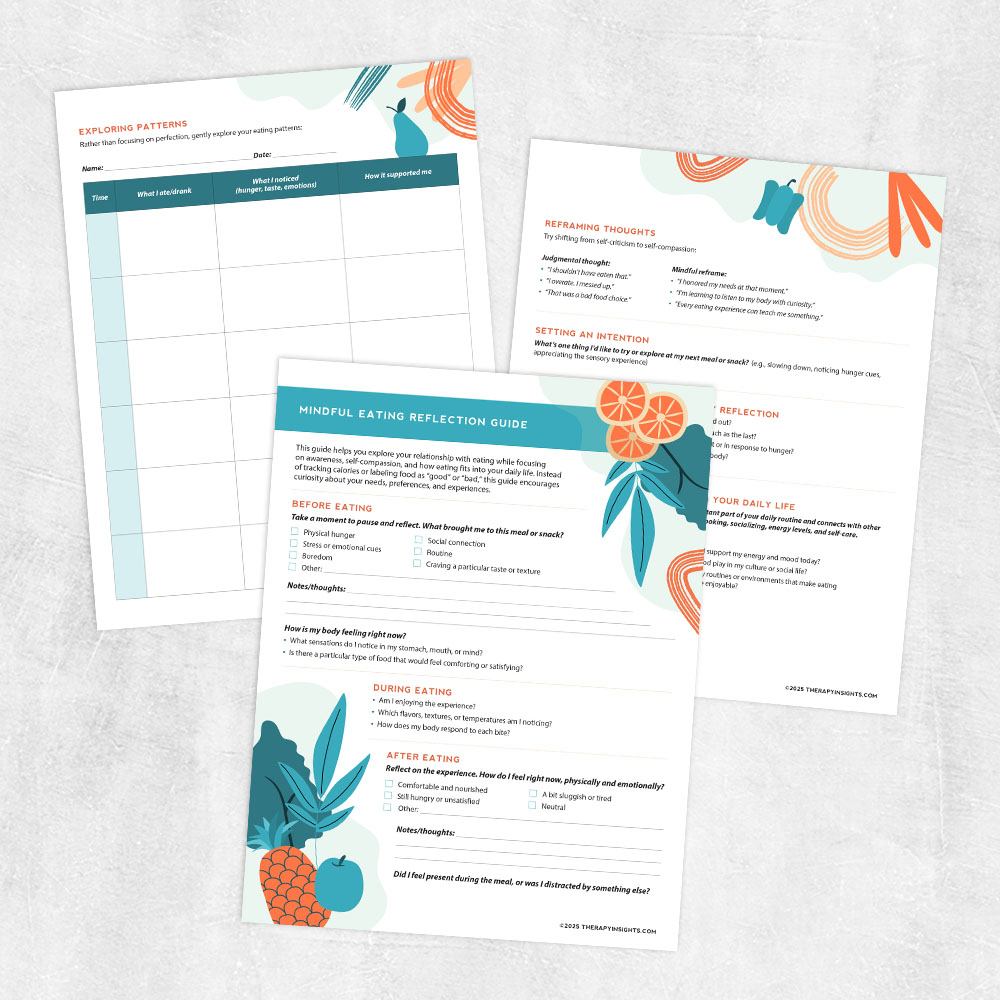
Mindful Eating Reflection Guide
A reflection tool for supporting more compassionate relationships with food.
Helps clients build awareness around habits and emotions without reinforcing shame or restriction.
What’s Coming in September…
We’re continuing to build tools that reflect your commitment to clarity, care, and creativity. In September, look for:
- Resources on swallowing and radiation for head and neck cancer
- A clinical explainer on ataxic dysarthria
- A guide to muscle tension dysphonia and what it reveals
- A real-world approach to dysarthria treatment
- A paper-based AAC tool for mealtime communication
- Support for navigating long-term care decisions after brain injury
- Practical tools for adaptive eating, walker selection, hand rehab, and no-cook meals
Clinical Pediatrics: New Therapy Tools for August
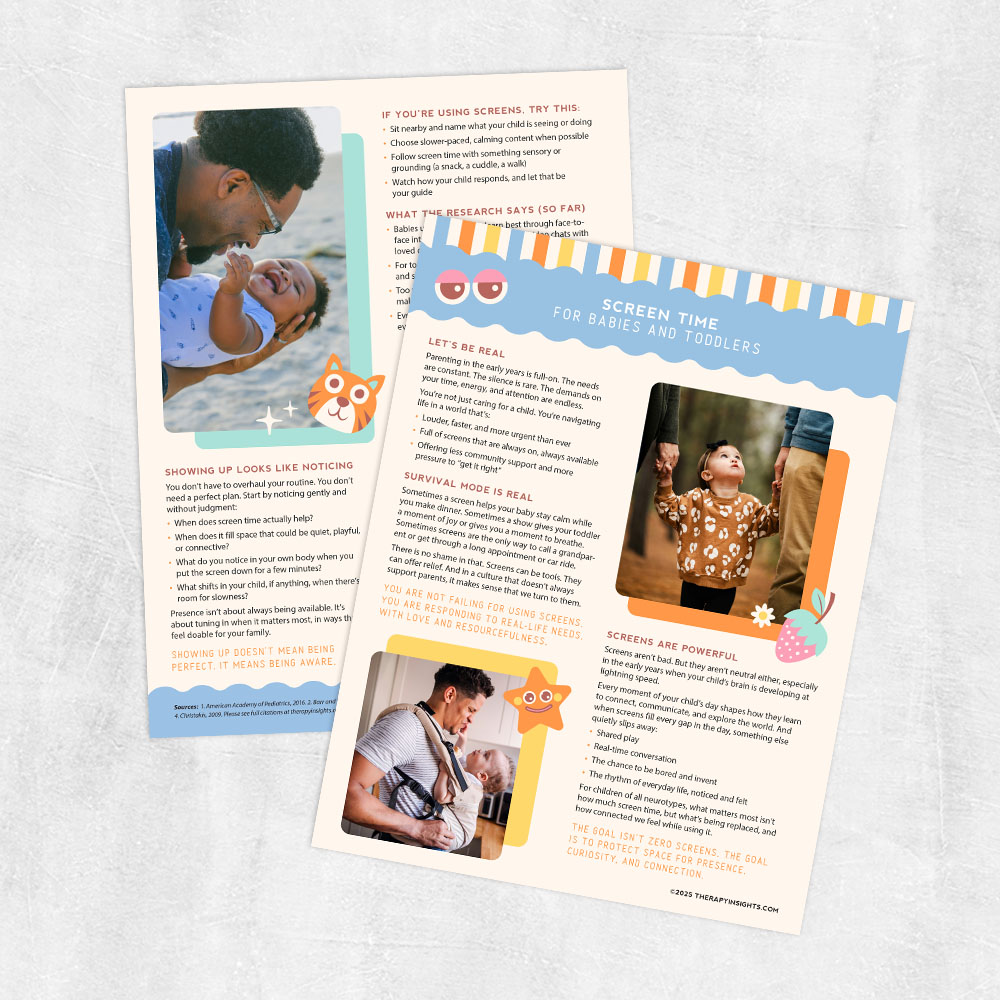
Screen Time for Babies and Toddlers
A nonjudgmental handout for families reflecting on screen use with little ones.
Invites gentle awareness and connection rather than strict limits or guilt.
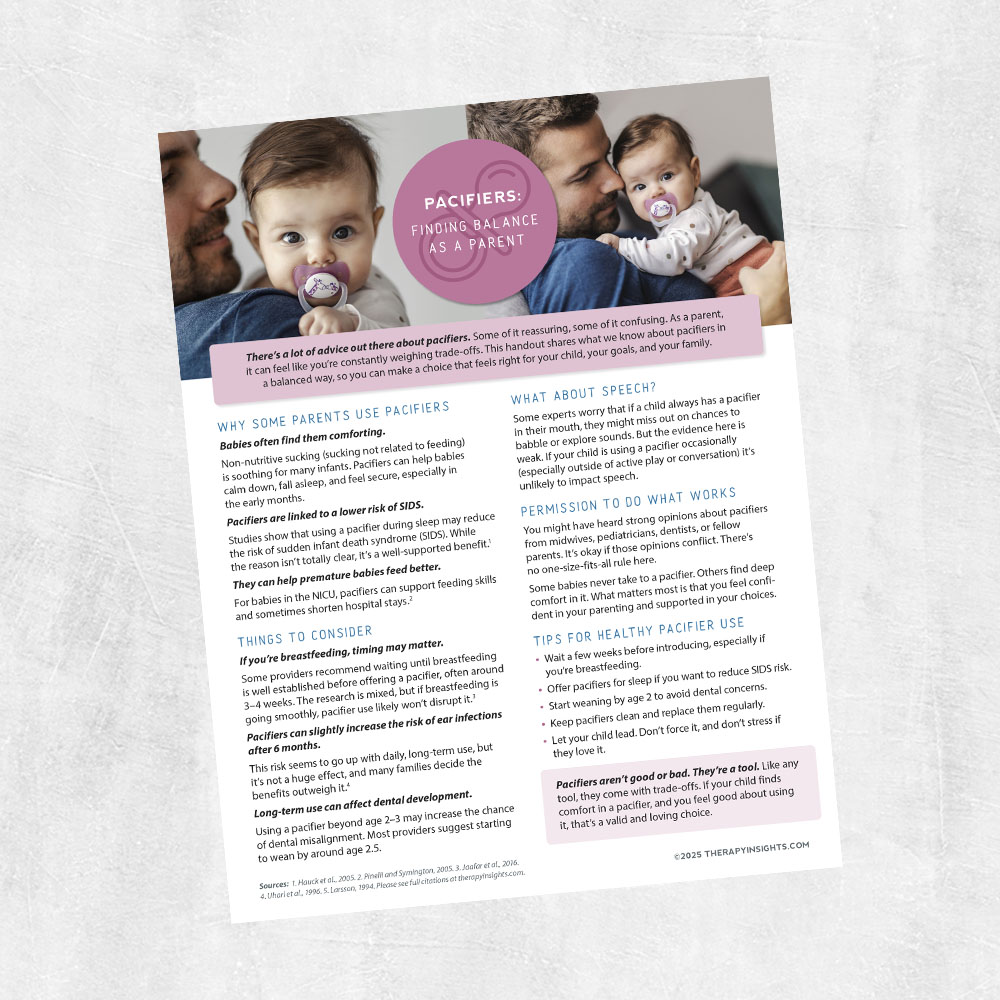
Pacifiers: Finding Balance as a Parent
A compassionate look at the pros and cons of pacifier use.
Supports therapist-led conversations rooted in confidence, not fear.
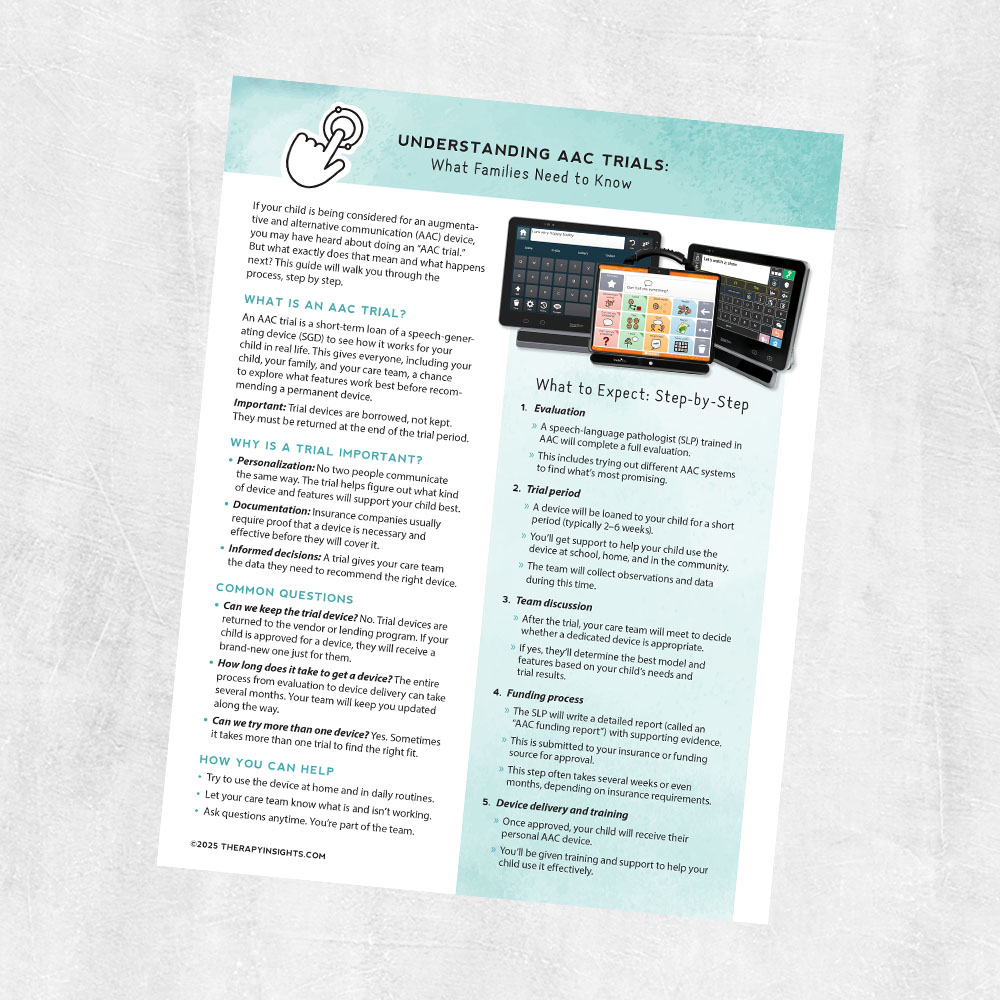
Understanding AAC Trials: What Families Need to Know
A plain-language explainer to guide families through the AAC trial process.
Covers what to expect, how devices are chosen, and why the process matters.
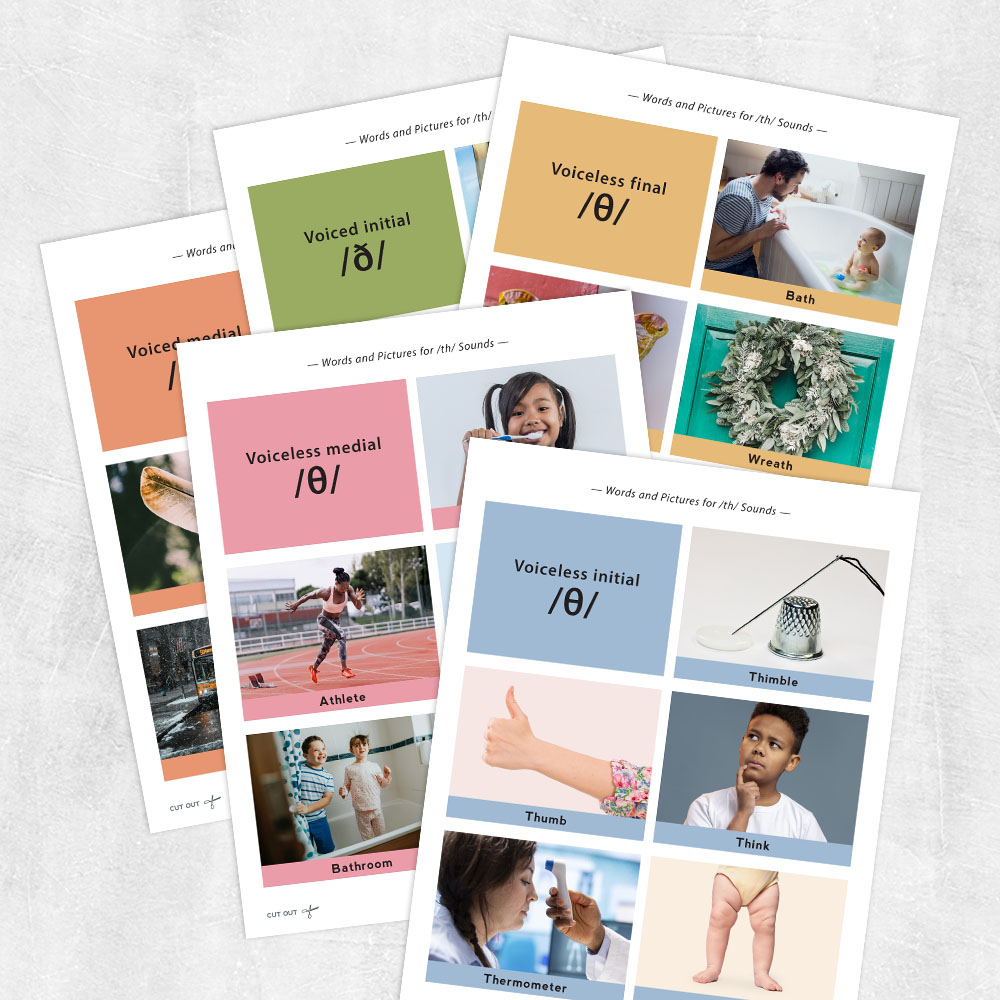
Words and Pictures for /th/ Sounds
A visual articulation tool for voiced and voiceless /th/ in all positions.
Includes minimal pairs and concrete images to make cueing and modeling easier.
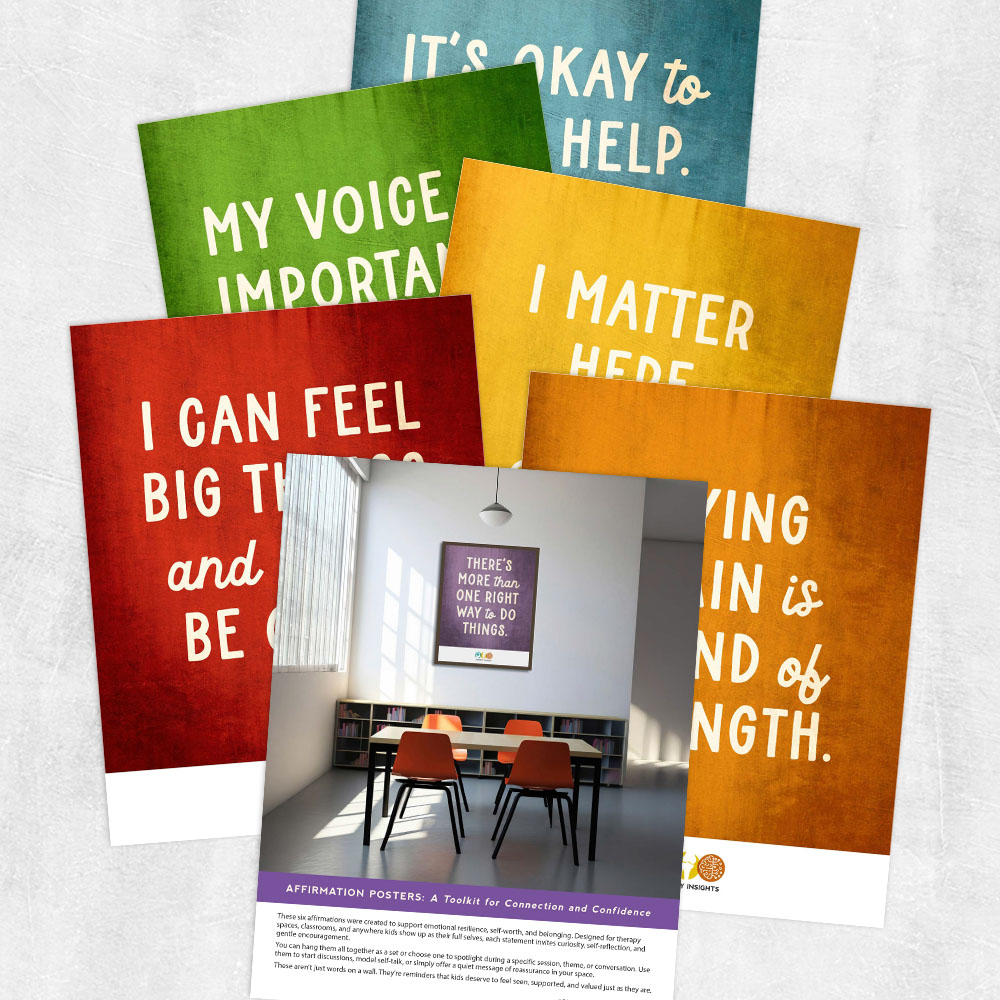
Affirmation Posters: A Toolkit for Connection and Confidence
Six printable posters with messages that help kids build self-trust.
Perfect for therapy rooms or to send home for continued encouragement.
What’s Coming in September…
We’re continuing to build pediatric tools that reflect your commitment to play, participation, and real-life support. In September, look for:
- Co-regulation strategy boards for sensory and emotional support
- Approaches to goal writing that emphasize play and participation
- Visual tools for adaptive feeding and articulation practice with velar sounds