New in December: Multilingual Supports and Practical Therapy Tools

Every month, we release new therapy resources across adult neuro and clinical pediatrics. These tools are designed to meet the realities of therapy today, whether you are teaching safe swallowing strategies across languages, helping families navigate feeding challenges, or building independence with planning, routines, and daily care.
In this post, you’ll find:
- New adult neuro tools that support swallowing safety, functional cognition, caregiver education, and community reintegration
- New pediatric resources that center independence, self-awareness, and family collaboration
Adult Neuro: New Therapy Tools for December

Large Print Basic Swallow Precautions (8 Languages)
A large-print handout listing five essential dysphagia precautions, translated into 10 languages for accessibility across care settings.
Everyone deserves this information in their own language, especially when safety is involved.
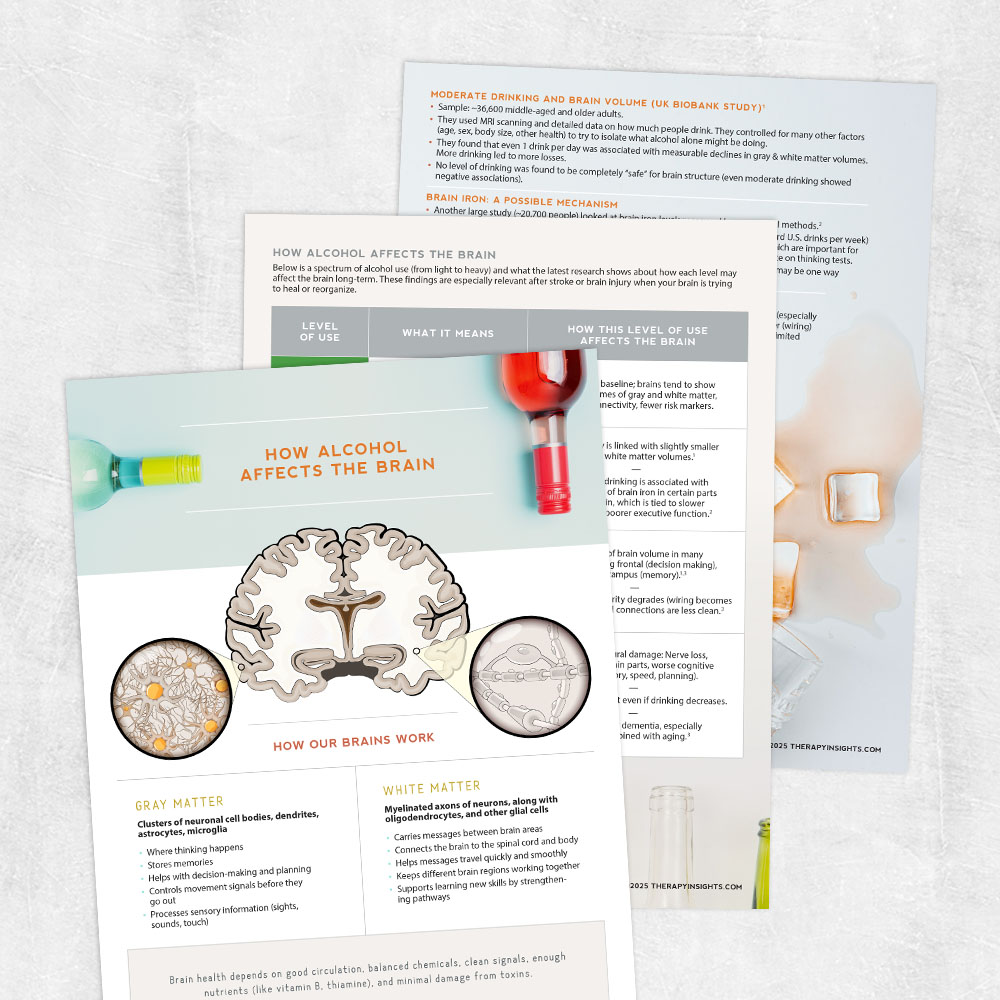
How Alcohol Affects the Brain
A simple, research-informed explainer on how alcohol affects brain structures and thinking skills, designed to support clear conversations about recovery and decision-making.
The conversation about alcohol is changing quickly, and people deserve accurate information without confusion or shame.

6 Weekly Planner Templates
Six printable weekly planners designed to help clients build planning and organization strategies during neuro rehab sessions.
Created by member request for flexible, ready-to-use templates that meet a range of cognitive and visual needs.

Broca’s Aphasia: The Basics
A one-page introduction to Broca’s aphasia that keeps information simple, supportive, and actionable for early education.
Families often receive overwhelming information at diagnosis. This resource keeps it clear and digestible.

Cleaning Product Safety Cards
A functional safety activity centered around household cleaners, supporting discussion and awareness without right-or-wrong answers.
Cleaning is a real ADL with real risks. This activity opens the door to education that feels concrete, not abstract.

How to Follow and Listen to Apple Podcasts on an iPhone or iPad
A step-by-step, low-vision-friendly guide for helping clients find and listen to podcasts.
Created after requests for more accessible, visual guides to using everyday technology.
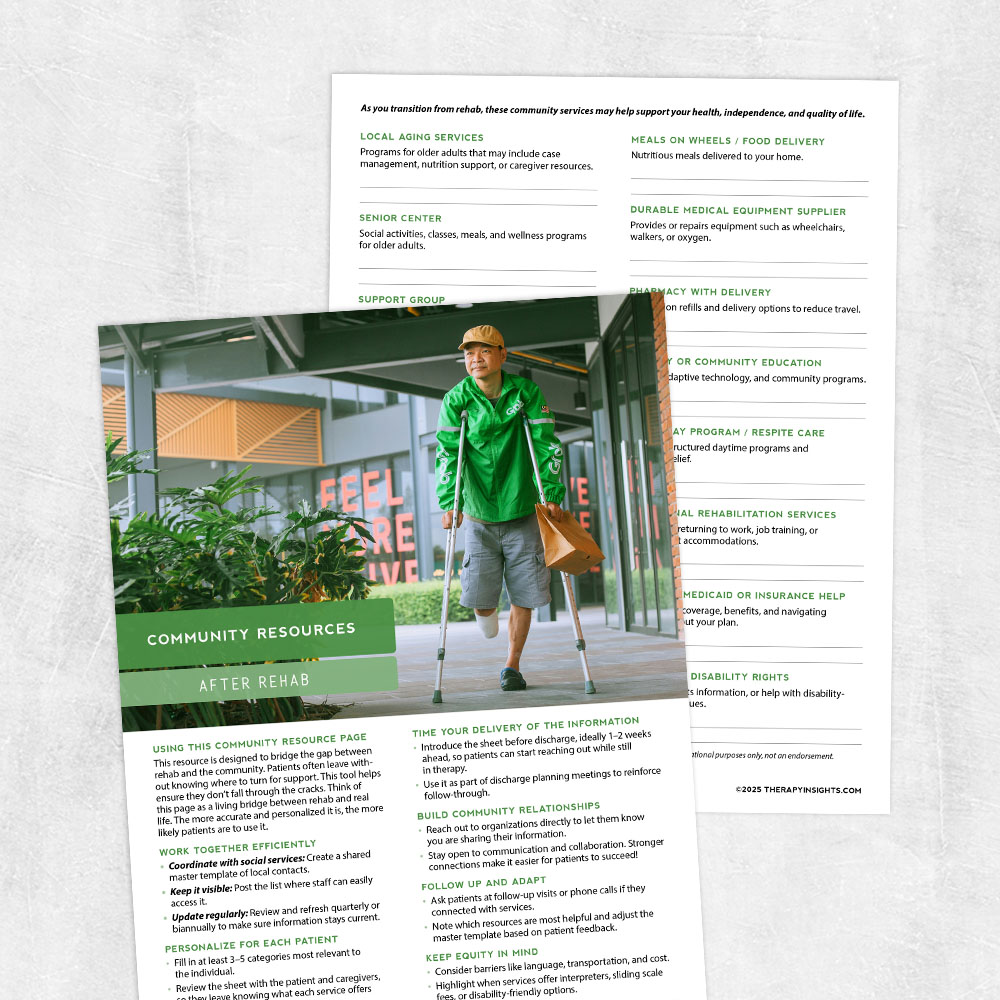
Community Resources After Rehab
A customizable handout that helps clients transition from inpatient rehab into the community with clear, local contacts and follow-up supports.
Going home often means losing a huge amount of structure. This bridges the gap.

Ambiguous Loss and Dementia
A compassionate handout explaining ambiguous loss and offering grounding rituals to support families through ongoing grief.
People navigating this kind of loss often feel alone. This gives language and support where there usually is none.

Centers for Independent Living (CILs)
A beginner-friendly explainer of what CILs are, what they offer, and how to connect with a local center.
Many clients do not know these free services exist. This puts the information directly into their hands.
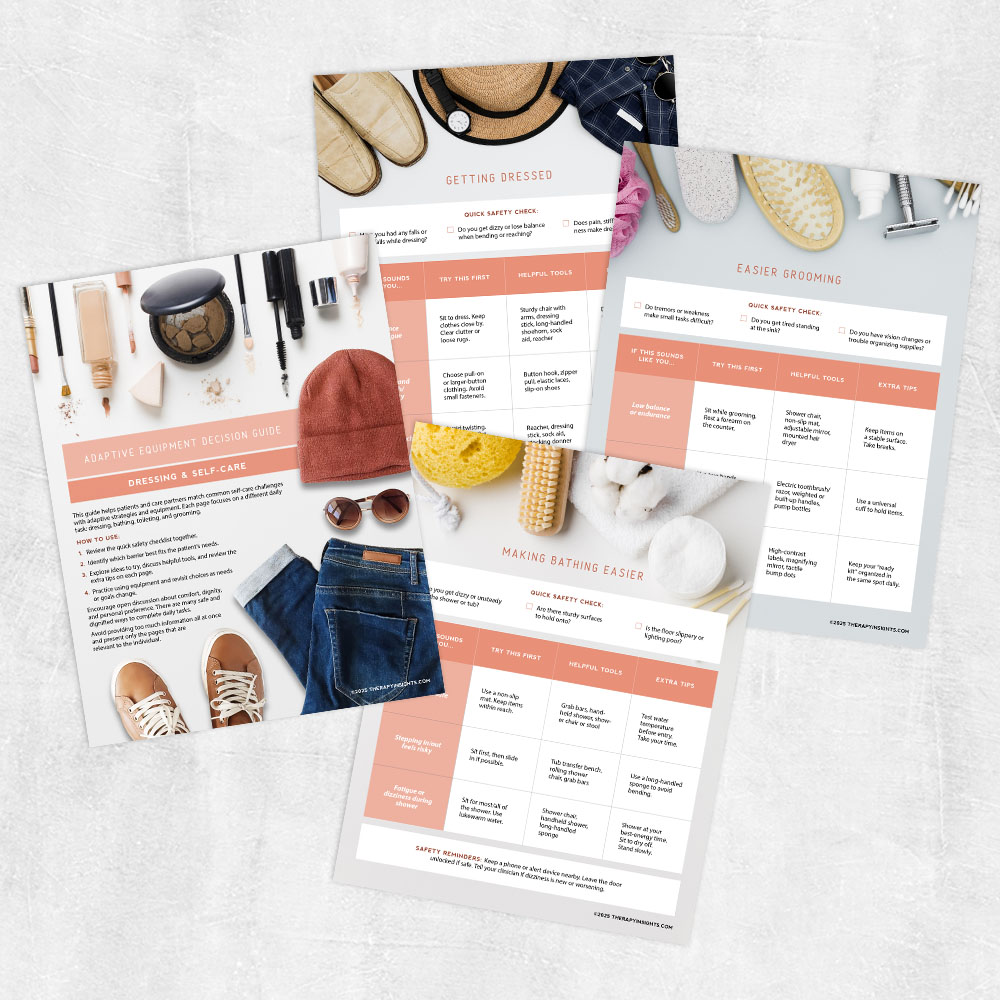
Adaptive Equipment Decision Guide: Dressing and Self-Care
A practical guide that helps clients identify barriers and explore adaptive equipment for dressing, bathing, toileting, and grooming.
Created to make self-care conversations more collaborative, visual, and actionable.
What’s Coming in January…
- Neuro-FAST subtests for smartphone and technology use, and functional memory
- A Brain Injury Article Club on identity and transformation
- Watercolor Brain Map for education and reflection
- Basic anatomy handouts: shoulder subluxation, the swallow, the voice
- Grab bar placement reference for toilets and showers
- Animal shelter data entry real-world activity
- Very basic acute care AAC boards
Clinical Pediatrics: New Therapy Tools for December

Visual Sequencing Board: Dressing Routine
A customizable visual tool that breaks down dressing steps using either simple outlines or personal photos.
Supports independence and reduces overwhelm during multi-step routines.
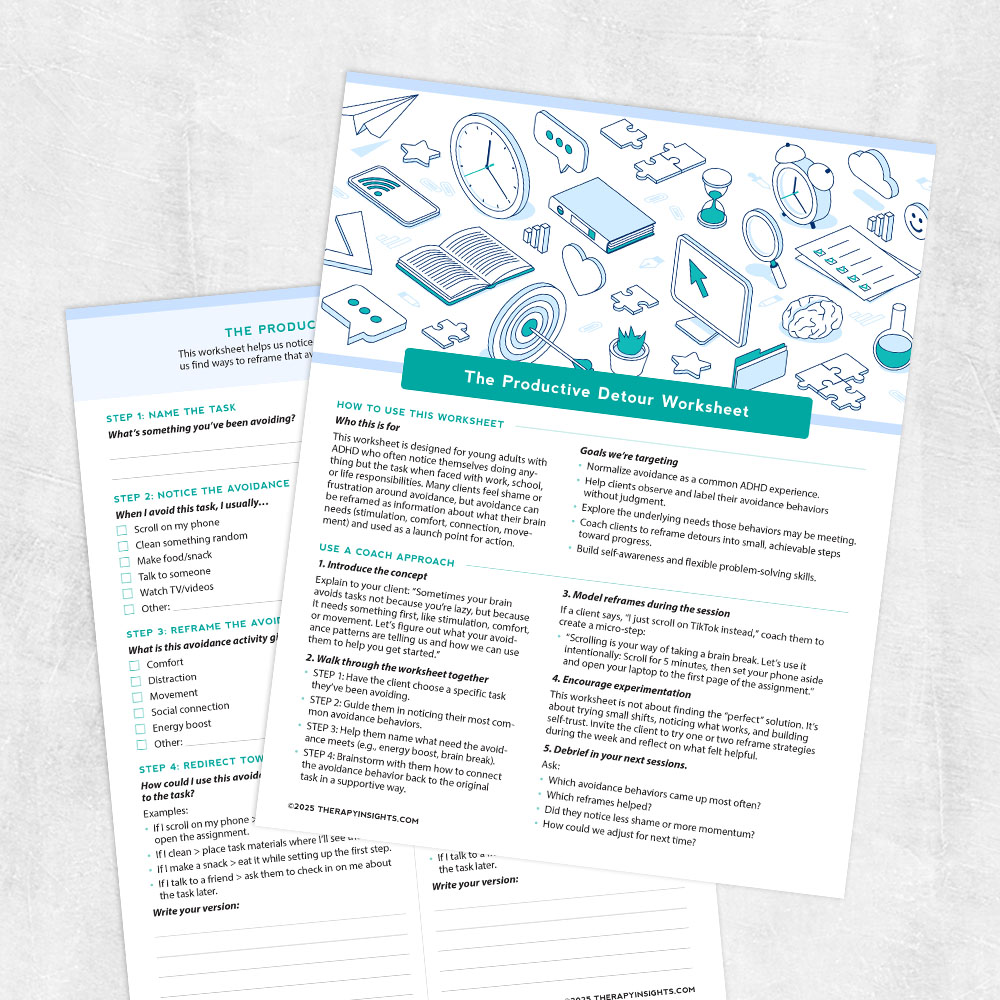
The Productive Detour Worksheet
A reflective tool that helps young adults with ADHD identify avoidance patterns and reframe them into supportive steps toward progress.
This approach prioritizes self-awareness and reduces shame instead of pushing kids to meet neurotypical expectations.
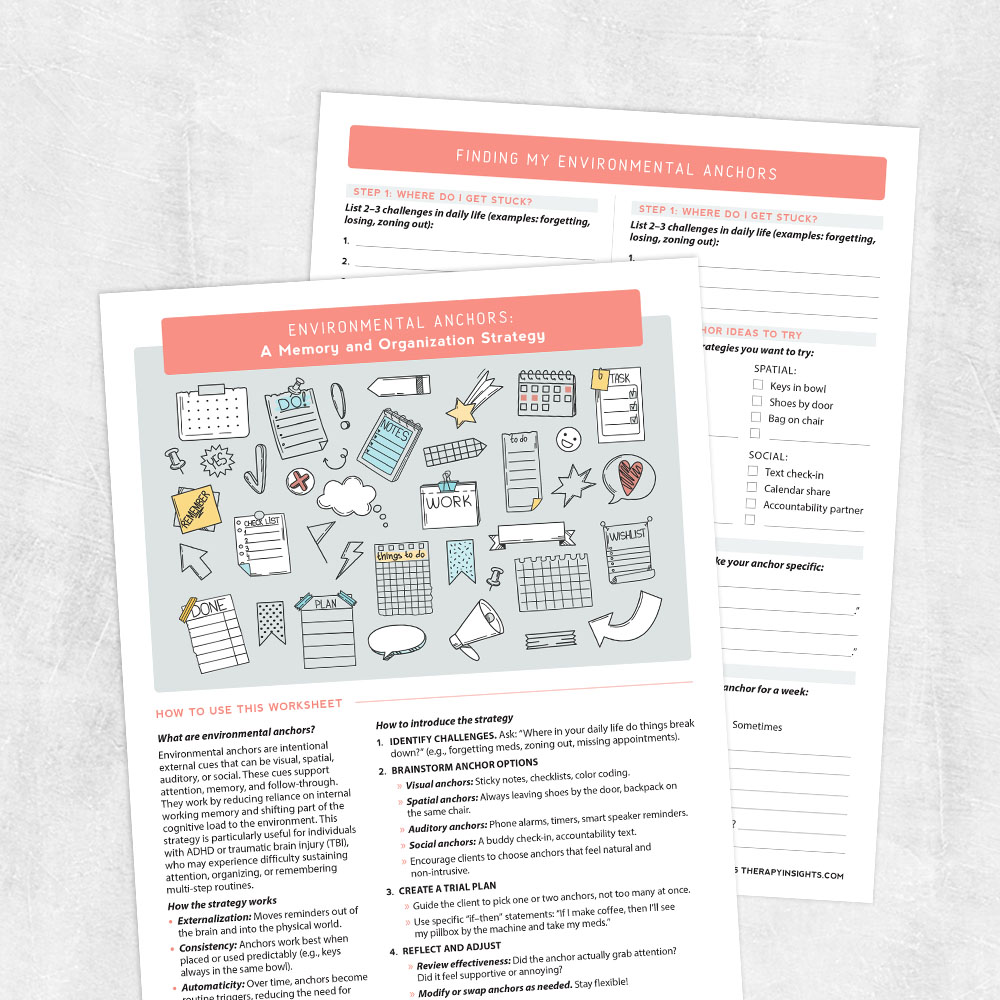
Environmental Anchors: A Memory and Organization Strategy
A worksheet that teaches kids and teens how to use practical environmental cues to support attention, follow-through, and memory.
This is a clear, concrete strategy that works for many individuals with ADHD or TBI.
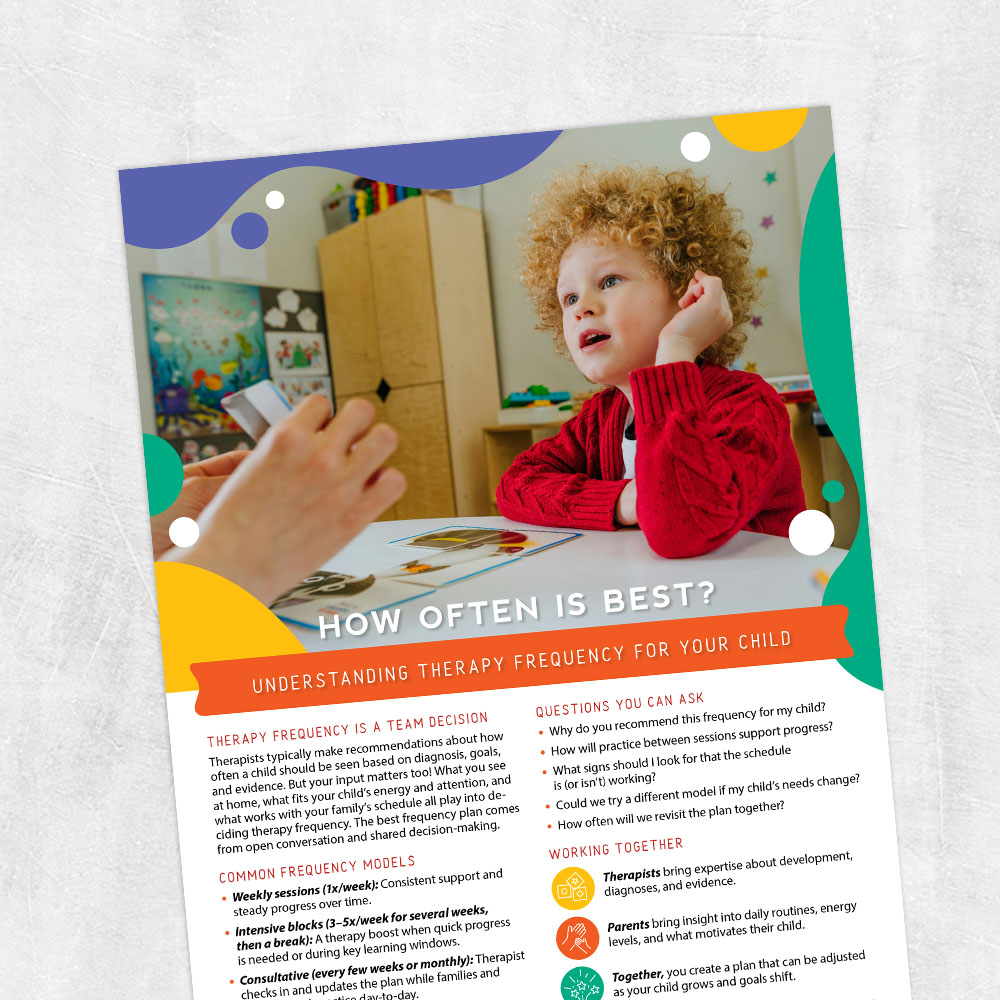
How Often Is Best? Understanding Therapy Frequency for Your Child
A handout that explains therapy frequency in simple, collaborative language and supports families in making informed decisions.
Parents deserve to understand a process that often feels mysterious or intimidating.
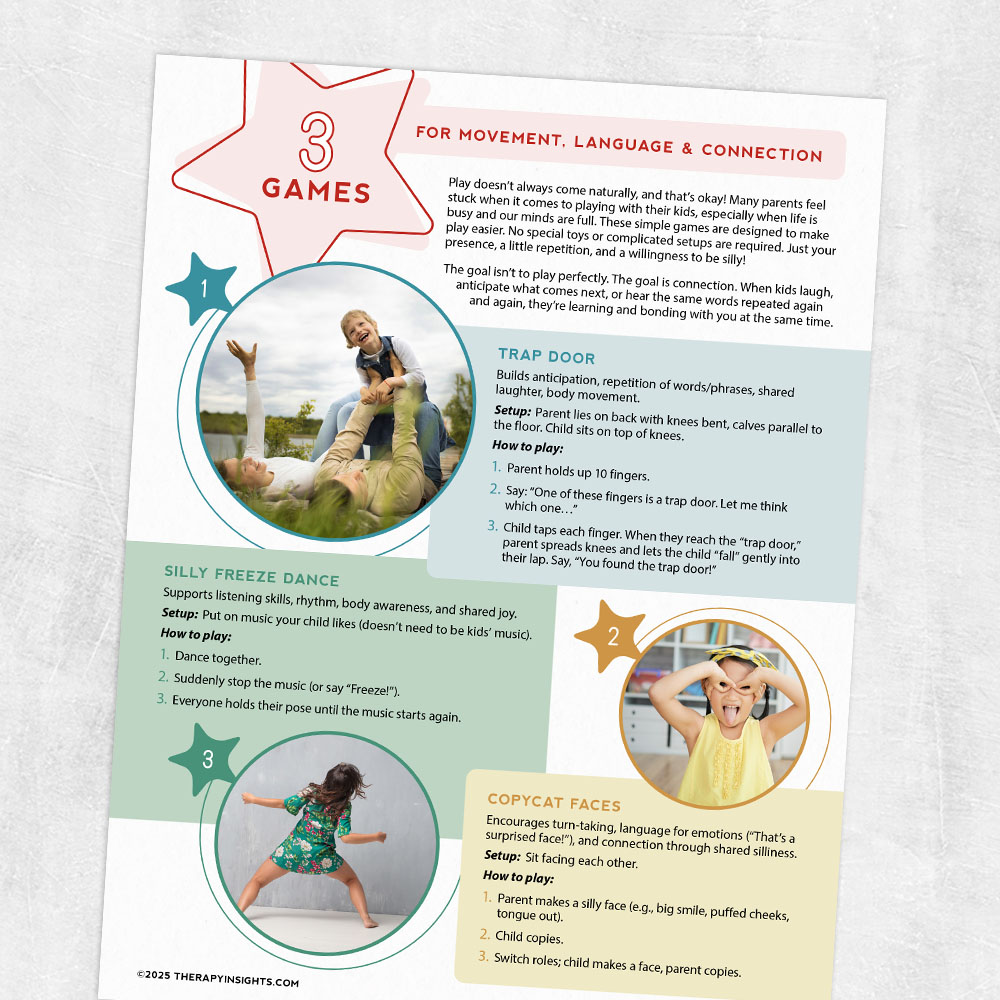
Three Games for Movement, Language, and Connection
A parent handout with three simple, repeatable games that build movement, language, and connection without special materials.
Many adults never experienced play modeled for them. This resource helps bridge that gap.
What’s Coming in January…
- Real-life problem solving tasks for junior high students
- A handout on what kids learn from boredom
- Priming strategies for helping kids feel ready
- A caregiver guide for supporting a healthy relationship with food
- A practical tool for handling toddler aggression