
From Brain Maps to Grab Bars: 15 New Resources for Clinical Carryover

As we move into January, our focus shifts toward the functional carryover. We’ve created tools that help bridge the gap between a therapy session and a patient’s actual life at home. This month’s collection is led by the launch of two new Neuro-FAST subtests, designed to capture the nuances of real-world memory and digital literacy that standardized tests often miss. From artistic approaches to brain injury education and ADA-informed home safety guides to pediatric resources that prioritize self-advocacy and responsive feeding, these tools are built for clinicians who look beyond “compliance” to find genuine independence. We’ve focused on creating language and visuals that reduce the mystery of therapy for families, ensuring that every handout serves as a roadmap for progress in the new year.
Adult Neuro: New Therapy Tools for January
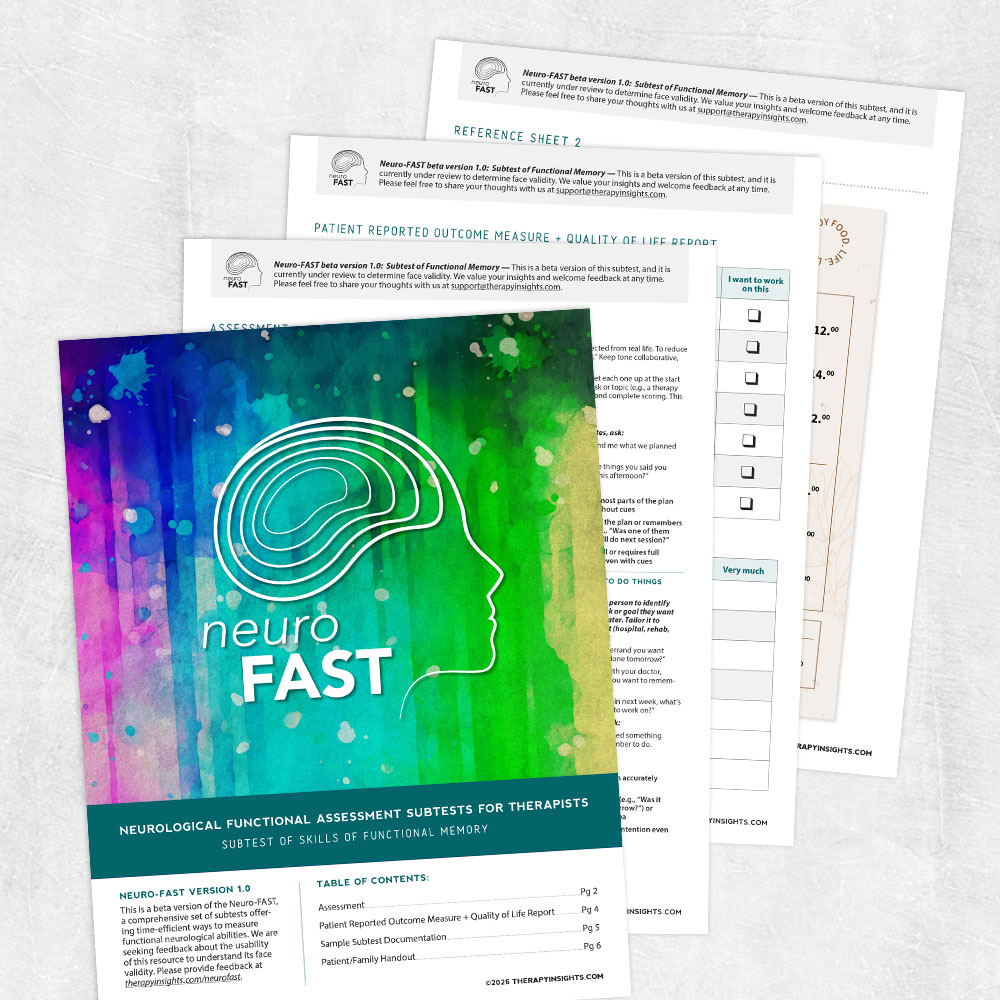
Neuro-FAST (Neurological Functional Assessment Subtests for Therapists): Subtest of Functional Memory
This subtest evaluates real-world memory skills using meaningful, collaborative tasks like remembering a meal order, following through on a plan, or recalling medication details. Use it to identify functional goals, track progress over time, and help patients rebuild confidence in remembering what matters most.
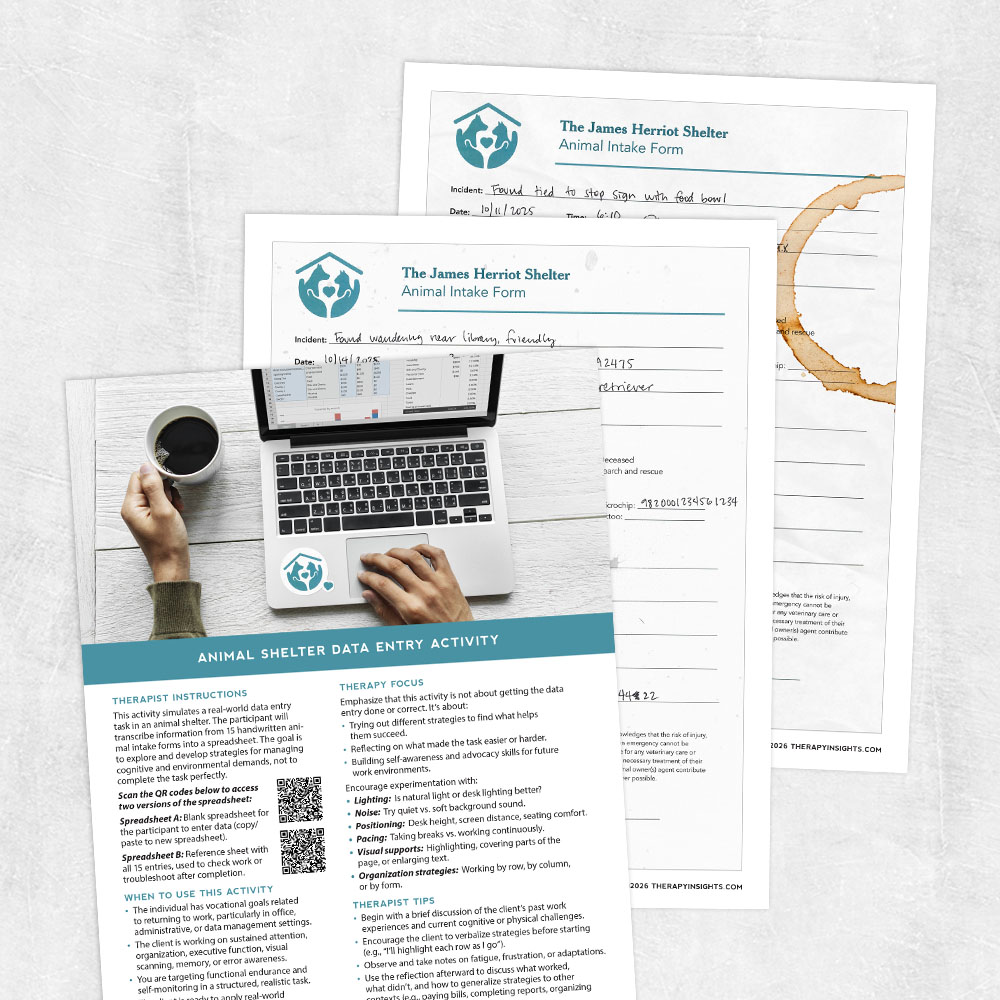
Animal Shelter Data Entry Activity
This functional data entry activity helps clients preparing to return to work practice organization, attention, and self-monitoring within a realistic context. Use it to explore strategies for managing distractions, fatigue, and task complexity while building insight into work-related cognitive demands.

Basic Anatomy: The Swallow
This visual breaks down the main structures involved in swallowing and shows how each part works together to move food safely from the mouth to the stomach. Use it to support education about airway protection and therapy goals.
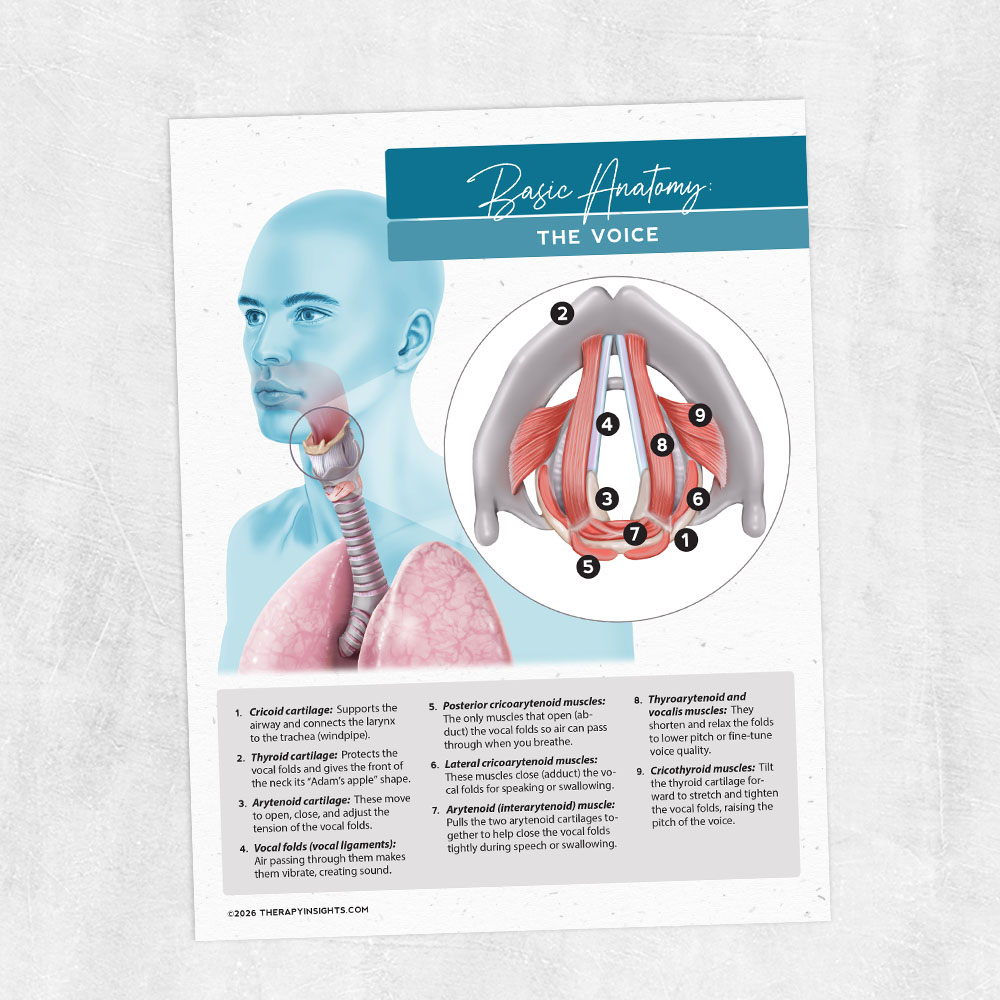
Basic Anatomy: The Voice
A clear visual guide to the key structures involved in voice production. Helps clients understand how the larynx works and supports education around voice disorders, injury, or recovery after surgery.

Very Basic Acute Care AAC Boards
A step-by-step AAC tool designed for acute care settings. Supports basic communication even with significant cognitive or motor impairments, beginning with yes/no responses and expanding as alertness and endurance improve.
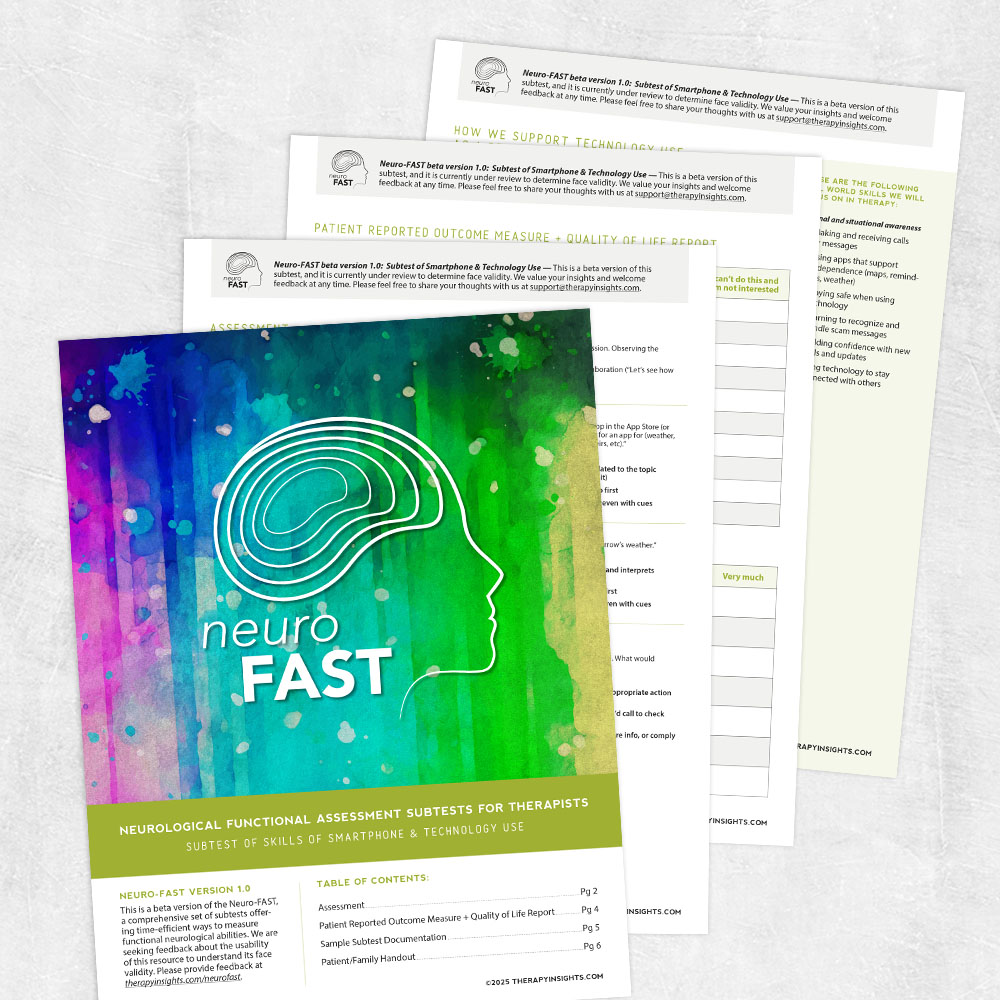
Neuro-FAST (Neurological Functional Assessment Subtests for Therapists): Subtest of Smartphone and Technology Use
Assesses real-world technology skills like phone use, messaging, app navigation, and scam awareness. Supports goal-setting and confidence building for communication, safety, and independence after brain injury or stroke.

Brain Injury Article Club: Identity and Transformation After Brain Injury
A group-based resource that uses an article and guided discussion to explore identity change after brain injury. Designed to foster reflection, connection, and meaning-making during recovery.
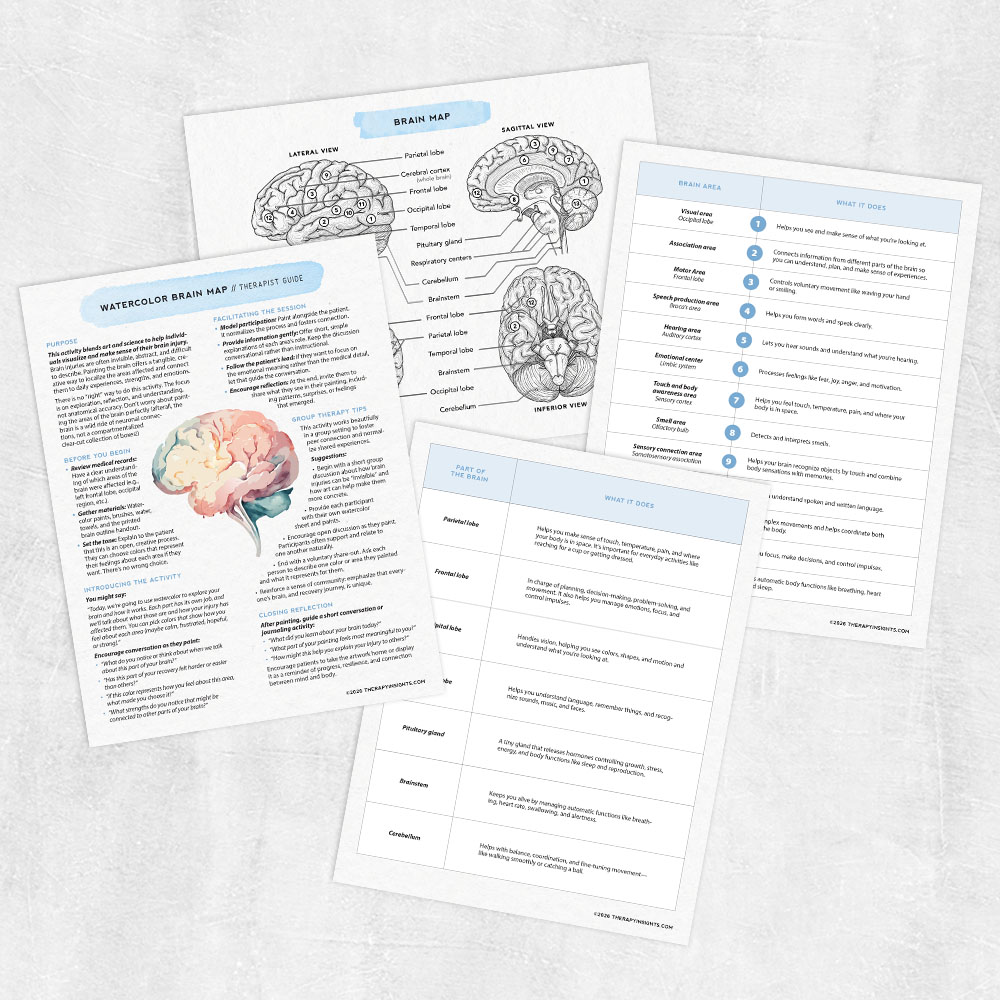
Watercolor Brain Map
An art-meets-science activity that helps patients visualize brain structures and connect them to daily life. Encourages emotional processing, reflection, and deeper understanding of injury and recovery.
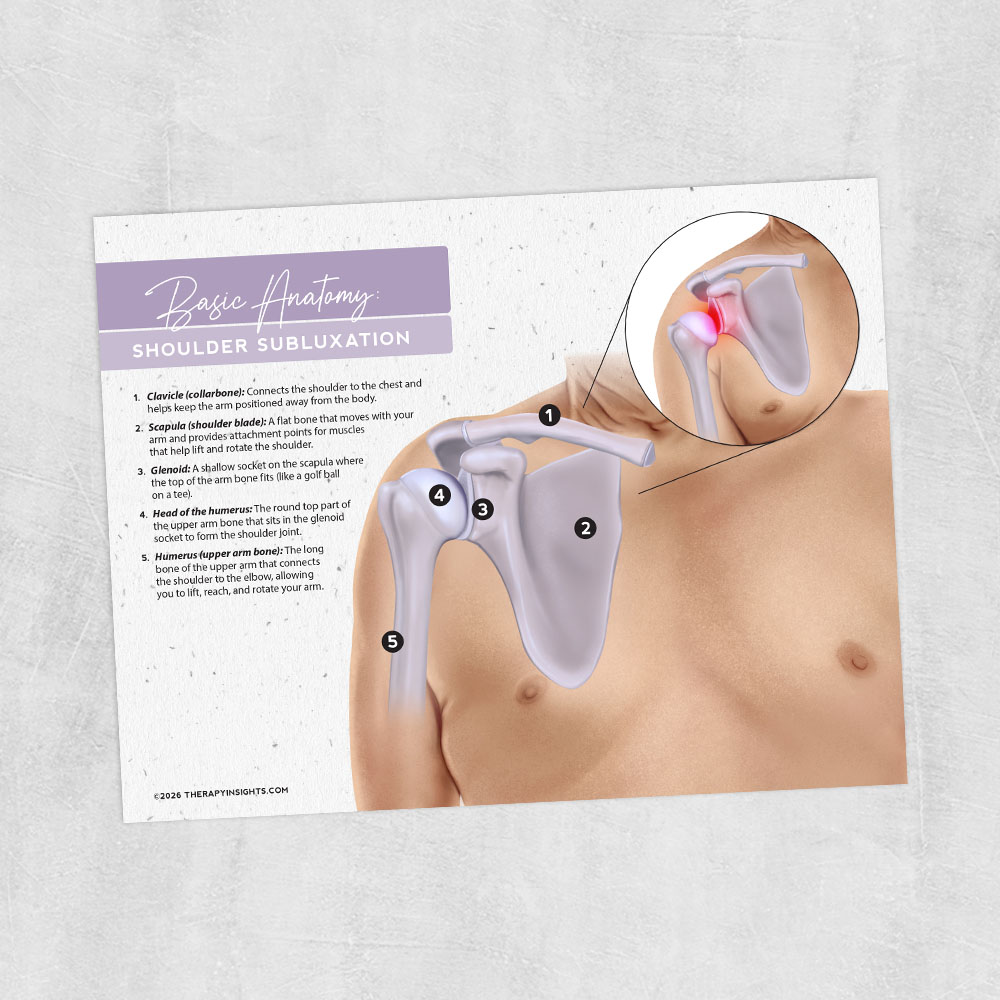
Basic Anatomy: Shoulder Subluxation
An educational handout explaining shoulder subluxation after neurological injury. Supports understanding of positioning, protection, and therapy goals.
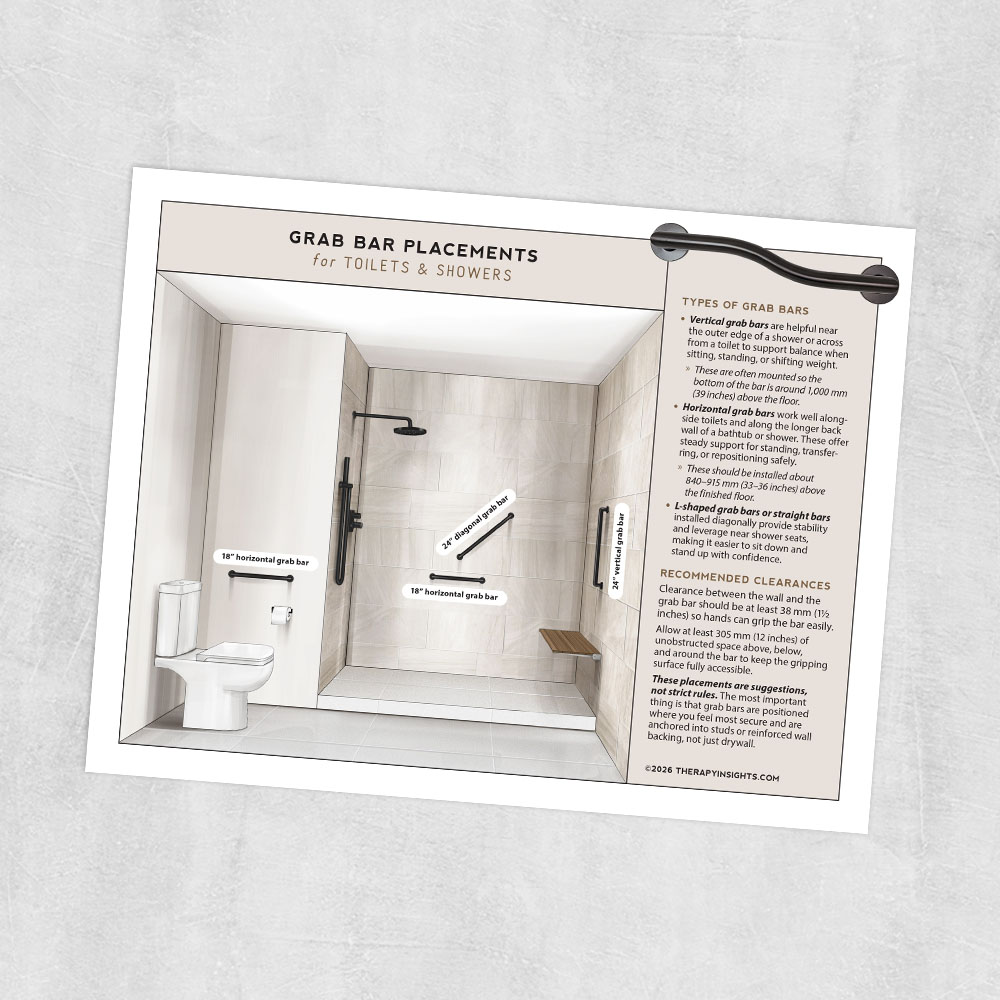
Grab Bar Placements for Toilets and Showers
A visual guide outlining ADA-informed grab bar placement. Helps therapists support safe, personalized home modifications for balance, confidence, and independence.
What’s Coming in February…
- A new Neuro-FAST subtest focused on real-world reasoning, judgment, and insight
- Clinical references for voice and reflux, including ENT diagnoses and a re-framed approach to GERD education
- Caregiver and staff education on aggression and sudden confusion after brain injury or illness
- Visual anatomy tools to support understanding of swallowing mechanics
- Resources supporting identity, autonomy, and safety, including online dating and smart wheelchair technology
Clinical Pediatrics: New Therapy Tools for January
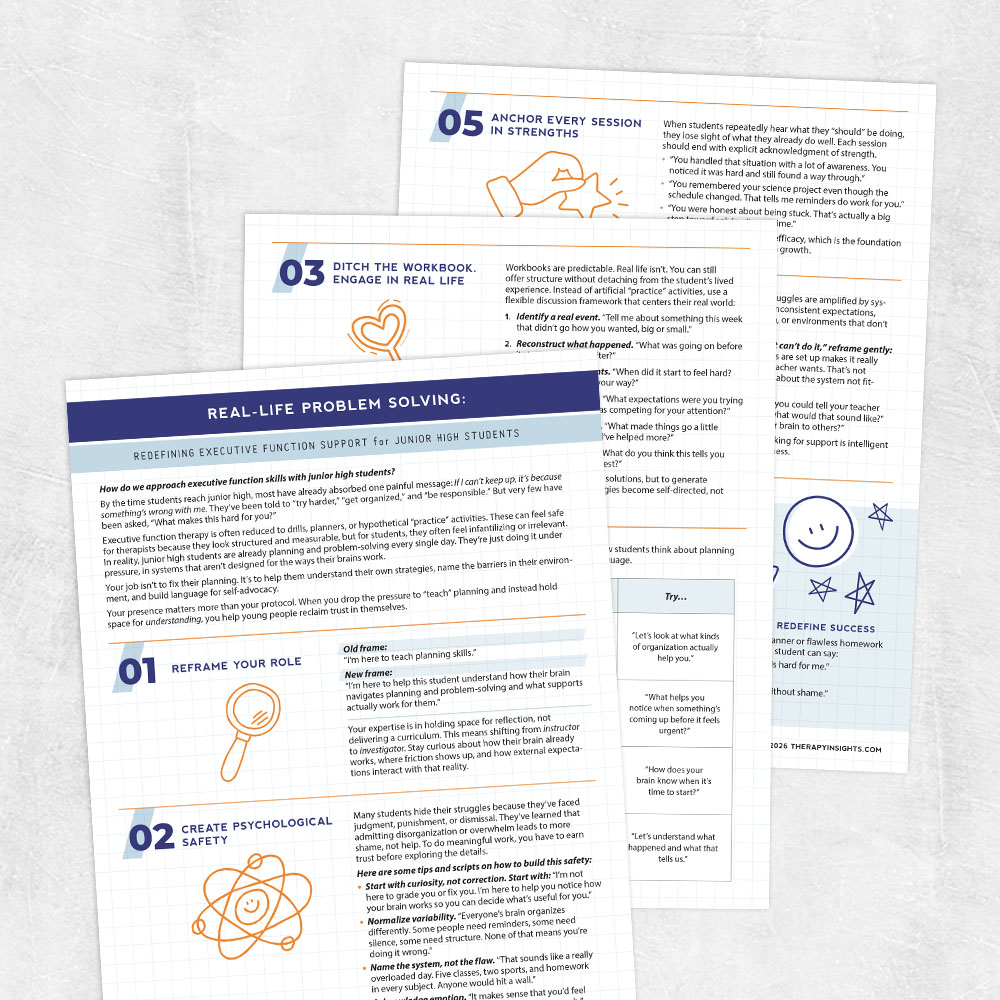
Real-Life Problem Solving: Redefining Executive Function Support for Junior High Students
This guide helps therapists move beyond workbook-style executive function activities by engaging junior high students in real-world reflection about how they actually plan, organize, and problem-solve. It provides concrete language, conversation frameworks, and mindset shifts to create psychological safety, reduce shame, and build genuine self-understanding and advocacy.
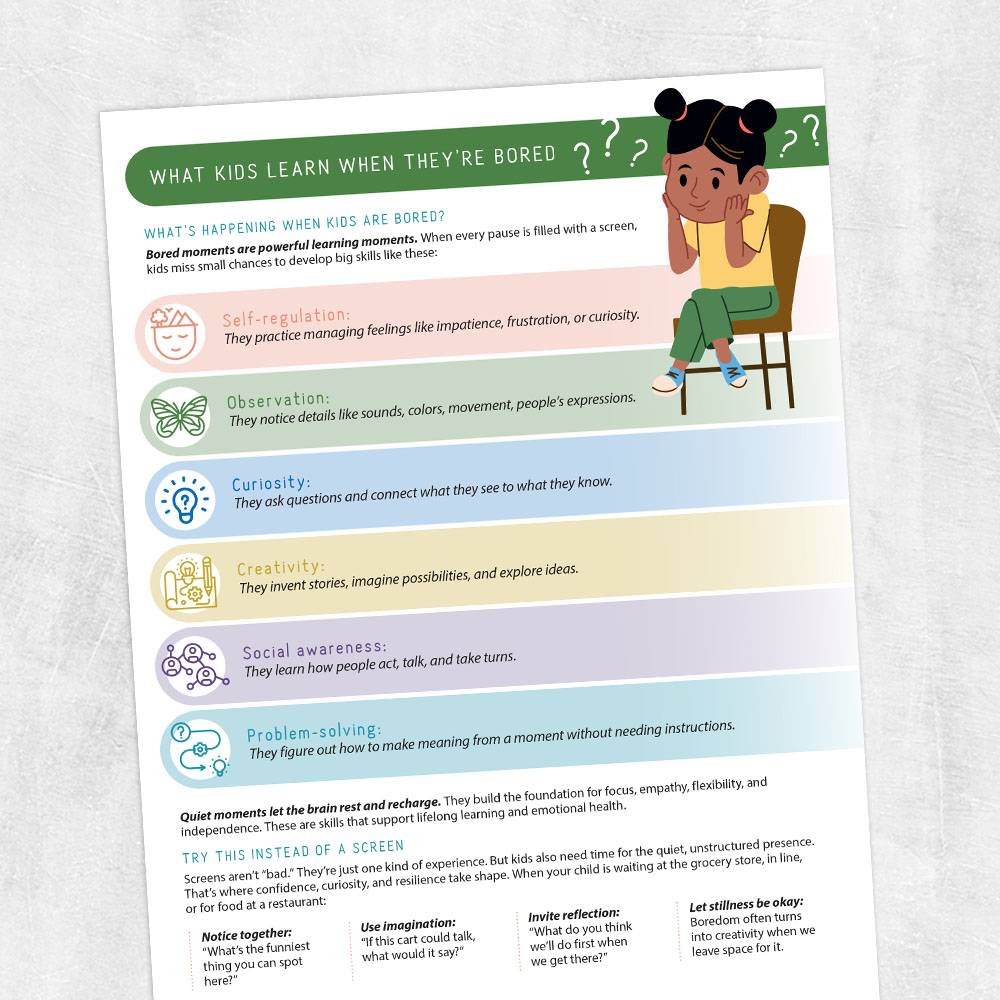
What Kids Learn When They’re Bored
This handout helps parents understand the developmental value of boredom during everyday moments like waiting in line or riding in the car. It offers gentle language to reframe screen-free time as an opportunity for kids to build self-regulation, creativity, and curiosity.
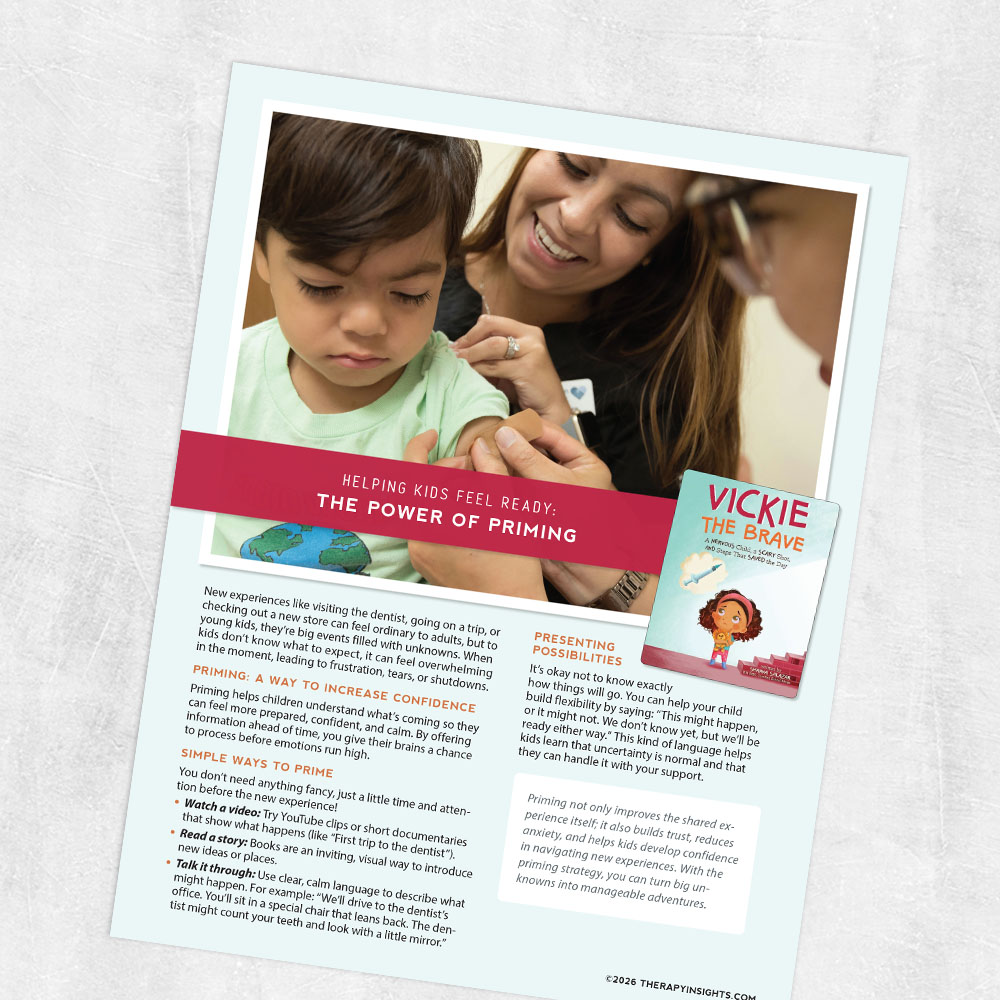
Helping Kids Feel Ready: The Power of Priming
A one-page parent handout introducing priming as a way to help kids anticipate what’s coming next through stories, videos, or conversation. Use this to support families whose children have big reactions to new or unexpected situations.

Supporting Your Child’s Healthy Relationship With Food: A Guide for Parents Navigating Feeding Challenges
This handout helps parents foster a positive, trusting relationship with food, especially when feeding challenges make mealtimes stressful. Use it to guide conversations about responsive feeding, reduce pressure, and support autonomy and body awareness.
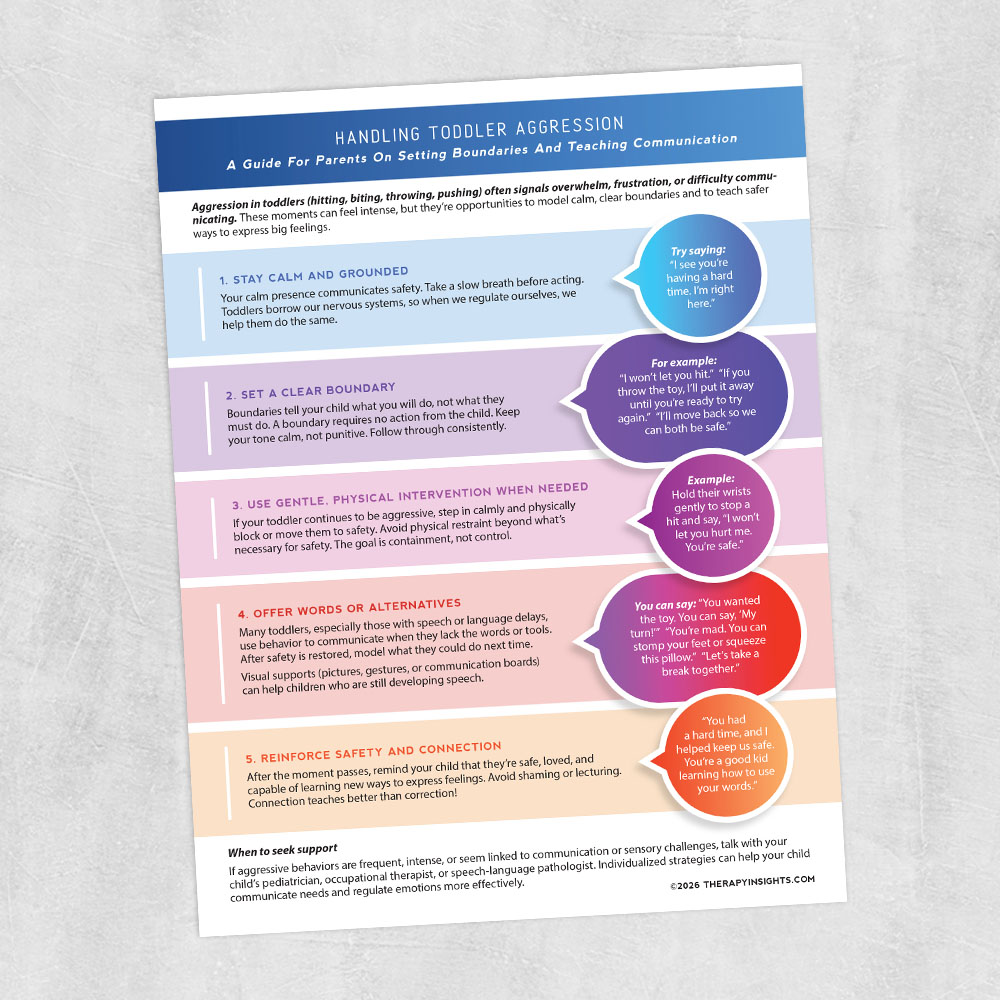
Handling Toddler Aggression
This handout helps parents understand and respond to toddler aggression through calm boundary setting and supportive communication. Use it to coach families on preventing power struggles, teaching emotional regulation, and fostering connection, especially for children with limited speech or developmental differences.
What’s Coming in February…
- Tools that support boundaries, self-advocacy, and honoring a child’s “no”
- Guidance for families on navigating feeding decisions with clarity and evidence
- Resources to help clinicians and caregivers spot concerning or misleading treatment claims
- Support for early communication and social development, with an emphasis on patterns over checklists
- Practical frameworks for building realistic, child-centered therapy roadmaps