
Therapy Insights
Member Exclusive




Print Resource
— US Letter — 2 pages
Population:
AdultDiscipline:
SLPDiagnosis:
DysphagiaReferences:
- Katz, P. O., Gerson, L. B., & Vela, M. F. (2013). Guidelines for the diagnosis and management of gastroesophageal reflux disease. Official journal of the American College of Gastroenterology| ACG, 108(3), 308-328.
- Chen, J. W., Vela, M. F., Peterson, K. A., & Carlson, D. A. (2023). AGA clinical practice update on the diagnosis and management of extraesophageal gastroesophageal reflux disease: expert review. Clinical Gastroenterology and Hepatology, 21(6), 1414-1421.
- American Speech-Language-Hearing Association. (n.d.). Adult dysphagia (Practice Portal). Retrieved December 2, 2025, from https://www.asha.org/practice-portal/clinical-topics/adult-dysphagia/
- Albarqouni, L., Moynihan, R., Clark, J., Scott, A. M., Duggan, A., & Del Mar, C. (2021). Head of bed elevation to relieve gastroesophageal reflux symptoms: a systematic review. BMC family practice, 22(1), 24.
- Simadibrata, D. M., Lesmana, E., Amangku, B. R., Wardoyo, M. P., & Simadibrata, M. (2023). Left lateral decubitus sleeping position is associated with improved gastroesophageal reflux disease symptoms: A systematic review and meta-analysis. World Journal of Clinical Cases, 11(30), 7329.
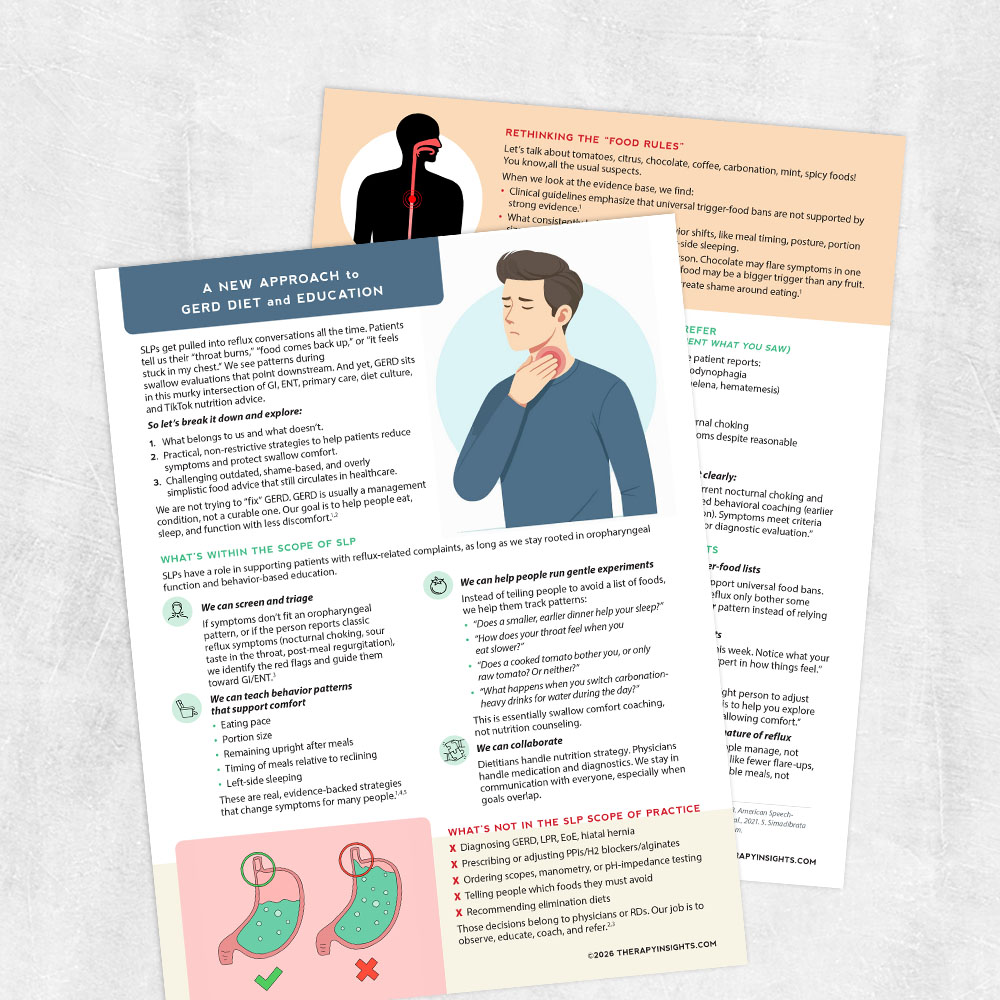
Understand your true scope in reflux-related care and shift away from restrictive, food-shaming advice toward individualized, behavior-based strategies that genuinely support swallow comfort. This resource offers clear, evidence-grounded guidance to help you coach patients through personalized symptom patterns, know when to refer, and stay centered on autonomy and real-world function.
Want access to this printable resource and hundreds more? Subscribe to Therapy Insights.
Subscribe to get instant and easy access to handouts, therapy materials, and clinical tools so that you can spend your valuable time doing what you do best: Connecting with your patients and changing lives for the better.
Subscribe now
Already subscribed to Therapy Insights? Log in to access this member exclusive.
Daily Resource Limit
There was an issue loading this asset. Please try again or contact customer support.