
Clarity in Complex Moments: April Therapy Tools

Adult Neuro: New Therapy Tools for April
April’s resources focus on helping people make sense of their bodies, their options, and their daily lives in ways that feel clear, collaborative, and grounded in reality. Across these tools, you’ll see a continued shift away from rigid protocols and toward shared decision-making, identity, and meaningful participation.
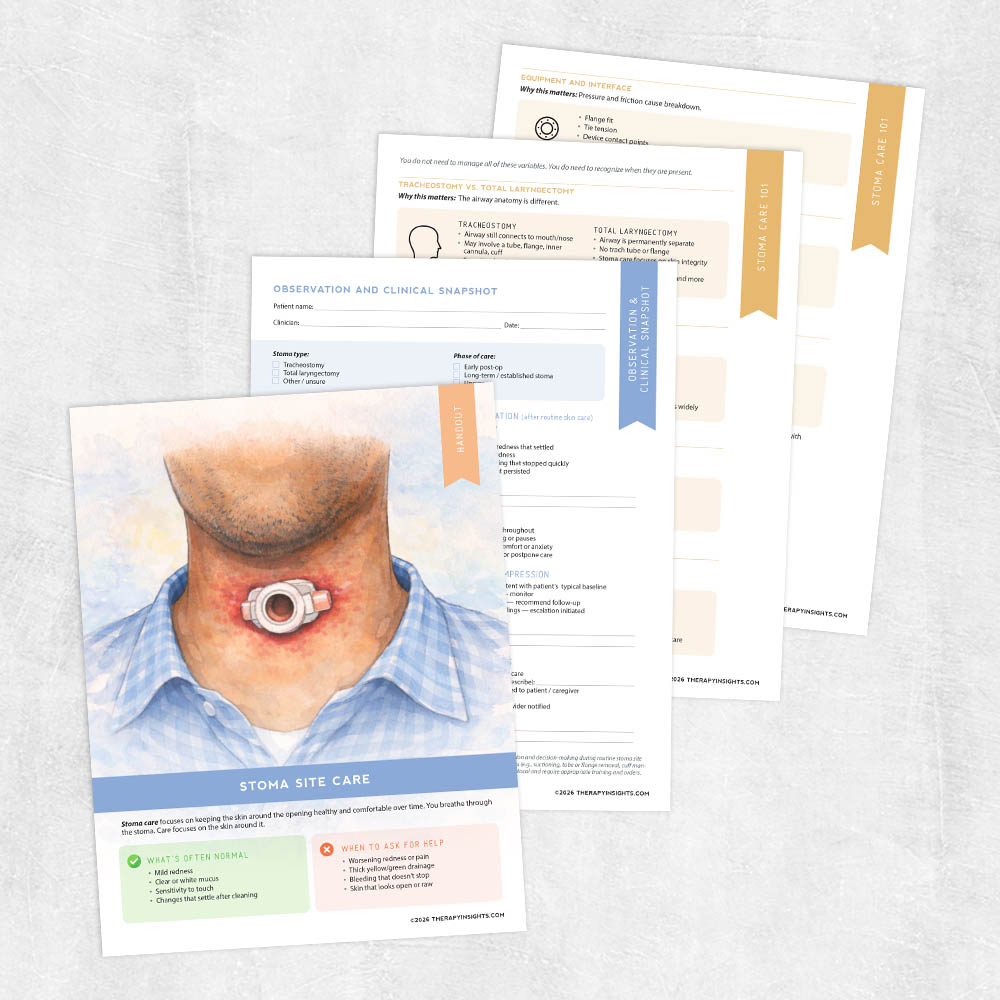
Stoma Site Care
This resource supports therapists in approaching stoma care through understanding, observation, and respectful decision-making rather than rigid protocols. It helps people feel more oriented to their bodies while supporting clinicians in participating in care safely and confidently within their role.
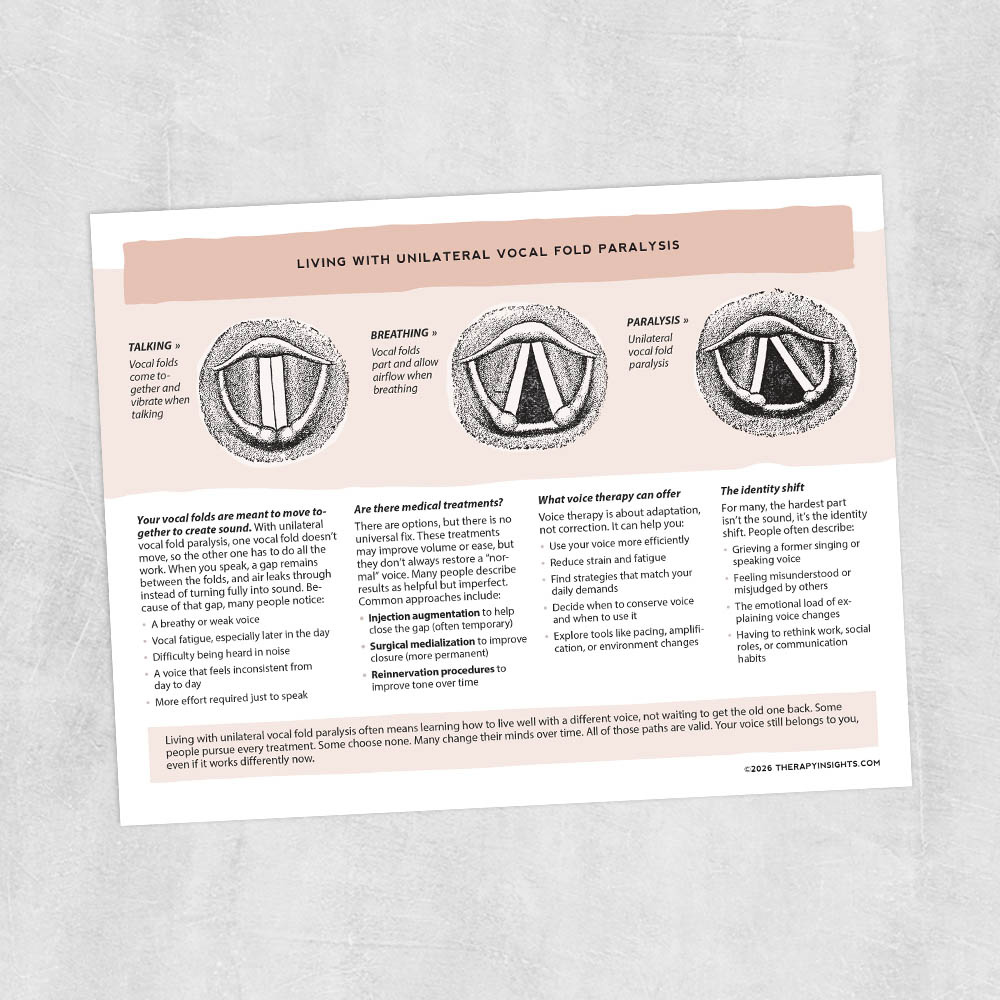
Living With Unilateral Vocal Fold Paralysis
A visual, plain-language guide that explains why voices may sound breathy or weak and what different interventions can and cannot change. Use it to support shared decision-making, validate identity shifts, and frame voice therapy as adaptation rather than “fixing.”
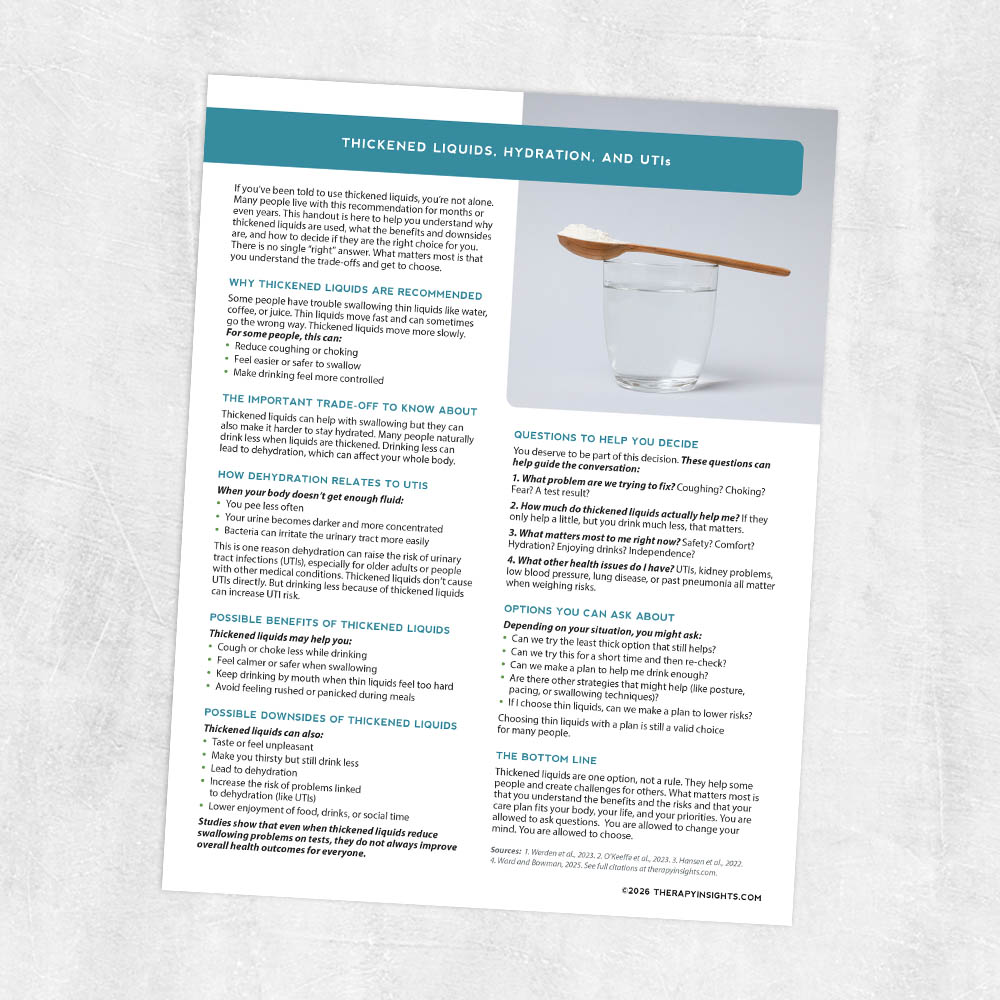
Thickened Liquids, Hydration, and UTIs
This handout helps people understand the trade-offs involved in thickened liquids, including hydration and UTI considerations. It supports values-based decision-making instead of default recommendations, helping conversations reflect what matters most to the individual.
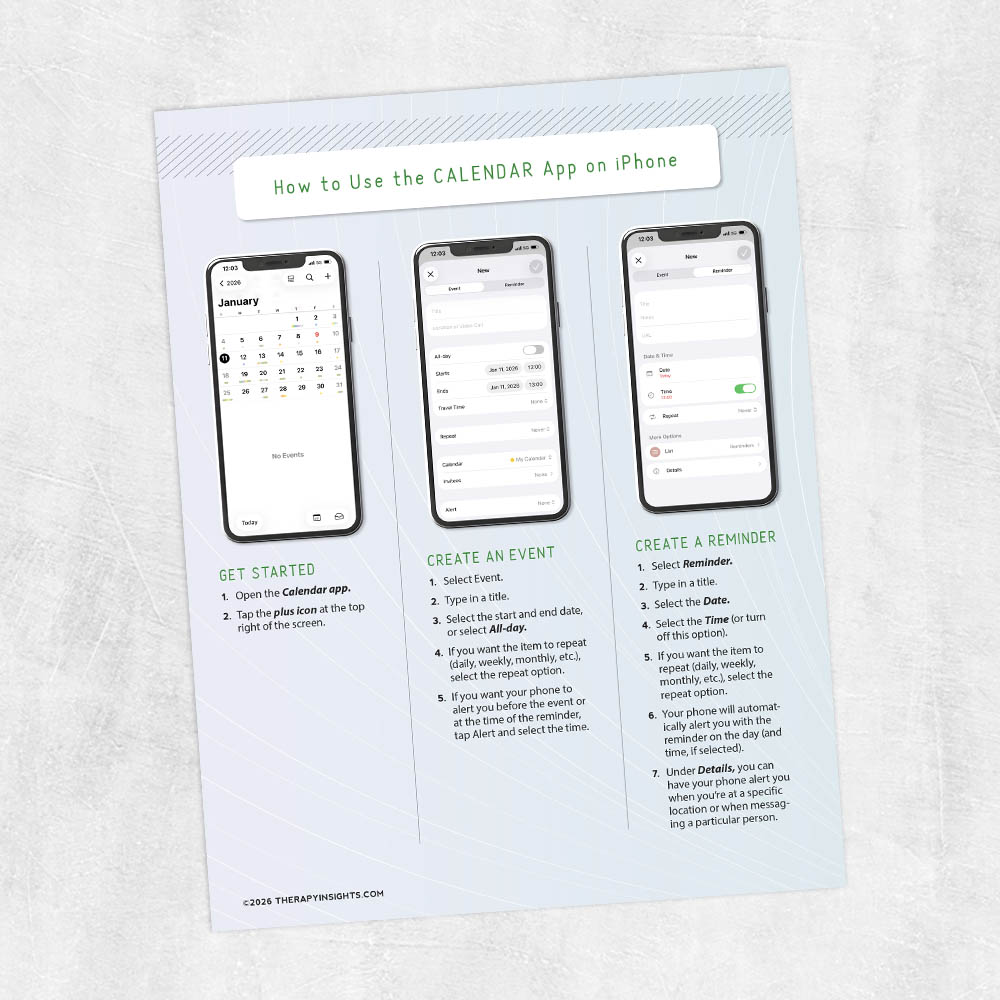
How to Use the Calendar App on iPhone
A step-by-step guide that supports people with cognitive changes in organizing appointments, routines, and daily plans using a familiar tool. Designed to reduce overwhelm and build confidence, it helps translate therapy into real-life follow-through.
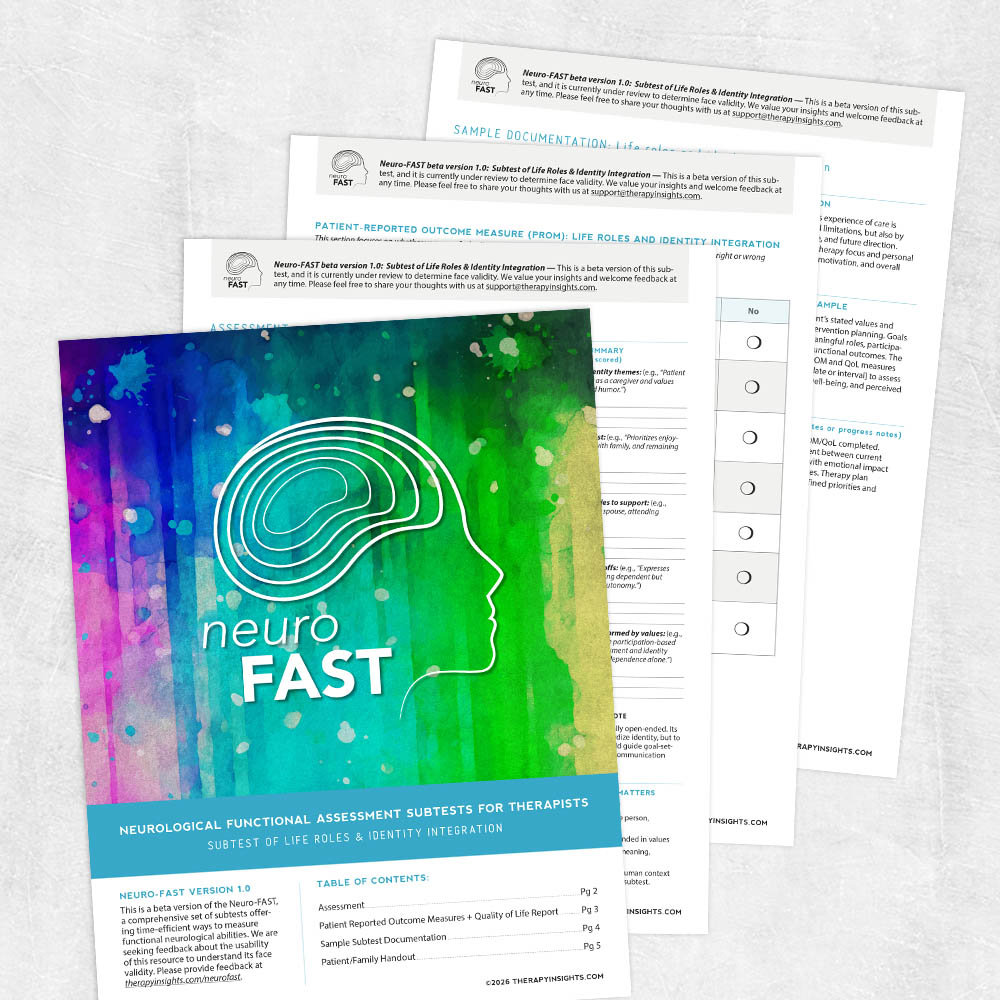
Neuro-FAST: Subtest of Life Roles & Identity Integration
This subtest shifts the focus beyond function to what truly matters. It helps clarify roles, values, and identity so therapy aligns with the person behind the diagnosis and reflects meaningful, real-life goals.
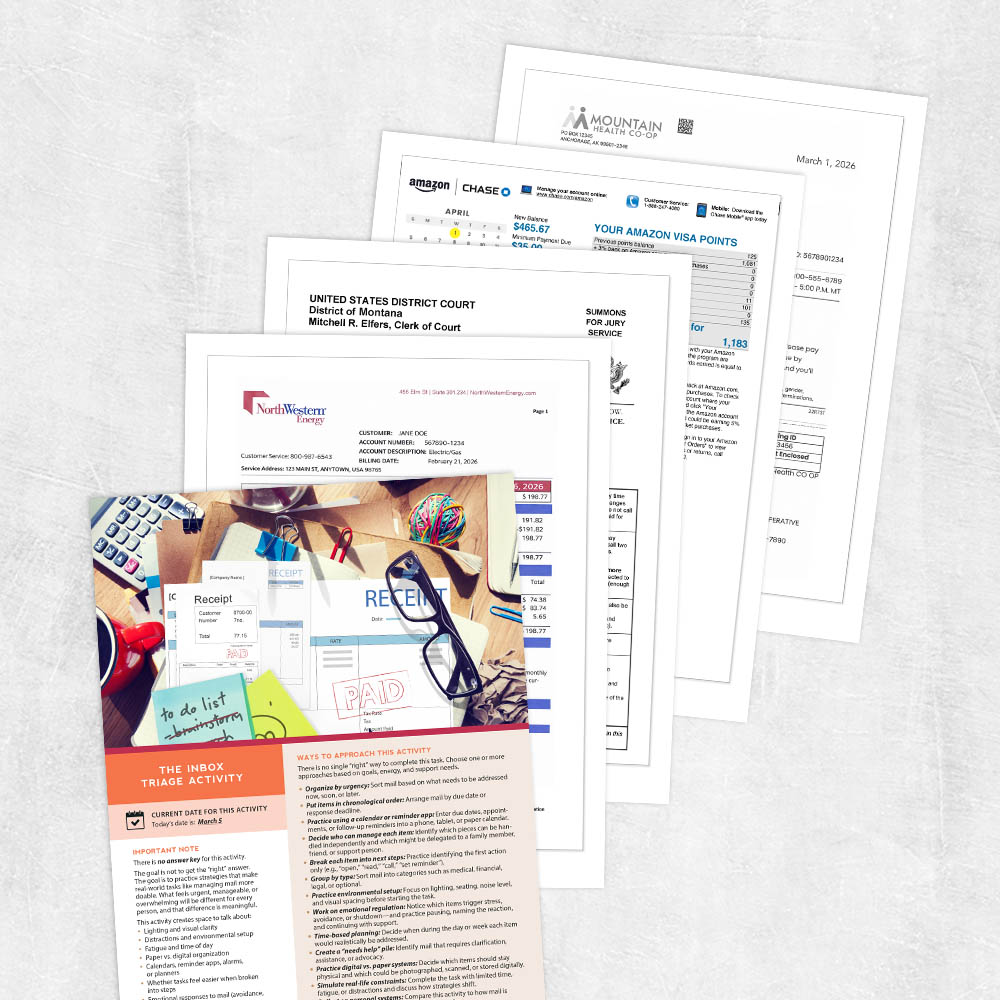
The Inbox Triage Activity
A functional executive functioning task that uses realistic mail sorting to target planning, prioritization, and problem-solving. Use it to understand how someone approaches everyday demands and to build systems that actually work in real life.
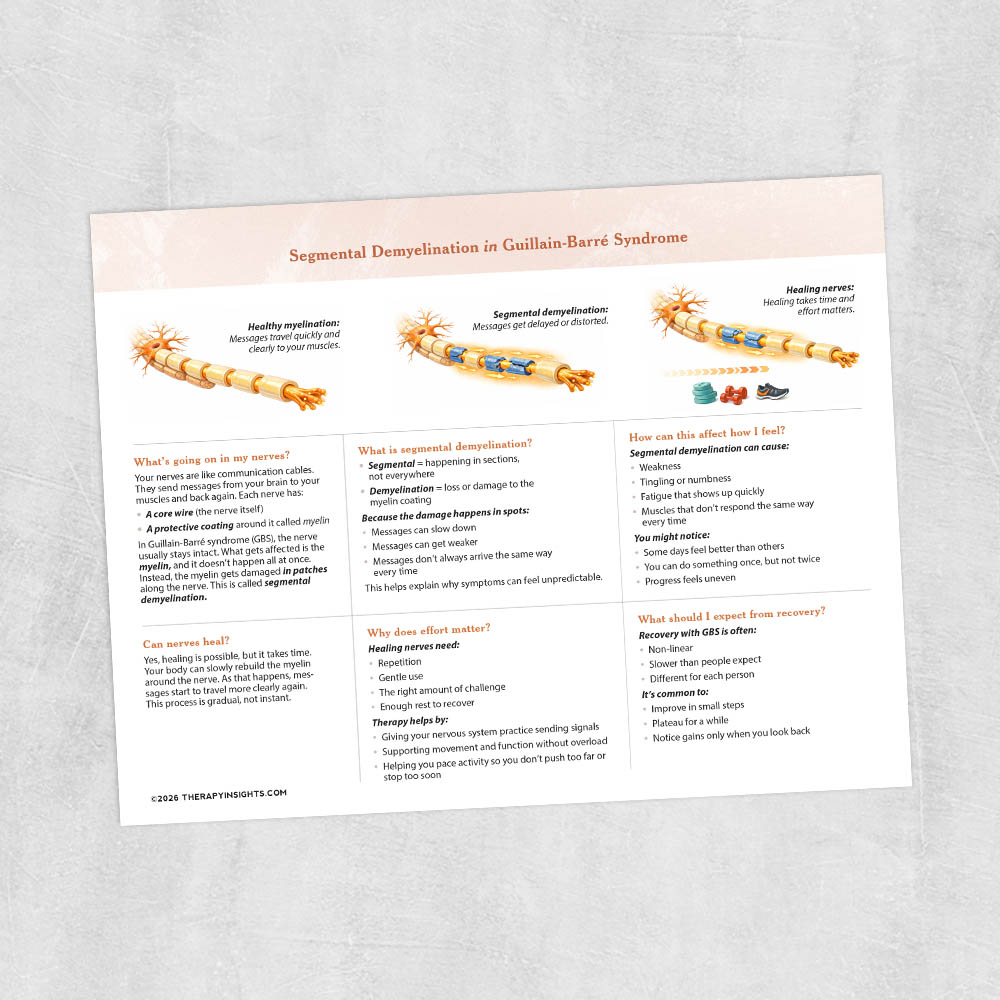
Segmental Demyelination in Guillain-Barré Syndrome
A clear, visual explanation of segmental demyelination designed to support shared understanding. It helps normalize uneven recovery and reinforces why pacing, repetition, and effort remain meaningful even when progress is slow.
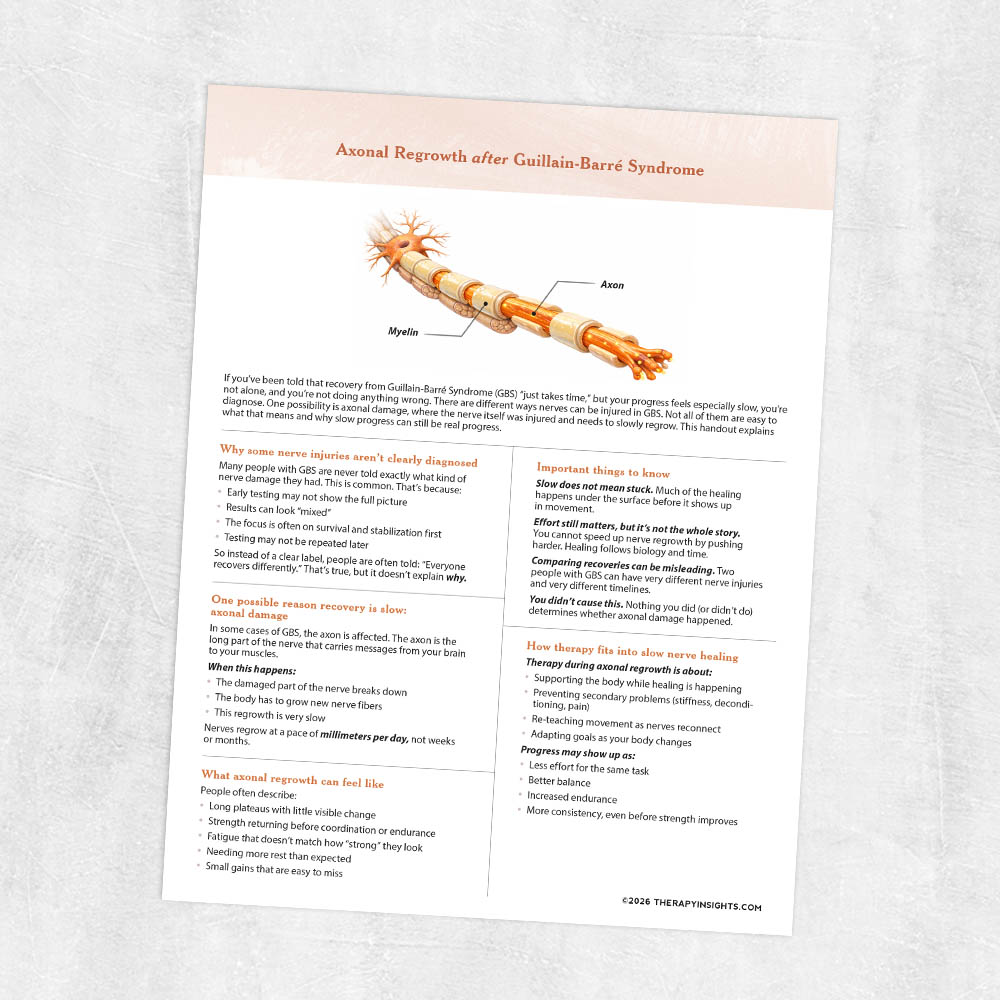
Axonal Regrowth After Guillain-Barré Syndrome
This visual resource explains how nerve recovery can be gradual and uneven while still reflecting real healing. It gives people a way to see how effort supports change over time, even when results are not immediately visible.
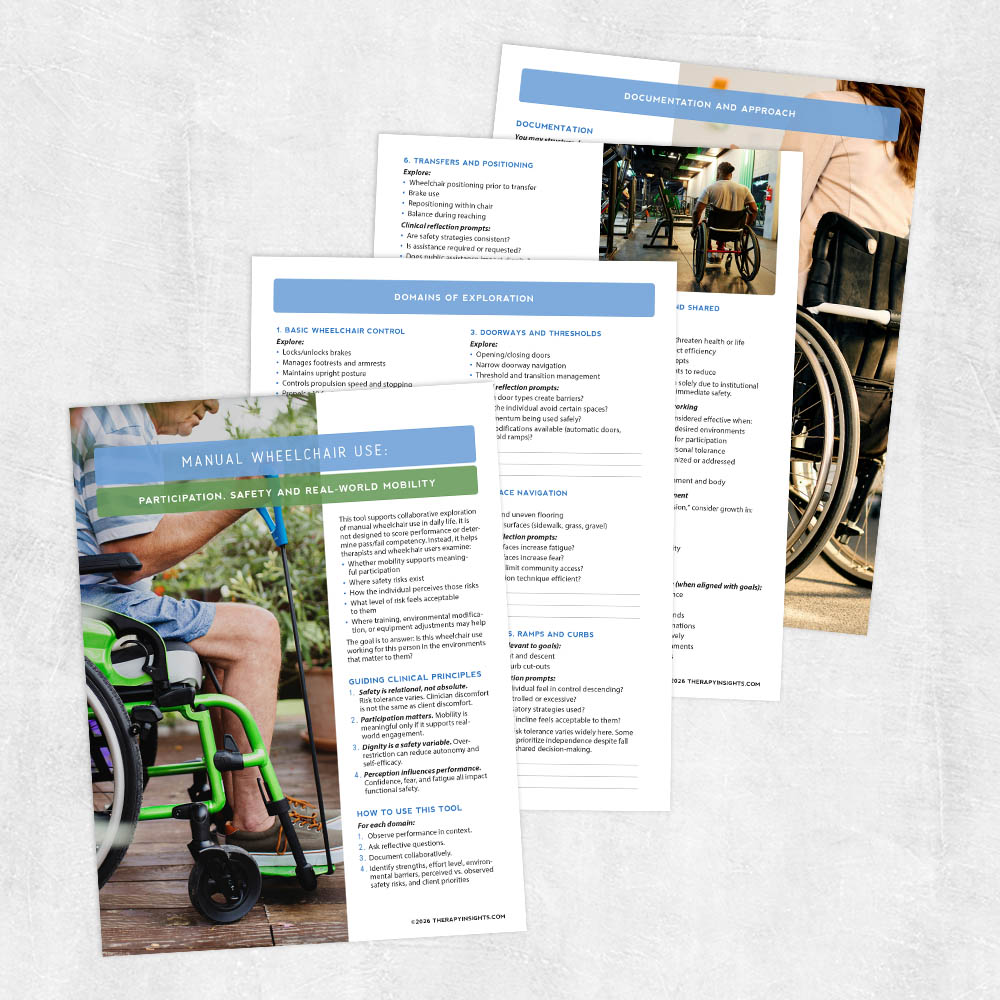
Manual Wheelchair Use: Participation, Safety, and Real-World Mobility
A clinical reference that moves beyond checklists to ask whether wheelchair use is actually supporting participation and confidence. Use it to guide collaborative conversations about risk, dignity, and mobility in everyday life.
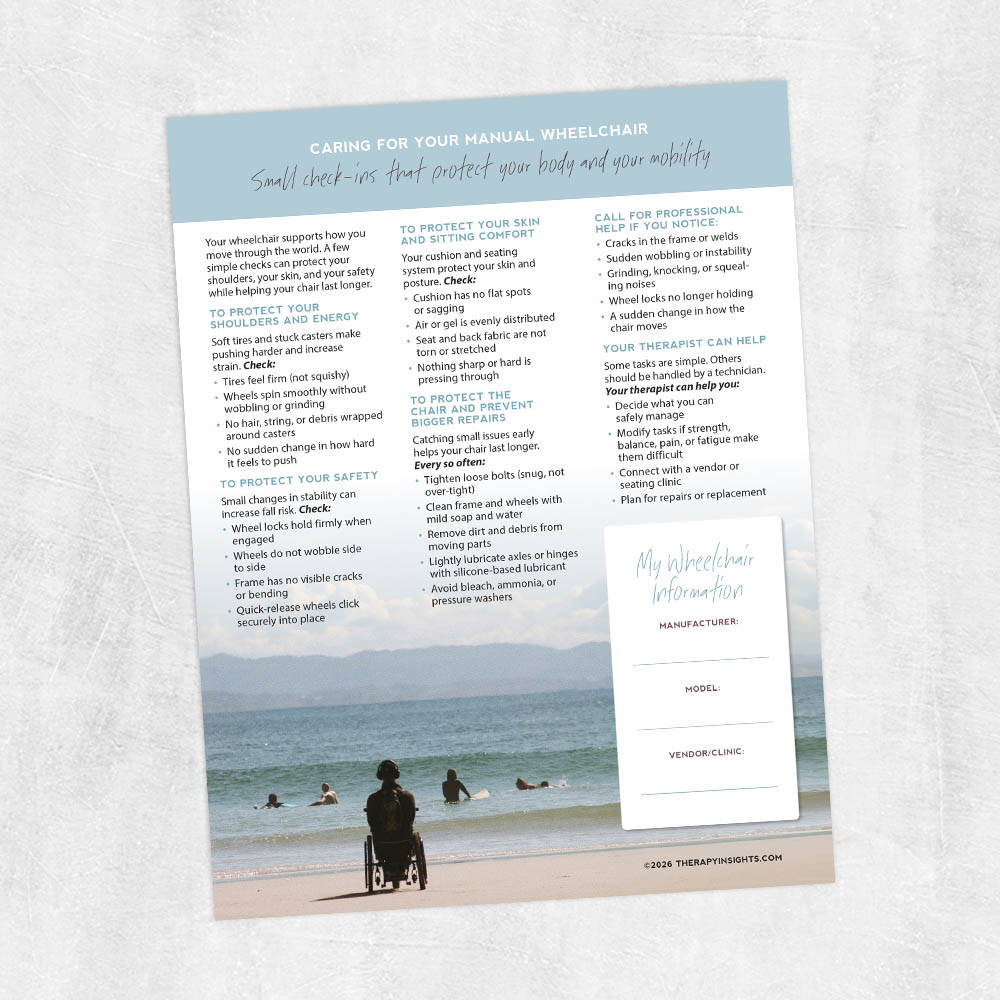
Caring for Your Manual Wheelchair
A practical guide that helps people understand how small, consistent wheelchair checks can support comfort, safety, and long-term mobility. It emphasizes awareness and prevention without overwhelming detail.
What’s Coming in April…
- Real-world return-to-work tasks like creating purchase orders from inventory lists
- Functional activities such as dishwasher manual navigation
- Technology supports including voice commands for memory and organization and low-vision guides for music access
- Clinical and practical guides on AI tools, including voice banking and contract review
- Reflective resources like books for the brain injury journey
- Foundational education, including autonomic pathway anatomy
- Cognitive and participation tools focused on flexible thinking and adapting when plans change
- Environmental supports through cognitive ergonomics
Clinical Pediatrics: New Therapy Tools for April
April’s pediatric resources focus on helping families and therapists make sense of development, regulation, and feeding in ways that feel clear, grounded, and collaborative. Across these tools, the emphasis is on explaining the “why” behind what we see, so families can move forward with more confidence and less uncertainty.
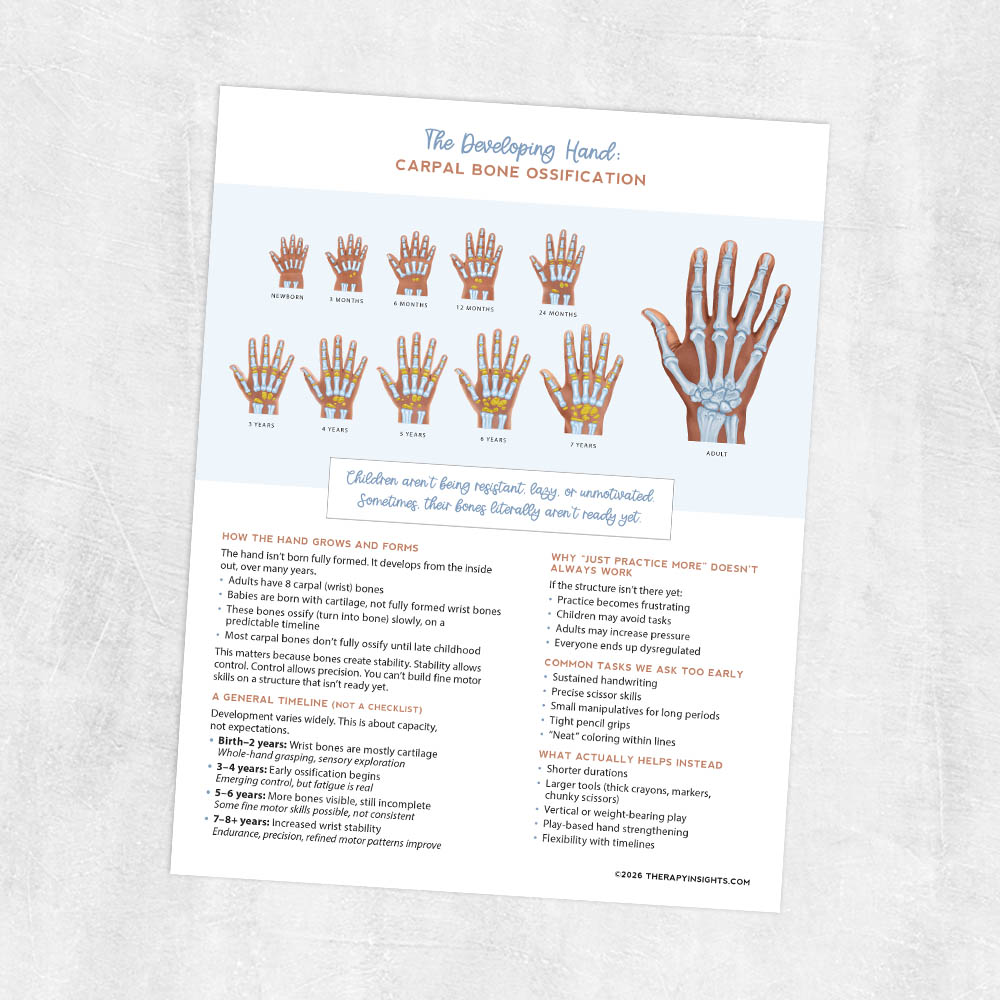
The Developing Hand: Carpal Bone Ossification
This handout helps therapists explain how the bones of the hand develop over time and why this matters for fine motor skills. Use it to connect anatomy to real-world function and support collaborative conversations about expectations, timing, and skill development.
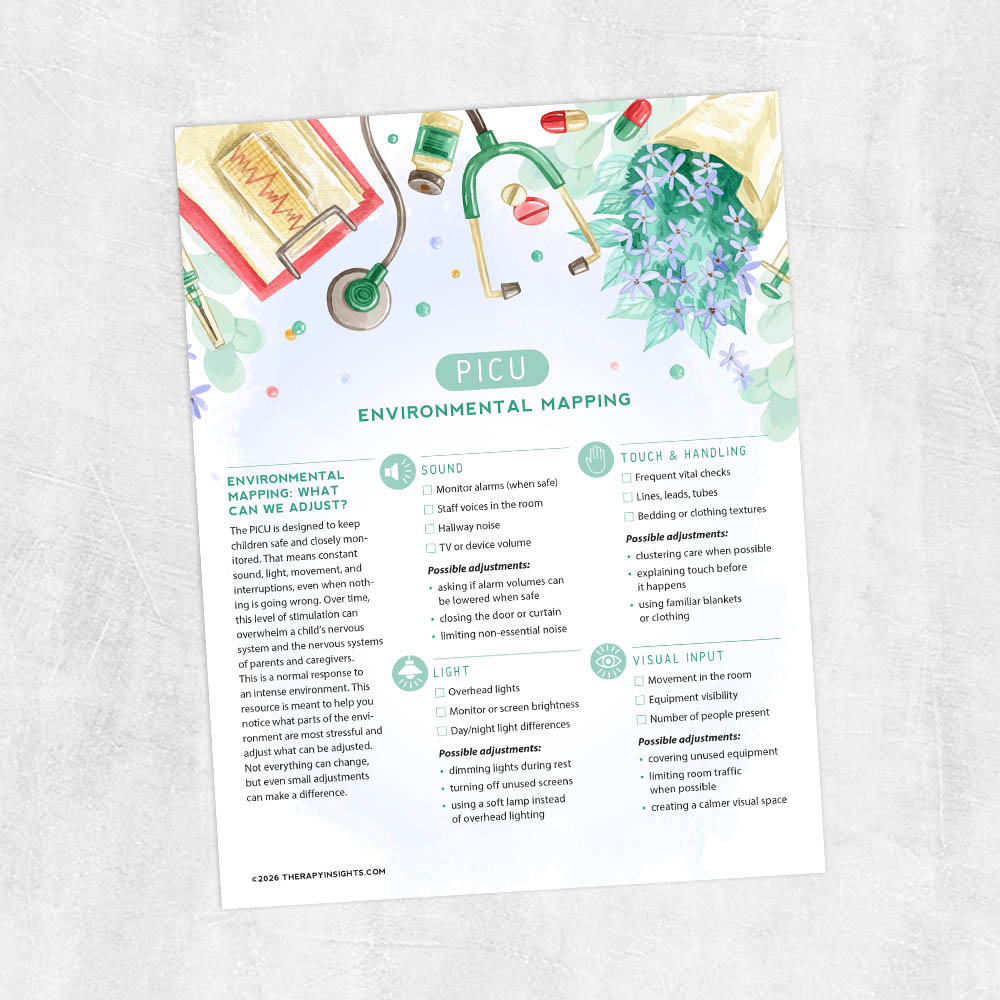
PICU Environmental Mapping
A family-facing handout that helps parents identify small, realistic changes in the PICU environment to reduce sensory overload and support regulation. It offers a way to create a sense of control and calm during long and often overwhelming hospital stays.
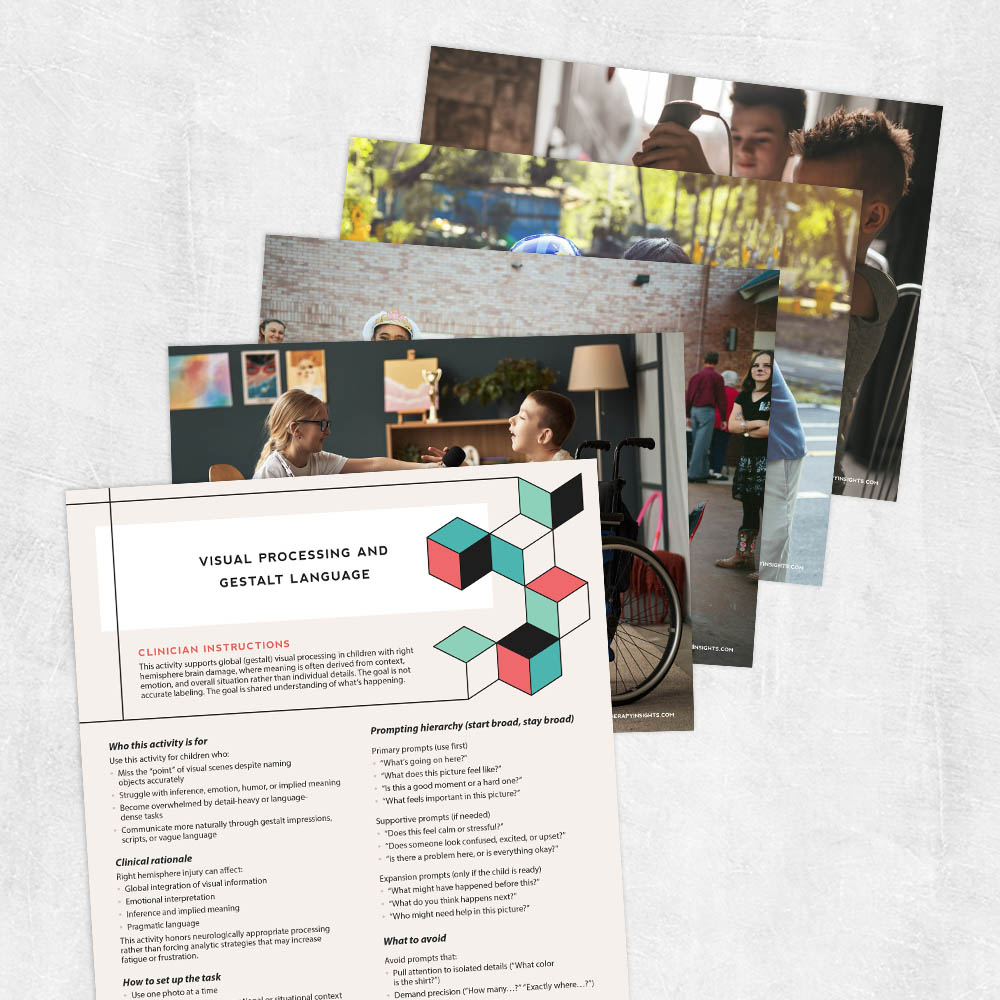
Visual Processing and Gestalt Language
This activity supports global visual processing and meaning-making without focusing on “right answers.” It offers flexible, gestalt-friendly prompts that honor how each child interprets context, emotion, and what feels meaningful in a visual scene.
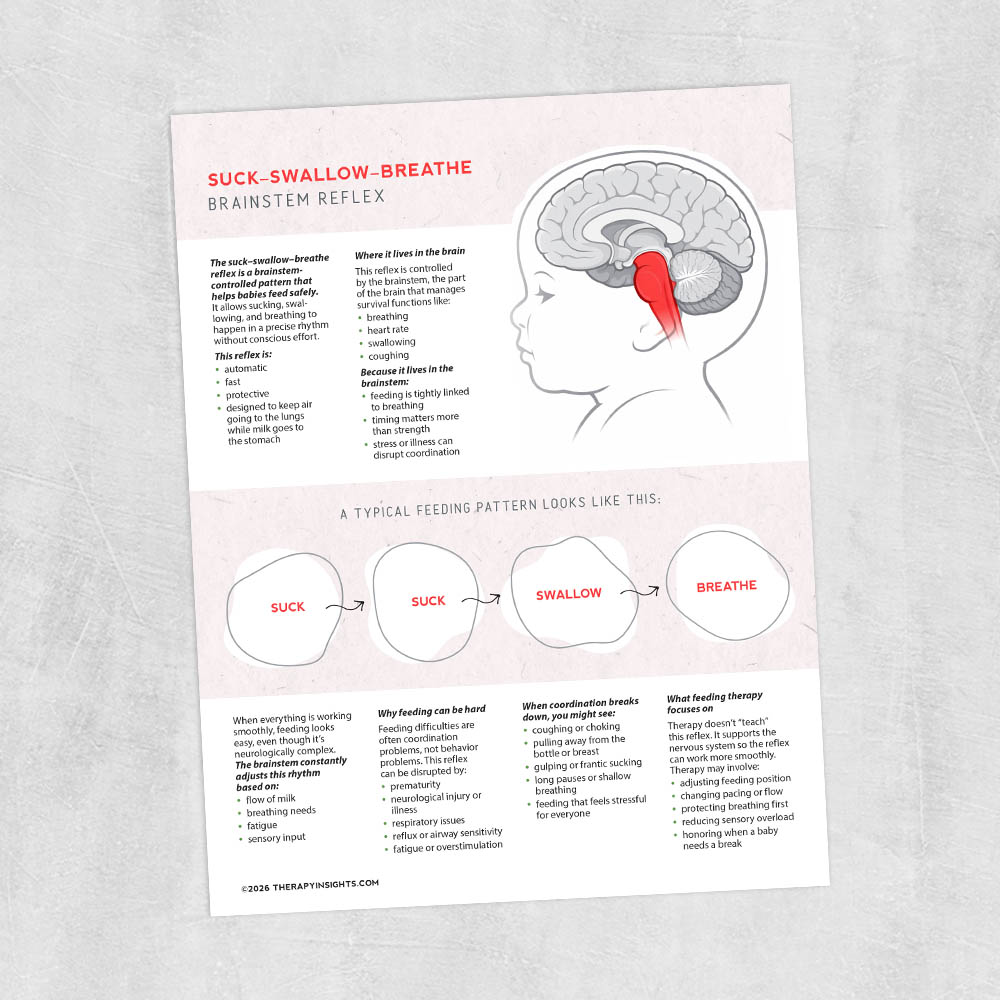
The Suck–Swallow–Breathe Brainstem Reflex
A simple, visual handout that explains how feeding coordination is controlled by the brainstem. Use it to normalize feeding challenges and support calm, informed conversations with families about what is happening and why.
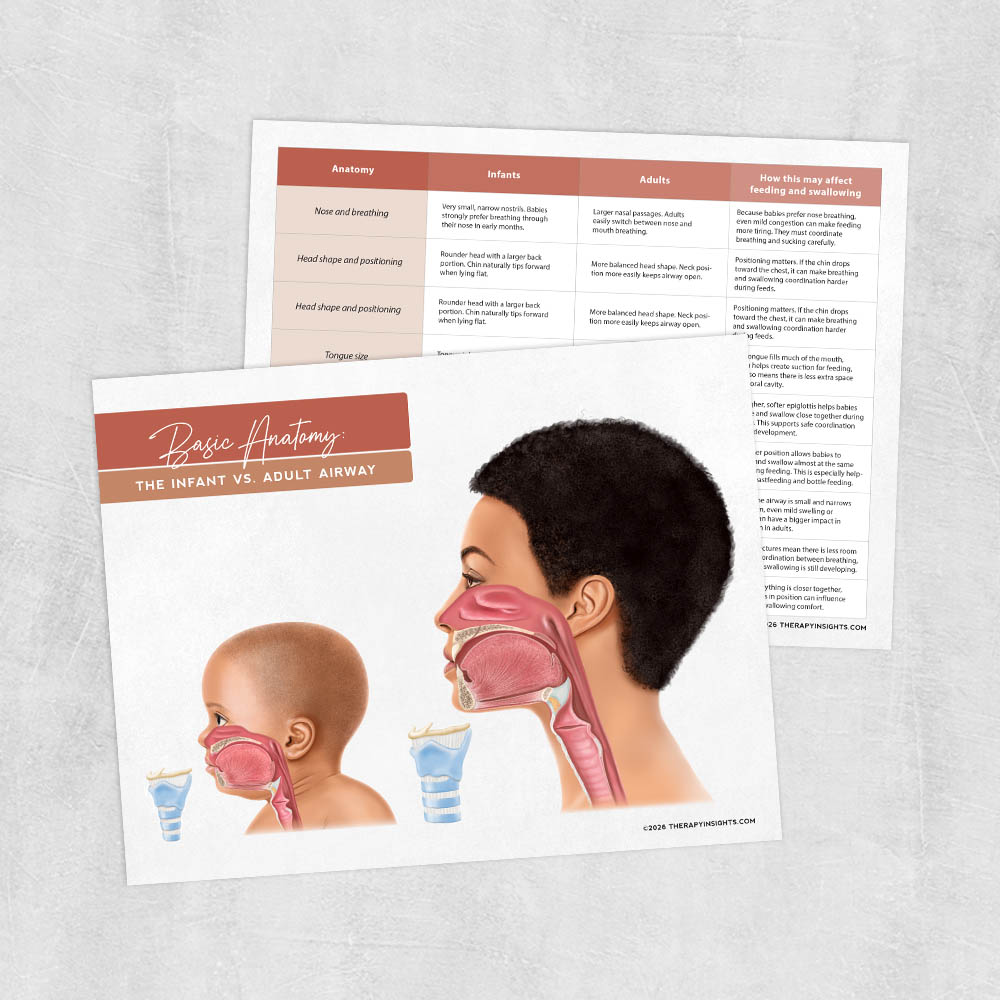
Basic Anatomy: The Infant vs. Adult Airway
This handout compares infant and adult airway structures in a way that is easy for families to understand. Use it to connect anatomy to feeding and swallowing function and support shared decision-making during care planning.
What’s Coming in May…
- New ways of reframing progress in feeding without pressure or rigid milestones
- Resources exploring masking, burnout, and the hidden cost of coping
- A developmental look at why adolescence often comes with disorganization
- Practical tools for understanding neurodevelopment in real-world contexts
- A hands-on activity combining fine motor skills and descriptive language