
Building Skills That Last: November Tools for Real-World Growth

Every month, we release new therapy resources across adult neuro and clinical pediatrics. These tools are designed to help you meet real needs with real strategies. Whether you’re helping clients rebuild communication, guide families through mealtime transitions, or reimagine what therapy can look like in everyday life.
In this post, you’ll find:
- New adult neuro tools that support communication, cognition, and real-world participation
- New pediatric resources that emphasize self-regulation, play, and meaningful family connection
Adult Neuro: New Therapy Tools for November
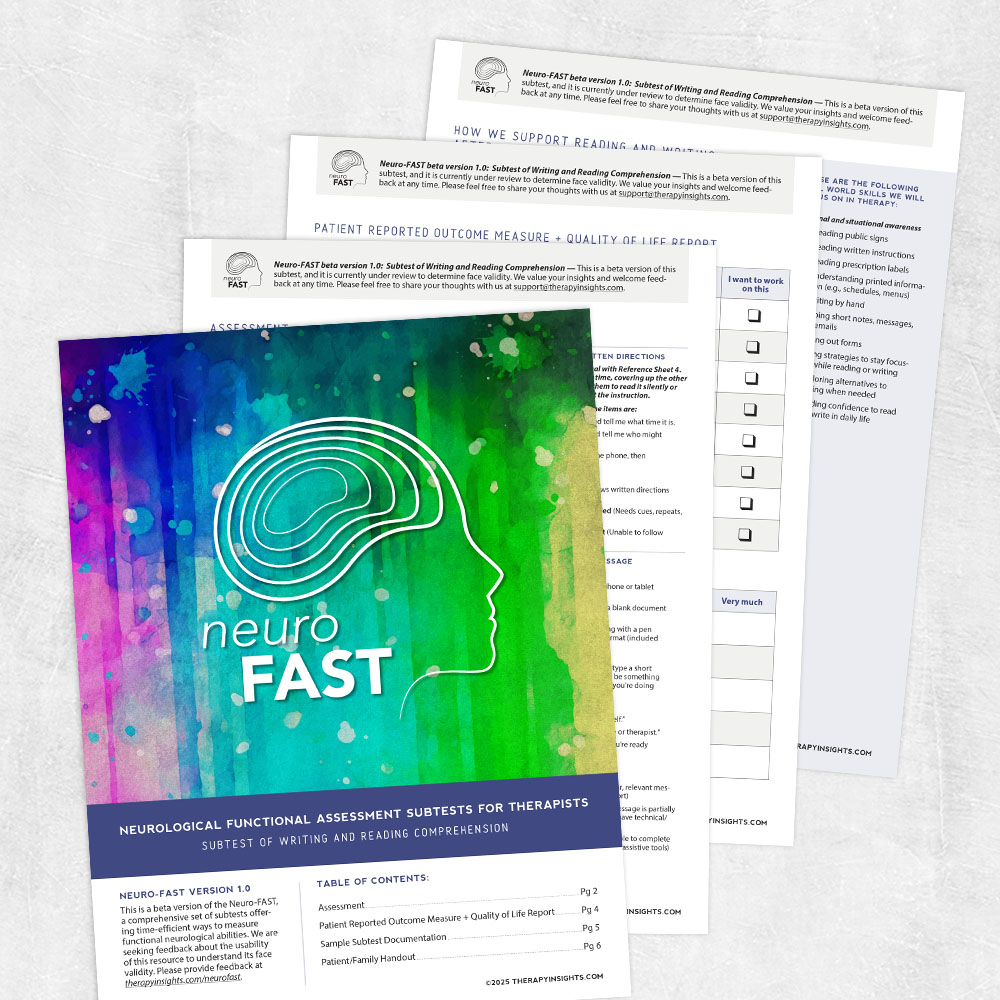
Neuro-FAST Subtest of Writing and Reading Comprehension
A quick, functional assessment of real-world reading, writing, and comprehension.
Includes tasks like reading a bill, sending a message, and following directions to identify meaningful therapy goals and track progress over time.
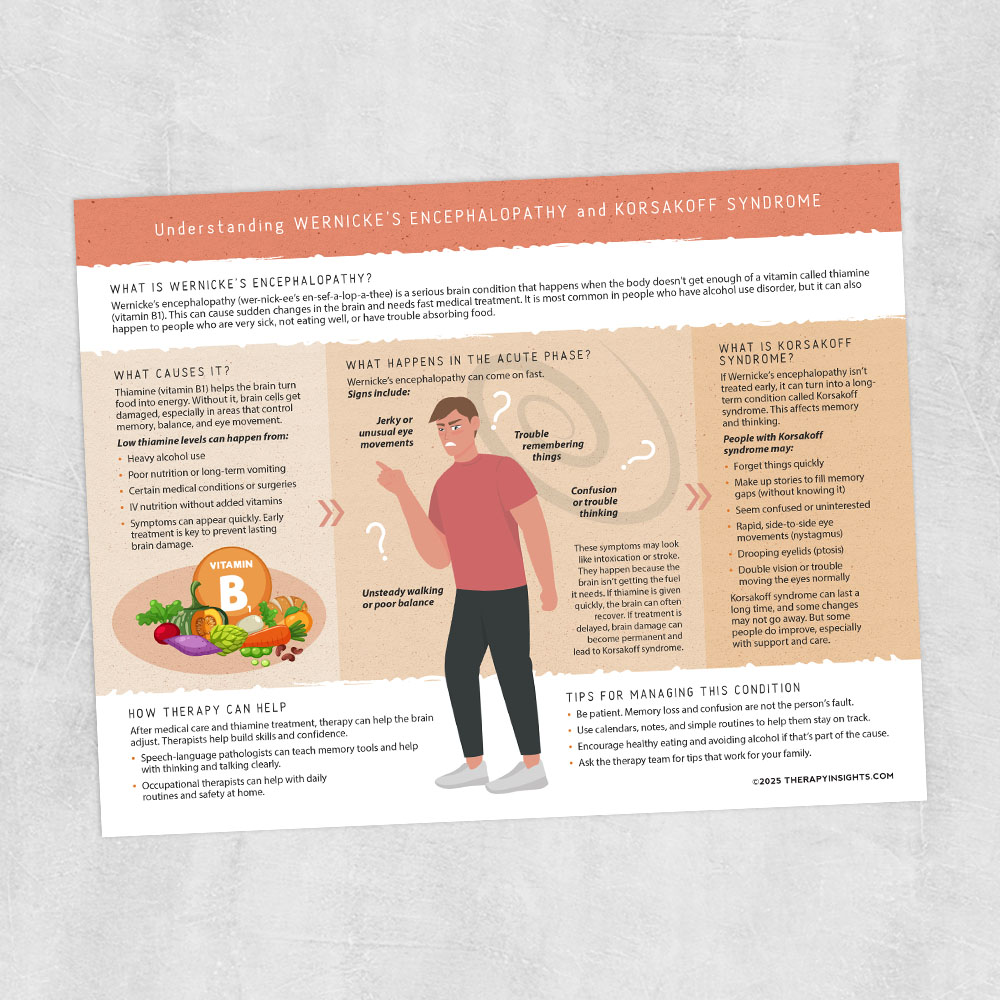
Wernicke’s Encephalopathy and Korsakoff Syndrome
A one-page explainer that walks families through the progression from Wernicke’s encephalopathy to Korsakoff syndrome.
Offers clear, compassionate education on what to expect and how therapy can support recovery alongside medical care.
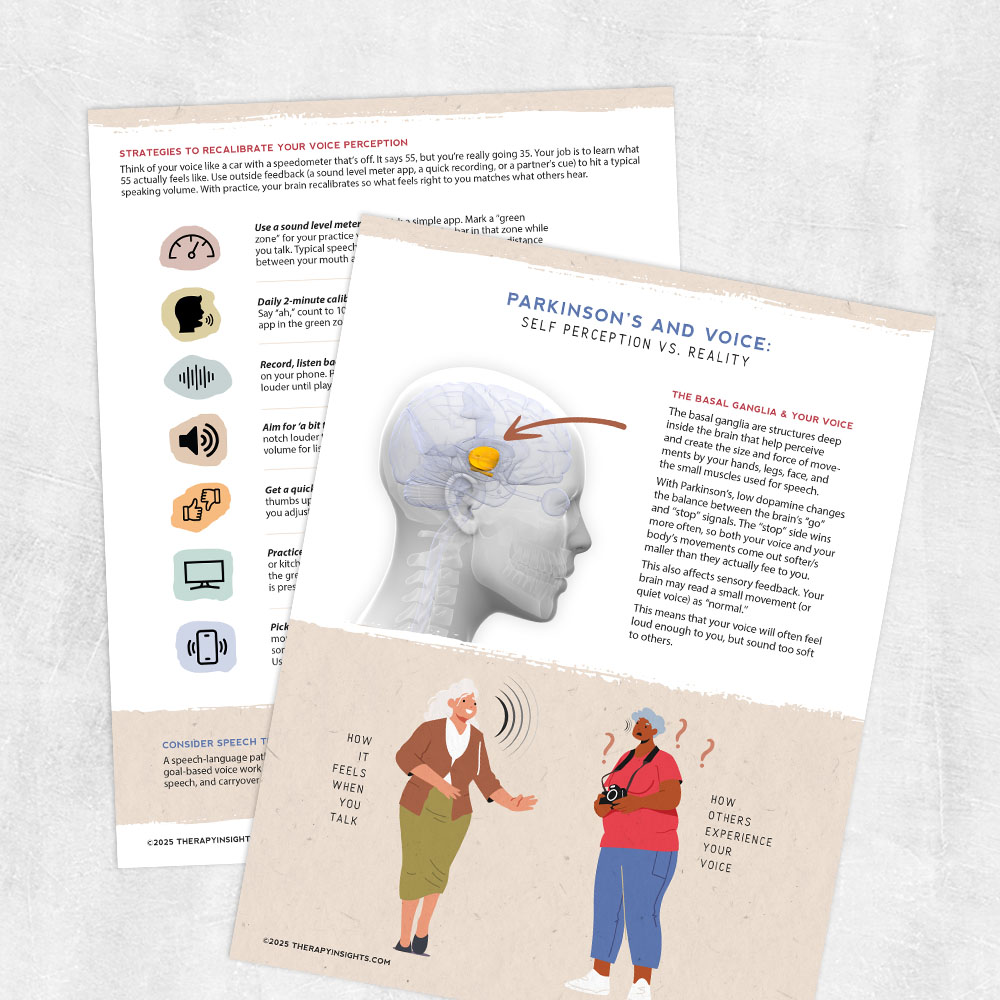
Parkinson’s and Voice: Self Perception vs. Reality
A handout that helps people with Parkinson’s understand why their voice feels loud but sounds soft.
Encourages self-monitoring with apps and recordings, and offers carryover tips that complement existing voice treatment programs.
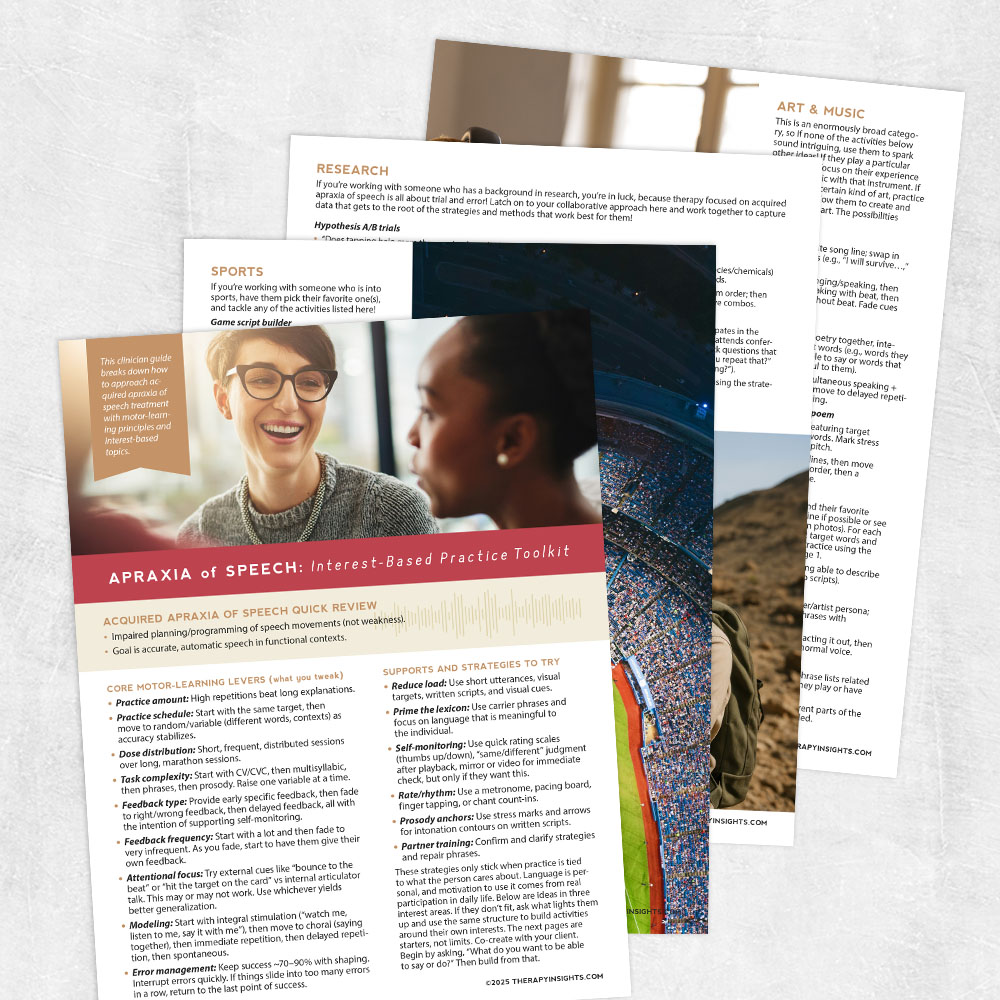
Apraxia of Speech: Interest-Based Practice Toolkit
An interactive toolkit that turns motor-learning principles into personally meaningful therapy.
Helps you co-create targets and move from blocked to random practice using topics like sports, music, or art for high-engagement, high-repetition sessions.
View the resource →
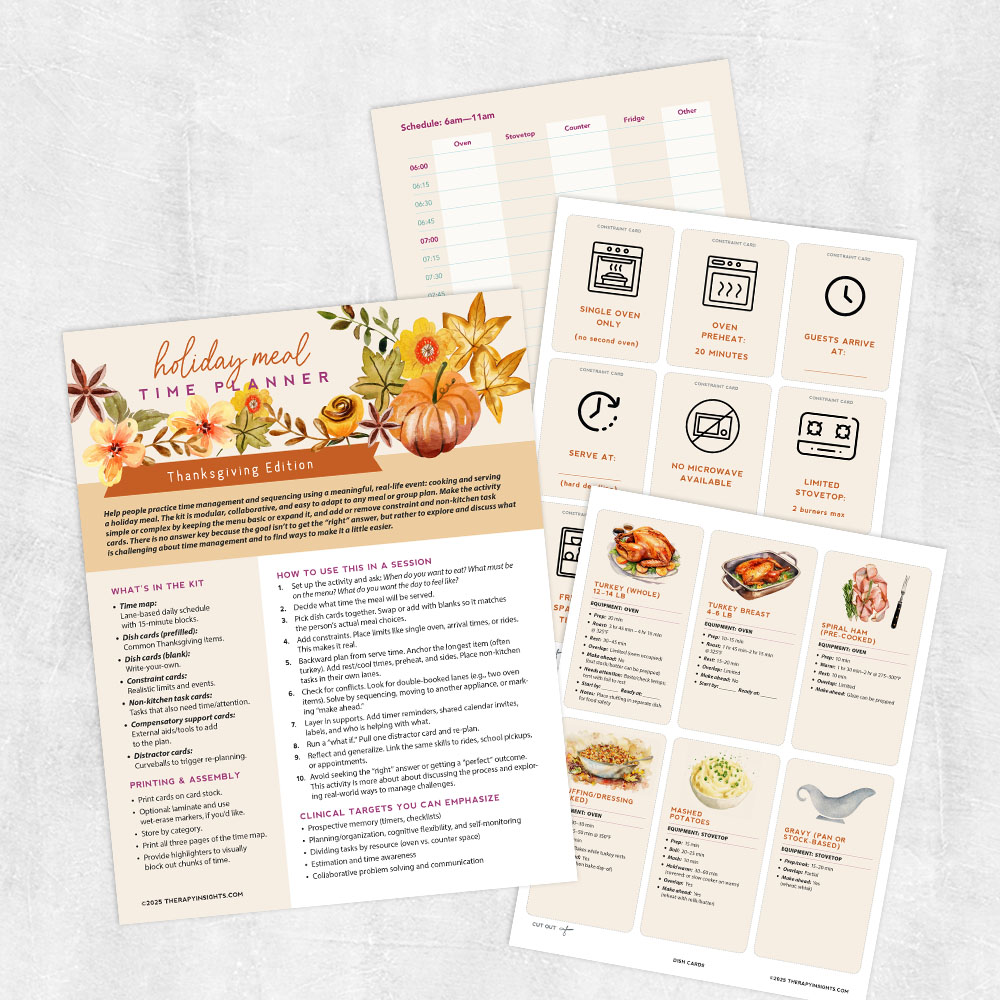
Holiday Meal Time Planner (Thanksgiving Edition)
A fun, functional way to build sequencing, time management, and planning skills.
Clients plan a holiday meal using time and constraint cards, mirroring the executive functioning skills needed for daily life.
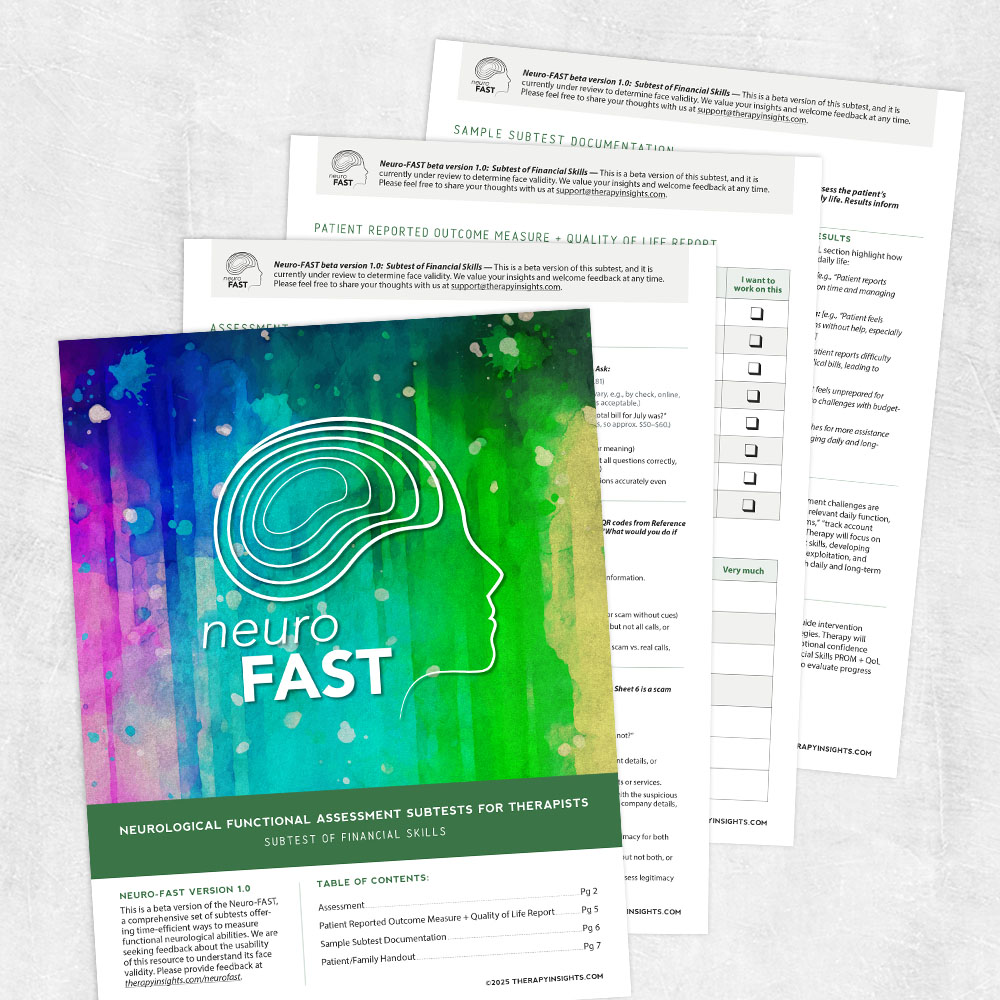
Neuro-FAST Subtest of Financial Skills
A real-world screener for financial reasoning and independence.
Includes tasks like reading a bill, budgeting, and identifying scams to support functional goal-setting and progress tracking after brain injury or stroke.
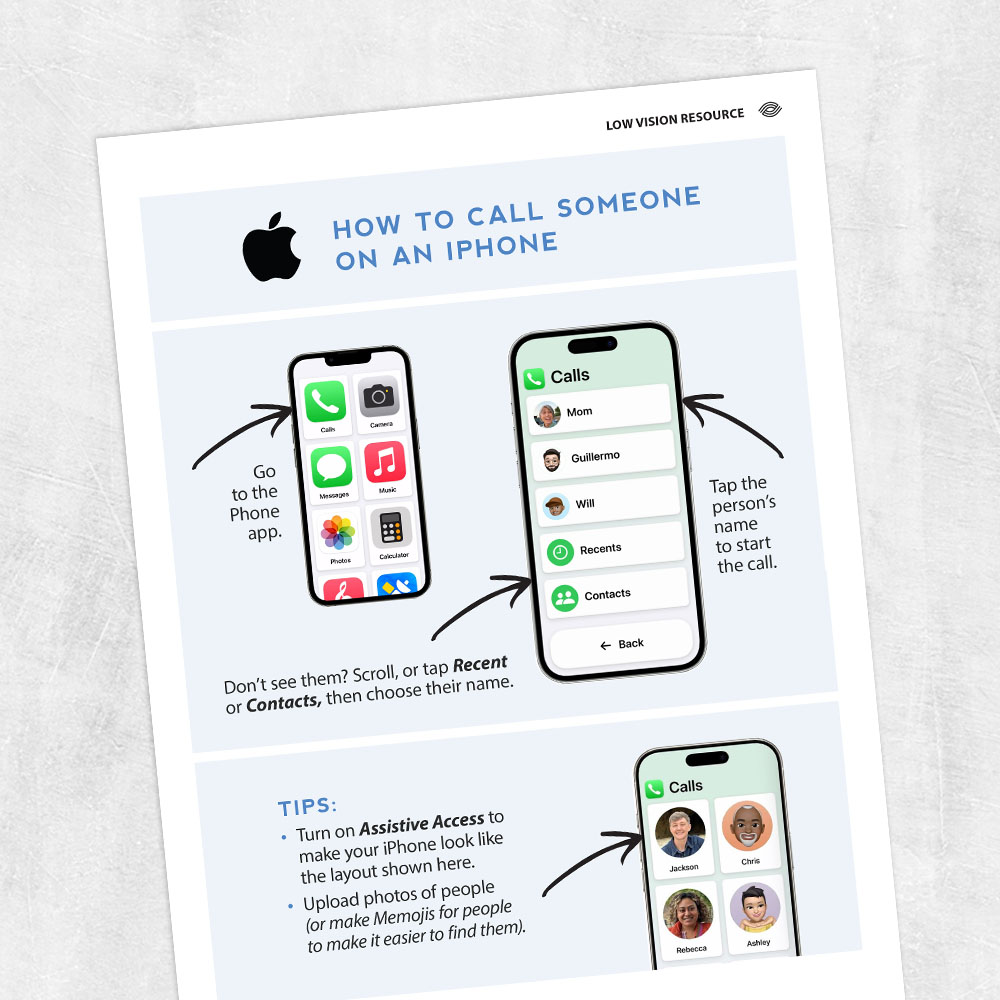
How to Call Someone on an iPhone (Large Print)
A large-print, step-by-step visual guide to placing a phone call using Assistive Access mode.
Supports cognitive and visual accessibility in therapy, caregiver coaching, and home carryover.
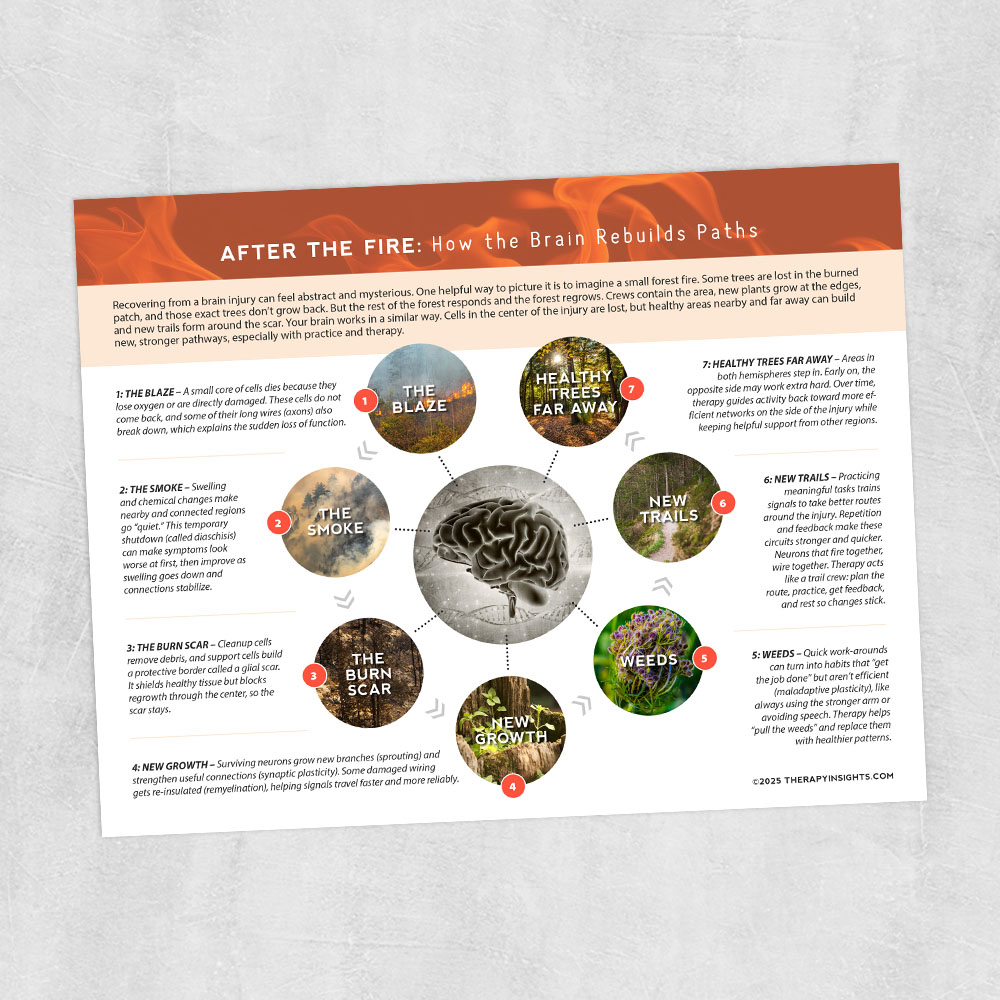
After the Fire: How the Brain Rebuilds Paths
A visual, metaphor-based handout that uses the imagery of a forest fire to explain neuroplasticity.
Helps clients understand recovery as rebuilding, showing how new pathways form and why repetition and meaning matter.
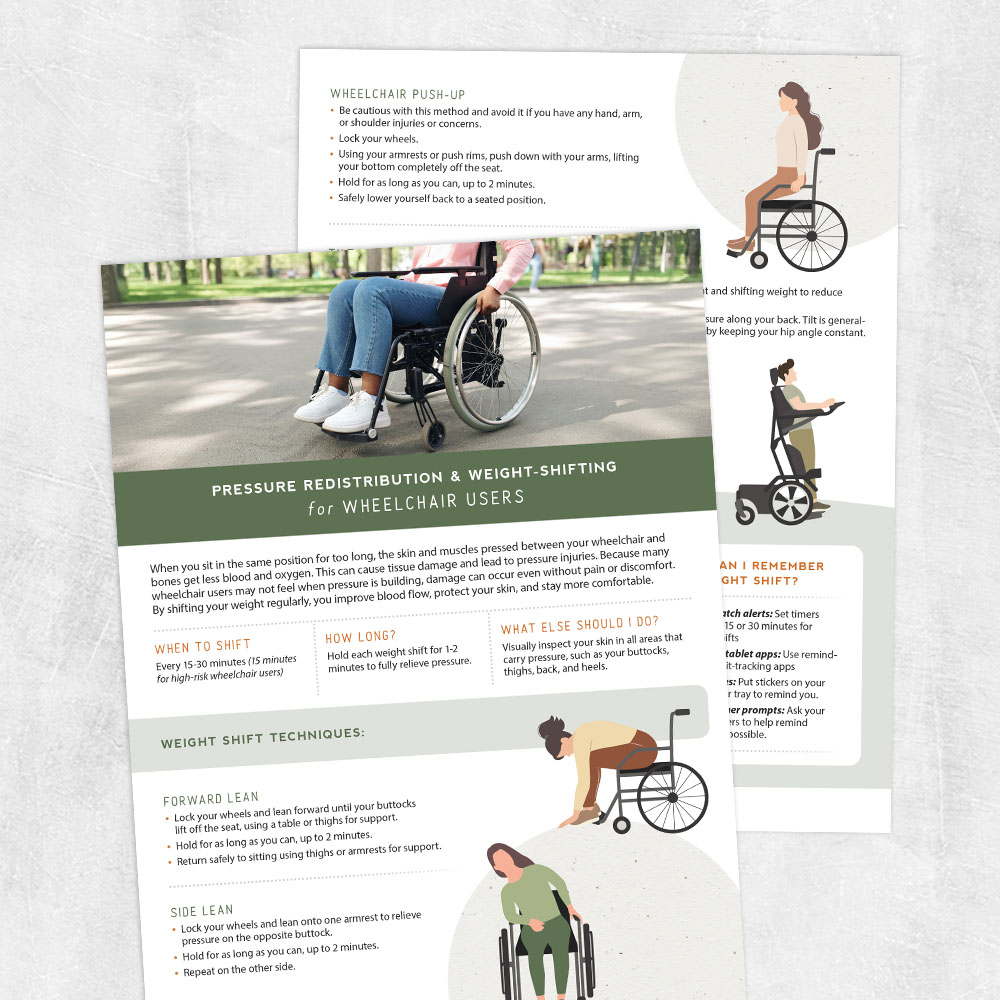
Pressure Redistribution & Weight-Shifting for Wheelchair Users
A visual guide to protecting skin and comfort through safe, effective pressure relief.
Explains when, how, and how long to shift, helping clients build these habits into daily life.
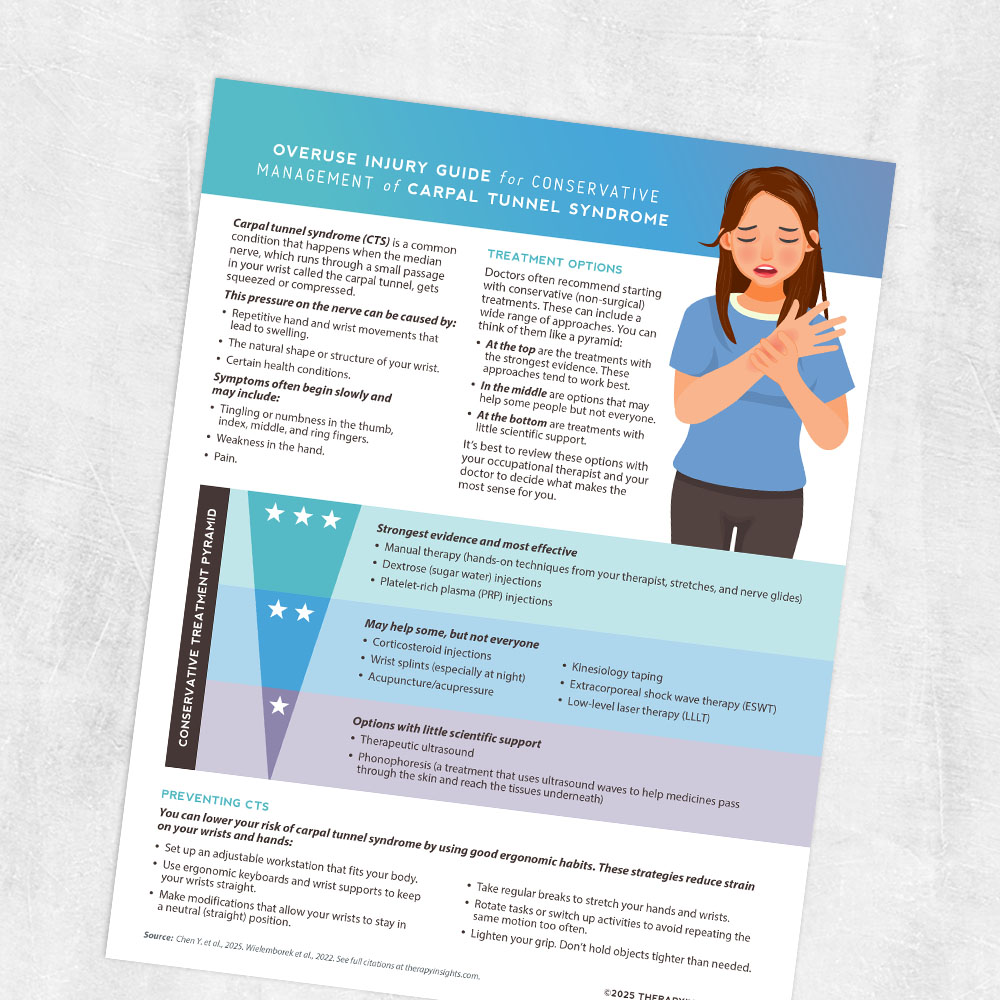
Overuse Injury Guide: Conservative Management of Carpal Tunnel Syndrome
A patient-friendly guide to understanding and managing carpal tunnel syndrome.
Provides clear visuals and prevention strategies to support early intervention and sustainable wrist health.
What’s Coming in December…
We’re continuing to build tools that blend functional relevance with clinical depth. In December, look for:
- Large-print swallow precautions available in 8 languages
- A patient education handout on how alcohol affects the brain
- Weekly planner templates for time and task management
- A concise explainer on Broca’s aphasia
- Cleaning product safety cards for functional reading practice
- A tech guide on following and listening to Apple Podcasts
- Resources for community reintegration and support after rehab
- A compassionate guide on ambiguous loss and dementia
- Centers for Independent Living (CILs): what they are and how to connect
- An adaptive equipment decision guide for dressing and self-care
Clinical Pediatrics: New Therapy Tools for November
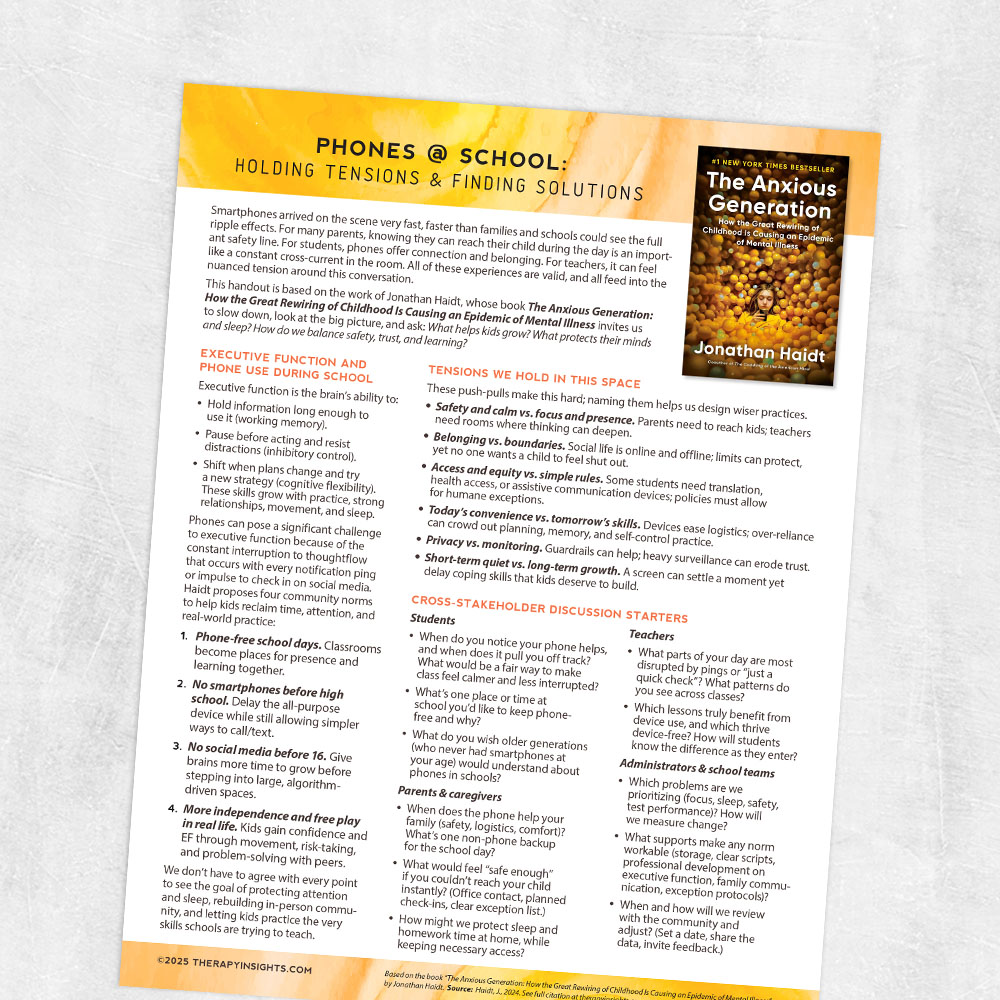
Phones at School: Holding Tensions and Finding Solutions
A conversation-starter for discussing phone use in schools with calm, evidence-aware language.
Explains attention and executive function in accessible terms, inviting dialogue among parents, teachers, and students.
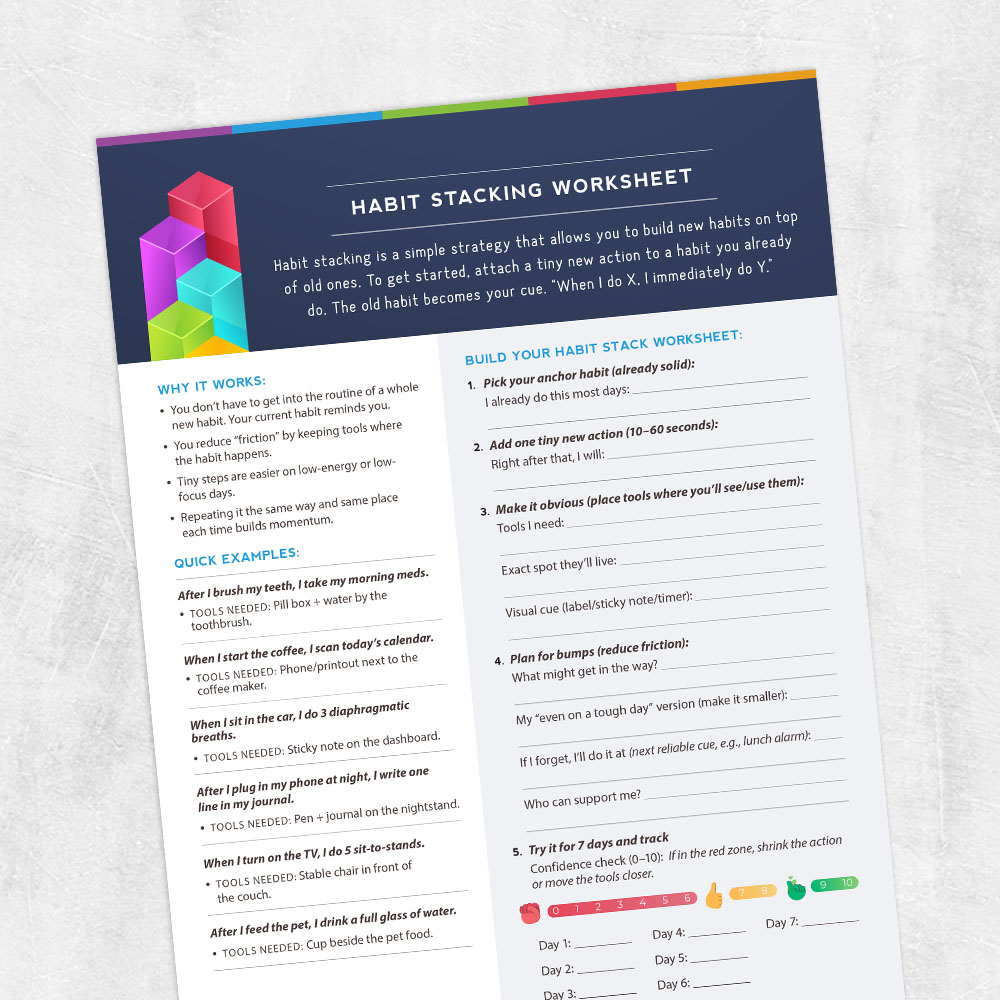
Habit Stacking Worksheet
A simple, flexible handout that helps families build sustainable daily routines.
Encourages self-awareness and gentle habit formation through positive stacking strategies.
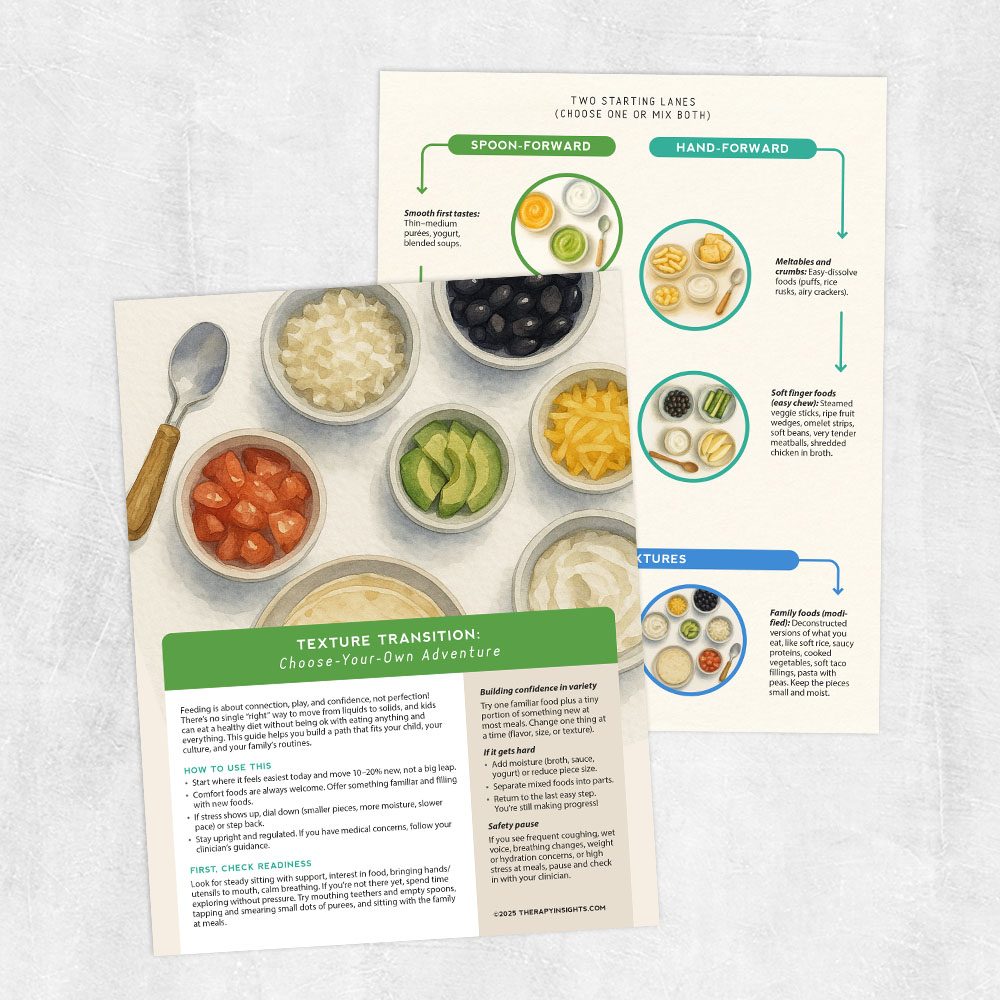
Texture Transition: Choose-Your-Own Adventure
A parent-friendly guide to navigating texture transitions without pressure or rigid sequencing.
Encourages exploration, safety, and shared decision-making around feeding and sensory readiness.
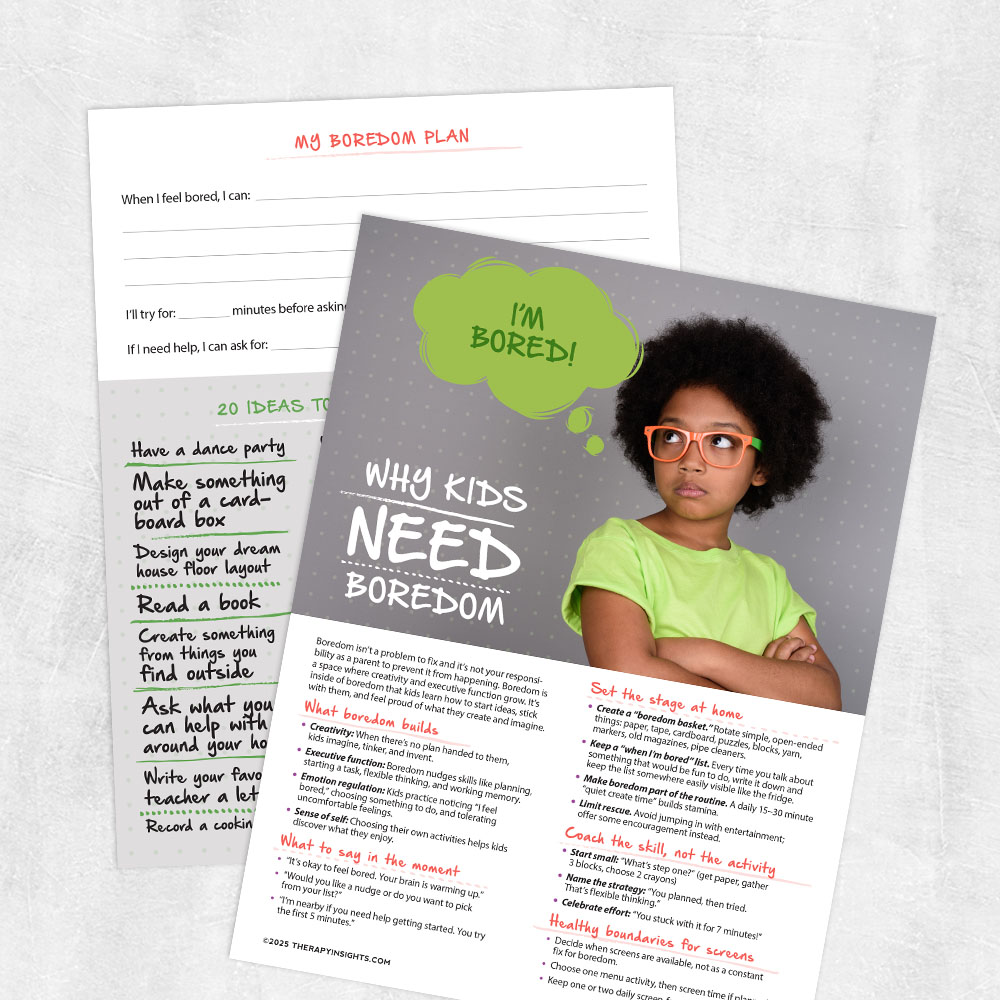
Why Kids Need Boredom
A parent handout reframing boredom as an opportunity for creativity and executive function growth.
Includes 20 ideas kids can start independently and coaching tips to help caregivers step back with confidence.
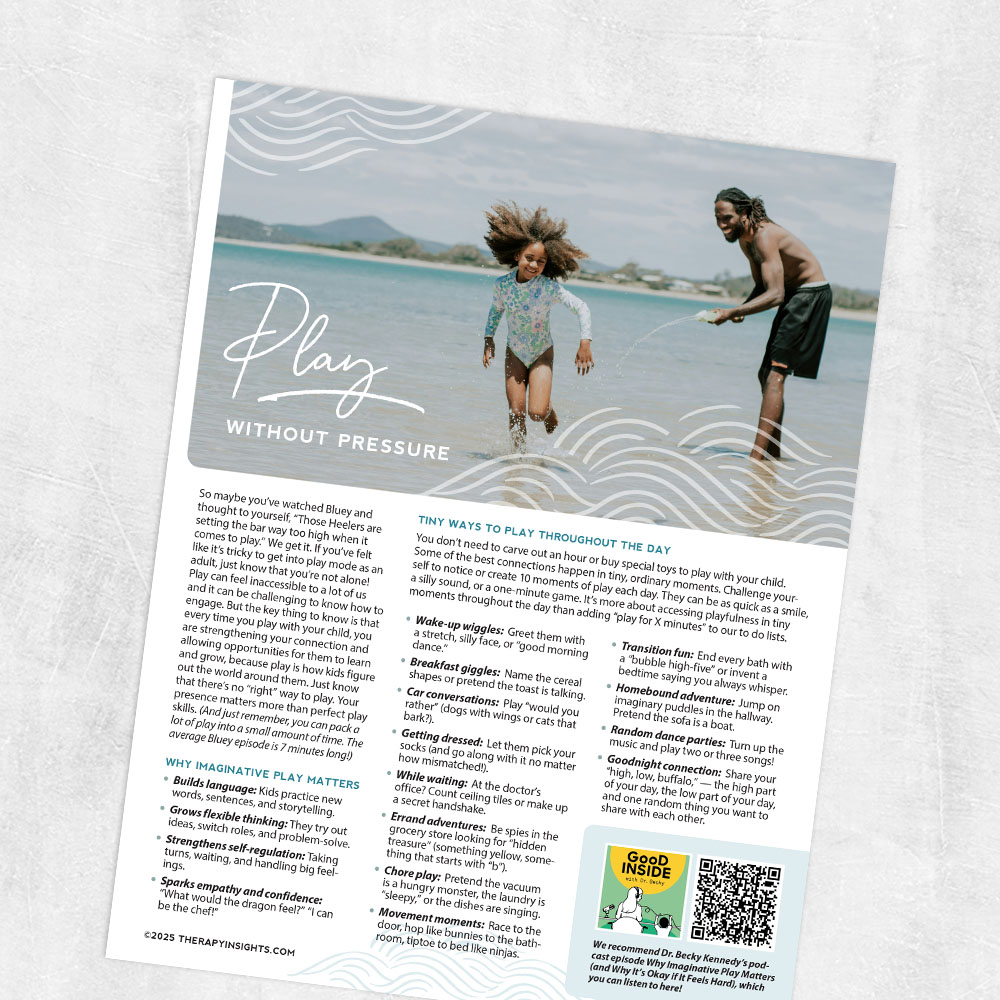
Play Without Pressure
A one-page guide for parents who find play difficult or unnatural.
Explains why play matters, models “follow-their-lead” strategies, and provides low-pressure prompts for connection and communication.
What’s Coming in December…
- A visual sequencing board for dressing routines
- The Productive Detour Worksheet for flexible problem-solving
- Environmental Anchors: a visual strategy for memory and organization
- A parent explainer on how often therapy should occur
- Three new games for movement, language, and connection